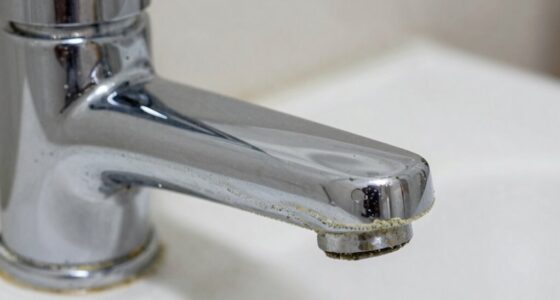
If your faucet starts spitting air, it’s likely because trapped air or fluctuating water pressure disrupts a steady flow. Changes in pressure, airlocks, or multiple fixtures running at once can cause sudden dips or spikes in water flow, pulling air into your pipes or forcing it out through the faucet. Maintaining proper pressure and fixing airlocks can help. If you’d like more tips on fixing and preventing this issue, keep exploring the causes and solutions.

Prime made for students and young adults
- Fast, free delivery for dorm and study essentials
- Prime Video and Amazon Music included
- Member-only deals
Key Takeaways
- Fluctuations in water pressure cause air to be pulled in and expelled from faucets.
- Airlocks trapped in pipes block water flow, leading to sputtering and spitting.
- High demand or multiple fixtures running create pressure dips, drawing in air.
- Problems with pressure regulators can cause inconsistent pressure, resulting in air spitting.
- Regular maintenance and bleeding pipes help prevent trapped air and stabilize faucet flow.

Have you ever turned on your faucet only to be greeted by a sudden burst of air and water? It’s a frustrating experience, especially when you’re trying to wash up or fill a glass. Often, this happens because of water pressure fluctuations or pipe airlocks that have developed in your plumbing system. These issues disrupt the smooth flow of water, causing air to get trapped or pushed through the pipes, which then escapes as spitting or sputtering at your faucet.
Water pressure fluctuations are a common culprit. When your home’s water pressure isn’t steady, it can cause the water to surge or drop unexpectedly. These pressure changes can be caused by high demand, such as multiple fixtures running at once, or by pressure regulator problems. When pressure drops suddenly, it creates a vacuum effect in the pipes, pulling air into the water line. When the pressure spikes again, that air gets forced out through your faucet, resulting in the spitting air and water you notice. This cycle can happen repeatedly if the pressure dips and rises frequently, making your faucet behave unpredictably.
Frequent water pressure fluctuations cause air to be pulled in and forced out, leading to faucet sputtering and unpredictable flow.
Another frequent reason for faucets spitting air is pipe airlocks. Airlocks form when air gets trapped in the plumbing system, usually after repairs or if there’s been a recent change in water pressure. These air pockets block the normal flow of water, forcing it to find alternative routes, which often includes escaping through the faucet in the form of sputtering. You might notice that this problem is more prominent in certain fixtures or after turning the water off and on again. The trapped air acts like a barrier, preventing water from flowing smoothly and causing the characteristic spitting. Properly understanding pipe airlocks and how they develop can help in effectively resolving these issues. Additionally, recognizing the role of water pressure fluctuations can assist in diagnosing the problem more accurately. Regularly inspecting your plumbing system for airlocks can prevent recurring problems and keep your water flow steady. Using pressure regulators to stabilize water pressure can also reduce the likelihood of airlocks forming in the future.
To fix these issues, start by checking your main water pressure. If it’s too high, adjusting the pressure regulator can help stabilize the flow and reduce fluctuations. For persistent airlocks, bleeding the pipes can often clear trapped air. This involves turning off the water supply, opening the faucet to drain the system, and then closing everything back up and restarting the water. Sometimes, installing an air release valve can prevent future airlocks from forming, especially in systems prone to air entrapment. Regular maintenance of your plumbing system, including monitoring water pressure, can help prevent these problems from recurring.
In essence, the cause of your faucet spitting air boils down to irregular water pressure or trapped air in your pipes. By addressing these root problems—whether through pressure regulation, bleeding the lines, or installing air release devices—you can restore normal flow and eliminate those annoying sputters. Keeping your plumbing system well-maintained ensures your faucet runs smoothly, providing water without interruptions or the surprise of air bursts.
water pressure regulator for home plumbing
As an affiliate, we earn on qualifying purchases.
As an affiliate, we earn on qualifying purchases.
Frequently Asked Questions
Can Low Water Pressure Cause Faucets to Spit Air?
Yes, low water pressure can cause faucets to spit air. When water flow drops, air bubbles can form in the pipes and get released through the faucet, creating spitting or sputtering. This happens because the reduced pressure allows air to enter the water stream, disrupting a steady flow. To fix this, you might need to check for clogged aerators or inspect your plumbing for leaks that could be affecting water pressure.
Does Faucet Age Affect Its Tendency to Spit Air?
Yes, faucet age can influence its tendency to spit air. Over time, mineral deposits build up on faucet materials, affecting water flow, especially with varying water temperatures. As your faucet ages, these deposits can cause inconsistent pressure, leading to air spitting. Regular cleaning and maintenance help prevent buildup, ensuring smooth water flow regardless of faucet age, water temperature, or materials used.
Are Certain Faucet Types More Prone to Spitting Air?
Certain faucet types are more prone to spitting air, especially those with specific designs like single-handle or aerated models. You’ll notice that faucet design influences how air gets trapped and released, causing spitting. Poor installation quality can worsen this issue, leading to loose fittings or improper sealing. To minimize spitting, make certain your faucet’s design suits your water pressure and that installation is done correctly, with secure fittings and no leaks.
Can Cleaning the Aerator Prevent Air Spitting?
Can cleaning the aerator prevent air spitting? Absolutely. Regular aerator maintenance helps remove debris and mineral buildup that cause irregular water flow and air spitting. By keeping your aerator clean, you’re extending your faucet’s lifespan and ensuring smooth operation. Neglecting it might lead to more frequent issues, so make cleaning part of your routine. Isn’t it worth it to keep your faucet working flawlessly and avoid unnecessary replacements?
Is Spitting Air a Sign of Plumbing Blockages?
Yes, spitting air can indicate plumbing blockages, especially if your water quality has deteriorated or the faucet design creates pressure issues. Blockages in pipes or aerators can cause air to be forced through the water stream, leading to spitting. Check for debris or buildup that might restrict water flow. Regular maintenance and understanding your faucet’s design can help you prevent or resolve this issue effectively.
As an affiliate, we earn on qualifying purchases.
Conclusion
Remember, a problem shared is a problem halved. When your faucet starts spitting air, it’s often due to air trapped in the pipes or a pressure imbalance. By checking for leaks, cleaning aerators, or adjusting water pressure, you can usually fix the issue yourself. Don’t ignore the little signs; they often point to bigger problems. Stay proactive, and you’ll keep your water flowing smoothly—because as they say, a stitch in time saves nine.
As an affiliate, we earn on qualifying purchases.
pressure booster pump for water system
As an affiliate, we earn on qualifying purchases.
As an affiliate, we earn on qualifying purchases.
Fall Picks
fall essentials
As an affiliate, we earn on qualifying purchases.