
The 4-to-1 rule helps you set your ladder at the safest angle by ensuring it’s stable and less likely to slip. For every four feet your ladder reaches, you should position the base one foot away from the wall. This simple ratio keeps the ladder balanced and secure, reducing fall risks. If you keep this rule in mind, you’ll improve safety during your tasks—continue exploring to learn more about proper setup and safety tips.

Prime made for students and young adults
- Fast, free delivery for dorm and study essentials
- Prime Video and Amazon Music included
- Member-only deals
Key Takeaways
- The 4-to-1 rule states that for every 4 feet of ladder height, the base should be 1 foot away from the wall.
- Proper ladder angle ensures stability, reduces slipping, and distributes weight evenly during use.
- Use tools like a ladder angle finder or level to accurately set the correct 4-to-1 angle.
- Ignoring the rule can lead to ladder instability, increased risk of falls, and potential structural damage.
- Following the 4-to-1 rule enhances safety, confidence, and efficiency when working at heights.
As an affiliate, we earn on qualifying purchases.
What Is the 4-to-1 Rule for Ladder Angles?
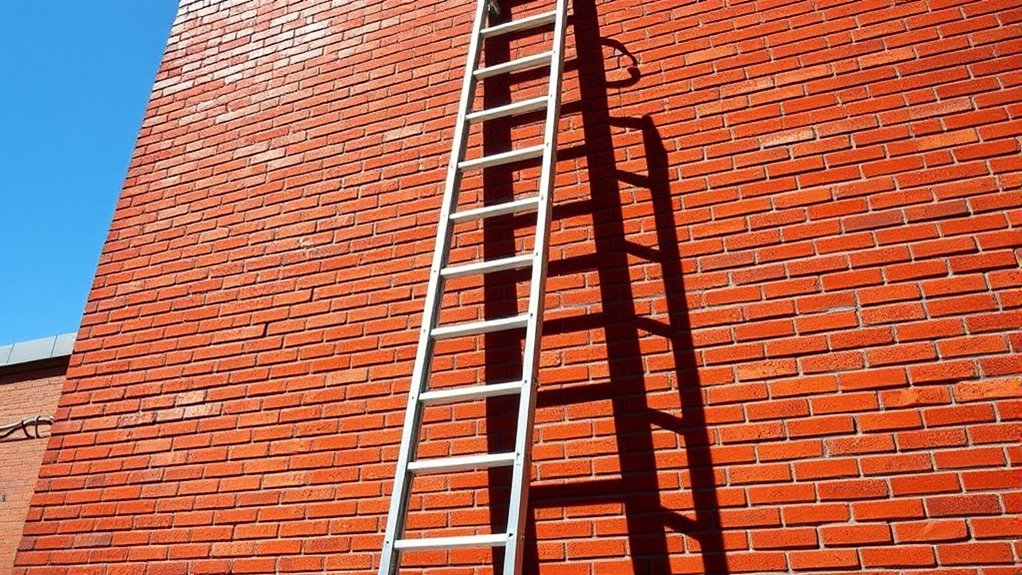
Ever wondered how to set a ladder at the safest angle? That’s where the 4-to-1 rule comes in. This rule is a simple way to guarantee proper ladder safety by guiding your angle calculation. Basically, for every four feet of ladder height, the base should be one foot away from the wall or structure. This creates an ideal angle that prevents slips and falls. To apply this, measure the height you’ll reach and divide by four to find how far out to place the ladder’s base. Following the 4-to-1 rule makes setting a ladder easier and safer, reducing risks associated with improper angles. Remember, a correct ladder angle is vital for stability and safety during your climb. Proper ladder setup is an essential part of smart safety practices to prevent accidents and ensure confidence during your work.
As an affiliate, we earn on qualifying purchases.
Why Setting the Right Ladder Angle Matters for Safety
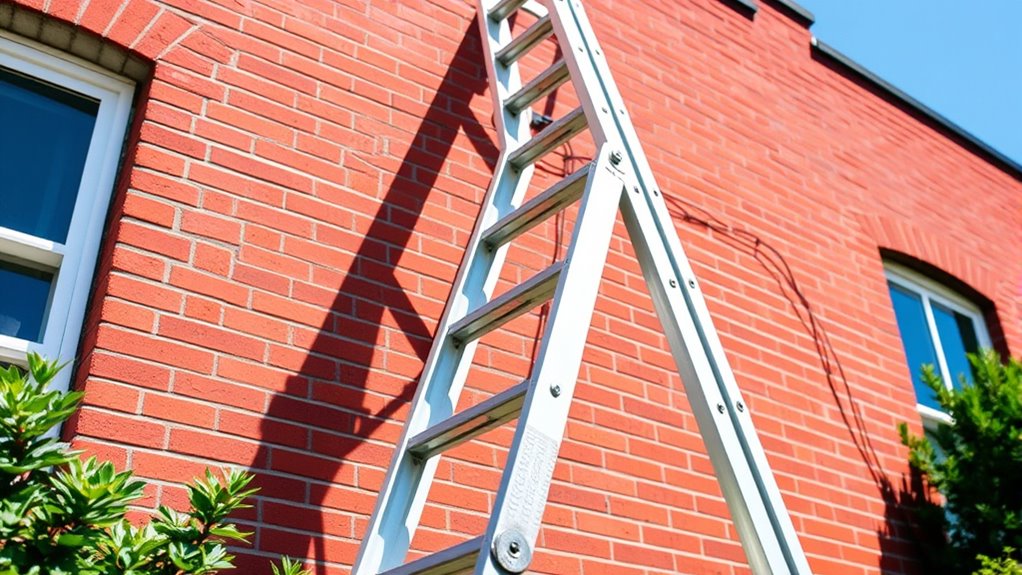
Setting the right ladder angle helps prevent slips and falls, keeping you safe while working. It also guarantees the ladder stays stable and provides the support you need. When you choose the correct angle, you reduce the risk of accidents and improve your safety on the job. Additionally, maintaining the proper ladder stability ensures you can work efficiently and confidently.
Prevents Slip and Fall
Choosing the right ladder angle is crucial because it directly affects your safety by preventing slips and falls. When you set the ladder at the proper 4-to-1 ratio, it minimizes the risk of slipping sideways or tipping over. The ladder materials also play a role—sturdy, non-slip rungs and stable feet help keep you grounded. Always use a safety harness if working at heights, especially if the ladder is on uneven ground or if there’s a risk of losing balance. Proper angle ensures your weight remains centered, reducing the chance of accidental slips. Remember, an incorrectly positioned ladder can be dangerous, so double-check the angle before climbing. Staying alert to these details keeps you safer and reduces the likelihood of falls. Maintaining proper ladder setup is key to ensuring your safety during any height-related task.
Ensures Stability and Support
When you set your ladder at the correct angle, it provides essential stability and support, preventing it from wobbling or slipping unexpectedly. Proper ladder stability is vital for your safety, ensuring you can work confidently without fear of falling. A well-angled ladder distributes your weight evenly, reducing strain on any one point and minimizing the risk of tipping over. Support safety depends on maintaining the correct angle, which keeps the ladder firm on the ground and against the surface you’re leaning on. By following the 4-to-1 rule, you create a secure setup that supports your tasks efficiently. This careful positioning not only protects you but also prolongs the ladder’s lifespan, making each use safer and more reliable. Additionally, understanding wiring basics can help ensure your ladder setup includes proper safety measures when working near electrical components.
As an affiliate, we earn on qualifying purchases.
How to Measure Your Ladder’s Proper Angle
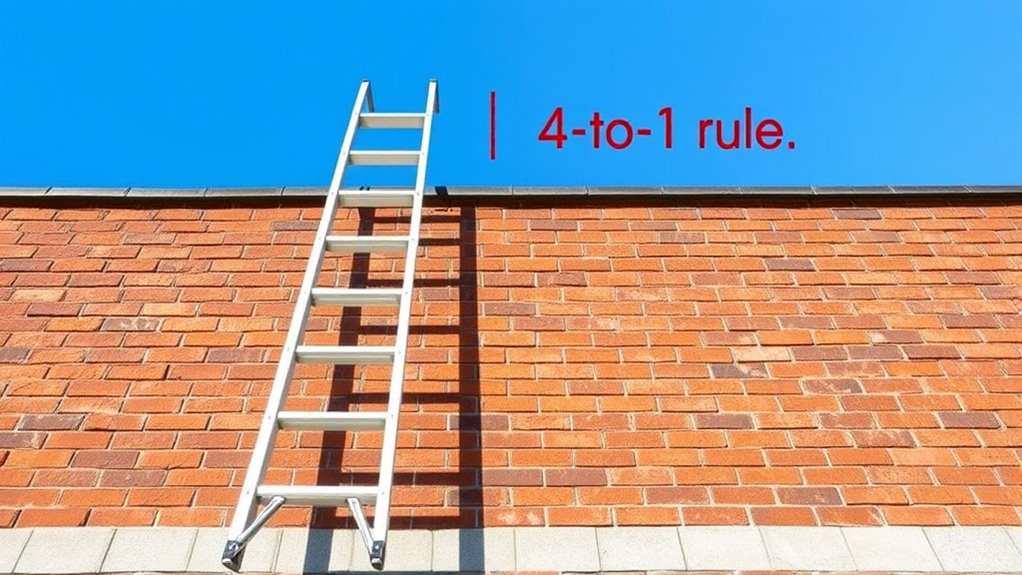
To measure your ladder’s proper angle, you’ll want to use the 4-to-1 ratio as a guide. This means that for every four units of height, the base should be one unit away from the wall. Properly positioning your ladder guarantees stability and safety every time you set it up. Incorporating innovative European cloud servers into your planning can enhance safety data analysis and improve overall security measures.
Using the 4-to-1 Ratio
The 4-to-1 ratio is a simple and effective way to guarantee your ladder is set at the correct angle. To use it, place the base of your ladder one foot away from the wall for every four feet of ladder height. This measurement ensures ideal ladder stability, reducing the risk of slipping or tipping. Maintaining the proper angle is essential for fall prevention, especially when working at heights. Once you’ve set the base, lean the ladder back until the top meets the wall at the right height, verifying the 4-to-1 ratio. This straightforward method helps you achieve a safe, stable setup every time, giving you confidence and security during your task. Proper ladder safety is crucial for preventing accidents and injuries. Remember, a properly measured ladder is key to safe and efficient work.
Properly Positioning the Ladder
Measuring your ladder’s proper angle is essential for safety and stability. To guarantee ladder stability, follow these steps:
- Stand back from the base and place the ladder at a comfortable height.
- Use the 4-to-1 ratio: for every 4 feet of ladder height, position the base 1 foot away from the wall.
- Check the angle by ensuring the ladder’s top is leaning slightly away from the wall, creating a safe and stable position.
As an affiliate, we earn on qualifying purchases.
Step-by-Step: Setting Up Your Ladder Using the 4-to-1 Rule
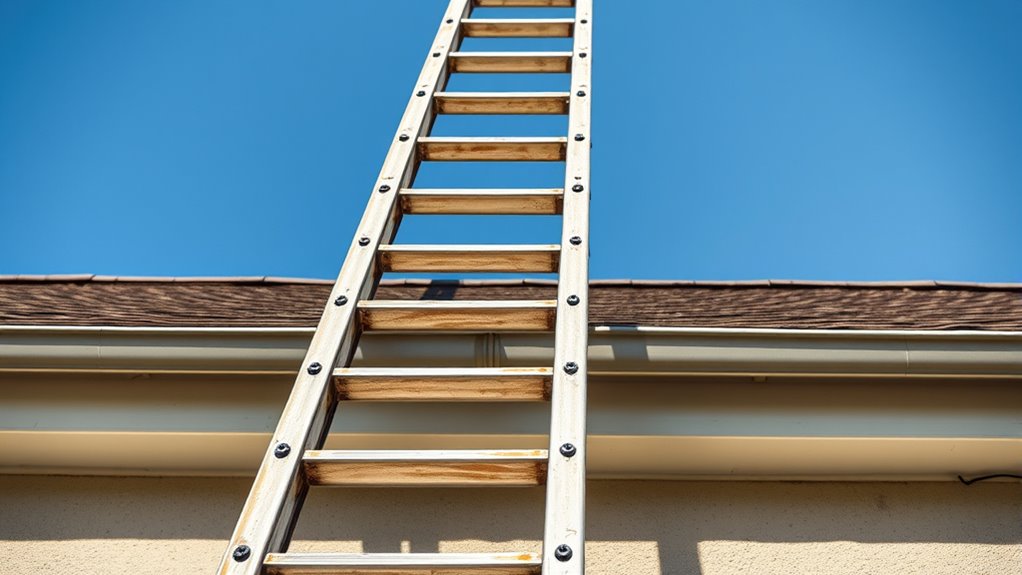
Setting up your ladder safely begins with understanding the 4-to-1 rule, which guarantees stability and reduces the risk of falls. To apply this rule, start by placing the base of your ladder one foot away from the wall for every four feet of ladder height. This simple angle measurement ensures the ladder leans at the correct angle. Adjust the ladder’s position until the base is correctly spaced, then secure the footing. Always double-check the angle before climbing, as an improper setup compromises ladder safety. Remember, following the 4-to-1 rule makes it easier to set up a stable ladder quickly and confidently. Properly measuring and adjusting your ladder’s angle is an essential step to prevent accidents and ensure safe working conditions. Proper ladder setup is crucial for maintaining safety and stability during your project.
Common Mistakes to Avoid When Positioning Your Ladder

Many common mistakes occur when positioning your ladder, and overlooking these can lead to accidents. One major issue is ignoring stability concerns caused by improper setup. To ensure safety, avoid these errors:
Avoid common ladder setup mistakes to ensure safety and stability during tasks at height.
- Setting the ladder too steep or too shallow, which compromises stability.
- Placing the ladder on uneven or slippery surfaces.
- Extending the ladder beyond the recommended height or not securing it properly.
These mistakes can cause the ladder to slip or tip, increasing the risk of falls. Always double-check that the base is firm and level, and follow the 4-to-1 rule precisely. Proper positioning minimizes stability concerns and keeps you safe while working at height. Remember, a stable ladder is a safe ladder.
Visual Examples of Correct and Incorrect Ladder Angles
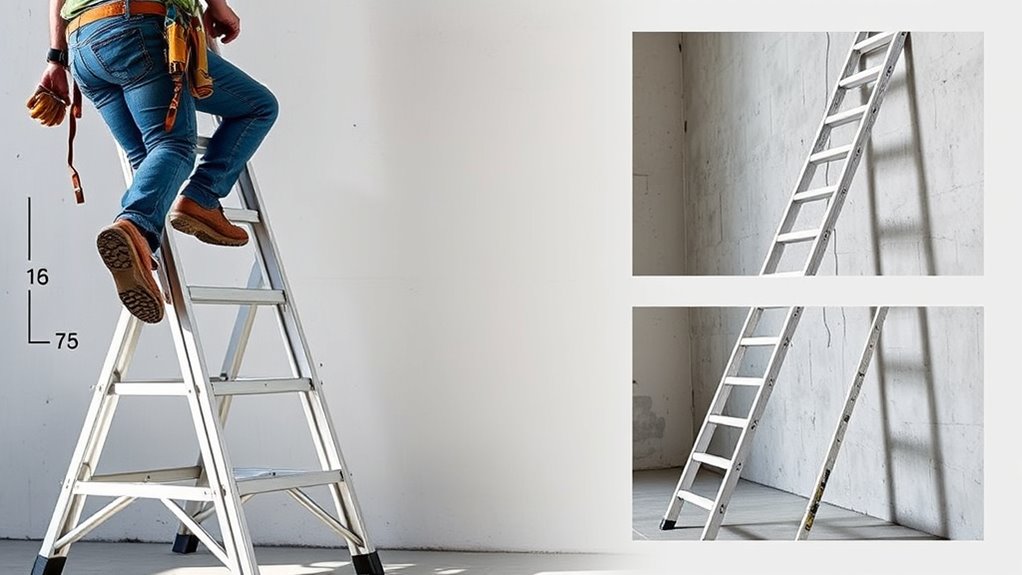
Have you ever wondered how a simple change in ladder angle can make a big difference in safety? Visual examples help illustrate the importance of angle accuracy in ladder safety. Here’s a clear comparison:
| Correct Ladder Angle | Incorrect Ladder Angle |
|---|---|
| Stable, secure footing, proper reach | Wobbly, risk of slipping, unsafe reach |
| 4-to-1 ratio maintained | Too steep or too flat, risking falls |
| Proper support, easy climb | Unbalanced, dangerous positioning |
Pay attention to these visuals. A correct angle guarantees stability and safety, while incorrect positioning increases fall risks. Always check your ladder’s angle to promote safety and prevent accidents. Ensuring proper ladder positioning is essential for reducing fall hazards.
Tools That Help You Achieve the Perfect Ladder Position

Achieving the perfect ladder position becomes much easier when you use the right tools designed for safety and accuracy. These tools aid in proper ladder setup, ensuring stability and reducing accidents. For example:
- Ladder Angle Finder – Quickly measures if you’re at the correct 4-to-1 angle, supporting proper ladder maintenance and safety.
- Level Tool – Ensures your ladder is perfectly vertical or horizontal, preventing slips and falls.
- Ladder Stabilizer – Adds extra stability, especially on uneven surfaces, promoting tool safety during use.
- Understanding ladder safety practices can further reduce the risk of accidents and ensure a secure working environment.
Using these tools helps you maintain your ladder properly and minimizes risks associated with incorrect angles. They are essential for efficient ladder maintenance and for working confidently at the right height. Incorporating these tools guarantees safer, more accurate ladder positioning every time.
Tips for Safe Climbing and Working at the Correct Angle
To climb safely and work effectively at the correct ladder angle, you must pay attention to your footing and body position throughout the task. Proper ladder safety starts with maintaining three points of contact—two hands and one foot or two feet and one hand—at all times. Use stable climbing techniques, such as facing the ladder and keeping your body centered, to prevent slips or falls. Verify your ladder is at the right angle, ideally following the 4-to-1 rule, for maximum stability. Always check footwear for grip, avoid overreaching, and move slowly and deliberately. By focusing on proper body alignment and steady movements, you reduce risks and enhance safety while maintaining control during your climb and work. Additionally, understanding the mechanics of nanomaterials can help in designing safer, more stable ladder systems in advanced workplaces.
What Happens When You Ignore the 4-to-1 Rule

Ignoring the 4-to-1 rule can lead to serious safety hazards. When you neglect proper ladder angles, ladder stability diminishes, increasing the risk of falls and injuries. Without following safety protocols, you jeopardize your safety and that of others. Specifically:
Neglecting the 4-to-1 rule risks ladder stability, falls, and injuries. Always follow safety protocols for secure work.
- The ladder may slip or tip over unexpectedly.
- You increase the chance of losing your balance while working.
- Structural stress can cause the ladder to bend or break.
These issues highlight why maintaining the correct angle is vital. Failing to do so weakens the ladder’s stability, making accidents more likely. Always adhere to safety protocols and ensure your ladder’s angle meets the 4-to-1 rule to prevent unnecessary hazards and keep your work safe.
Frequently Asked Questions
Can the 4-To-1 Rule Vary With Different Ladder Types?
Yes, the 4-to-1 rule can vary with different ladder types. Ladder material and weight influence how stable and safe a ladder is at certain angles. For example, lightweight aluminum ladders may need a slightly different angle to stay secure, while heavier fiberglass ladders can often be set at a standard 4-to-1 ratio. Always check manufacturer guidelines, considering ladder weight and material, to guarantee proper and safe setup.
How Does Ladder Height Affect the Optimal Angle?
You’ll find that as ladder height increases, the ideal angle for stability decreases to maintain proper angle calculation. This keeps the ladder stable and reduces wobbling or slipping. For taller ladders, aim for a steeper angle, around 75 degrees, but always guarantee it follows the 4-to-1 rule. Proper ladder stability depends on maintaining the correct angle, so adjust accordingly based on ladder height for safe use.
Is the 4-To-1 Rule Applicable on Uneven Surfaces?
Yes, the 4-to-1 rule is still applicable on uneven surfaces, but you need to prioritize ladder stability and surface compatibility. Adjust the ladder’s base to ensure it forms a proper angle, even if the ground is uneven. Use stabilizers or levelers if necessary, and always double-check that the ladder is secure before climbing. Properly following the rule helps prevent slips and falls, ensuring safety on any surface.
What Safety Gear Should I Use When Setting up a Ladder?
You need to prioritize your safety with the right gear. Always wear personal protective equipment like a helmet, gloves, and non-slip footwear to guarantee ladder stability. Using a harness or fall arrest system adds extra security, especially on uneven surfaces. Remember, stability is key—proper safety gear acts as your safety net, preventing accidents and giving you confidence to work securely at heights. Safety isn’t optional; it’s essential.
How Often Should I Inspect My Ladder for Safety Compliance?
You should inspect your ladder weekly for safety compliance, especially before each use. Use a thorough ladder inspection checklist to identify any damage, loose rungs, or corrosion. Regular ladder maintenance guarantees it remains stable and safe. Look for worn-out parts, proper locking mechanisms, and secure footing. If you find any issues during your inspection, repair or replace the ladder immediately to prevent accidents and ensure ongoing safety during your projects.
Conclusion
Ignoring the 4-to-1 rule is like climbing a ladder on shaky ground—you risk falling. But when you follow it, you set yourself up for stability and safety. Think of the difference between a cautious step and a reckless jump. By understanding and applying this simple rule, you turn a dangerous climb into a confident reach. Safety isn’t just a rule; it’s the foundation of every secure, successful task.
Halloween Picks
halloween
As an affiliate, we earn on qualifying purchases.