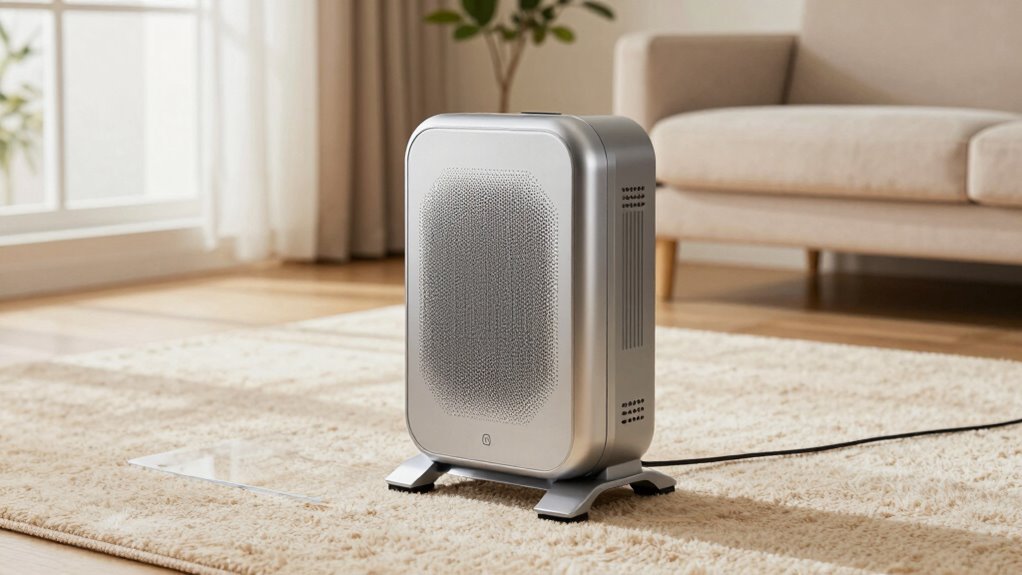

To stay safe with your space heater, keep at least three feet of clear space around it, away from furniture, curtains, and other combustibles. Proper placement guarantees heat disperses evenly and prevents fire hazards or overheating. Always measure the distance accurately and monitor for items that might drift closer over time. Ignoring these clearance rules can lead to dangerous situations. Keep informed—there’s more you need to know to ensure safe operation.
Key Takeaways
- Maintain at least three feet of clearance around the heater to prevent fire hazards.
- Keep furniture, curtains, and other combustibles away from the heater’s sides and top.
- Regularly check for objects that may have moved closer, reducing safe distance.
- Follow manufacturer guidelines for specific clearance requirements based on heater size and wattage.
- Place the heater on a stable, fire-resistant surface to avoid tipping or contact with combustible materials.
QIO CHUANG Emergency Mylar Thermal Blankets -Space Blanket Survival kit Camping Blanket (4-Pack). Perfect for Outdoors, Hiking, Survival, Bug Out Bag ,Marathons or First Aid 1
Emergency Mylar Thermal Blankets – Emergency Blanket,Space Blanket,Thermal Blanket,Mylar Blanket,Survival Blanket.Our durable advanced aluminized Mylar blankets are perfect…
As an affiliate, we earn on qualifying purchases.
As an affiliate, we earn on qualifying purchases.
Why Clearance Rules Matter for Space Heater Safety
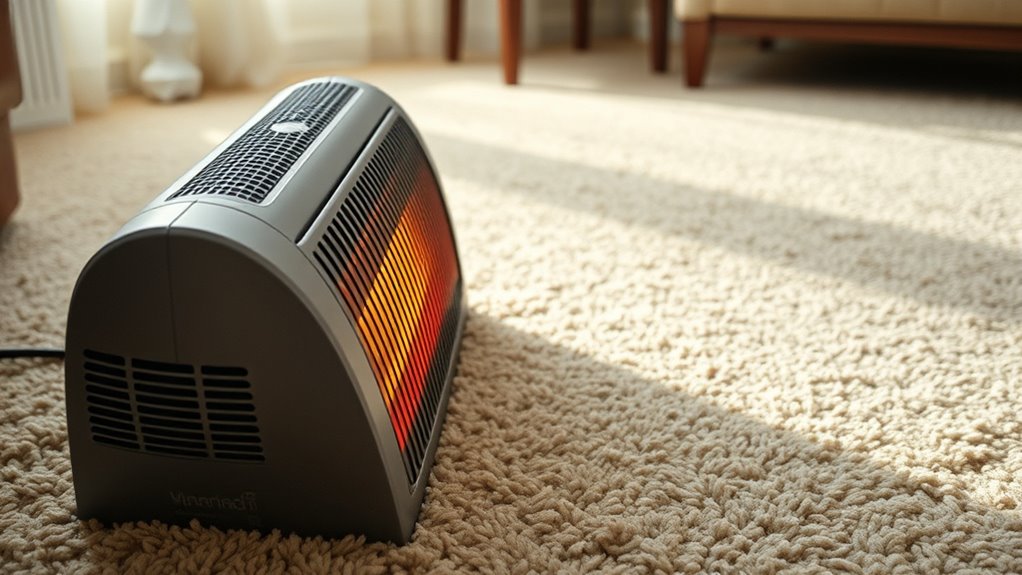
Clearance rules are essential for keeping you safe when using a space heater. They help prevent fire safety hazards by ensuring the heater isn’t placed too close to combustible materials. Proper clearance allows heat to disperse evenly and reduces the risk of overheating. Insulation importance becomes evident here—you want to avoid placing your heater near items that can easily catch fire, such as curtains, furniture, or paper. Maintaining adequate space ensures that heat doesn’t build up dangerously around the device. Following clearance guidelines also helps your heater operate efficiently, preventing potential malfunctions caused by overheating. In short, respecting clearance rules is a simple but vital step to protect your home and loved ones from fire risks associated with space heater use. Additionally, understanding field‑of‑view and imaging‑scale concepts from astronomy can remind us of the importance of proper spacing and positioning in safety practices.

Heat Storm Tradesman 1500 Watt Infrared Heater Tripod Combo, Remote
Instant Infrared Heat – warms objects instead of just air
As an affiliate, we earn on qualifying purchases.
As an affiliate, we earn on qualifying purchases.
How Much Space Should You Keep Around Your Heater?
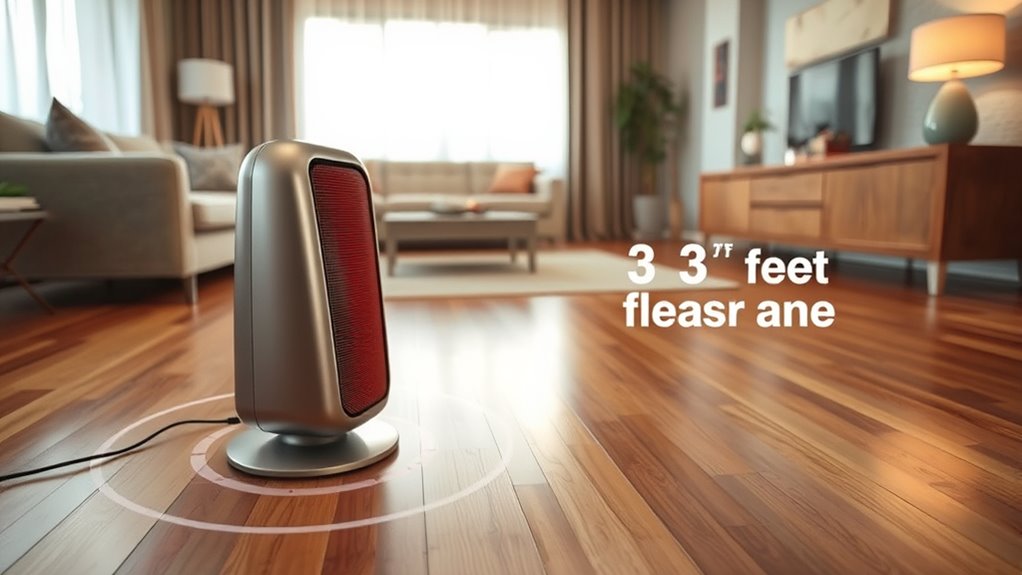
To guarantee safe operation, you should keep at least three feet of space around your space heater on all sides. Proper heater placement involves maintaining clear safety zones to prevent accidental fires or tip-overs. Position your heater away from furniture, curtains, and other combustible objects, ensuring nothing blocks airflow or access. Avoid placing it near bedding, paper, or clutter that could catch fire. By establishing these safety zones, you minimize risks associated with overheating or ignition. Remember, the goal is to create a buffer that allows your heater to operate efficiently without hazards. Keeping the recommended space not only protects your home but also ensures your heater functions safely and effectively. Always follow the manufacturer’s guidance for specific clearance requirements. Understanding clearance is essential to creating a safe environment when using a space heater.
FLASLD Aluminized Heat Shield Mat Thermal Barrier Adhesive Backed Heat Blanket 12'' X 24'', Fiberglass Insulation Reflective Material High Temp Protection
Withstands Extreme Heat — Made with aluminized finish which is flexible and durable woven silica, this Aluminized Adhesive…
As an affiliate, we earn on qualifying purchases.
As an affiliate, we earn on qualifying purchases.
What Factors Affect Space Clearance Needs?

Your space heater’s clearance needs depend on several factors. The heater’s size and power influence how much room you should leave, while the room’s size and ventilation affect heat circulation. Additionally, the material and surface type of nearby objects can impact safety requirements. For those investing in space heaters with safety features, understanding the importance of clearance requirements is essential for optimal use.
Heater Size & Power
The size and power of a space heater directly influence how much clearance you’ll need for safe operation. Larger heaters or those with higher power requirements tend to generate more heat and pose greater fire risks if placed too close to combustible materials. To guarantee safety, check the manufacturer’s guidelines for recommended clearance distances based on your heater’s size and wattage. Heaters with greater power often require more space around them to prevent overheating and allow proper airflow. Remember, underestimating the necessary clearance can lead to hazards, so always follow the specified safety distances. Additionally, understanding your heater’s energy efficiency can help you select a model that balances power needs with safe operation. By understanding your heater’s size and power needs, you can set it up correctly and minimize risks while keeping your space warm and safe.
Room Size & Ventilation
Room size and ventilation considerably influence how much clearance a space heater needs to operate safely. Larger rooms may require less clearance because heat disperses more easily, but poor ventilation can cause heat buildup and hazards. Ventilation requirements are essential, as proper airflow prevents overheating and ensures safe operation. Your room layout also impacts clearance needs—placing a heater near furniture or curtains can block airflow and increase fire risk. Make sure there’s enough space around the heater for heat to circulate freely, and avoid clutter that impedes ventilation. Properly evaluating your room size and ventilation helps you determine the right clearance, reducing the chance of accidents and maximizing efficiency. Additionally, adequate ventilation is crucial for dispersing heat and preventing dangerous heat accumulation. Always follow manufacturer guidelines tailored to your room’s layout to keep safety a priority.
Material & Surface Type
Different materials and surface types can considerably influence how much clearance a space heater needs for safe operation. Material considerations include whether the surface is heat-resistant or flammable. For example, metal or ceramic surfaces can handle higher temperatures without risk, while plastics or fabrics pose surface hazards if placed too close. If your heater is on or near a surface that’s prone to melting, warping, or catching fire, you’ll need greater clearance to prevent accidents. Additionally, textured or uneven surfaces can block proper airflow, increasing the risk of overheating. Always assess the surface hazards associated with your space and choose materials that can withstand the heater’s heat output. Proper clearance minimizes fire risks and keeps your space safer. Material properties also influence how heat dissipates and can impact the overall safety of your heater setup.

Lasko Portable Indoor Electric Ceramic Space Heater with Tip-Over Safety Switch, Overheat Protection and Thermostat, 2 Speeds, Safe for Home, 9.2 Inches, Dark Gray, 1500W, 754201
CUSTOM COMFORT: Choose from 2 heat settings—High (1500W) for quick, powerful warmth, Low (900W) for steady heating—or use…
As an affiliate, we earn on qualifying purchases.
As an affiliate, we earn on qualifying purchases.
Items That Should Never Be Near Your Space Heater

To guarantee your space heater operates safely, you must keep certain items well away from it. First, avoid flammable liquids like gasoline or paint thinner—they can ignite instantly. Second, steer clear of combustible fabrics such as blankets, curtains, or clothing that could catch fire if they come into contact with heat. Third, keep paper, cardboard, or any kind of paper-based materials at a safe distance—they pose a serious fire risk. These items can spark a dangerous blaze if they accidentally touch the heater’s hot surfaces. Remember, even small, seemingly harmless objects can be deadly when exposed to heat. Additionally, maintaining proper clearance around the heater is essential for safe operation. Protect your home and loved ones by maintaining a safe clearance and always being vigilant about what’s nearby.
How to Measure and Keep the Right Distance

To stay safe, you need to measure the proper distance between your space heater and nearby objects accurately. Follow safe distance guidelines to prevent fire hazards, and regularly check that nothing has moved closer over time. Keeping a clear space around your heater is key to ensuring safe operation. Additionally, understanding the thermal behavior of your heater can help you determine the safest clearance distances based on heat output and surroundings.
Proper Measurement Techniques
How can you guarantee your space heater operates safely and efficiently? Proper measurement techniques are key. First, use a cordless thermostat to monitor the room’s temperature accurately, ensuring your heater isn’t working overtime or too little. Second, always measure the distance between the heater and nearby objects, keeping it at least the recommended clearance to prevent overheating. Third, double-check your heater placement by stepping back and visually confirming it’s positioned away from curtains, furniture, or other combustibles. Maintaining proper water resistance ensures your heater functions safely in various conditions. These steps help maintain safe operation and ideal heat distribution. Remember, accurate measurement isn’t just about numbers—it’s about creating a safe environment where your heater can perform without hazards. Proper heater placement and distance are essential for peace of mind.
Safe Distance Guidelines
Ensuring your space heater stays at a safe distance from objects is essential for preventing fires and overheating. Measure carefully, considering thermal insulation around walls and furniture, which can affect heat transfer. Most safety certifications recommend a minimum clearance of 3 feet from combustible materials. Use a tape measure to maintain this distance consistently. Keep in mind, objects with high thermal insulation may require extra space to prevent heat buildup. Here’s a quick reference:
| Object Type | Safe Distance |
|---|---|
| Curtains & Drapes | At least 3 feet |
| Furniture | Minimum 3 feet, avoid touching |
| Walls & Walls with insulation | 3 feet or more, depending on insulation |
Always check your heater’s safety certifications for specific clearance advice. Proper clearance helps prevent accidental fires and prolongs the life of your heater.
Regular Clearance Checks
Regularly checking the clearance around your space heater is essential for maintaining safety. Proper heater placement keeps your safety zones intact and prevents accidents. To guarantee ideal clearance:
- Measure the distance between the heater and nearby objects, making sure it matches manufacturer guidelines.
- Adjust furniture or clutter that encroach on safety zones, creating a clear buffer.
- Routinely inspect for any shifts or movement that could reduce the required clearance.
How to Recognize When Your Heater Is Too Close to Obstructions
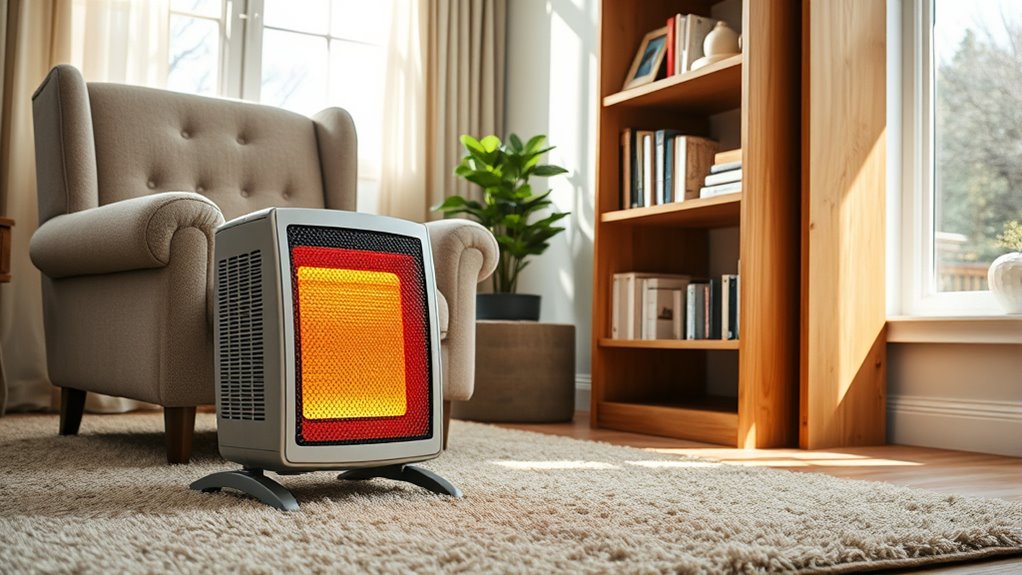
Your heater’s safety depends on maintaining proper clearance from nearby objects, as cluttered or obstructed spaces can quickly turn into fire hazards. If your heater is too close to curtains, furniture, or other combustible items, it increases the obstruction risk and the chance of overheating. Look for warning signs like heat coming from objects too close or if items are visibly warm to the touch. Make certain there’s at least the recommended clearance distance specified by the manufacturer, usually a few feet. If you notice any objects within this zone, move them away immediately. Staying alert to these signs helps prevent fire hazards caused by obstruction risk, keeping your space heater use safe and effective. Regularly check your heater’s surroundings to avoid dangerous closeness.
Tips for Placing Your Space Heater Safely
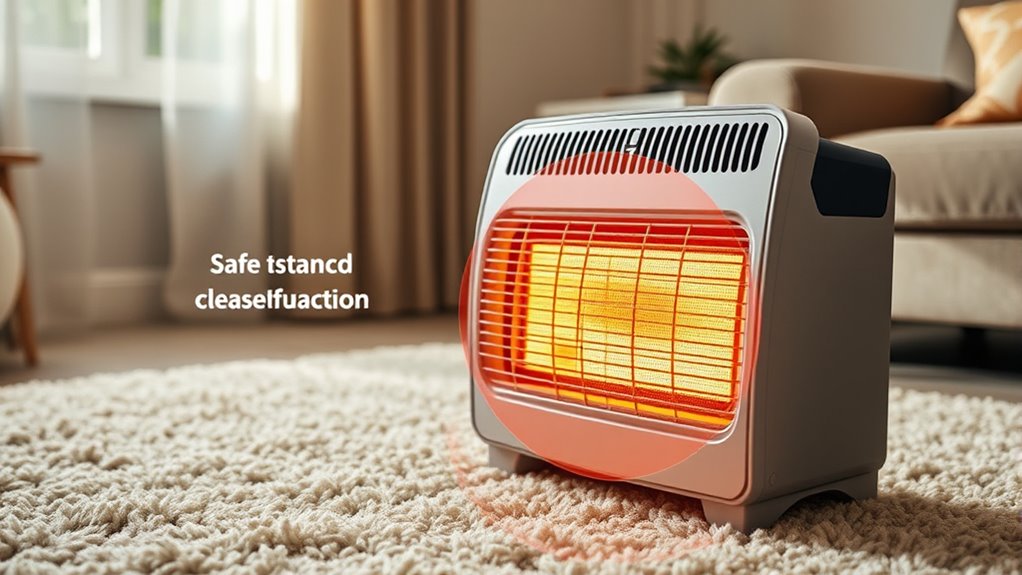
Placing your space heater in the right spot is essential for safety and efficiency. Choose a stable, flat surface made of fire-resistant materials to prevent tipping or accidental fires. Keep the heater away from curtains, furniture, and bedding to reduce fire risks. Make sure your electrical safety by plugging the heater directly into a grounded outlet, avoiding extension cords.
Consider these tips:
- Position your heater on a non-combustible surface to prevent fires.
- Maintain at least three feet of clearance from any combustible items.
- Regularly inspect your heater’s cord and plug for damage to avoid electrical hazards.
The Dangers of Ignoring Clearance Guidelines
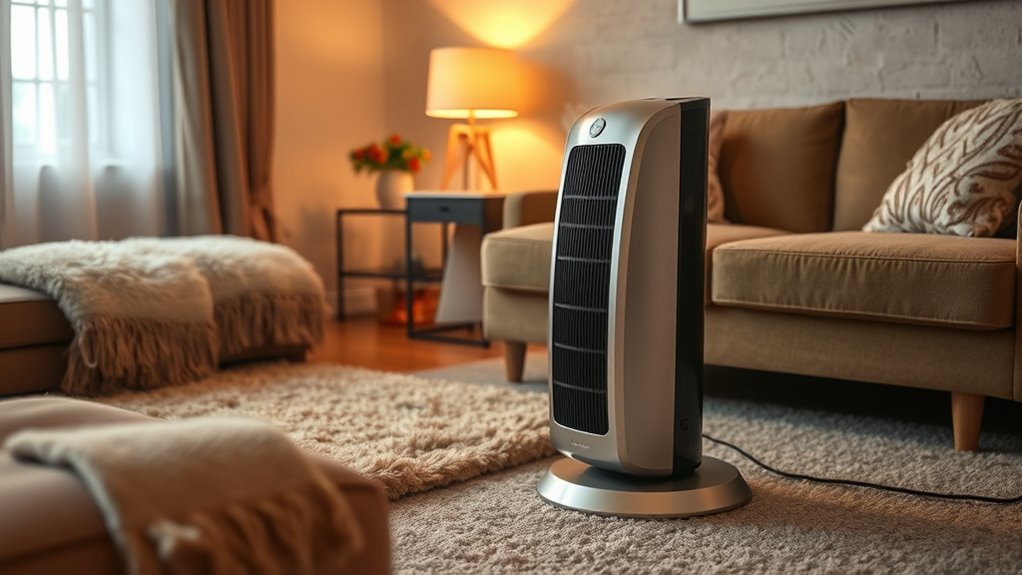
Ignoring clearance guidelines when using a space heater can lead to serious fire hazards and personal injuries. When you place the heater too close to furniture, curtains, or other combustible materials, you increase the risk of overheating and igniting a fire. Poor electrical safety practices, like blocking vents or using damaged cords, only worsen this danger. Maintaining proper clearance guarantees that heat dissipates safely and prevents the heater from becoming a source of ignition. Failing to follow these guidelines compromises both fire safety and electrical safety, putting your home and loved ones at risk. Always keep space around your heater clear, and never ignore recommended distances. Doing so helps prevent accidents and ensures your space heater operates safely and efficiently.
How to Maintain Your Space Heater for Safe Use
Regular maintenance of your space heater helps guarantee it operates safely and efficiently over time. Proper heater maintenance enhances electrical safety and prevents potential hazards. To keep your heater in top condition:
Routine heater maintenance ensures safe, efficient operation and prolongs its lifespan.
- Clean the vents and filters regularly to prevent dust buildup, which can cause overheating.
- Inspect the power cord and plug for damage; replace immediately if you notice fraying or cracks.
- Test the safety features like tip-over and overheat shut-off mechanisms to ensure they’re functioning correctly.
These steps protect you and your loved ones from electrical safety risks. Consistent maintenance not only prolongs your heater’s lifespan but also ensures it operates safely when you need it most. Stay vigilant—your safety depends on it.
Frequently Asked Questions
Can Pets Accidentally Knock Over a Space Heater?
Yes, pets can accidentally knock over a space heater, risking safety. To prevent pet accidents, always keep the heater out of their reach and make certain it’s stable. You should also monitor your pets around the heater to avoid accidental tipping, which could cause fires or injuries. By taking these precautions, you’re prioritizing pet safety and reducing the risk of any dangerous incidents caused by accidental tipping.
Are There Specific Clearance Rules for Outdoor Space Heaters?
Yes, there are specific clearance rules for outdoor space heaters. For outdoor safety, you should keep the heater at least three feet away from combustible materials, structures, and overhanging branches. Proper heater placement involves positioning the heater on a stable, level surface, ensuring unobstructed airflow, and maintaining a safe distance from people and pets. Following these guidelines helps prevent accidents, enhances safety, and guarantees your outdoor space stays warm and secure.
How Often Should I Check the Clearance Around My Heater?
You should check the clearance around your heater at least once a month to guarantee safety. Regular heater maintenance includes measuring the clearance to confirm it stays within the recommended distances from walls and objects. Keep an eye on any debris or obstructions that could affect airflow or cause overheating. By consistently monitoring clearance measurement, you help prevent fire hazards and keep your space heater functioning safely and efficiently.
What Safety Features Should I Look for in a Space Heater?
When choosing a space heater, look for safety certifications like UL or ETL to guarantee it meets safety standards. You should also check if it has an automatic shutoff feature, which turns the heater off if it tips over or overheats. These features help prevent accidents and keep your space safe. Always verify that the heater has these safety elements before use to protect yourself and your home.
Do Different Room Sizes Affect Clearance Requirements?
You might wonder if room size influences clearance requirements, and it does. Larger rooms often need more space around the heater for safety, while smaller rooms might require adjustments to prevent overheating or fire hazards. Always check your heater’s manual for specific clearance adjustments based on room size. Don’t take chances—proper clearance isn’t just a rule; it’s your safeguard against accidents, no matter how big or small the space.
Conclusion
Think of your space heater as a trusted guardian, standing watch in your home. Giving it the right space isn’t just about safety—it’s about honoring its role as a protector. Keep your distance, respect its boundaries, and it’ll serve you well, creating a warm and safe haven. Remember, clear boundaries aren’t just lines—they’re the shields that keep your sanctuary cozy and secure, shielding you from unseen dangers.