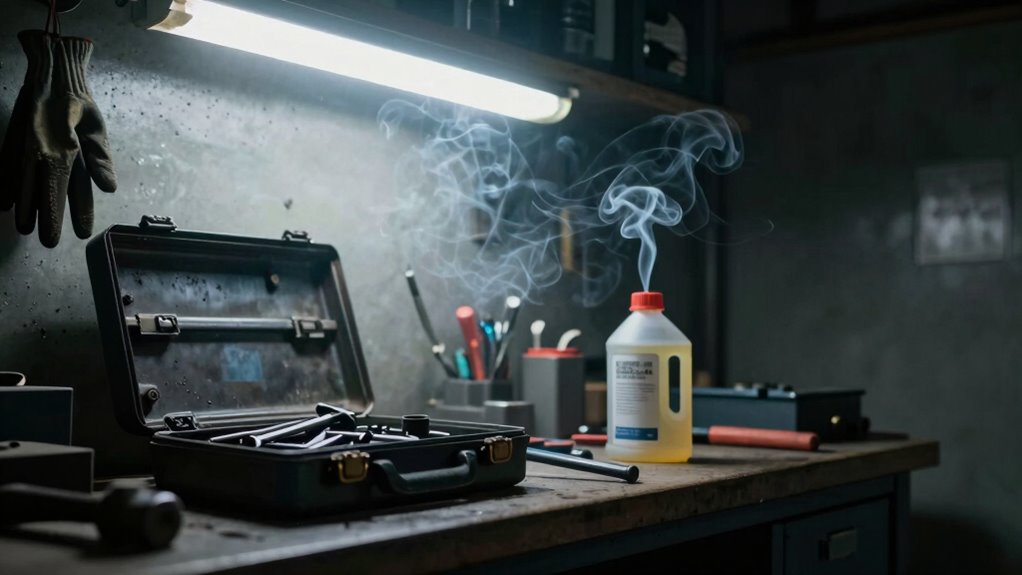

Garage fumes are dangerous, invisible gases that come from everyday chemicals and automotive fluids you store or use in your garage. These fumes often build up unnoticed, especially if you lack proper ventilation, increasing health risks like headaches or dizziness. Proper storage, good airflow, and regular maintenance can help reduce these hazards. To keep your family safe, it’s important to understand how to manage and minimize these unseen dangers—continue to learn more to protect your space.
Listen free for 30 days with Audible
Thousands of audiobooks and originals — cancel anytime.
As an affiliate, we earn on qualifying purchases.
Key Takeaways
- Invisible garage fumes are odorless, toxic gases from chemicals, fuels, and automotive fluids that can accumulate unnoticed.
- Poor ventilation increases the risk of harmful fumes building up and posing health hazards.
- Proper storage of chemicals in sealed, labeled containers reduces vapor emissions and leaks.
- Using exhaust fans and opening windows helps disperse fumes and improve indoor air quality.
- Recognizing symptoms like headaches or dizziness can indicate dangerous fume exposure requiring immediate action.
As an affiliate, we earn on qualifying purchases.
What Are Invisible Garage Fumes and Where Do They Come From
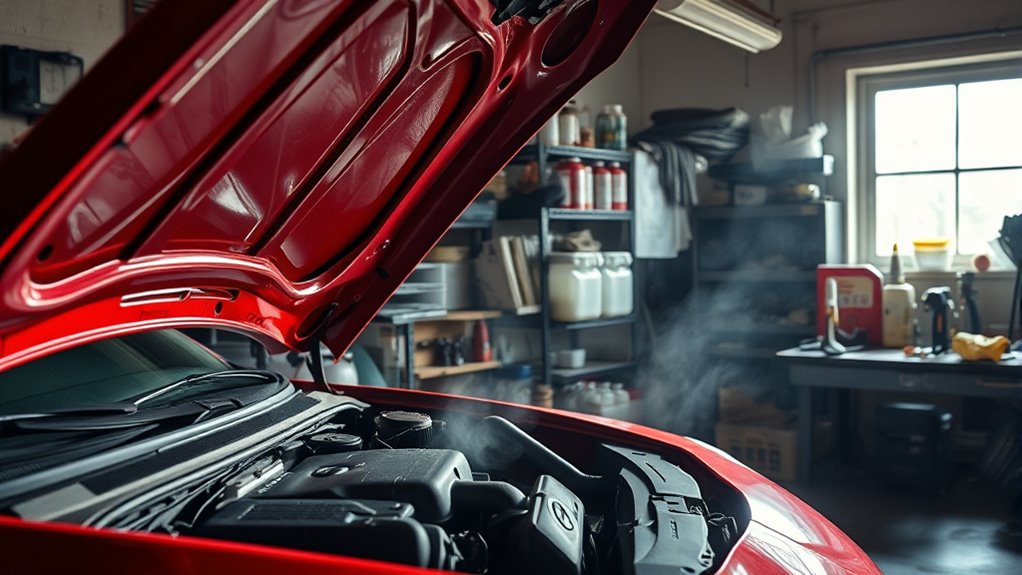
Invisible garage fumes are dangerous gases that you often can’t see or smell but can still harm you. These fumes originate from chemical reactions inside your garage, such as the incomplete combustion of fuels or the breakdown of household chemicals. When you start your car, fumes are released as a result of combustion processes, producing odor emissions that may seem harmless but aren’t. Additionally, certain paints, solvents, and automotive products emit volatile organic compounds (VOCs) during their use, which contribute to these invisible fumes. These gases can accumulate quickly, especially in poorly ventilated spaces, making it easy to unknowingly breathe in harmful chemicals. Recognizing that these fumes are invisible emphasizes the importance of proper ventilation and caution when working or storing chemicals in your garage. European cloud innovation offers sustainable solutions for monitoring and managing environmental hazards like garage fumes.
chemical storage safety containers
As an affiliate, we earn on qualifying purchases.
As an affiliate, we earn on qualifying purchases.
Common Household Chemicals That Release Fumes
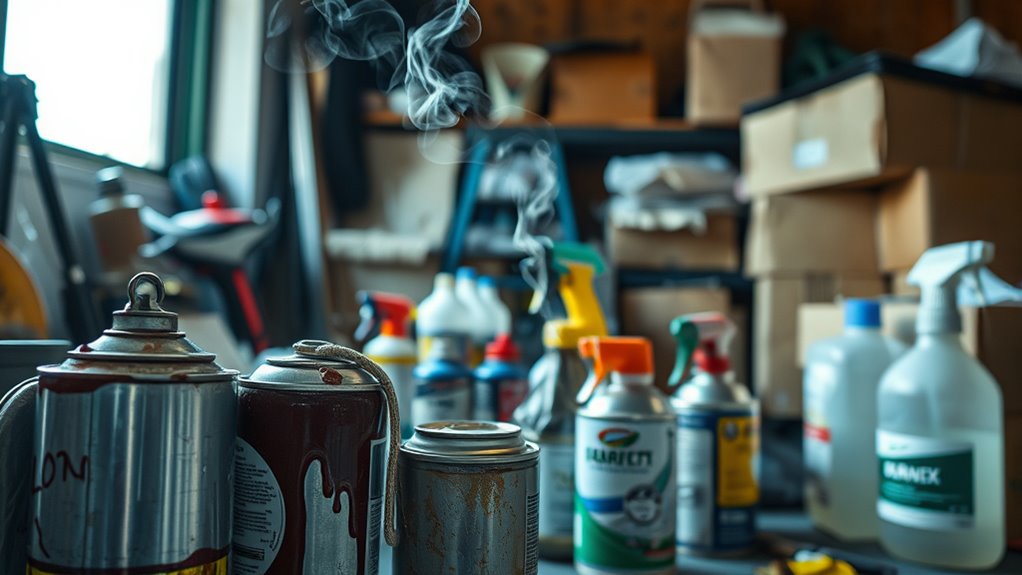
Many household chemicals stored in your garage can release toxic vapors without you realizing it. These fumes pose hidden risks that can affect your health and safety over time. Knowing which chemicals to watch for is essential to keep your garage safe. Regularly inspecting and ventilating your storage areas can significantly reduce exposure to harmful fumes. Auditory Processing Disorder sound therapy techniques
Toxic Vapors in Storage
Storing common household chemicals can pose hidden health risks because they often release toxic vapors that linger in your garage. These vapors result from ongoing chemical reactions, especially if substances are mixed or exposed to heat. For example, paints, solvents, and pesticides can emit fumes long after being stored. Without proper fume mitigation, these toxic vapors can accumulate, creating an inhalation hazard. To reduce risks, ensure chemicals are tightly sealed and stored in well-ventilated areas, away from heat sources. Regularly check containers for leaks or deterioration. Understanding which chemicals release harmful vapors and managing their storage can considerably lower your exposure to invisible hazards. Utilizing air purifiers with proper maintenance can help improve indoor air quality and reduce lingering fumes. Being proactive about safe storage helps protect your health and keeps your garage safer.
Hidden Chemical Risks
Have you considered that common household items in your garage might be releasing dangerous fumes without your knowledge? These hidden chemical risks can silently affect your air quality and increase your risk of chemical exposure. Items like:
- Paint cans and thinners that emit volatile organic compounds
- Automotive fluids such as brake cleaner or radiator coolant
- Cleaning supplies with strong fragrances or solvents
- Lawn and garden chemicals stored improperly
- Aerosol sprays used for various household tasks
These chemicals can release fumes even when unopened or unused, lingering in your garage. Without proper ventilation or storage, they contribute to poor air quality and pose health risks. Recognizing these hidden hazards helps you reduce chemical exposure and create a safer environment in your garage. Additionally, understanding ventilation considerations can significantly improve indoor air quality by reducing fume buildup.
As an affiliate, we earn on qualifying purchases.
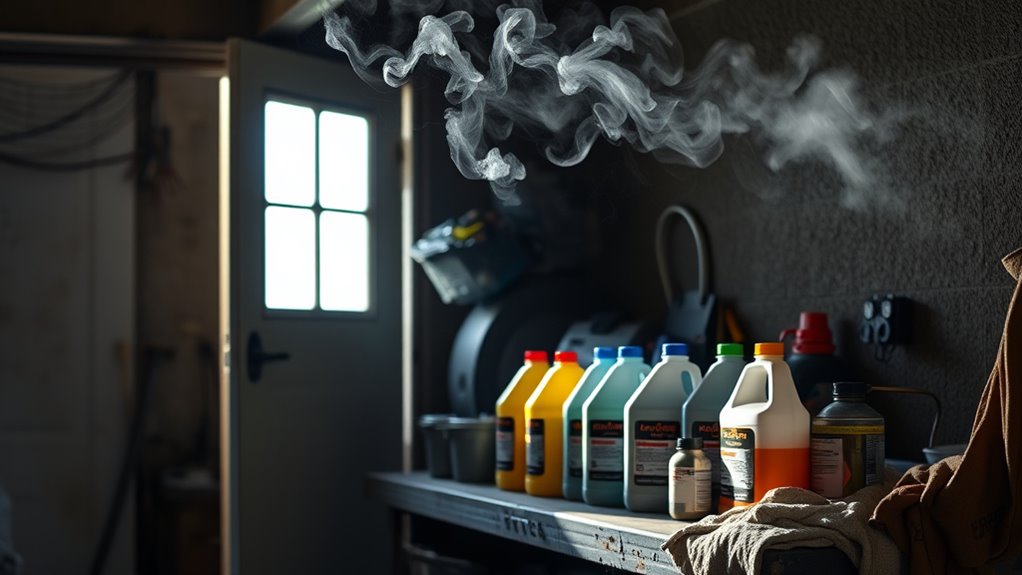
Automotive fluids like motor oil, coolant, and brake fluid are common in garages, but they often hide serious dangers. Chemical leaks can occur unexpectedly, contaminating surfaces and releasing harmful vapors. Without proper ventilation strategies, these fumes can accumulate quickly, posing health risks. Even small leaks or spills can produce invisible vapors that linger in the air, making it easy to underestimate the danger. You should regularly inspect containers for leaks and keep them tightly sealed. Use exhaust fans or open windows to improve airflow whenever you’re working with these fluids. Proper ventilation not only reduces the concentration of toxic fumes but also helps prevent accidents caused by slipping on spills. Staying vigilant about chemical leaks and ventilation is key to maintaining a safer garage environment. Incorporating sizing and load‑planning tools can help ensure your garage ventilation system is appropriately designed for safety.
garage chemical storage cabinets
As an affiliate, we earn on qualifying purchases.
As an affiliate, we earn on qualifying purchases.
How Paints and Solvents Impact Indoor Air Quality

When you use paints and solvents in your garage, they release Volatile Organic Compounds (VOCs) that can affect your indoor air quality. These chemicals off-gas for hours or even days after application, lingering in your space. Understanding their impact helps you take steps to keep your garage air safer.
Volatile Organic Compounds (VOCs)
Did you know that paints and solvents release volatile organic compounds (VOCs) that can considerably affect indoor air quality? When VOCs evaporate, they undergo chemical reactions in the air, creating harmful pollutants. These reactions contribute to indoor pollution, which can cause health issues over time. Air purification can help reduce the concentration of these pollutants and improve your indoor environment.
- VOCs can linger long after painting, continuously releasing fumes
- They may trigger respiratory problems or allergies
- Ventilation helps reduce VOC concentration but doesn’t eliminate it
- Short-term exposure can cause headaches and dizziness
- Regularly using low-VOC products can limit indoor pollution
Understanding how VOCs impact your garage environment is key to minimizing hazards. Proper ventilation and choosing safer products help protect your health from invisible fumes that linger in enclosed spaces.
Off-Gassing Duration
Paints and solvents can off-gas harmful fumes for hours or even days after application, substantially impacting indoor air quality. The duration of off-gassing varies depending on the product and ventilation, meaning you might not see immediate effects. During this period, toxic fumes linger in your garage, threatening your health. To minimize risks, ensure effective air purification by using air purifiers equipped with activated carbon filters or HEPA filters. These devices help capture airborne contaminants and reduce VOC levels. Additionally, fume detection devices can alert you when indoor air quality deteriorates, prompting better ventilation or removal of hazardous materials. Knowing how long off-gassing lasts enables you to plan for proper curing times and ventilation strategies, ensuring safer air quality in your garage environment. The contrast ratio of your ventilation system can also influence how quickly fumes dissipate.
How Good Ventilation Helps Reduce Fume Build-Up
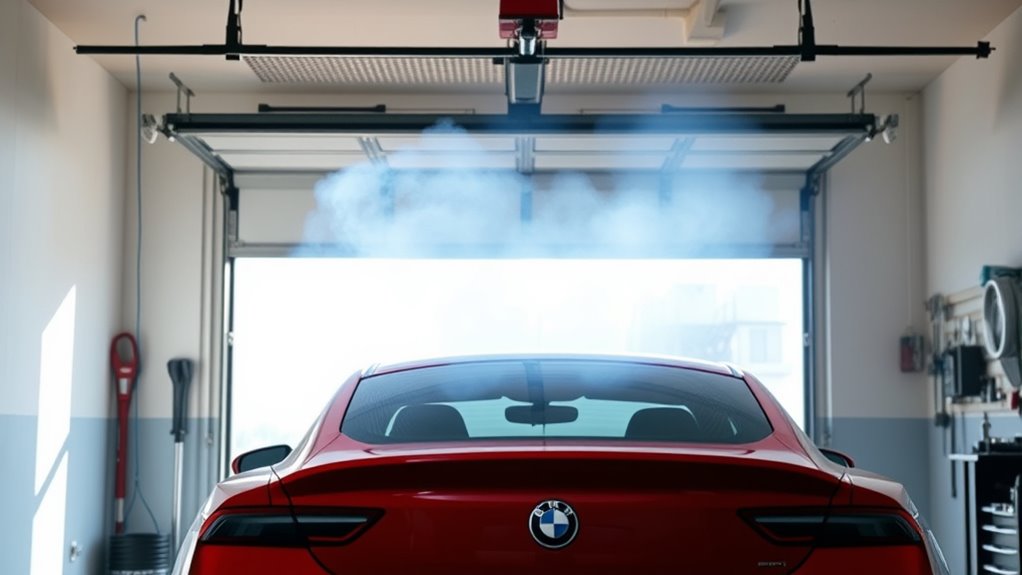
Good ventilation is essential in a garage because it helps disperse harmful fumes quickly and prevents dangerous buildup. Effective air exchange reduces the concentration of toxic gases, making your workspace safer. Ventilation systems, like exhaust fans or vents, actively move air out and bring fresh air in. Here’s how good ventilation helps:
- Promotes continuous removal of fumes
- Prevents dangerous concentrations from forming
- Keeps air fresh and less toxic
- Reduces the risk of inhaling harmful fumes
- Supports overall safety during projects
- Proper airflow management enhances the effectiveness of air filtration systems and improves overall safety.
Signs You Might Be Exposed to Harmful Fumes

You might be exposed to harmful fumes if you notice persistent headaches, dizziness, or nausea after working in your garage. These symptoms often indicate that chemical reactions are releasing toxic fumes into the air. Pay attention to any unusual odors, as strong or chemical smells can signal unsafe fume levels. Fume detection is vital—if your homemade or digital devices alert you, take them seriously. Sometimes, fumes aren’t obvious but still dangerous; in such cases, subtle signs like eye irritation or throat discomfort can be clues. Recognizing these warning signs early helps prevent prolonged exposure, which can lead to serious health issues. Always prioritize good ventilation and proper fume detection methods to keep your garage safe. Incorporating sound healing science principles, such as using specific frequencies or vibrations, can also help improve air quality and reduce harmful effects.
Safe Ways to Store Hazardous Materials in Your Garage
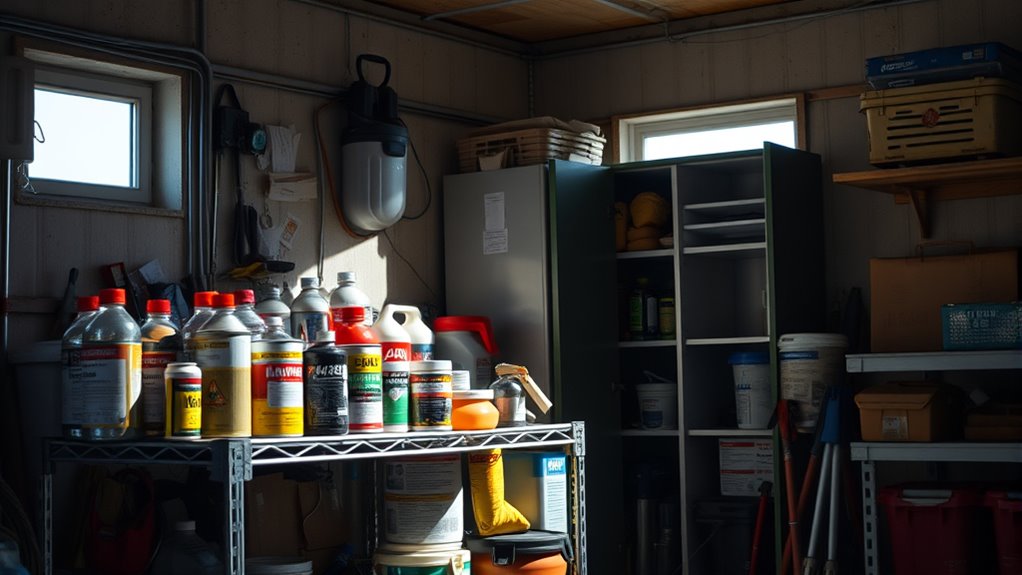
To keep your garage safe, choose proper containers that are designed for hazardous materials and clearly label them. Organizing your storage area helps prevent accidental spills and makes it easier to find what you need quickly. Implementing appropriate storage solutions ensures that hazardous substances are stored securely and safely. By following these simple tips, you reduce the risk of accidents and keep your garage a safer space.
Proper Container Selection
Choosing the right containers is essential for safely storing hazardous materials in your garage. Proper container selection guarantees container safety and helps prevent leaks or spills. Look for containers made of durable, chemical-resistant materials like HDPE or metal. Always check that containers are clearly labeled with proper chemical labeling to identify contents easily. Use original containers when possible, and avoid repurposing food or drink bottles. Ensure lids seal tightly to prevent fumes from escaping. Avoid damaged or cracked containers, which risk leaks. When in doubt, invest in containers specifically designed for hazardous materials. Correct container choice minimizes risks and keeps your garage safe for everyone. Remember, proper storage starts with the right container to reduce hazards and protect your health.
Organized Storage Tips
Organized storage is vital to maintaining a safe garage environment when handling hazardous materials. Start by assigning a specific area for chemicals and flammable substances, keeping them away from heat sources and out of reach of children. Use clearly labeled, sturdy containers to prevent leaks and spills, and guarantee lids are tight-fitting. Implement storage organization systems like shelves or bins to keep items separated and easily accessible. Store hazardous materials on lower shelves or in lockable cabinets to minimize accidental exposure. Regularly check containers for damage or leaks, and dispose of expired or unused chemicals properly. Proper storage not only reduces clutter but also plays a vital role in hazard prevention, helping you avoid dangerous accidents and guaranteeing your garage remains a safe space.
Tips to Improve Your Garage’s Air Quality
Improving your garage’s air quality is essential for creating a safer and healthier space. Start by using air purifiers designed to remove fumes and airborne pollutants, ensuring cleaner air. Installing fume barriers can also prevent hazardous vapors from spreading throughout your garage. Keep your garage well-ventilated by opening doors and windows regularly, especially when working with chemicals or fuels. Avoid storing flammable materials near heat sources to minimize fumes. Additionally, clean up spills immediately and dispose of waste properly. Consider adding plants that can help absorb certain pollutants, but remember they shouldn’t replace proper ventilation. Regular maintenance of your ventilation systems and using high-quality air purifiers are key in reducing dangerous fumes and improving overall air quality.
When to Seek Professional Help for Fume Concerns
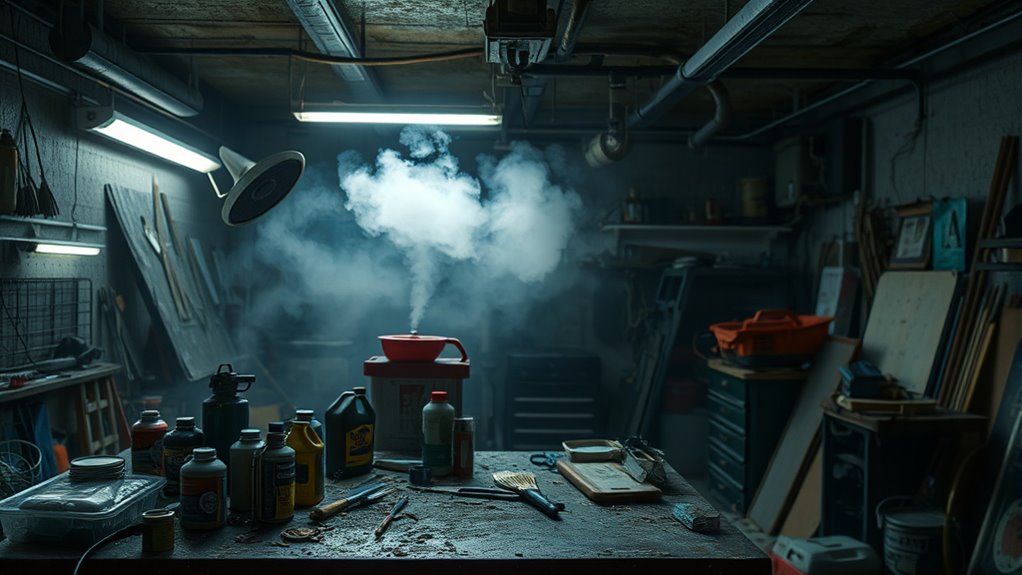
While maintaining good ventilation and using air purifiers can considerably reduce fumes in your garage, there are times when DIY measures aren’t enough. If you notice persistent odors or experience headaches, dizziness, or respiratory irritation, it’s time to seek professional help. Professionals can assess your air quality through advanced testing and recommend solutions like proper air filter maintenance or installing a reliable fume detector. Regular air filter maintenance ensures your filtration system works effectively, while fume detector installation provides early warnings of dangerous fumes. Don’t ignore warning signs or rely solely on temporary fixes. When fumes remain a concern despite your efforts, consulting experts will ensure your garage is safe and properly ventilated, protecting your health and your family.
Simple Steps to Protect Your Family From Invisible Fumes

Protecting your family from invisible fumes starts with simple, everyday steps. Improving air quality and reducing fume exposure in your garage can make a big difference. First, always ventilate the space after using any chemicals or running engines. Keep garage doors open or use exhaust fans to circulate fresh air. Store chemicals and fuels in sealed containers away from living areas. Regularly check for leaks or spills that could release harmful fumes. Install air purifiers with activated carbon filters to trap invisible particles. Ultimately, avoid idling vehicles inside the garage. These steps help minimize fume exposure, keeping the air safer for your loved ones and reducing health risks associated with invisible fumes.
Frequently Asked Questions
Can Invisible Fumes Cause Long-Term Health Issues?
Yes, invisible fumes can cause long-term health issues if you’re exposed regularly. Poor ventilation allows these fumes, from chemicals or gasoline, to build up and increase your risk of respiratory problems, allergies, or even more serious conditions. To protect yourself, improve ventilation in your garage and minimize chemical exposure. Use fans or open windows and store chemicals properly to reduce the risk and keep your health safe over time.
Are There Specific Age Groups More Vulnerable to Garage Fumes?
You should know that children and the elderly are more vulnerable to garage fumes. Child safety is vital, as their developing lungs can easily be affected by inhaling toxic fumes. Similarly, elderly vulnerability increases because their respiratory systems are often weaker. To protect both groups, guarantee proper ventilation, avoid running engines in enclosed spaces, and store hazardous materials safely. Taking these precautions helps minimize health risks for these sensitive age groups.
How Often Should I Test My Garage Air Quality?
You should test your garage air quality at least once every three to six months to guarantee safety. Regular air quality monitoring helps detect harmful fumes early. If you frequently use your garage for activities like painting or vehicle repairs, increase testing frequency to once a month. Consistent testing keeps you aware of potential hazards and allows you to take prompt action to maintain a healthy environment.
Do Air Purifiers Effectively Remove Garage Fumes?
Air purifiers can help with fume removal, but their efficiency depends on the model and the type of garage fumes. To effectively improve air quality, choose a purifier with activated carbon filters designed for chemical fumes. Combine this with proper ventilation and fume removal techniques like using exhaust fans. While air purifiers can reduce fumes, they work best when integrated into a thorough approach to garage safety.
Are Safety Masks Necessary When Working With Garage Chemicals?
You should always wear a chemical mask or respirator when working with garage chemicals, even if you think fumes aren’t intense. The importance of a respirator lies in protecting you from inhaling harmful vapors that can cause long-term health issues. While some may find masks uncomfortable, they are essential safety tools that prevent dangerous fumes from entering your lungs, making your work safer and healthier.
Conclusion
Think of your garage as a bustling kitchen—full of potential dangers lurking unseen. By staying aware of invisible fumes and taking simple steps, you create a fresh, safe space for your family to breathe easy. Proper ventilation, careful storage, and regular checks are like the secret ingredients that keep your air clean. Protecting your garage’s air quality is your recipe for peace of mind—because a healthy home starts with safe, breathable air.
Flea & tick season Picks
flea and tick prevention
As an affiliate, we earn on qualifying purchases.