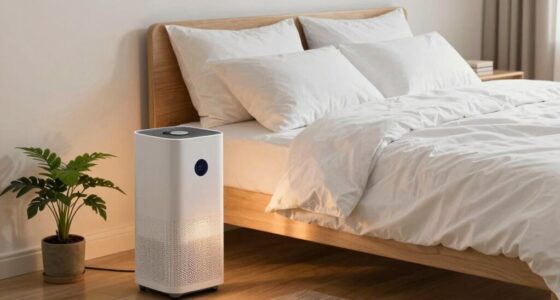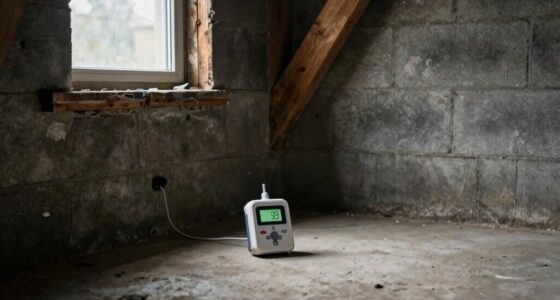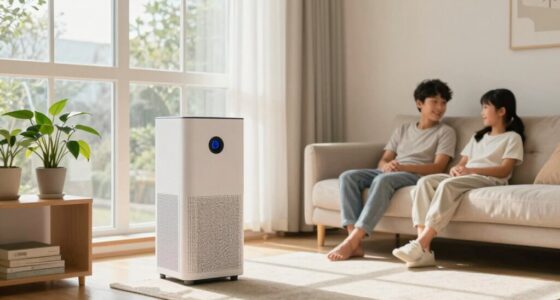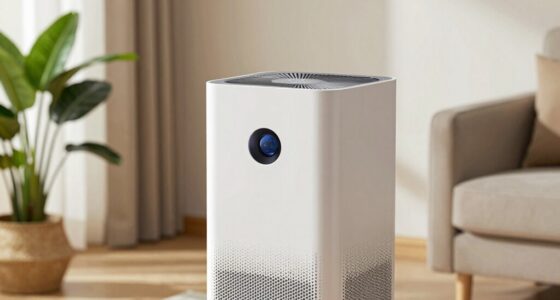

Indoor smoke contains tiny particles, often less than 2.5 micrometers in size, which makes them very difficult to remove. These small particles can bypass your body’s natural defenses and stay suspended in the air much longer than larger debris. Conventional ventilation won’t effectively clear them out, so choosing the right air filtration becomes essential. If you want to know more about how to tackle this particle size problem and protect your health, keep exploring.

Prime made for students and young adults
- Fast, free delivery for dorm and study essentials
- Prime Video and Amazon Music included
- Member-only deals
Key Takeaways
- Tiny smoke particles are often smaller than 2.5 micrometers, allowing them to bypass natural defenses and penetrate deep into lungs.
- Their microscopic size causes them to remain suspended in air longer, making removal challenging with basic ventilation.
- Conventional fans and open windows do not effectively filter out these microscopic particles from indoor air.
- HEPA filters are necessary to trap particles as small as 0.3 micrometers, addressing the particle size challenge.
- Understanding particle size is essential to select appropriate air purification methods and improve indoor air quality.

Indoor smoke presents a notable health challenge primarily because of the tiny particles it contains. These particles, often microscopic, can easily penetrate deep into your lungs and even enter your bloodstream. Because of their small size, they remain suspended in the air for long periods, making it difficult to clear them out without effective air filtration. When you’re exposed to indoor smoke, whether from cooking, candles, or tobacco, these tiny particles pose serious health implications. They can cause respiratory issues, aggravate asthma, and increase your risk of cardiovascular disease. They are especially problematic because many of these particles are less than 2.5 micrometers in diameter, known as PM2.5, which are particularly dangerous because they bypass the body’s natural defenses and reach your lungs.
Indoor smoke’s tiny particles can deeply penetrate lungs and bloodstream, posing serious health risks.
The challenge of dealing with these small particles is that traditional ventilation methods often fall short. Opening windows or using basic fans might help circulate air, but they don’t effectively remove the tiny particles suspended in the space. This is where air filtration comes into play. High-efficiency particulate air (HEPA) filters are specifically designed to trap particles as small as 0.3 micrometers, including those in indoor smoke. When you use air filtration systems equipped with HEPA filters, you’re actively reducing the concentration of harmful particles in your environment. This not only improves air quality but also minimizes the health implications associated with prolonged exposure to indoor smoke.
However, understanding the particle size problem is vital because it highlights why some air purifiers are more effective than others. Air filtration units with proper HEPA filters can capture the smallest particles, but you need to choose a device suitable for your space and smoke levels. Simply running a fan or a basic filter might give a false sense of security, as they may not trap the most dangerous particles. Additionally, air exchange rate plays a crucial role in how quickly indoor air quality can improve, especially in spaces with ongoing smoke sources. To maximize effectiveness, it’s also important to consider filter maintenance and replace filters regularly to ensure continued performance. Particle size is a crucial factor in selecting effective air purification solutions, and awareness of this can help you make more informed decisions to improve indoor air quality.
The key takeaway is that the tiny particles in indoor smoke are what make it so difficult to manage. They linger in the air, penetrate deep into your body, and require specialized air filtration solutions to effectively remove them. By investing in the right air filtration system, you can considerably mitigate the health implications of indoor smoke. You’ll breathe easier, reduce your risk of health problems, and create a safer indoor environment for yourself and your loved ones. Recognizing the particle size problem is essential to taking control of indoor air quality and protecting your health.
Popular right now

Ninja Flip Toaster Oven and Air Fryer, 8-in-1, Stainless Steel, SP151

Ninja Luxe Café Premier 3-in-1 Espresso Machine, Drip Coffee & Cold Brew

Dyson Ball Animal Total Clean Upright Vacuum
As an affiliate, we earn on qualifying purchases.
Frequently Asked Questions
How Do Particle Sizes Vary in Different Indoor Smoke Sources?
You’ll notice that particle sizes vary in indoor smoke sources depending on their smoke composition and indoor air circulation. For example, cigarette smoke contains tiny particles that stay suspended longer, while cooking smoke has larger particles that settle faster. As indoor air circulation influences how these particles disperse and linger, understanding these differences helps you improve air quality and choose effective filtration methods to reduce harmful particles in your environment.
Can Particle Size Affect Long-Term Health Risks Indoors?
Think of indoor air quality as a fragile glass, easily shattered by tiny particles. Smaller particles can penetrate deep into your lungs, posing serious health implications over time. Yes, particle size affects long-term health risks indoors, as these tiny particles linger and accumulate, increasing exposure. You might not see the danger right away, but over time, inhaling these particles can lead to respiratory issues, heart problems, and other health concerns.
Are There Effective Methods to Filter Out the Smallest Particles?
Yes, there are effective methods to filter out the smallest particles. Modern air purifier technology, like HEPA filters, captures particles as tiny as 0.3 microns, including smoke. Advances in filtration materials, such as activated carbon and electrostatic precipitators, enhance this capability. To improve indoor air quality, choose an air purifier with these features, and guarantee regular maintenance for peak performance in trapping even the tiniest smoke particles.
How Does Humidity Influence Particle Size and Distribution?
Think of humidity effects on particles like a dance floor—moisture causes tiny particles to clump together, making them larger and easier to catch. When humidity rises, particle behavior shifts; smaller particles tend to stick together and grow, reducing airborne pollution. Conversely, low humidity keeps particles dispersed and tiny. So, controlling humidity helps manage indoor air quality by influencing how particles move and cluster, aiding filtration efforts.
Do Particle Sizes Change Over Time After Smoke Is Produced?
Yes, particle sizes change over time after smoke is produced. As particles undergo chemical reactions and interact with humidity, their chemical composition shifts, often causing them to grow or break apart. Combustion efficiency influences initial particle size distribution, but as particles age, they tend to aggregate or settle, altering their size. These dynamic changes impact how smoke behaves indoors, affecting filtration and air quality management.
Conclusion
You see, understanding the particle size problem is key to tackling indoor smoke. Smaller particles can hide deep in your lungs, making smoke hard to eliminate and harmful to health. The saying “A little knowledge is a dangerous thing” reminds you to stay informed and proactive. By choosing better air purifiers and ventilation, you can protect yourself and your loved ones. Remember, a clean home starts with understanding what’s in the air you breathe.