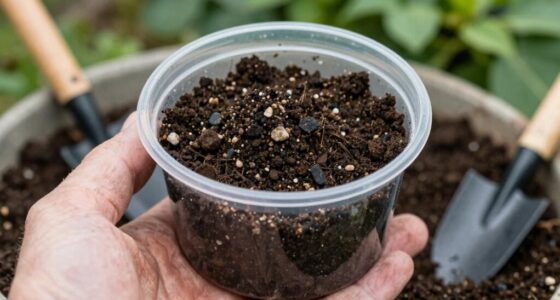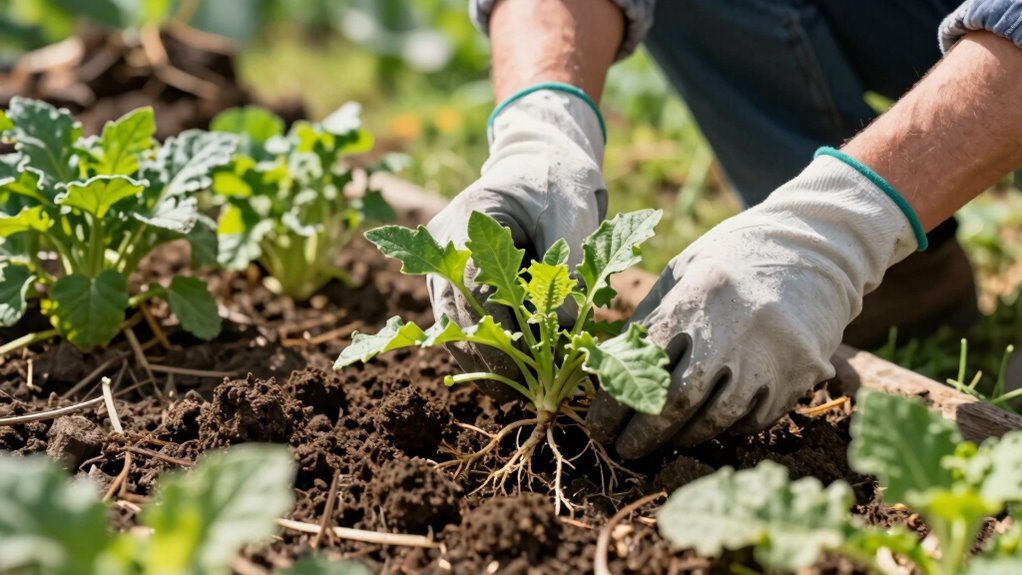

To stop weeds naturally, first identify them and remove them manually before they seed; doing this early prevents spread. Apply organic mulch like straw or wood chips around your plants to block sunlight and suppress new weeds. Use ground cover plants to outcompete weeds and maintain a healthy, dense lawn through proper watering and soil management. Regularly monitor your garden for weeds and replace mulch as needed. Keep learning for more effective, chemical-free strategies.
Key Takeaways
- Apply a thick layer of organic mulch to block sunlight and prevent weed seed germination.
- Hand-pull weeds early when they are small and their roots are easier to remove completely.
- Use dense ground covers to outcompete weeds and fill gaps in the garden.
- Choose native and resilient plants that naturally suppress weeds through competition.
- Regularly monitor your garden and remove weeds promptly to prevent seed spread and establishment.
Identifying and Understanding Common Weeds

Understanding the weeds in your yard is the first step toward controlling them effectively. Proper weed identification helps you recognize which plants are unwanted and understand their growth habits. Some weeds are invasive species that spread rapidly, choking out native plants and disrupting your garden’s balance. Learning to identify common weeds by their leaves, stems, and flowers allows you to target them early. Invasive species often have unique features that set them apart from desirable plants, making identification easier once you know what to look for. Developing weed management strategies based on accurate identification can significantly improve your ability to control weeds naturally. By familiarizing yourself with these weeds, you can develop a strategic approach to manage them naturally, preventing their spread and maintaining a healthy, weed-free yard. Accurate weed identification is your foundation for successful, chemical-free control. Proper identification techniques can help you distinguish between harmful invasive weeds and beneficial native plants, ensuring your efforts are effective. Recognizing weed growth patterns can further aid in implementing timely removal methods before they establish deep roots. Additionally, understanding weed propagation methods enables you to interrupt their spread more effectively. Knowing the best times for removal helps you target weeds when they are most vulnerable, increasing your success rate.
Manual Removal Techniques for Effective Weed Control
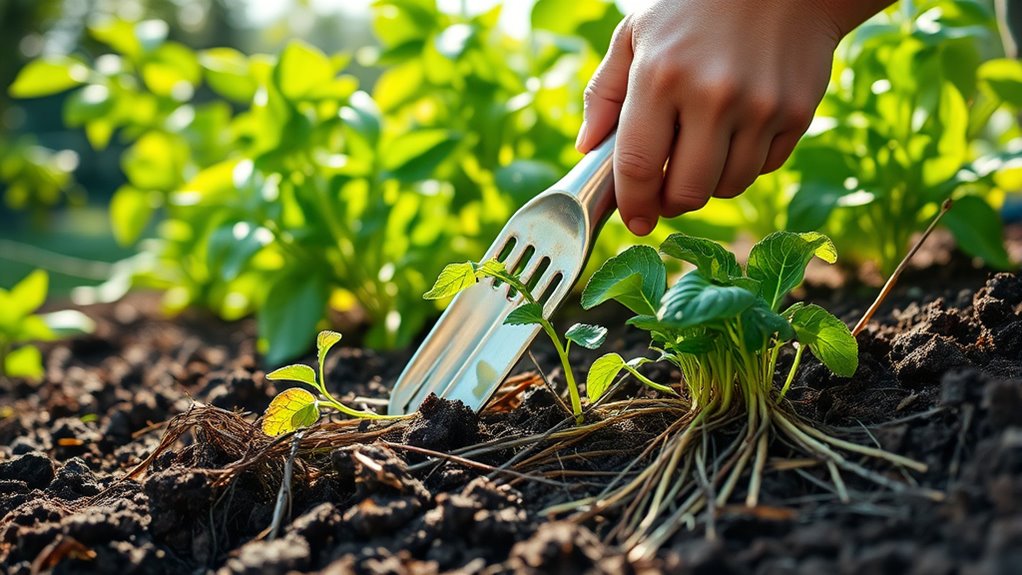
You can start by hand-pulling weeds, making sure to grasp them close to the soil and remove the entire root system. Mulching around your plants helps prevent new weeds from taking hold by blocking light and creating a barrier. Additionally, natural weed control methods such as using organic mulch or introducing competitive ground covers can further suppress weed growth. Incorporating visual cues can help identify weeds early and improve removal accuracy. For instance, understanding the horsepower of electric dirt bikes can inspire more efficient garden tools powered by electric motors, reducing manual effort. Being aware of website features and content can guide you in adopting more sustainable gardening practices that align with eco-friendly principles. Recognizing best arcade machines for home game rooms can inspire you to create an engaging environment that encourages outdoor activity and reduces reliance on chemical weed control. Combining these techniques gives you an effective, chemical-free way to keep your garden weed-free.
Hand-Pulling Strategies
Hand-pulling is a straightforward and effective way to control weeds without chemicals, especially when done early in their growth cycle. Use your garden tools carefully to grasp weeds at the base, ensuring you remove the entire root system. Proper weed identification helps you target invasive species before they spread. Focus on moist soil, which makes pulling easier and reduces soil disturbance. Keep a dedicated hand tool nearby for stubborn weeds. Regularly check your garden to prevent weeds from establishing deep roots. Additionally, understanding weed growth habits can improve your removal strategy and prevent regrowth. Being aware of a weed’s growth cycle can help you time your efforts for maximum effectiveness. Developing an understanding of integrated weed management techniques can further enhance your weed control approach. Here’s a quick guide:
| Weed Type | Identification Tip |
|---|---|
| Annual weeds | Short-lived, often with seed heads |
| Perennial weeds | Deep roots, regrow season after season |
| Broadleaf | Wide, flat leaves, easy to spot |
| Grasses | Narrow, blade-like leaves |
Mulching Benefits
Mulching amplifies the effectiveness of manual weed removal by suppressing weed growth and making future efforts easier. A thick layer of mulch blocks sunlight, preventing weeds from sprouting and reducing the need for frequent hand-pulling. It also helps conserve soil moisture and maintains consistent soil temperatures. When you choose organic mulches like straw or wood chips, you enhance soil health through compost enrichment and improve soil amendments over time. Mulching creates a barrier that discourages weed seeds from establishing roots, saving you time and effort. Regularly replenishing mulch ensures continuous weed suppression and promotes healthy plant growth. Additionally, using essential oils for weed control can provide a natural method to further inhibit weed growth without chemicals. Incorporating mulching techniques into your gardening routine can also help prevent soil erosion and improve overall garden health. By integrating mulching into your gardening routine, you boost your manual weed control and foster a thriving, weed-free landscape naturally.
Mulching Strategies to Suppress Weeds Naturally

Applying mulch is an effective way to naturally suppress weeds and improve your garden’s health. To maximize its benefits, consider strategic mulching techniques. Use organic composting materials like shredded leaves, straw, or bark to create a dense barrier that blocks weed growth. Mulch also acts as a pest deterrent, helping keep pests away from your plants. For best results, apply a 2-3 inch layer around your garden beds, ensuring you don’t pile it directly against plant stems. Regularly refresh the mulch to maintain its weed-suppressing power. Incorporate organic materials known for pest deterrents and weed suppression. Proper mulching conserves moisture, reduces soil erosion, and promotes healthy plant growth, all while naturally preventing weeds from taking hold.
Using Ground Cover Plants to Outcompete Weeds

Choosing durable ground cover plants helps prevent weeds from taking hold. Make certain you space them properly so they grow quickly and fill in gaps. Keeping the coverage consistent ensures your garden stays weed-free naturally. Additionally, selecting plants that are native plants suitable for your environment can enhance overall garden stability. Proper planting and maintenance promote healthy growth, further reducing weed intrusion.
Select Durable Ground Covers
Selecting durable ground cover plants is an effective way to suppress weeds naturally, especially when they can outcompete unwanted plants for resources. Opt for native grasses and ornamental groundcovers that establish quickly and spread densely. These plants create a thick mat, blocking sunlight and preventing weed seeds from germinating. Choose varieties suited to your climate and soil conditions for maximum durability. Incorporate plants with strong root systems that resist drought and foot traffic. By planting resilient ground covers, you reduce the need for maintenance and chemical controls. Their ability to fill gaps and cover bare soil makes it harder for weeds to take hold. Proper plant choice enhances the success of natural weed suppression by ensuring the ground cover thrives and outcompetes weeds effectively. Additionally, selecting plants with biodiversity benefits can support local ecosystems and attract pollinators, creating a healthier garden environment. Incorporating native species can also improve soil health and resilience over time. Furthermore, choosing plants with resilient root systems can increase their ability to withstand environmental stresses and maintain ground coverage longer. Using ground cover plants that are well-adapted to your environment further ensures their longevity and effectiveness in weed control.
Proper Plant Spacing
Proper plant spacing is essential for ground cover plants to effectively outcompete weeds. When you space plants correctly, you ensure they grow densely enough to create a natural barrier. Proper plant spacing promotes weed suppression by minimizing gaps where weeds can establish themselves. If you plant too far apart, weeds can easily take hold in the empty spaces, undermining your efforts. Conversely, overcrowding can hinder healthy growth, so find the right balance. Measure your plants’ mature width and space accordingly, allowing for full coverage without crowding. Consistent spacing helps ground covers fill in quickly, shading the soil and blocking weed seed germination. Selecting ground cover plants that are well-suited to your climate and soil conditions can further enhance weed control. Additionally, understanding plant growth habits helps you plan spacing more effectively for long-term weed suppression. Recognizing the competitive nature of certain ground cover plants enables you to choose species that naturally outcompete weeds over time. This simple step makes your weed control efforts more effective and sustainable, reducing the need for manual removal or chemicals.
Maintain Consistent Coverage
Maintaining consistent coverage with ground cover plants is a highly effective way to suppress weeds. When your plants grow densely, they block sunlight, making it hard for weeds to establish. By understanding weed identification and the weed lifecycle, you can target weeds before they spread. Covering your soil prevents bare patches that weeds love to invade, reducing their chances to thrive. Regularly monitor your garden to keep coverage even and healthy. If you notice gaps, quickly fill them with more ground cover plants to maintain a continuous barrier. This approach minimizes the opportunity for weeds to take hold, especially during early weed stages. Staying vigilant and consistent keeps your garden weed-free naturally and promotes healthier plant growth.
- Identify weed types early to prevent seed spread
- Remove weeds during their immature, vulnerable stages
- Mulch to enhance ground cover and suppress weeds
- Regularly check for gaps and fill promptly
Creating a Healthy Lawn to Prevent Weed Growth
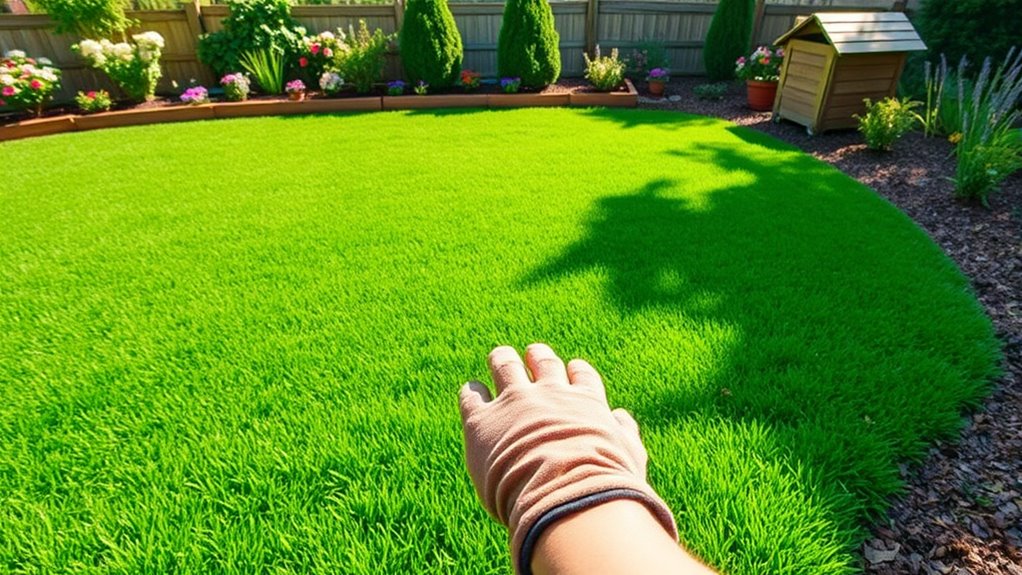
A healthy lawn is your best defense against weeds, as strong grass naturally crowds out unwanted plants. To achieve this, start with lawn aeration to reduce soil compaction and improve air, water, and nutrient penetration. Regular aeration creates a healthier root system, making your grass more resilient. Additionally, soil testing helps determine nutrient deficiencies or imbalances, guiding you to amend the soil effectively. Proper fertilization based on soil test results encourages dense, vigorous growth that outcompetes weeds. Avoid overwatering or underwatering, and choose the right grass type for your climate. By focusing on lawn aeration and soil testing, you establish a strong foundation for a lush, weed-resistant lawn that minimizes the need for chemical interventions.
Watering Practices That Minimize Weed Development

Watering correctly is essential for preventing weeds, as overwatering creates a damp environment that encourages weed seed germination and growth. To minimize weed development, focus on proper irrigation timing and watering depth. Water early in the morning to reduce evaporation and allow the soil to dry before evening. Deep watering encourages strong root growth, making your lawn more competitive against weeds. Avoid shallow or frequent watering, which promotes shallow roots and weed seeds sprouting. Keep these tips in mind:
- Water deeply, but infrequently
- Schedule watering during early morning hours
- Ensure even coverage to avoid dry patches
- Adjust irrigation based on weather conditions
Maintaining Soil Health for Weed Resistance
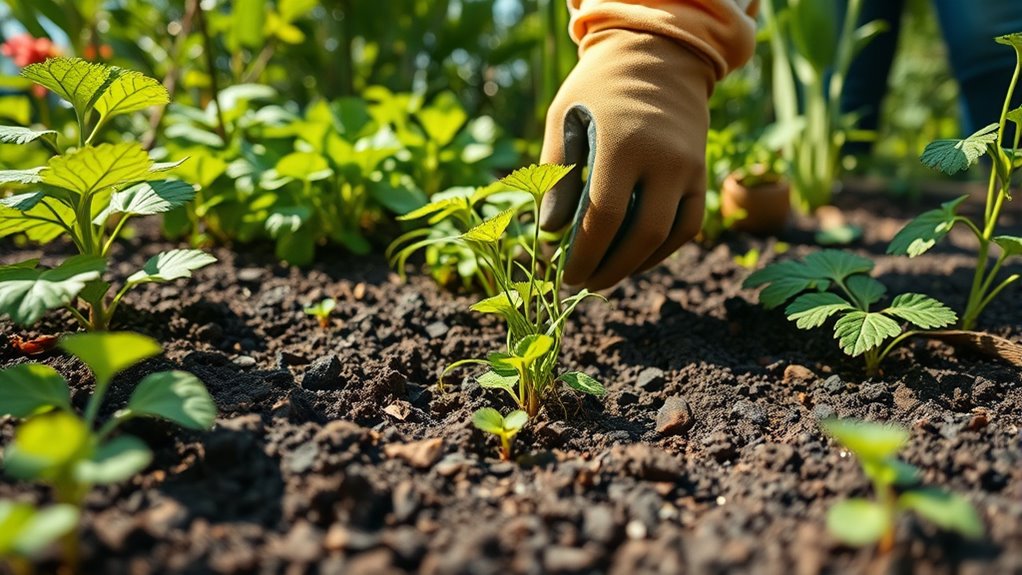
Healthy soil naturally resists weeds by fostering strong, vigorous plants that outcompete unwanted species. To do this, focus on maintaining a healthy soil microbiome, which plays a vital role in nutrient cycling and plant growth. Incorporate organic amendments like compost or aged manure to enrich the soil, boost beneficial microorganisms, and improve structure. Healthy soil with a diverse microbiome creates a resilient environment where weeds struggle to establish themselves. Regularly adding organic matter encourages microbial activity, helping plants develop stronger roots and better defenses against invasive species. Avoid synthetic chemicals that can harm beneficial microbes. By prioritizing soil health, you create an ecosystem that naturally suppresses weeds, reducing the need for manual removal or herbicides. Healthy soil is your best defense against persistent weeds.
Natural Weed-Repellent Plants and Companion Planting
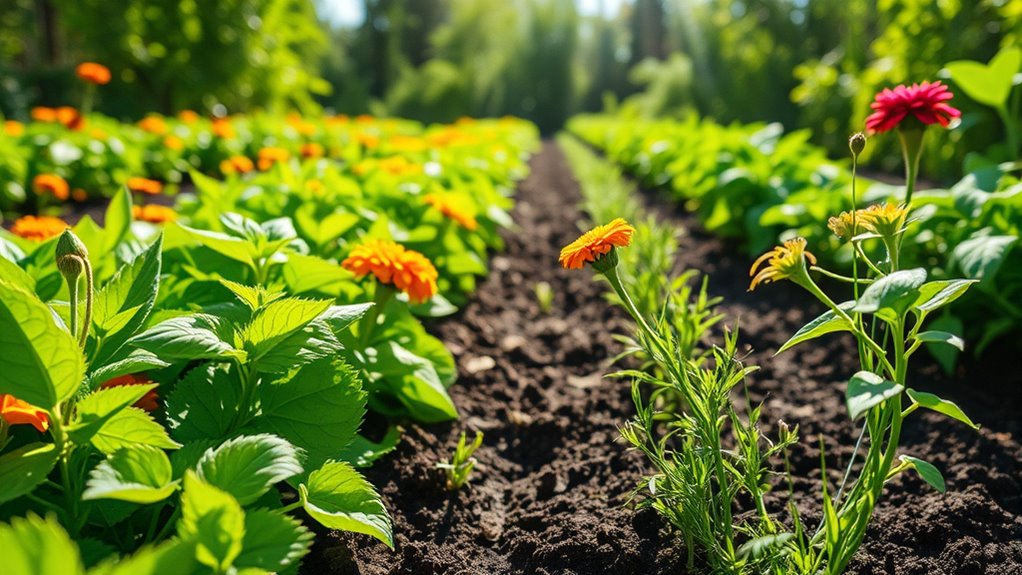
Using natural weed-repellent plants and strategic companion planting can considerably reduce weeds in your garden. Certain plants naturally deter weeds and pests, aiding organic pest control efforts. Pairing plants like marigolds, garlic, or basil with vegetables can suppress weed growth and improve soil health. Incorporate composting techniques to enrich the soil, making it less hospitable for weeds. Companion planting not only minimizes weeds but also promotes healthy, resilient plants. Consider planting ground covers such as clover or creeping thyme to act as living mulch, blocking weed emergence. These methods create a balanced ecosystem, reducing the need for chemical interventions. By choosing the right plants and optimizing your composting, you can maintain a thriving, weed-resistant garden naturally.
Regular Maintenance and Monitoring for a Weed-Free Garden

To keep weeds at bay, consistent maintenance and vigilant monitoring are essential. Use your garden tools regularly to remove weeds as soon as they appear, preventing them from spreading. Pay close attention to weed identification, so you know which plants are unwanted and can target them effectively. Check your garden daily, especially after rain or watering, to catch new weeds early. Keep the soil surface clear and mulch around plants to suppress weed growth. Removing weeds promptly prevents them from setting seeds and taking over your garden. Regularly inspecting your plants and soil helps you stay ahead of weed problems, saving time and effort in the long run. Staying attentive guarantees your garden remains healthy, vibrant, and free of unwanted invaders.
Frequently Asked Questions
How Long Does It Take to See Results From Natural Weed Control Methods?
You might see results from natural weed control methods within a few weeks, but it depends on weed growth and soil health. Consistent mulching and manual removal will gradually weaken weeds, often showing noticeable improvements in 2-4 weeks. Healthy soil promotes strong plants that outcompete weeds, accelerating the process. Patience is key, as natural methods take time to fully establish and effectively reduce weed growth without chemicals.
Can Natural Weed Control Methods Work in All Climates?
Natural weed control methods can work in most climates, but their regional effectiveness varies due to climate adaptability. You’ll find that methods like mulching or manual removal are effective in many areas, but some techniques may need adjustments based on your specific environment. To get the best results, tailor your approach to your regional climate, considering factors like rainfall, temperature, and soil type, ensuring your weed control efforts are successful everywhere you apply them.
Are There Any Plants That Attract Weeds Instead of Preventing Them?
Some plants, like invasive species, invite weeds instead of fighting them. Native plants, while beneficial, can sometimes attract weed seeds, creating a chaotic crawl of unwanted growth. You should be cautious, as certain plants may seem appealing but actually promote weed development. By understanding which plants attract weeds, you can better manage your garden and prevent an invasion, keeping your space healthy and harmonious.
What Are the Best Times of Year to Implement Weed Prevention Strategies?
You should implement weed prevention strategies during early spring and late fall. During these times, seasonal planting is ideal because it allows you to prepare the soil properly, making it less inviting for weeds. Focus on soil preparation by adding mulch or compost to suppress weed growth. Acting early in the season helps establish healthy plants, giving them a competitive edge against weeds, and reduces the need for future interventions.
How Do I Deal With Persistent Weeds That Keep Returning Naturally?
Did you know that persistent weeds can regrow even after removal? To tackle this, use mulching techniques to block sunlight and prevent weed seeds from sprouting. Additionally, try companion planting; certain plants like marigolds or beans can naturally suppress weeds by outcompeting them for nutrients. Consistent maintenance, combined with these natural methods, helps keep weeds at bay and restores your garden’s health naturally.
Conclusion
By staying vigilant, practicing consistent maintenance, and choosing natural methods, you can keep weeds at bay. Identifying weeds early, removing them promptly, and using organic strategies create a healthier, weed-free garden. Embrace mulching, healthy soil, and companion planting to prevent weeds before they start. With regular monitoring, natural solutions, and proactive care, you’ll enjoy a lush, thriving garden free of chemicals—because preventing weeds is about persistence, patience, and natural choices.