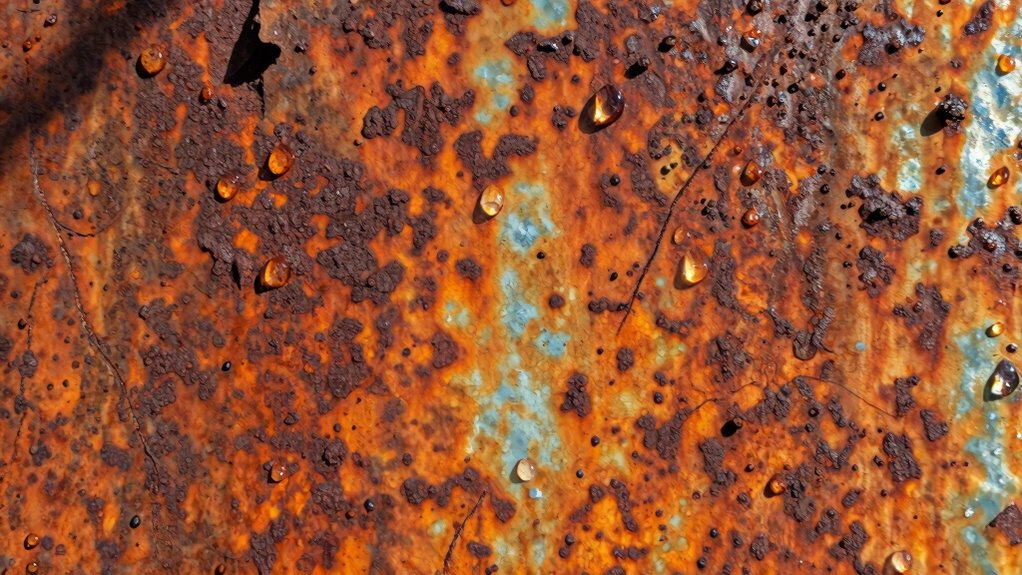

To prevent rust outdoors, you need to understand how moisture and oxygen cause corrosion. When moisture, like humidity or rain, interacts with oxygen, it forms rust on metal surfaces. Weather conditions, like high humidity and pollution, speed up this process. Protect your outdoor items by applying coatings, storing in dry places, and keeping surfaces clean. Staying aware of environmental factors helps extend the lifespan of your metal belongings; more tips are available if you keep exploring.
Key Takeaways
- Rust forms when metal reacts with oxygen, accelerated by moisture which provides the necessary environment for oxidation.
- Protective coatings and moisture barriers prevent water and oxygen contact, reducing rust formation.
- Environmental factors like humidity, rain, and pollution increase moisture exposure, promoting corrosion.
- Proper surface preparation and maintenance extend the effectiveness of protective treatments against rust outdoors.
- Strategic storage, weather-resistant paints, and regular inspections help control the moisture + oxygen equation to prevent rust.

Rust-Oleum 7798830 Stops Rust Spray Paint, 12 oz, Semi-Gloss Black
Weather and corrosion resistant coating protects exterior/interior surfaces like wood, metal, concrete, masonry and more
As an affiliate, we earn on qualifying purchases.
As an affiliate, we earn on qualifying purchases.
How Moisture and Oxygen Cause Rust Outdoors

Rust forms outdoors mainly because moisture and oxygen work together to corrode metal surfaces. When exposed to the elements, metal reacts with oxygen, creating iron oxide, or rust. Moisture accelerates this process by providing the necessary environment for oxidation to happen faster. To combat this, you can choose rust resistant alloys, which contain elements like chromium or nickel that form protective layers, slowing rust formation. Additionally, applying moisture barriers, such as paints or sealants, helps keep water away from metal surfaces, reducing exposure to moisture. These protective measures are vital for outdoor structures, as they minimize contact with water and oxygen, ultimately extending the lifespan of your metal assets. Understanding how moisture and oxygen interact is key to preventing rust outdoors effectively. Corrosion resistance technologies further enhance the durability of metal in outdoor environments.

Titebond 61121 Metal Roof Sealant Cartridge, 10.1 oz., Black
Adheres to Kynar coated metals
As an affiliate, we earn on qualifying purchases.
As an affiliate, we earn on qualifying purchases.
What Environmental Factors Speed Up Rust Formation
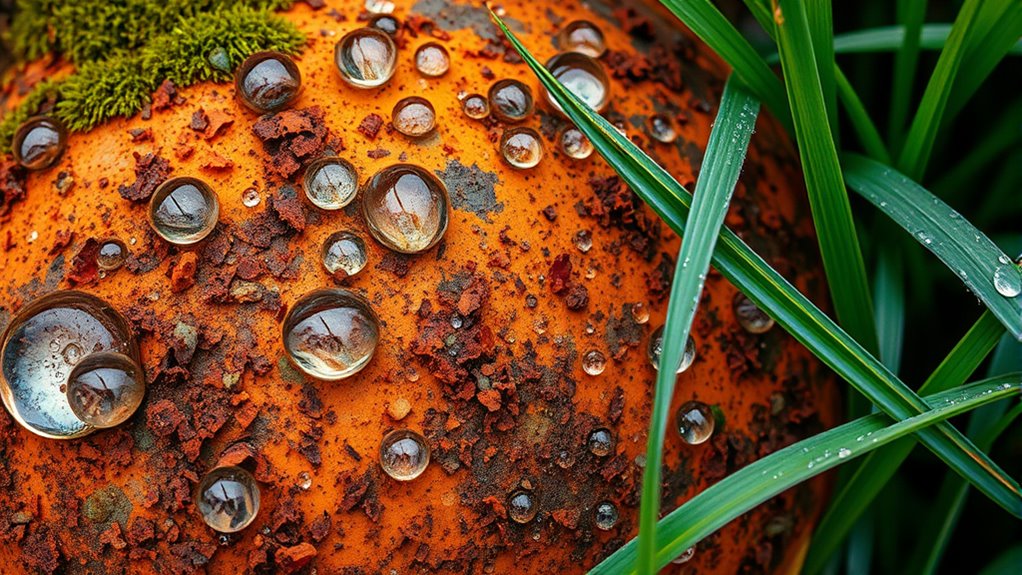
Environmental factors such as temperature, humidity, and pollution can considerably accelerate rust formation. High temperatures increase oxidation rates, while humidity provides the moisture needed for rust to develop. Pollution introduces environmental pollutants like sulfur and nitrogen oxides, which act as oxidation catalysts, speeding up corrosion. These pollutants form acids when combined with water, further corroding metal surfaces. Additionally, Gold IRA Markets have demonstrated how environmental conditions influence metal integrity over time.

TECSPACE 55 Gallon Aluminum Deck Box, IP65 Waterproof Level Patio Storage Box, 221 Lbs Bearing Capacity, for Pool & Sports Equipment & Garden Tools Storage (Black)
IP65 Waterproof Level: Not only the TECSPACE aluminum deck box can be completely protected from dust penetration but…
As an affiliate, we earn on qualifying purchases.
As an affiliate, we earn on qualifying purchases.
Which Outdoor Items Are Most Prone to Rusting
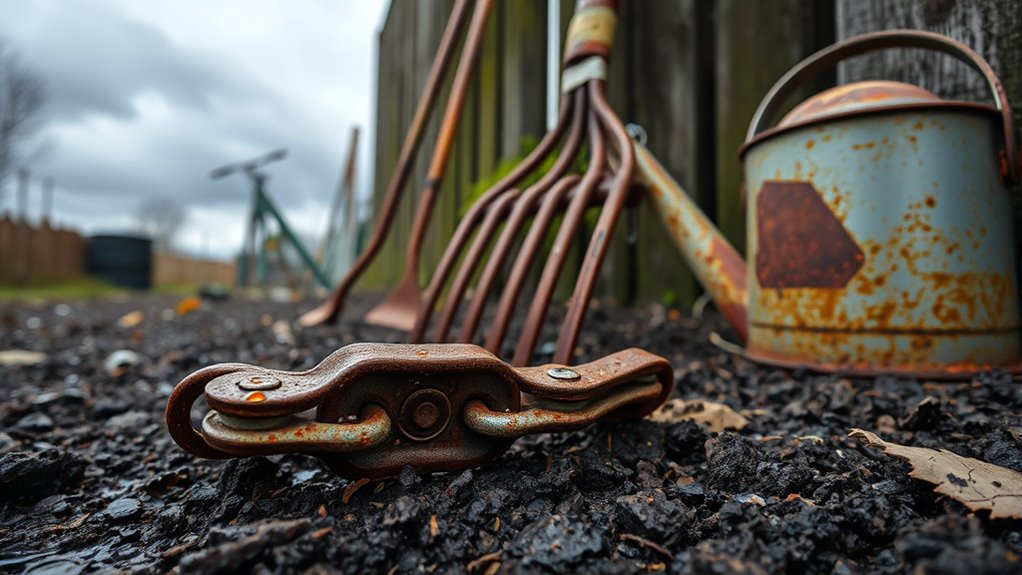
You’ll notice that metal tools and equipment are among the most vulnerable to rust outdoors, especially when exposed to moisture. Outdoor hardware and fixtures, like garden gates and fences, also face high corrosion risks. Even camping and hiking gear, such as tents and cookware, can rust quickly without proper care. Proper maintenance can significantly extend their lifespan and preserve their appearance.
Metal Tools & Equipment
Metal tools and equipment are especially vulnerable to rusting when exposed to moisture and oxygen over time. To improve rust prevention and enhance corrosion resistance, you need to understand which items are most at risk. These include:
- Garden hand tools like shovels and pruners
- Power tools used outdoors
- Lawn mowers and trimmers
- Camping gear such as cookware and utensils
These items often lack built-in corrosion resistance, making them prone to rust if not properly stored or maintained. Regular cleaning, applying protective coatings, and keeping tools dry are essential steps. Proper storage, like using sealed containers or indoor cabinets, also helps minimize exposure to moisture. Taking these precautions will extend the lifespan of your metal tools and equipment, keeping them functional and rust-free. Understanding plant properties can help you choose the best protective measures to prevent rusting based on the materials used.
Outdoor Hardware & Fixtures
Outdoor hardware and fixtures often face rusting if they’re exposed to moisture and air regularly. Items like door handles, railings, and garden fixtures are especially vulnerable. To combat this, many manufacturers apply rust resistant coatings that create a barrier against moisture and oxygen. Additionally, choosing hardware made from corrosion resistant alloys, such as stainless steel or bronze, considerably extends their lifespan. These materials resist rust better than traditional steel or iron. Regular maintenance, like cleaning and applying protective coatings, also helps prevent rust buildup. If you want your outdoor fixtures to stay in good shape longer, prioritize hardware with these protective features. Being proactive in selecting rust-resistant options can save you time, effort, and money on repairs down the line. Using corrosion resistant alloys is a key factor in prolonging hardware lifespan, especially in environments with high moisture and oxygen exposure.
Camping & Hiking Gear
Camping and hiking gear often includes metal components that are exposed to the elements, making them particularly susceptible to rust. Items like tent stakes, cookware, knives, and trekking poles are especially vulnerable if moisture isn’t properly managed. To prevent rust, focus on rust prevention techniques and moisture control strategies. Regular cleaning and thorough drying after use help reduce moisture exposure. Applying protective coatings or rust inhibitors can also extend the lifespan of your gear. Proper storage in a dry, ventilated space minimizes humidity and prevents oxidation. Be mindful of metal parts that come into contact with water or snow, as these are most prone to rusting. Staying proactive with moisture control is key to keeping your camping and hiking gear in top condition. Understanding metal corrosion processes can help you better prevent rust formation on your outdoor equipment.

CorrosionX Heavy Duty Anti Rust Spray, Dripless Self-Healing Corrosion Inhibitor with Waterproof Barrier for Marine, Agricultural & Industrial Equipment in Harsh, Saltwater Environments, 12oz Aerosol
RELENTLESS RUST PROTECTION FOR ANY WEATHER: This self-healing barrier clings and protects metal through rain, seawater, and pressure…
As an affiliate, we earn on qualifying purchases.
As an affiliate, we earn on qualifying purchases.
How Humidity and Rain Accelerate Corrosion
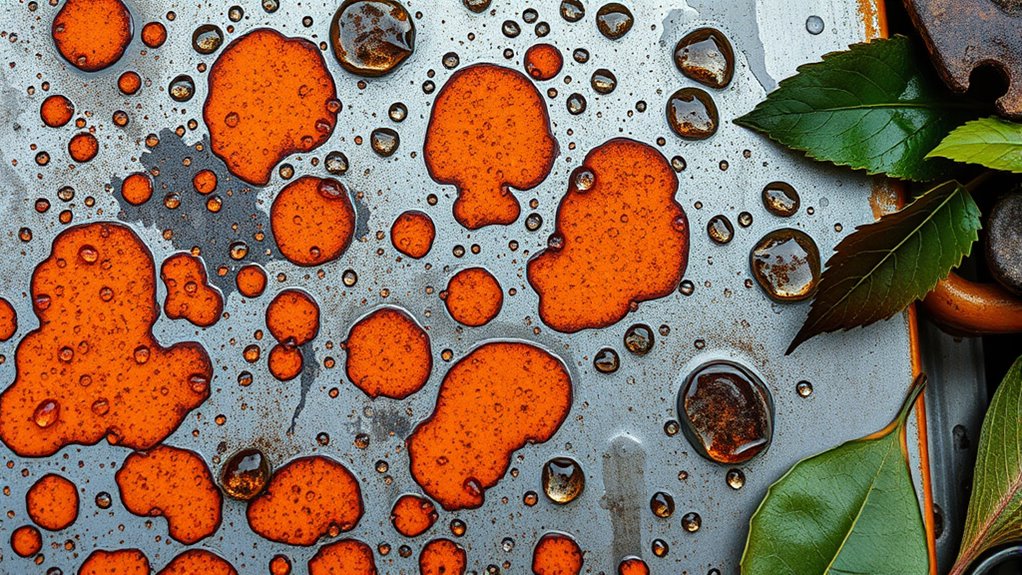
Humidity and rain play a significant role in speeding up corrosion on outdoor metal surfaces. When moisture settles on metal, it creates ideal conditions for rust to form. Higher humidity levels introduce more water vapor into the environment, which can penetrate protective coatings and reach the metal underneath. Rain accelerates this process by continuously wetting surfaces, removing protective layers, and providing fresh water for corrosion reactions. To combat this, rust prevention strategies often rely on environmental monitoring to track moisture levels and precipitation patterns. By understanding how humidity and rain influence corrosion rates, you can better time protective measures and select suitable coatings. Keeping tabs on environmental conditions helps you minimize rust formation and prolong the life of outdoor metal structures. Implementing environmental monitoring tools can help detect changes in humidity and rainfall, enabling more proactive rust prevention measures.
How to Protect Metal Surfaces Outside
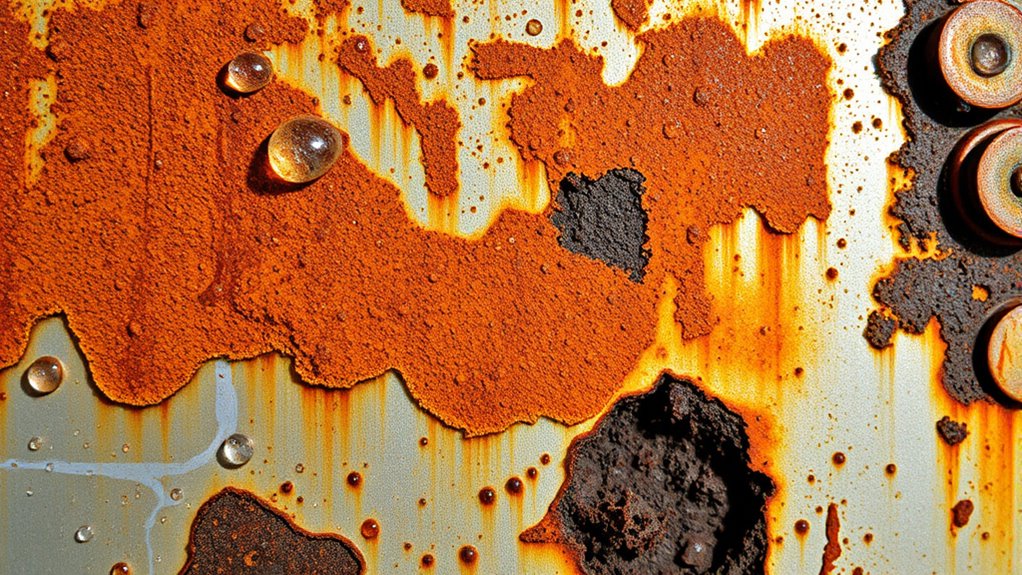
To keep your metal surfaces protected outside, you should consider applying protective coatings that resist moisture and rust. Proper storage, like keeping items in dry, covered areas or using protective covers, also makes a big difference. Implementing these techniques helps prevent corrosion and extends the life of your metal objects. For additional protection, exploring free crypto opportunities can provide resources to invest in high-quality coatings and storage solutions.
Applying Protective Coatings
Applying protective coatings is essential for safeguarding metal surfaces outdoors, especially since exposure to weather elements can cause rust and deterioration. Proper paint protection and sealing techniques create a barrier that prevents moisture and oxygen from reaching the metal. To maximize effectiveness, guarantee the surface is clean and dry before applying coatings. Use high-quality paints designed for outdoor use, and apply multiple coats if needed. Consider adding a primer for better adhesion and longevity. Sealants can fill in small cracks and imperfections, enhancing the barrier against corrosion. Regular inspection and touch-ups help maintain protection over time. Remember, well-applied coatings can considerably extend the life of your metal surfaces and reduce rust formation. Ensuring proper surface preparation is critical for optimal coating adhesion and durability.
- Choose weather-resistant paint for maximum durability
- Prepare surfaces thoroughly before coating
- Apply multiple thin layers rather than one thick coat
- Use appropriate sealing techniques for gaps and joints
Proper Storage Techniques
Proper storage is crucial for protecting metal surfaces outside, especially when they won’t be in use for extended periods. To prevent rust, choose storage solutions that keep moisture and oxygen away from the metal. Use waterproof covers or tarps to shield equipment from rain and humidity. Elevate items off the ground to avoid contact with standing water, which accelerates rust. Store tools and equipment in dry, well-ventilated sheds or cabinets whenever possible. Applying a rust prevention spray before storage can add an extra layer of protection. Regularly inspect stored items for signs of moisture or corrosion and address issues promptly. Ensuring proper ventilation is essential in reducing humidity around stored metal. Effective storage techniques are essential in maintaining metal integrity and extending the lifespan of outdoor metal surfaces.
Simple DIY Tips to Reduce Rust Growth

Rust can develop quickly if you leave metal surfaces exposed to moisture and air, but you can take simple steps to prevent it. Applying rust resistant paints creates a barrier that shields metal from oxygen and moisture. Using corrosion inhibitors on metal surfaces provides an extra layer of protection, slowing rust formation. Regularly wiping down outdoor equipment removes water and dirt that can accelerate rusting. Additionally, storing metal items in dry, covered areas reduces exposure to humidity. For added protection, consider coating tools and furniture with a clear sealant. These DIY tips are effective and affordable, helping you maintain your outdoor items longer without rust. Incorporate these strategies into your routine to keep rust at bay and extend the lifespan of your outdoor metal belongings.
Long-Term Ways to Keep Outdoor Equipment Rust-Free
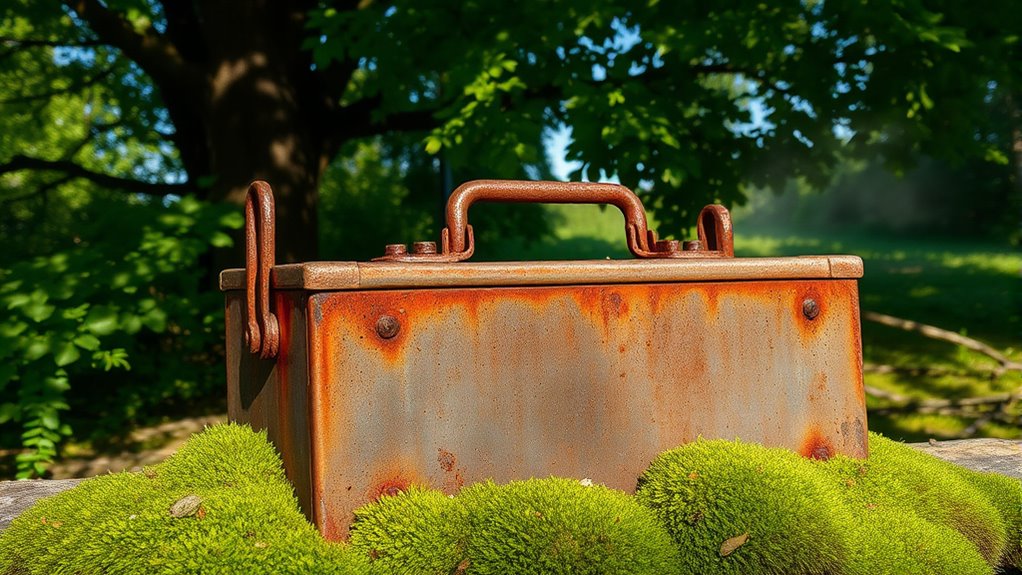
To keep outdoor equipment rust-free over the long term, consistent maintenance is key. You should regularly inspect and clean your gear to remove dirt and moisture that can promote rust. Applying rust prevention treatments, like protective coatings or oil, creates a barrier against oxygen and moisture. Using moisture barriers such as tarps, covers, or sealed storage containers shields your equipment from rain and humidity. Store items in a dry, well-ventilated area whenever possible. Ensuring proper drainage around storage spots also reduces water accumulation. By maintaining these moisture barriers and applying rust prevention techniques consistently, you markedly extend the lifespan of your outdoor tools and equipment, preventing rust from forming even in harsh weather conditions.
Frequently Asked Questions
How Does Temperature Fluctuation Influence Outdoor Rust Formation?
Temperature fluctuations accelerate outdoor rust formation by causing temperature cycles and humidity shifts. When it gets warmer, moisture from humidity condenses on metal surfaces, creating ideal conditions for rust. As temperatures drop, moisture may freeze or evaporate, but the repeated cycles weaken protective coatings and expose new metal areas. This constant change promotes rust development, especially in environments with frequent temperature and humidity shifts.
Can Certain Plants or Soil Conditions Prevent Rust on Metal Surfaces?
Think of plants and soil as guardians shielding your metal. Certain plants, like those with strong resistance, act as natural barriers, reducing rust formation. Soil conditions, especially with balanced pH, can also hinder rust by limiting moisture and oxygen access. By choosing resistant plants and maintaining ideal soil pH, you create an environment where rust struggles to take hold, turning your outdoor space into a resilient fortress against corrosion.
What Are the Best Non-Toxic Methods to Remove Rust Outdoors?
You can effectively remove rust outdoors using natural remedies like lemon juice or vinegar, which act as rust inhibitors. Simply soak a cloth in these solutions and apply it to the rusted area, letting it sit before scrubbing gently. For a more lasting solution, consider applying natural rust inhibitors like baking soda paste or plant-based oils. These non-toxic methods are safe, environmentally friendly, and work well for outdoor rust removal.
How Does Salt Exposure From Coastal Environments Affect Rust Speed?
Salt exposure from coastal environments accelerates rust formation because salt causes salt corrosion, which speeds up the oxidation process. Coastal rust develops faster as salt particles cling to metal surfaces, attracting moisture and oxygen more readily. This combination creates an ideal environment for rapid rusting, so you’ll notice corrosion happening quicker near the sea. To protect your outdoor metal items, consider applying a non-toxic sealant or regularly cleaning off salt residues.
Are There Eco-Friendly Coatings That Effectively Prevent Outdoor Rusting?
You might be surprised, but eco-friendly coatings like biodegradable paints and sustainable rust inhibitors can truly protect your outdoor metal. These innovative solutions form a barrier against moisture and oxygen, slowing rust without harming the environment. Imagine safeguarding your possessions while reducing pollution—sounds promising, right? By choosing these eco-conscious options, you stay ahead in rust prevention, combining effectiveness with sustainability. Don’t wait—embrace greener protection today and keep rust at bay naturally.
Conclusion
By understanding how moisture and oxygen fuel rust, you can turn your outdoor belongings into fortress-like protectors. Think of rust as a slow, creeping vine that can choke the life out of your metal items if left unchecked. But with simple tips and regular care, you hold the power to keep your outdoor gear shining like a beacon amidst the storm. Stay vigilant, and let your metal treasures stand resilient against nature’s relentless march.