
Rainwater can be used safely for outdoor tasks like watering plants, washing your car, and cleaning surfaces since it’s naturally soft and free of many chemicals. However, it’s not suitable for drinking or cooking unless you properly treat it through filtration and disinfection. Be aware of local rules on harvesting and store water carefully to prevent contamination. Continue exploring to learn how to make the most of rainwater while staying safe and compliant.
Key Takeaways
- Rainwater is suitable for outdoor uses like watering plants and cleaning, but requires filtration for safety.
- It can be used for drinking and cooking only after proper treatment and purification.
- Harvesting may be restricted by local laws; always check regulations and obtain necessary permits.
- Contaminants from roofs, gutters, and environment can make untreated rainwater unsafe for consumption.
- Regular testing, filtering, and maintenance are essential to ensure rainwater safety and compliance.
Understanding the Composition of Rainwater

Rainwater, often seen as pure and invigorating, actually contains a mix of various substances it picks up as it falls through the atmosphere. These rainwater contaminants include dust, pollen, bacteria, and pollutants from human activities, which can affect water quality. Fortunately, natural filtration helps remove some of these impurities as the water passes through soil and plant matter on its way to collection. This process reduces certain contaminants, but it doesn’t eliminate all risks. You should understand that despite its seemingly clean appearance, rainwater can still carry harmful substances. Knowing its composition helps you determine whether the water is safe for specific uses and highlights the importance of additional treatment if needed. Additionally, contrast ratios can influence how clearly you can see these impurities if the water is used in certain filtration assessments. Recognizing the chemical makeup of rainwater is essential for assessing its suitability for various applications. Furthermore, understanding the contaminant levels can guide you in deciding whether any purification measures are necessary before use. It is also important to consider the source of rainwater, as local environmental conditions significantly impact its purity. Analyzing the water quality parameters is crucial for making informed decisions about its safe utilization.
Suitable Uses for Collected Rainwater
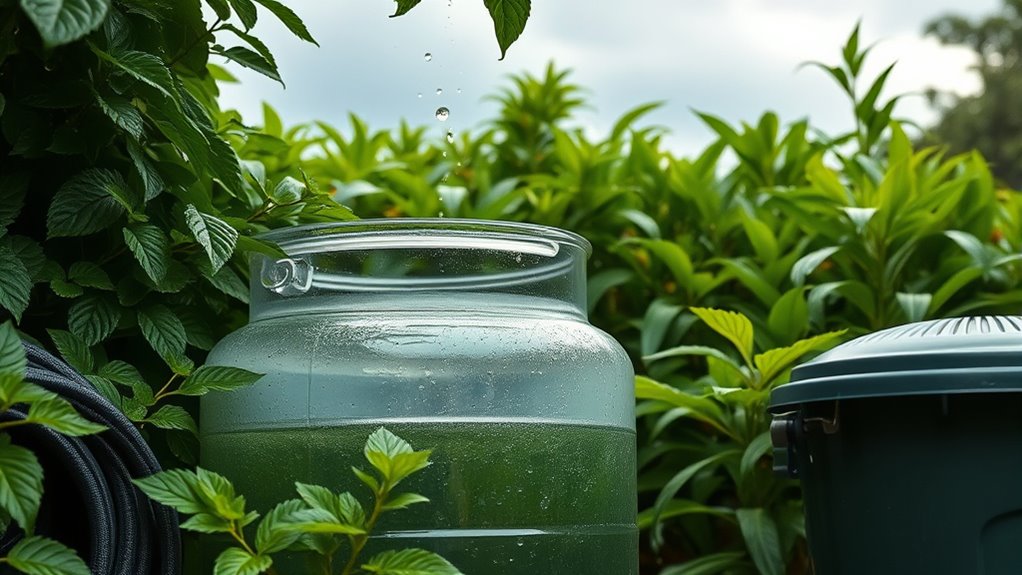
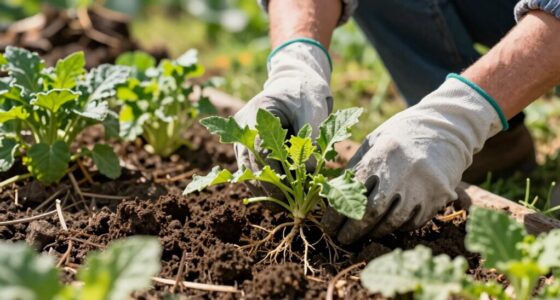
Collected rainwater can be be a valuable resource for various practical uses around your home and garden, especially when you understand its limitations. Using effective rainwater purification methods and reliable harvesting systems, you can safely water your plants, wash your car, or clean outdoor surfaces. Rainwater is naturally soft and free of many chemicals found in tap water, making it ideal for irrigation. Installing proper harvesting systems ensures the collected water stays clean and free from debris. While you shouldn’t use untreated rainwater for drinking or cooking, it’s perfect for non-potable tasks that don’t require potable water standards. Additionally, proper filtration methods are essential to remove contaminants and ensure safety for your intended purposes. Using rainwater harvesting systems can help maintain water quality by preventing contamination from external sources. By understanding these uses, you can maximize your rainwater collection while avoiding potential health risks associated with unfiltered water. Proper filtration methods and maintenance are essential for keeping rainwater safe for your intended purposes. Incorporating water quality management practices can further enhance the safety and usability of your collected rainwater.
Activities and Purposes That Require Treated Water

While rainwater can be a useful resource for many outdoor tasks, certain activities demand water that has been properly treated to guarantee safety. For example, drinking, cooking, and brushing teeth require water that’s free from contaminants, making treatment indispensable. When implementing harvesting methods, you should use filtration and disinfection systems to guarantee water quality. Storage solutions also play a vital role; storing water in clean, covered containers prevents contamination and algae growth. Proper treatment and storage safeguard your health and assure the water’s safety for activities that demand higher purity standards. Additionally, utilizing innovative European cloud servers can support the management and monitoring of water treatment systems efficiently and sustainably. Developing a comprehensive understanding of water quality standards is essential to ensure that the treated rainwater consistently meets safety requirements. Understanding contaminant removal methods is also crucial for maintaining safe water for sensitive uses. Moreover, keeping abreast of solar energy insights can help optimize the efficiency of water treatment processes by integrating renewable power solutions. Staying informed about water treatment technology can further enhance the safety and effectiveness of your rainwater harvesting system.
Restrictions and Safety Precautions

Using rainwater responsibly involves understanding important restrictions and safety precautions. One key aspect is being aware of harvesting restrictions, which vary by location and may limit collection methods or storage. You should also recognize contamination risks, as rainwater can pick up pollutants from roofs, gutters, and the environment, making it unsafe for certain uses. To stay safe, consider these precautions:
- Use proper filters and first-flush systems to reduce contaminants
- Avoid harvesting from roofs with debris or chemical treatments
- Regularly clean and maintain collection containers
- Never use untreated rainwater for drinking or cooking without proper testing
- Being aware of vetted guidelines and best practices can help ensure your rainwater use remains safe and compliant. Additionally, understanding water quality standards can help you assess the safety of your collected rainwater. Incorporating consistent monitoring is essential to maintain safe water quality over time and prevent health risks associated with contaminant buildup. Implementing proper testing protocols can further help identify potential hazards early and ensure ongoing water safety.
Legal and Regulatory Considerations
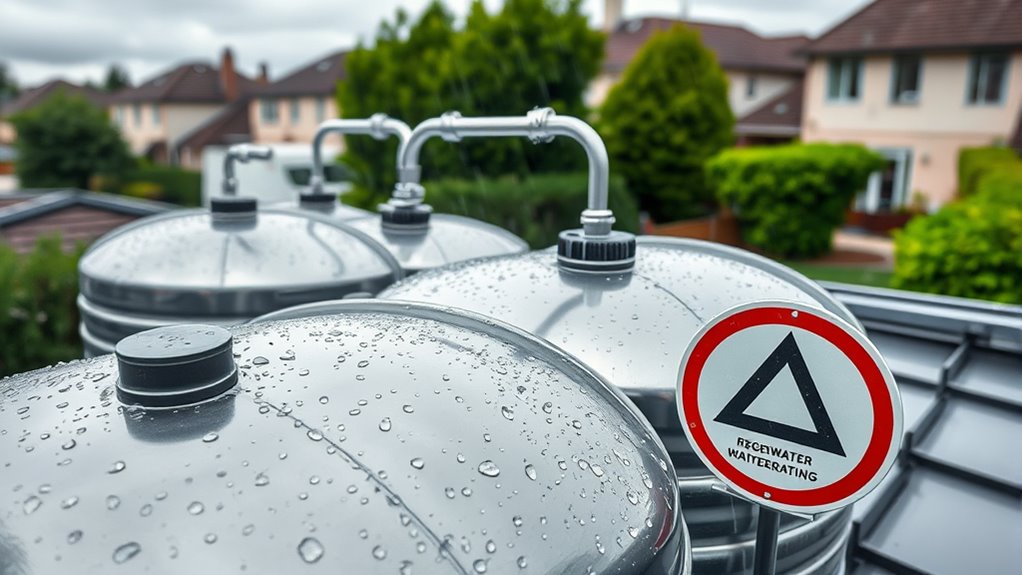
Are you aware of the legal and regulatory rules that govern rainwater harvesting in your area? Many regions have specific legal restrictions you need to follow to ensure regulatory compliance. These laws can vary widely, affecting how much rainwater you can collect, where you can install collection systems, or whether permits are required. Failing to adhere to these rules could lead to fines or other penalties. Before installing a rainwater harvesting system, research local regulations thoroughly. Some areas encourage rainwater collection for sustainability, while others impose strict limits. Understanding the regulatory environment can help you navigate complex legal requirements more effectively. Staying informed about local laws related to rainwater use is essential for responsible stewardship and avoiding legal issues. Additionally, being aware of water rights in your region can influence your ability to collect and use rainwater legally. Recognizing the water management policies in your jurisdiction can further clarify permissible practices and help you stay compliant. Moreover, understanding the permit process can streamline your efforts and prevent potential delays.
Frequently Asked Questions
How Long Can Rainwater Be Safely Stored Before It Needs Treatment?
You can generally store rainwater safely for about 5 to 7 days before it needs treatment. During this storage duration, contamination risks increase, especially if the water isn’t kept in a clean, covered container. To guarantee safety, check for signs of stagnation or debris, and treat the water if you plan to use it beyond a week. Proper storage and regular maintenance help minimize contamination risks and keep water safe.
Can Rainwater Be Used for Drinking Without Any Filtration?
You shouldn’t drink rainwater without water filtration or purification first. Even if it looks clean, rainwater can contain bacteria, viruses, and pollutants. To make it safe for drinking, you need to use proper water filtration methods to remove harmful contaminants. Water purification, such as boiling or chemical treatments, further guarantees it’s safe. Always treat rainwater before drinking to protect your health and avoid waterborne illnesses.
What Are the Health Risks of Using Untreated Rainwater for Household Chores?
Are you aware of the contamination concerns when using untreated rainwater for household chores? Without proper filtration, you risk exposure to bacteria, viruses, and pollutants that can cause illness. Using untreated rainwater for cleaning dishes, laundry, or personal hygiene without health precautions can lead to infections or gastrointestinal issues. Always consider treating or filtering rainwater before use to protect your health and ensure safety in your household activities.
Are There Specific Containers Recommended for Collecting Rainwater?
You should use a sturdy rain barrel or a dedicated storage tank to collect rainwater. Look for containers made of food-grade materials that resist UV rays and prevent algae growth. Verify the container has a lid to keep out debris and insects. Regularly clean your rain barrel or tank to maintain water quality. Properly installed, these containers help you efficiently harvest rainwater for various household uses.
How Does Local Climate Affect the Quality and Usability of Rainwater?
Did you know that over 80% of urban areas experience significant water quality issues due to pollution? Your local climate impacts rainwater usability by influencing seasonal variations; heavy rains can wash pollutants into your collection system, reducing water quality. Urban pollution often introduces contaminants, making rainwater less suitable for drinking without proper treatment. So, always consider your climate and pollution levels when evaluating how safe and usable your rainwater is.
Conclusion
As you explore rainwater collection, you’ll find it’s surprisingly versatile—just like the unexpected rainstorm that turns your garden lush overnight. While you can use it for many things, remember that some activities need treated water, and safety always comes first. Coincidentally, the very rain that nourishes your plants also reminds you to stay informed about local laws. Embrace these insights, and you’ll make the most of your rainwater while staying safe and compliant.