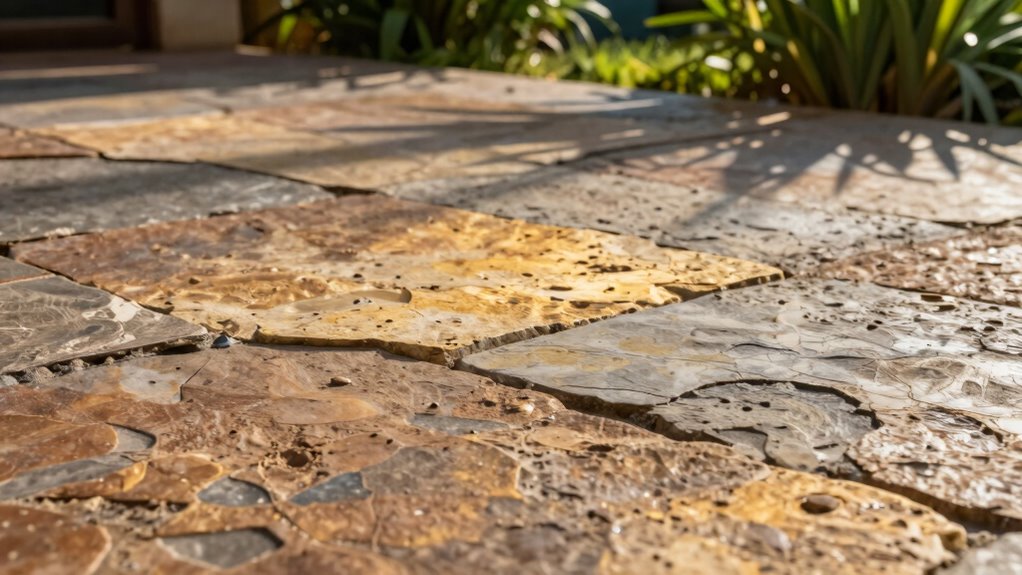
You might be surprised how much heat your patio surfaces absorb and hold, especially on sunny days. Dark-colored materials like asphalt and concrete absorb more sunlight and transfer heat quickly, making your outdoor space hotter. Porous and textured surfaces can trap heat, while lighter colors and reflective coatings help keep things cooler. Understanding how materials and finishes influence heat retention can help you create a more comfortable patio—and there’s plenty more to discover on this topic.
Key Takeaways
- Dark-colored surfaces absorb more sunlight, increasing heat retention on patios.
- Materials with high thermal conductivity transfer heat quickly, raising surface temperatures.
- Textured or porous finishes trap heat and air, enhancing heat retention.
- Urban heat island effects cause surfaces to absorb and slowly release stored heat, amplifying warmth.
- Reflective coatings and lighter colors help reduce heat absorption and keep patios cooler.
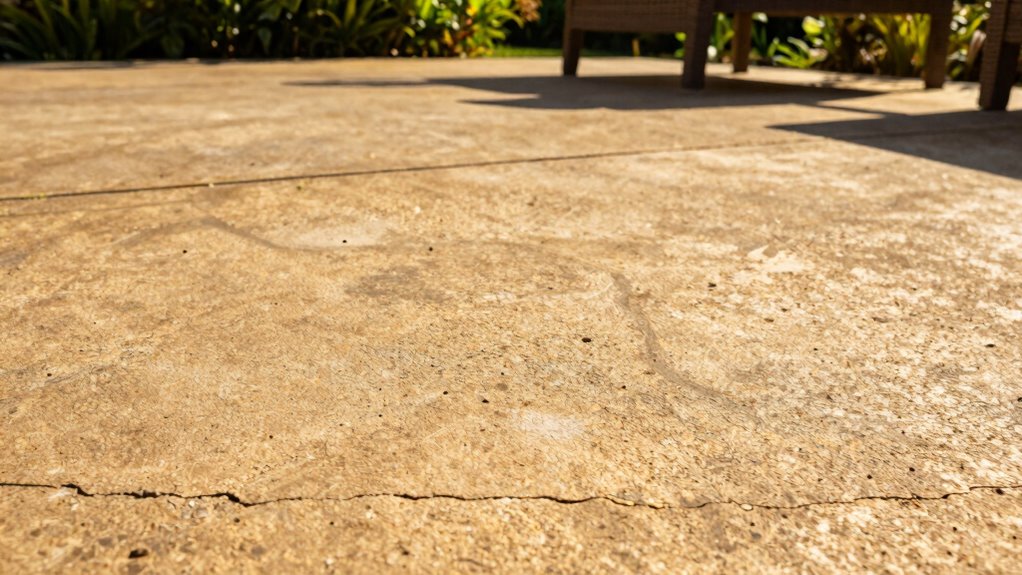
When the sun beats down on your patio, the type of surface you choose can substantially affect how hot it feels underfoot. Not all materials absorb and retain heat equally, which explains why some patios become scorching during the hottest parts of the day. This difference is partly due to each surface’s thermal conductivity—the ability to transfer heat from the sun’s rays into the material. Surfaces with high thermal conductivity, like concrete or asphalt, quickly soak up heat, making your patio feel much hotter than you might expect. Conversely, materials with lower thermal conductivity, such as wood or certain types of stone, don’t heat up as rapidly or as intensely, providing a cooler experience underfoot.
Understanding how urban heat islands work can also help you grasp why some surfaces feel hotter. Urban heat islands are areas within cities that experience higher temperatures compared to surrounding rural zones. This phenomenon occurs because urban surfaces—like concrete, asphalt, and dark roofing materials—absorb and retain more heat during the day, releasing it slowly at night. When you have a patio made from these materials, it contributes to this localized increase in temperature, making your outdoor space an extension of the heat island effect. That’s why your patio might feel notably warmer than the natural ground elsewhere in your yard or neighborhood.
The color and finish of your patio surface also influence heat absorption. Dark colors, especially black or charcoal, absorb more sunlight, increasing the surface temperature. Lighter colors reflect more sunlight and stay cooler, which can make a noticeable difference in how hot your patio feels. Additionally, textured surfaces can impact heat retention. Rough or porous materials may trap air and heat differently than smooth, sealed surfaces, affecting how much heat they retain. Recognizing the thermal properties of different materials can help you choose options that stay cooler throughout the day. Incorporating cool roofing principles into your patio design can further reduce heat absorption and improve comfort. Using reflective coatings on your patio surface is another effective way to deflect sunlight and lower surface temperatures. Understanding the thermal conductivity of materials can also guide you in selecting options that minimize heat transfer, enhancing your outdoor comfort. Being aware of how different surfaces interact with sunlight helps you make smarter choices that can turn your outdoor space into a more comfortable retreat, even on the hottest days. Ultimately, understanding heat transfer and urban heat islands allows you to select patio surfaces that won’t just look good but will also keep you cooler when the sun’s rays are at their strongest.
As an affiliate, we earn on qualifying purchases.
Frequently Asked Questions
How Can I Reduce Heat Absorption on My Patio Surfaces?
You can reduce heat absorption on your patio surfaces by adding shade structures like pergolas or umbrellas to block direct sunlight. Incorporate water features such as fountains or small pools to cool the area naturally. Using lighter-colored or reflective materials for your patio surface also helps. These strategies work together, making your outdoor space more comfortable and less heat-intensive, especially during hot summer days.
Do Different Patio Materials Affect Cooling Times?
Yes, different patio materials affect cooling times. Durable materials like concrete or brick tend to retain heat longer, especially if they have a rough surface texture that traps heat. Smoother, lighter-colored surfaces reflect more sunlight and cool faster. Choosing materials with better durability and a less textured surface can help your patio cool more quickly, making it more comfortable during hot days.
Are There Heat-Reflective Coatings for Patio Surfaces?
Imagine your patio as a sunbaked sponge soaking up heat—that’s why reflective paints and heat-resistant coatings exist to shield it. These specialized coatings act like a mirror, bouncing sunlight away instead of absorbing it. Reflective paints and heat-resistant coatings help keep your patio cooler by reducing heat absorption. Applying them creates a shield that deflects the sun’s rays, making your outdoor space more comfortable and reducing indoor cooling costs.
How Does Patio Color Influence Heat Retention?
Your patio color considerably influences heat retention through color contrast and surface texture. Light-colored surfaces reflect more sunlight, keeping your patio cooler, while dark shades absorb heat, making it warmer. A smooth surface tends to retain less heat compared to textured ones, which trap warmth. Choosing a lighter color with a smooth texture can help keep your patio cooler, especially during hot summer days.
Can Landscaping Help Minimize Patio Surface Heat?
Yes, landscaping can help minimize patio surface heat. You can add landscape shading with trees or umbrellas to block direct sunlight, reducing heat absorption. Plant insulation also helps by cooling the surrounding air and providing a natural barrier against heat transfer. These strategies work together to create a cooler environment, making your patio more comfortable and reducing the heat that your patio surface retains.
light-colored outdoor patio tiles
As an affiliate, we earn on qualifying purchases.
As an affiliate, we earn on qualifying purchases.
Conclusion
Next time you step onto your patio, picture the warm sun soaking into the stones, turning them into tiny heaters. The surface radiates that heat long after sunset, transforming your outdoor space into a cozy retreat—or a sweltering hotspot. Understanding this, you can choose materials wisely or add shading to keep your evenings comfortable. With a little awareness, your patio becomes more than just a surface; it’s a part of your outdoor sanctuary, waiting to be enjoyed without the unexpected heat surprise.
As an affiliate, we earn on qualifying purchases.
thermal reflective sealant for patios
As an affiliate, we earn on qualifying purchases.
As an affiliate, we earn on qualifying purchases.