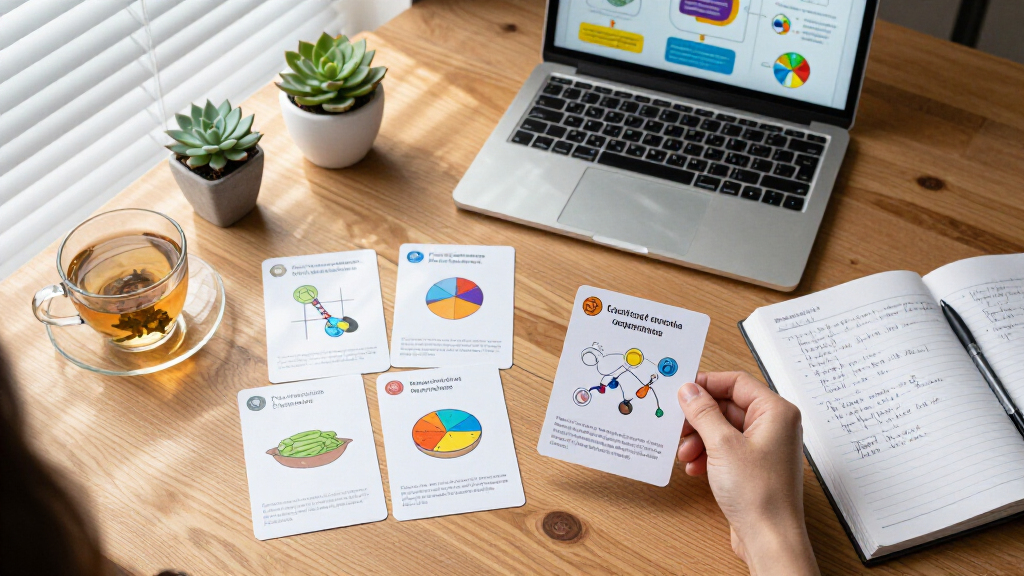

Science reference flashcards span two very different jobs: exam prep for teaching certifications and lasting reference knowledge for students and hobbyists. My top overall pick is the Periodic Table Educational Flashcards, because the 118 color-coded element cards balance atomic data with visual learning at an accessible price. For certification candidates, the Praxis Earth and Space Sciences (5572) Flashcard Study System is the strongest exam-aligned option, while the Must Have Organic Chemistry Flashcards stand out for college-level depth with 300 color-coded reactions. The main tradeoff in this category is breadth versus depth — sets like the Our World in Pictures cards are visually rich but introductory, while exam systems are dense but narrow. Keep reading for the full breakdown of what each set does well and who should skip it.
Key Takeaways
- Color coding emerged as the single biggest differentiator: the periodic table and organic chemistry sets use category-based color systems that make recall faster, while the exam prep sets rely on plain layouts that are harder to scan.
- Exam prep systems (Praxis 5572, TExES 116) are locked to specific tests — they are poor general reference tools despite their higher price, so buyers should only pick them if that exact certification is the goal.
- The two Our World in Pictures sets offer the best visual quality per dollar for younger learners, but their content ceiling is middle school, making them poor companions for advanced coursework.
- The Organic Chemistry set is the only option here with college-level depth, and its reaction-organized structure replaces what would otherwise be hundreds of dollars of textbooks or a subscription app.
- Deck size matters less than card design: the 118-card periodic table set felt more usable than larger exam decks because each card carries denser, better-organized reference data.
| Praxis Earth and Space Sciences (5572) Flashcard Study System |  | Best for Certification Prep | Format: Physical flashcard study system | Target Exam: Praxis Earth and Space Sciences (5572) | Audience: Teacher certification candidates | VIEW LATEST PRICE | See Our Full Breakdown |
| Periodic Table Educational Flashcards – 118 Elements |  | Best Overall Reference Set | Number of Flashcards: 118 | Coverage: All chemical elements | Includes: Bonus periodic table sheet | VIEW LATEST PRICE | See Our Full Breakdown |
| The Must Have Organic Chemistry Flashcards: 300 Color Coded Reactions |  | Best for College STEM Majors | Card Count: 300 flashcards | Brand: Flash Chem | Organization: By compound class with color coding | VIEW LATEST PRICE | See Our Full Breakdown |
| Our World in Pictures Human Body Flash Cards |  | Best for Younger Learners | Format: Physical illustrated flashcards | Subject: Human body and anatomy | Series: Our World in Pictures (DK) | VIEW LATEST PRICE | See Our Full Breakdown |
| Our World in Pictures Rocks and Minerals Flash Cards |  | Best Value Intro Pick | Format: Physical illustrated flashcards | Subject: Rocks and minerals | Series: Our World in Pictures (DK) | VIEW LATEST PRICE | See Our Full Breakdown |
| TExES Science 4-8 (116) Flashcard Study System |  | Best for Certification Exam Prep | Format: Physical flashcard study system | Target Exam: TExES Science 4-8 (116) | Content Type: Practice questions and exam review material | VIEW LATEST PRICE | See Our Full Breakdown |
| science reference flashcard | Format | Digital Version | Series |
|---|---|---|---|
| Praxis Earth and Space Science | Physical flashcard study system | Not included | Praxis Subject Assessments |
| Periodic Table Educational Fla | Physical cards only | — | — |
| The Must Have Organic Chemistr | — | Not included | — |
| Our World in Pictures Human Bo | Physical illustrated flashcards | Not included | Our World in Pictures (DK) |
| Our World in Pictures Rocks an | Physical illustrated flashcards | Not included | Our World in Pictures (DK) |
| TExES Science 4-8 | Physical flashcard study system | — | — |
More Details on Our Top Picks
Praxis Earth and Space Sciences (5572) Flashcard Study System
Most flashcard sets in this roundup support ongoing coursework, but this one serves a narrower purpose: passing a high-stakes licensing exam. Where the Rocks and Minerals Flash Cards build general geological literacy, this system is built around Praxis 5572 test objectives, translating exam blueprints into drillable question-and-answer cards that reveal weak areas before test day does. Compared with the Periodic Table Educational Flashcards, which reward casual reference use, this set demands sequential, disciplined study — it functions more like a structured review course in card form. The tradeoff is flexibility: buyers expecting rich visuals or classroom-friendly browsing will find the format dry, and it is useless outside its target exam. This pick makes the most sense for examinees who want diagnostic value rather than pretty design.
Pros:- Aligned directly to Praxis 5572 exam objectives
- Practice-test-style questions simulate real exam pressure
- Helps pinpoint knowledge gaps for targeted final review
- Covers the full breadth of earth and space science topics
Cons:- Flashcard-only format is too rigid for learners who prefer full study guides
- No illustrations or visual aids compared with image-driven sets like the DK cards
Best for: Teacher-licensure candidates preparing specifically for the Praxis Earth and Space Sciences 5572 exam
Not ideal for: General science learners or hobbyists — the content is exam-specific and won’t serve as a broad reference tool
- Format:Physical flashcard study system
- Target Exam:Praxis Earth and Space Sciences (5572)
- Audience:Teacher certification candidates
- Content Type:Practice test questions and exam review
- Series:Praxis Subject Assessments
- Digital Version:Not included
Our verdict“Buy this only if the Praxis 5572 exam is on your calendar; as a general science reference it falls short.”
Periodic Table Educational Flashcards – 118 Elements
This is the most complete pure reference set in the lineup: all 118 elements, each card pairing a symbol-only front for self-testing with an atomic-data back for lookup. Compared with the Human Body Flash Cards or Rocks and Minerals Flash Cards, which lean on illustrations and shorter fact blurbs, this set delivers quantitative detail — the kind a chemistry student actually needs at exam time. The color-coded categories mirror standard periodic table groupings, so sorting by metals, noble gases, or halides reinforces structure while you study, and the water-resistant stock survives backpack abuse better than typical paper cards. The tradeoff: nothing here is interactive, and there is no companion app or digital bank, so learners who want spaced-repetition software should look elsewhere. As a durable, self-contained reference, though, this option stands out.
Pros:- Complete coverage of all 118 elements
- Symbol-front, data-back design enables genuine recall testing
- Color-coded categories reinforce periodic table groupings
- Water-resistant and tear-resistant cards plus bonus wall sheet
Cons:- No digital or interactive features
- Element data alone may feel dry for younger children
Best for: High school and early college chemistry students who want a complete, self-testing element reference
Not ideal for: Digital-first learners — there is no app, audio, or interactive component whatsoever
- Number of Flashcards:118
- Coverage:All chemical elements
- Includes:Bonus periodic table sheet
- Material:Water-resistant, tear-resistant card stock
- Features:Color-coded categories, atomic data on card backs
- Format:Physical cards only
Our verdict“The most versatile pick in the roundup — a complete chemistry reference that works for study, review, and quick lookup.”
The Must Have Organic Chemistry Flashcards: 300 Color Coded Reactions
Organic chemistry sinks most students not because concepts are hard but because reaction mechanisms are voluminous. This set attacks that problem with 300 color-coded cards organized by compound class — alcohols, alkenes, esters, amides, benzenes, and more — a structure that mirrors how orgo courses and exams are actually sequenced. Compared with the Periodic Table Educational Flashcards, which covers breadth at an introductory level, this set goes deep on one subject, making it a companion to a full course rather than a general reference. The included progress bookmarks are a small feature with real payoff, letting students track which reaction families still need drilling, and the heavy-stock construction holds up to daily shuffle-and-sort sessions. The obvious tradeoff: this is single-topic, physical-only, and priced like a specialty tool. For non-STEM majors it is simply the wrong purchase.
Pros:- 300 reactions organized by compound class for systematic drilling
- Color coding speeds visual recognition of reaction families
- Included bookmarks track which card groups need more review
- Heavy-stock cards tolerate frequent handling and sorting
Cons:- Strictly limited to organic chemistry reactions
- No digital or online study resources included
- Higher price point than general-audience card sets
Best for: College students enrolled in organic chemistry who need systematic reaction memorization
Not ideal for: Anyone not taking organic chemistry — the narrow scope and premium price make it a poor general reference
- Card Count:300 flashcards
- Brand:Flash Chem
- Organization:By compound class with color coding
- Included Components:300 flashcards, progress bookmarks
- Material:Durable heavy card stock
- Target Audience:College students (adult)
- Digital Version:Not included
Our verdict“A course-specific investment that pays off for orgo students, and an easy skip for everyone else.”
Our World in Pictures Human Body Flash Cards
Where most sets in this roundup target test-takers, this one targets curiosity. The Our World in Pictures design philosophy — big, colorful illustrations paired with digestible facts — makes anatomy approachable for upper-elementary and middle school students in a way the Praxis Earth and Space Sciences system never attempts. Compared with its sibling Rocks and Minerals Flash Cards, the human body set handles a more complex subject, so the visual-first approach does more heavy lifting: diagrams carry the explanations that text alone would bog down. This model is better suited to home reference, classroom review games, and browsing than to formal exam prep — the information per card stays light by design. That lightness is the core tradeoff; a nursing or A&P student will outgrow it quickly, and there is no digital layer for quizzes.
Pros:- Engaging illustrated format that suits younger attention spans
- Covers anatomy at an accessible introductory level
- Works equally well for classroom activities and independent browsing
- Familiar DK-style visual quality aids retention
Cons:- Limited depth per card compared with college-level sets
- No digital components or quiz features
Best for: Parents and elementary/middle school teachers building a home or classroom science library
Not ideal for: Anatomy and physiology students needing exam-level depth — the cards favor breadth and visuals over detail
- Format:Physical illustrated flashcards
- Subject:Human body and anatomy
- Series:Our World in Pictures (DK)
- Reading Level:Elementary to middle school
- Use Case:Home reference and classroom learning
- Digital Version:Not included
Our verdict“An inviting first anatomy reference for kids — skip it if you need rigorous, test-ready detail.”
Our World in Pictures Rocks and Minerals Flash Cards
This set earns its place as the lowest-commitment entry point in the roundup. Like the Human Body Flash Cards from the same series, it relies on strong imagery and short facts, but geology is a subject where a photo genuinely is worth a paragraph — identifying quartz versus calcite by sight is the whole skill. Compared with the Praxis Earth and Space Sciences system, the ambition here is completely different: no exam alignment, no question banks, just specimen photos and identification facts that build a base of geological literacy. That makes it a natural gift or classroom-library addition rather than a study tool. The tradeoffs mirror its price: card content is thin for anyone past an introductory level, and unlike the Periodic Table Educational Flashcards, there is no bonus reference sheet or durability treatment. For sparking interest, though, it does the job cheaply.
Pros:- Affordable entry point into geology reference
- Specimen photography supports visual identification practice
- Kid-friendly format suits independent browsing
- Compact enough for travel or car-ride learning
Cons:- Limited information per card on properties like hardness and cleavage
- No additional learning materials or reference sheets included
Best for: Budget-conscious buyers and gift-givers introducing a child to geology
Not ideal for: Earth science students preparing for tests — the shallow per-card detail won’t support real exam study
- Format:Physical illustrated flashcards
- Subject:Rocks and minerals
- Series:Our World in Pictures (DK)
- Reading Level:Elementary to middle school
- Use Case:Introductory geology learning and browsing
- Digital Version:Not included
Our verdict“A cheap, cheerful geology starter set — great for interest-building, insufficient for serious study.”
TExES Science 4-8 (116) Flashcard Study System
Among the flashcards in this lineup, this is the only one built around a single high-stakes certification exam, which changes its purpose entirely. Where the Periodic Table Educational Flashcards and the Our World in Pictures sets teach reference content for its own sake, this system is organized around testable competencies for the TExES Science 4-8 exam, so every card is filtered through what certification candidates will actually face. The portable card format suits the grab-and-go rhythm of teacher-prep candidates juggling coursework and student teaching. The tradeoff is depth: unlike the Must Have Organic Chemistry Flashcards, which drill a single subject exhaustively, these cards survey broad science domains at a review level, so a candidate weak in one area will need supplementary materials. There’s also no digital component, which matters for buyers who prefer app-based drilling.
Pros:- Content mapped directly to the TExES 4-8 (116) exam competencies rather than generic science topics
- Includes practice questions, not just facts, so it mimics exam-style recall
- Portable flashcard format fits short study sessions between classes or work
- Self-paced review structure works well alongside other prep materials
Cons:- Flashcard format limits depth on any single topic, leaving conceptual gaps for weaker areas
- No online or interactive resources included, unlike modern app-based study systems
- Useless outside the Texas certification context, unlike general reference flashcards
Best for: Texas teacher-certification candidates preparing specifically for the TExES Science 4-8 (116) exam who need portable, question-driven review
Not ideal for: Students or general science learners — the content is exam-mapped rather than reference-oriented, so the DK-style sets like Our World in Pictures serve casual learning far better
- Format:Physical flashcard study system
- Target Exam:TExES Science 4-8 (116)
- Content Type:Practice questions and exam review material
- Subject Coverage:Broad science domains tested on the exam
- Supplementary Resources:None — print flashcards only
- Best Use Case:Certification exam preparation
Our verdict“Buy this only if the TExES Science 4-8 exam is on your calendar — for general science reference, other sets in this roundup do the job better.”

How We Picked
I evaluated each set through the lens of what science reference flashcards are actually bought for: durable knowledge, fast lookup, and effective self-testing. That meant judging card stock quality and print legibility, the accuracy and density of the scientific content, whether the organization (color coding, categorization, indexing) supports quick retrieval, and how well each set matches its intended audience — from elementary learners to certification candidates. Price per card and longevity of usefulness also factored in, since a reference set that stays relevant for years beats a cheaper one that gets outgrown in a semester.
The ranking rewards versatility and design quality first, which is why the periodic table set leads: it serves students from middle school through college. Exam prep systems rank lower as general picks because their value collapses outside a single test, and visually-oriented introductory sets slot in the middle — excellent for their audience, but with a clearly limited ceiling. This ordering reflects a core belief from the comparison: reference flashcards should justify shelf space long after the first use.
| science reference flashcard | Format | Series |
|---|---|---|
| Praxis Earth and Space Science | Physical flashcard study system | Praxis Subject Assessments |
| Periodic Table Educational Fla | Physical cards only | — |
| The Must Have Organic Chemistr | — | — |
| Our World in Pictures Human Bo | Physical illustrated flashcards | Our World in Pictures (DK) |
| Our World in Pictures Rocks an | Physical illustrated flashcards | Our World in Pictures (DK) |
| TExES Science 4-8 | Physical flashcard study system | — |
Factors to Consider When Choosing Science Reference Flashcards
Choosing science flashcards is less about finding the ‘best’ set and more about matching the deck to how you actually learn. These are the factors that separated the winners from the mismatches in my comparison.Reference Use vs. Exam Prep: Know Which You’re Buying
The most expensive mistake in this category is buying a certification study system as a general reference tool — or the reverse. Sets like the Praxis and TExES systems are built around test blueprints, meaning their content is framed as exam-answer prompts rather than durable explanations. If you miss the test window or the exam changes, the deck loses most of its value. Reference-oriented sets, by contrast, organize knowledge by scientific structure — element families, reaction types, body systems — which stays useful regardless of any test calendar. Before buying, ask whether you need to pass one specific exam or build long-term fluency, and let that answer drive the entire purchase.
Card Durability and Print Quality
Reference flashcards live a harder life than novels — they get shuffled, sorted into piles, carried in backpacks, and flipped through hundreds of times. Thin card stock that curls or tears after a month of use quietly destroys the value of even excellent content. Glossy or coated finishes resist the wear that comes with frequent self-testing, and they hold up better near a desk with drinks or in a classroom. Look for descriptions that mention card weight or lamination, and be skeptical of large decks at very low prices, because cheap stock is usually where the cost was cut. A durable deck you keep for three years is cheaper per use than a flimsy one you replace twice.
Color Coding and Retrieval Design
The biggest finding from this comparison was how much organization affects recall. Sets that color-code by category — metals versus nonmetals, reaction families, mineral classes — let your brain build a visual map of the subject, which speeds both learning and lookup. Monochrome decks force you to rely purely on sequence, which works for rote drilling but fails as a quick-reference tool. This matters most in subjects with natural taxonomies: chemistry, geology, and anatomy practically beg for visual grouping. If a set doesn’t mention any categorization scheme, assume you’ll be building your own sorting system with tabs or markers, and factor that time into the price.
Content Depth and the Ceiling Problem
Every flashcard set has a ceiling — the level at which it stops teaching you anything. Introductory visual decks typically top out around middle school, which is fine for a ten-year-old but frustrating for a high schooler prepping for an exam. At the other extreme, college-level decks assume background knowledge and can overwhelm a beginner who just wants the basics. A common buying error is purchasing a deck one level too advanced, reasoning that the student will ‘grow into it,’ when in practice it just sits unused. Match the deck to the current level plus maybe one step of headroom, and plan to upgrade rather than overshoot.
Price per Useful Card, Not per Card
Raw card counts are misleading marketing. A 500-card exam prep deck where half the cards restate test-taking tips delivers less reference value than a 118-card periodic table set where every card is packed with atomic data. Calculate value by asking how many cards you’ll revisit after the first month of ownership. Reference decks with dense, well-designed cards tend to win this math decisively, while padded exam systems lose it. Also weigh whether a deck replaces another purchase entirely — the organic chemistry set substitutes for study aids that often cost far more, which changes its effective price.
Audience Fit: Who Is Actually Holding the Cards
A deck that works for a classroom teacher often fails for a solo student, and vice versa. Visual, image-heavy cards suit younger learners and visual thinkers but can feel patronizing to adults studying seriously. Dense text-heavy decks suit motivated older students but bore children. Self-quizzers benefit from a two-sided question-and-answer format, while reference users want front-loaded data they can scan at a glance. Be honest about the person doing the studying — not the person doing the buying — because the best-designed deck in the world is worthless if it never leaves the box.
Frequently Asked Questions
Are the Praxis and TExES flashcard systems useful if I’m not taking those exams?
Not really, and that’s their biggest limitation. These decks are organized around specific test blueprints, so the content is framed as exam-answer prompts rather than general science education. If you’re studying earth science or middle-grade science for a different purpose, you’ll get better mileage from subject-based reference decks like the Rocks and Minerals cards or the periodic table set. The exam systems also assume you’ll discard them after test day, so they lack the durable design and organization that makes reference decks worth keeping. Buy them only if the certification test is on your calendar.
Which set is best for a middle school student who struggles with science?
The Our World in Pictures Human Body or Rocks and Minerals cards are the strongest fits for that profile. Their image-driven design lowers the reading barrier and builds confidence before denser material arrives. Pairing one of those with the periodic table set covers two core middle school topics — life science and chemistry foundations — with room to grow into high school. The organic chemistry deck would be a mistake here; it assumes prior knowledge and will frustrate rather than encourage. Start visual, then graduate to text-dense decks once the basics stick.
Do flashcard apps make physical science cards obsolete?
Apps win on convenience and spaced repetition, but physical cards still hold real advantages for science reference specifically. Color-coded physical decks let you sort, group, and spread cards across a table, which builds spatial memory of how a subject fits together — something a phone screen can’t replicate. Physical cards also never demand a subscription, never show ads, and never die with a battery. The strongest approach for serious students is often hybrid: physical cards for building the mental map, an app for drilling on the go. If you only buy one, choose based on where you actually study.
Is the organic chemistry flashcard set a replacement for a textbook?
It’s a supplement, not a replacement, but a genuinely powerful one. The 300 reaction cards excel at the pattern-recognition part of organic chemistry — seeing a functional group and recalling how it behaves — which is exactly where textbooks are slow to help. What the set can’t do is teach the underlying mechanisms from scratch; you still need lecture material or a textbook for that foundation. Where it shines is review: before exams, it condenses what would be hours of chapter-skimming into focused recall practice. If you’re enrolled in the course, treat it as your review layer, not your primary source.
How long will the periodic table flashcards stay useful compared to other sets?
The periodic table set has the longest useful life of anything in this roundup, which is a big part of why it earns the top spot. The 118 elements and their core data don’t change with curriculum updates or test revisions, so the same deck serves a seventh grader, a high school chemistry student, and a college freshman. Compare that with exam prep decks that expire after test day or introductory picture cards that get outgrown in a couple of years. Unless you specialize deeply in chemistry, this is the one deck in the group you could genuinely keep on a shelf for a decade. That longevity also makes it the best hand-me-down option for families with multiple kids.
Conclusion
After comparing all six sets, the right choice comes down to who’s holding the cards. For best overall, the Periodic Table Educational Flashcards deliver unmatched longevity, color-coded organization, and content that spans grade levels — the rare deck that justifies permanent shelf space. The Our World in Pictures Human Body and Rocks and Minerals cards earn the best value and best for beginners spots, offering visual learning quality that punches well above their price for elementary and middle school learners. For college-level depth, the Must Have Organic Chemistry Flashcards are in a class of their own, covering 300 reactions in a format no other set here approaches. Certification candidates have a clear path too: the Praxis Earth and Space Sciences system for the 5572 exam, the TExES Science 4-8 system for Texas test-takers — but only those buyers should consider them. Buy for the student you have today, with one level of headroom, and these cards will earn their keep.