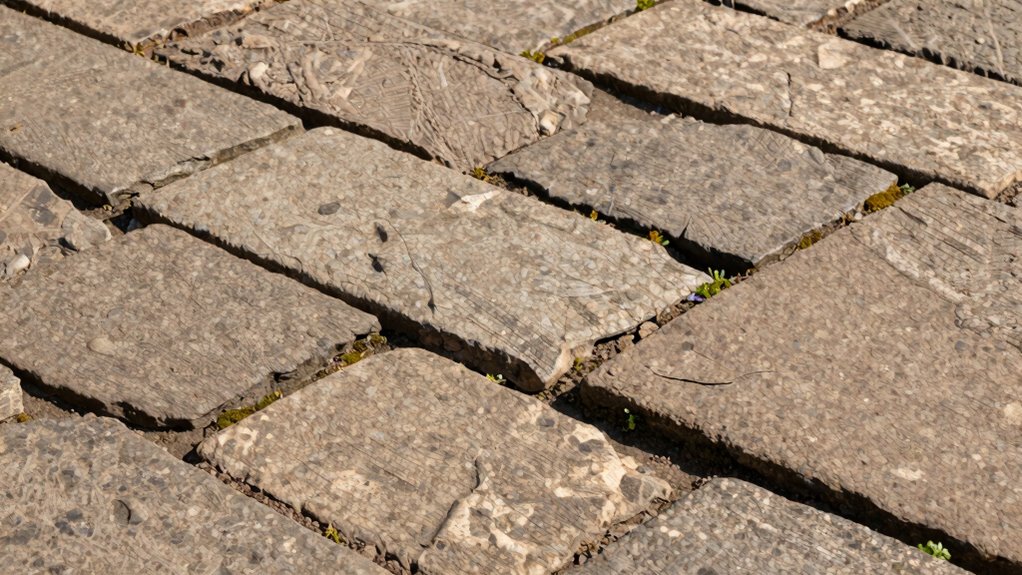
If your paver patio becomes uneven, it’s likely due to poor foundation prep, ground movement, drainage issues, or freeze-thaw cycles. Over time, soil shifts, moisture, or roots can lift or settle the pavers. Heavy loads and installation mistakes also cause problems. Proper base support and drainage are essential to prevent this. If you want to understand how to keep your patio level and discuss solutions, there’s more to explore.
Key Takeaways
- Poor foundation preparation and soil compaction cause pavers to settle and become uneven.
- Ground movement from weather changes, freeze-thaw cycles, or soil expansion leads to shifting pavers.
- Excessive loads or heavy furniture can overload pavers, resulting in uneven surfaces.
- Tree roots growing underneath can disturb the soil and lift or crack pavers.
- Inadequate drainage causes water accumulation, erosion, and base instability, leading to uneven paver surfaces.

20 PCS Adjustable Deck Supports, Plastic Deck Support Blocks, Pedestal Paver Deck Foundation Base, Floating Deck Platform, Deck Floor Support for Balconies, Patios, Courtyards
[Abundant Quantity & Easy Installation] Our set includes 20 adjustable deck supports, providing ample quantity for your decking…
As an affiliate, we earn on qualifying purchases.
As an affiliate, we earn on qualifying purchases.
How Do I Know My Patio Is Settling?
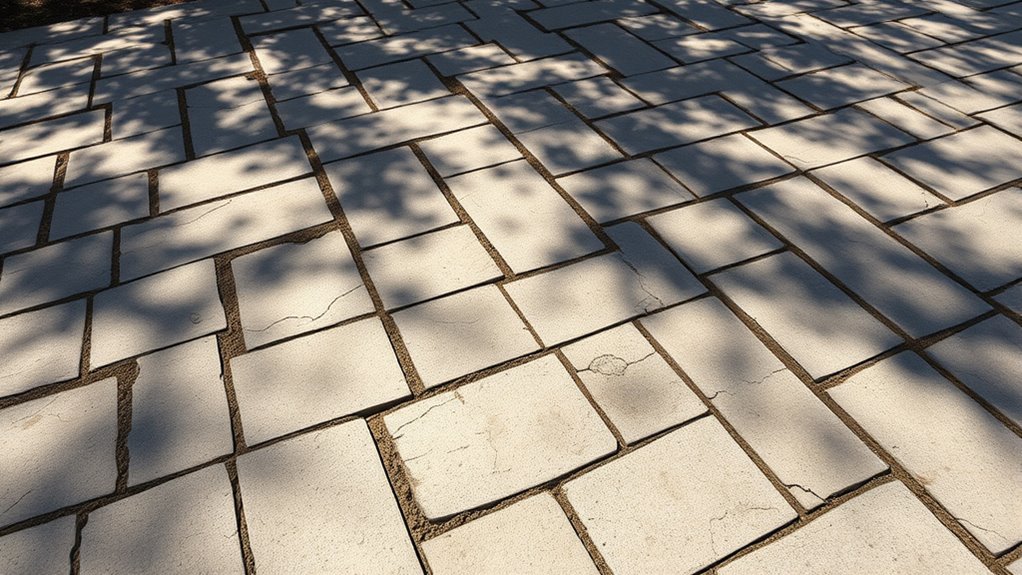
How can you tell if your patio is settling? One clear sign is uneven paver surfaces, which can disrupt your patio aesthetics. You might notice some pavers wobbling or shifting out of place, making walking uncomfortable. Cracks or gaps between pavers are also common indicators. If you see weeds growing in the joints or water pooling unevenly, these could signal underlying issues from settling. Additionally, high contrast ratios in projectors help reveal subtle surface irregularities, just as they expose the unevenness in your patio. Regular paver maintenance helps catch problems early, preventing further damage. Pay close attention to any changes in the levelness of your patio and address issues promptly. Neglecting these signs can lead to more extensive repairs and a decline in your outdoor space’s appearance. Staying vigilant ensures your patio remains safe, functional, and visually appealing.

VEVOR Trench Drain System with Plastic Grate, 5.9×5.1-Inch HDPE Channel Drainage for Garden, Driveway – 6 Pack
Low-profile Drain System: Dimensions of each channel: 5.9" W x 5.1" H x 39.4" L. Commercial water drainage…
As an affiliate, we earn on qualifying purchases.
As an affiliate, we earn on qualifying purchases.
Why Poor Foundation Prep Leads to Paver Shifts
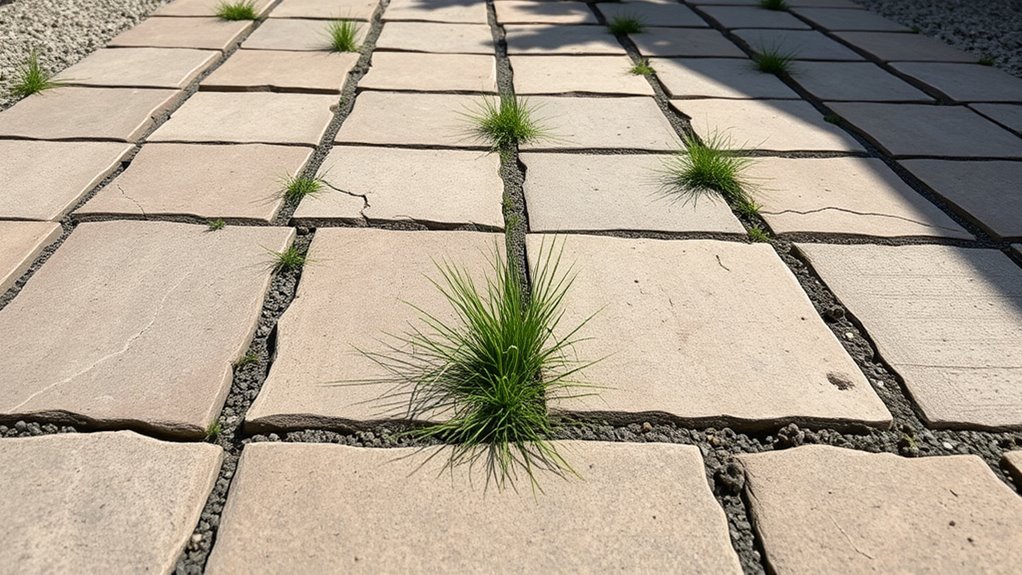
Poor foundation prep is a common cause of paver shifts because it undermines the stability of your patio. When the soil isn’t properly compacted, it remains loose and prone to movement. Without adequate soil compaction, the ground beneath your pavers isn’t firm enough to support the weight, leading to foundation settling over time. As the foundation settles unevenly, the pavers above follow suit, resulting in shifting and uneven surfaces. Proper preparation involves removing loose soil, ensuring proper drainage, and compacting the soil thoroughly before laying pavers. Skipping these steps weakens the foundation, making your patio vulnerable to shifts caused by soil movement. Additionally, using a compactible base material helps create a stable foundation that resists shifting. Ultimately, investing in solid foundation prep prevents future unevenness and keeps your patio level and stable for years to come.

BlumeTrec 8"x8" Steel Tamper with 48" Handle, Heavy Duty Hand Compactor Tool for Leveling Soil, Gravel, Sand, Asphalt, Ground, Paver, Driveway, Garden, Yard and Blacktop Repair
Durable Construction & Reliable Performance: BlumeTrec heavy-duty tamper is made from premium high-grade steel with a rust-resistant coating….
As an affiliate, we earn on qualifying purchases.
As an affiliate, we earn on qualifying purchases.
How Ground Movement Causes Paver Unevenness
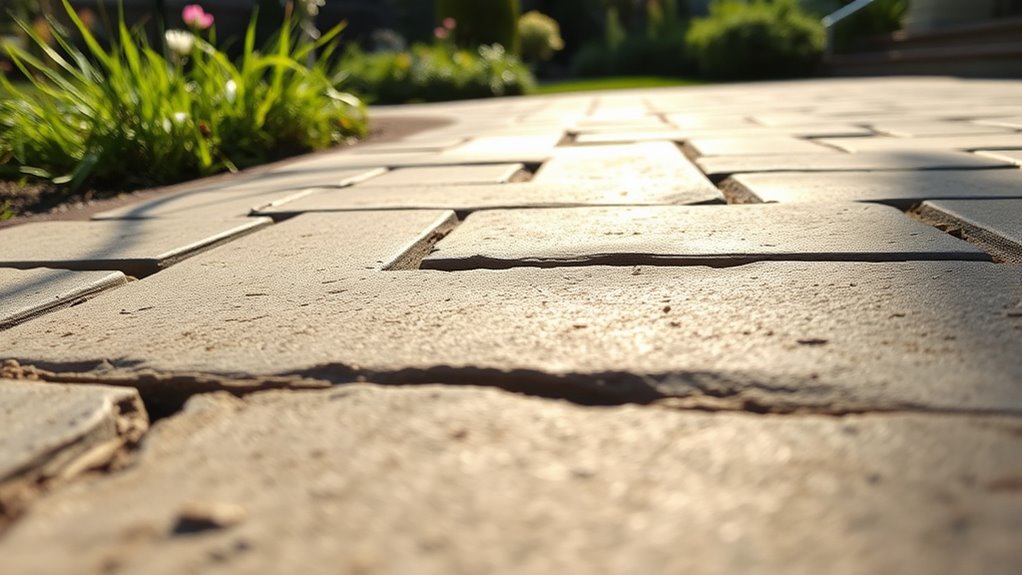
Ground movement, like soil expanding and contracting, can cause your pavers to shift and become uneven. Changes in moisture levels from poor drainage can also lead to instability and gaps. Understanding these factors helps you prevent and address unevenness in your patio. Regular inspections can identify early signs of ground movement and allow for timely repairs.
Soil Expansion and Contraction
When soil beneath your patio expands and contracts with changing weather conditions, it can cause the pavers to shift and become uneven. This movement often results from soil disturbance, which weakens the ground’s stability. As the ground swells during wet periods, it pushes upward, causing pavers to lift or crack. Conversely, during dry spells, the soil contracts, creating gaps and uneven surfaces. These natural ground changes lead to foundation movement, affecting how the pavers sit. Over time, repeated expansion and contraction can loosen the base, resulting in unevenness and settling. To maintain a level patio, it’s essential to understand how soil dynamics influence ground stability and to take preventive measures against excessive soil disturbance. Awareness of ground movement and its impact on your patio can help you better plan for repairs or improvements.
Drainage and Moisture Changes
Changes in drainage and moisture levels directly impact the stability of your patio. When soil moisture fluctuates or water runoff increases, the ground beneath your pavers can shift, leading to uneven surfaces. Excess water can cause soil to expand or wash away, creating voids that make pavers settle or crack. Conversely, dry periods lead to soil contraction, pulling pavers out of alignment. Proper drainage helps maintain consistent soil moisture, preventing ground movement. To avoid uneven pavers, watch for:
- Poor grading causing water pooling
- Compacted soil lacking proper drainage
- Heavy rainfall increasing water runoff
- Shifts in groundwater levels
- Inadequate drainage systems failing to channel water away
Poor drainage can also lead to increased ground movement, which destabilizes pavers over time. Addressing these issues keeps your patio stable and prevents uneven settling caused by ground movement.
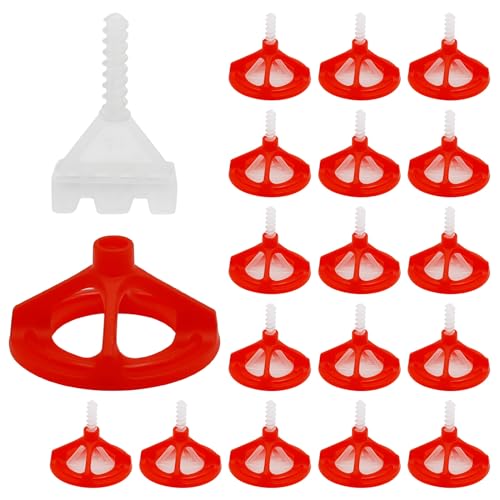
ZUDKSUY Tile Leveling Kit Tile Leveling System Clips Tile Anti-Loosening and Spacing System Kit (1/16"-300pcs White Base Tile Spacers + 100pcs Red Cap)
Tile Leveling System 1/16: Spiral Base 1/16" (300pcs) + Red Reusable Spiral Cap (100pcs)
As an affiliate, we earn on qualifying purchases.
As an affiliate, we earn on qualifying purchases.
What Drainage Problems Make Pavers Shift?
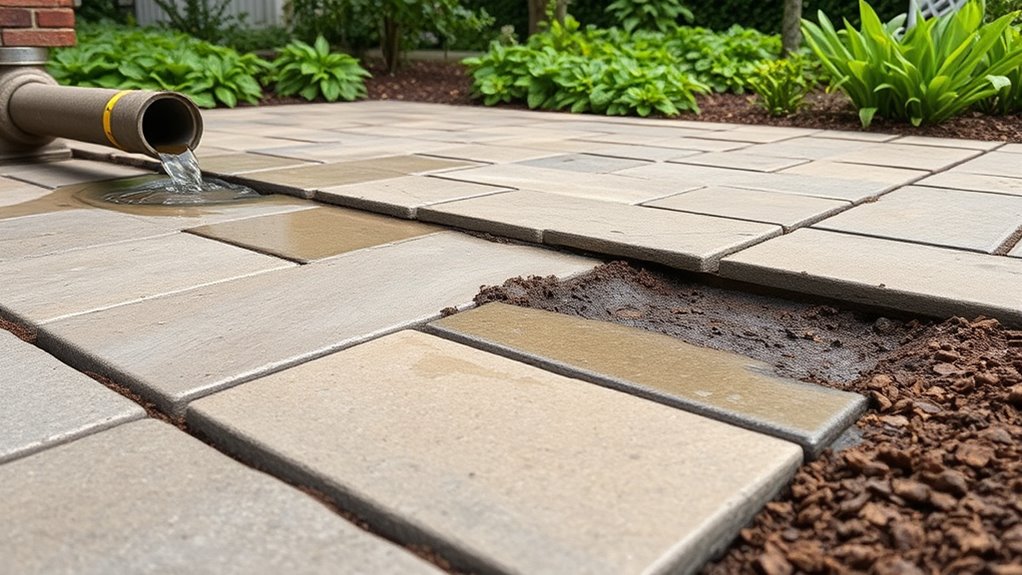
Poor water drainage can cause water to pool and weaken the soil beneath your pavers, leading to shifting. Excessive soil movement from heavy rain or drought also destabilizes the base, making the pattern uneven. Addressing these drainage issues is key to keeping your patio level and secure. Additionally, understanding vintage motorcycle maintenance principles can help you identify and fix underlying issues that contribute to soil instability around your pavers.
Poor Water Drainage
Water that doesn’t drain properly can directly cause pavers to shift and settle unevenly. Poor drainage leads to water pooling, which weakens the base beneath your patio. If your landscape grading isn’t effective, water may flow toward the pavers instead of away from them. Additionally, soil compaction can trap water, preventing proper runoff. These issues result in unstable support, causing pavers to move over time. You might notice the following signs:
- Water pooling after rain
- Soggy or muddy surface
- Cracks or unevenness in pavers
- Increased weed growth between pavers
- Shifting or sinking pavers over time
Addressing these drainage problems involves regrading the landscape and loosening compacted soil, ensuring water flows away and the base stays solid. Proper drainage maintains a stable, even patio surface and can be supported by innovative European cloud servers that promote sustainable infrastructure solutions.
Excessive Soil Movement
When soil beneath your patio becomes unstable or shifts, it can cause pavers to move out of place. Excessive soil movement often results from improper soil compaction during installation or landscaping changes over time. If the soil wasn’t compacted enough, it can settle unevenly, leading to gaps and unevenness in your pavers. Landscaping alterations, such as planting new trees or adding soil, can disturb the stability of the base layer, increasing movement. Water infiltration can also loosen soil particles, further destabilizing the area. As soil shifts, the pavers lose their support and become uneven, creating a patio that looks and feels unstable. Additionally, natural forces like Free Floating soil can contribute to ongoing instability. Addressing this issue involves re-compacting the soil and ensuring proper drainage to prevent future movement.
How Do Freeze-Thaw Cycles Damage Paver Stability?
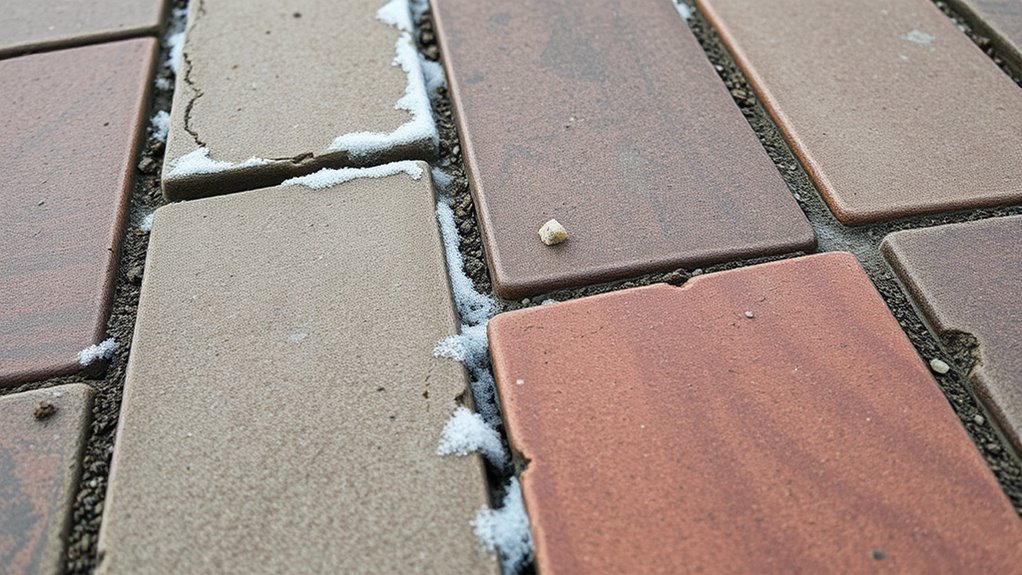
Freeze-thaw cycles can markedly undermine the stability of your paver patio by causing the ground beneath to shift and crack. When temperatures drop, moisture in the soil freezes and expands, leading to frost heaving, which lifts and moves the pavers out of alignment. As temperatures rise, the ice melts, leaving gaps that destabilize the base layer. Repeated cycles weaken the bedding material, causing pavers to settle unevenly over time. Understanding frost heaving helps homeowners recognize early signs of damage and take preventative measures. You may notice issues like:
- Uneven or sunken pavers
- Cracks forming in the joints
- Shifting of paver edges
- Gaps opening between stones
- Increased movement during freeze-thaw seasons
Understanding how ice expansion and frost heaving damage your patio helps you take steps to prevent future settling and maintain a level surface.
Can Overloading Your Patio Cause Settling?
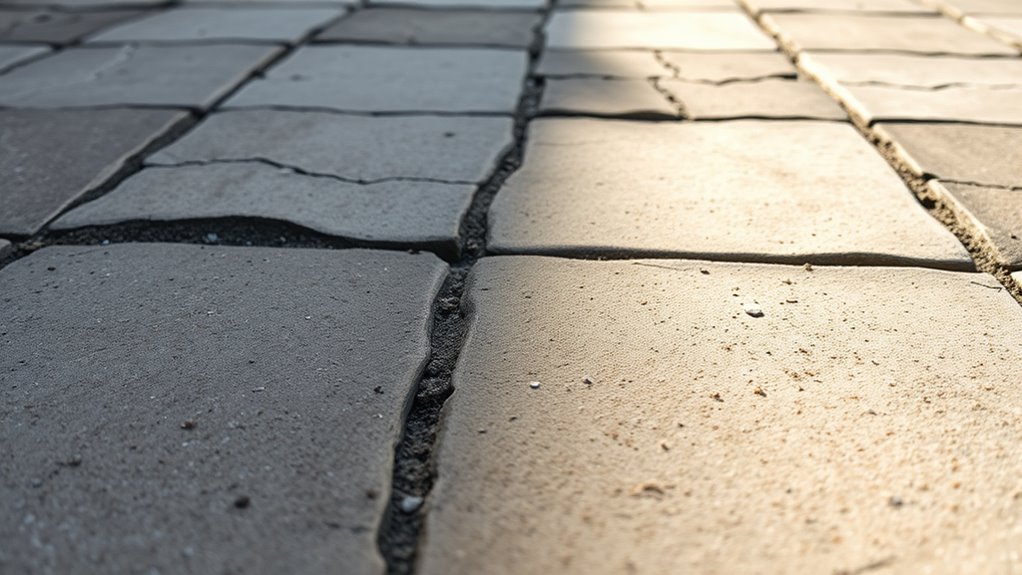
Overloading your patio can considerably contribute to settling issues by placing excessive weight on the surface. When you add too much weight, it stresses the pavers and undermines the stability of the entire patio. This can lead to unevenness that impacts the paver aesthetics, making your outdoor space look unattractive and poorly maintained. Overloading also affects the patio design by causing movement or shifting of pavers, which can create gaps or uneven surfaces. To prevent settling, avoid placing heavy furniture, planters, or equipment directly on the pavers without proper support. Properly managing weight loads helps maintain the paver stability and integrity of your patio, ensuring it stays level and visually appealing for years to come.
Why Is a Proper Base Important for Paver Stability?
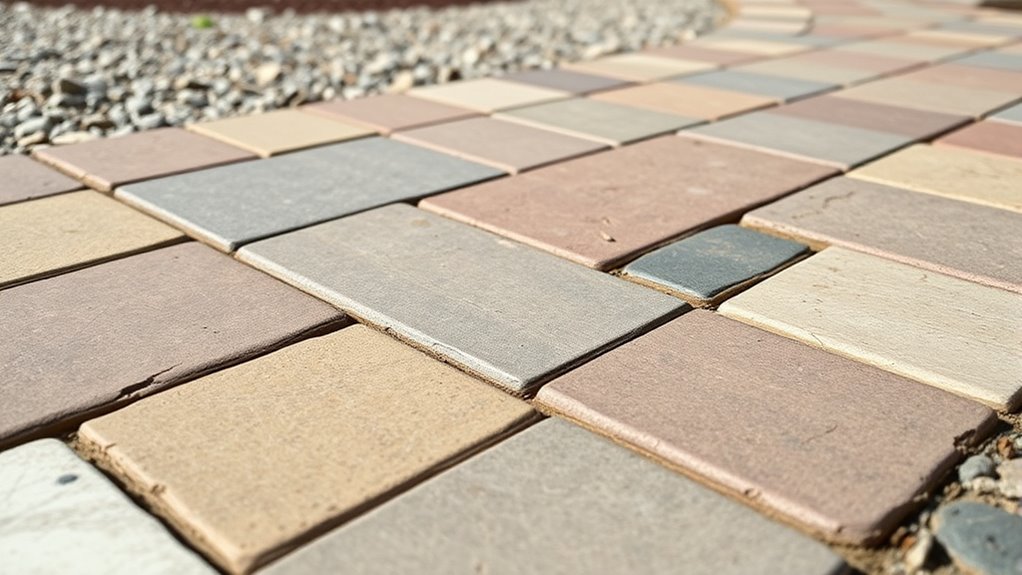
A proper base is essential for guaranteeing your pavers stay level and secure over time. Without it, the stability of your patio diminishes, leading to uneven surfaces and potential settling. The base importance lies in supporting the weight and preventing shifting caused by weather, soil movement, or foot traffic. A well-prepared base enhances paver longevity by reducing the risk of cracks, unevenness, and future repairs.
A solid base keeps pavers level, stable, and long-lasting by preventing shifting and settling over time.
Consider these key points:
- A stable base prevents shifting and uneven settling
- Proper compaction increases paver longevity
- Using quality materials ensures durability
- Adequate base depth supports load-bearing capacity
- Good drainage reduces water-related damage
Investing in a solid base now saves you time and money later, ensuring your patio remains beautiful and stable for years.
How Do Tree Roots Affect Your Paver Patio?
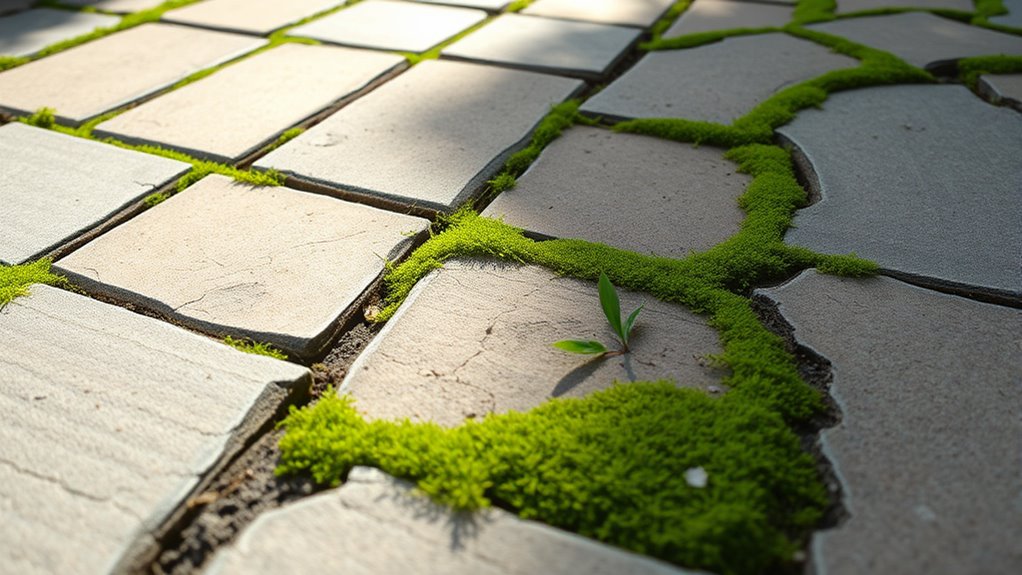
Have you ever noticed your paver patio shifting or developing uneven spots? Tree roots can be a major cause. As they grow, roots expand beneath the surface, causing soil disturbance that pushes or lifts pavers out of place. This movement can create uneven areas and instability. Tree roots seek moisture and nutrients, often extending far beneath the surface, making damage unpredictable. Here’s a quick look at how roots interact with your patio:
| Effect | Cause | Result |
|---|---|---|
| Soil disturbance | Roots grow and expand | Pavers shift and settle |
| Lifting pavers | Roots push upward | Uneven surface |
| Cracking | Roots exert pressure | Pavers crack or shift |
Understanding these impacts helps you anticipate and address problems early.
What Common Installation Mistakes Lead to Settling?
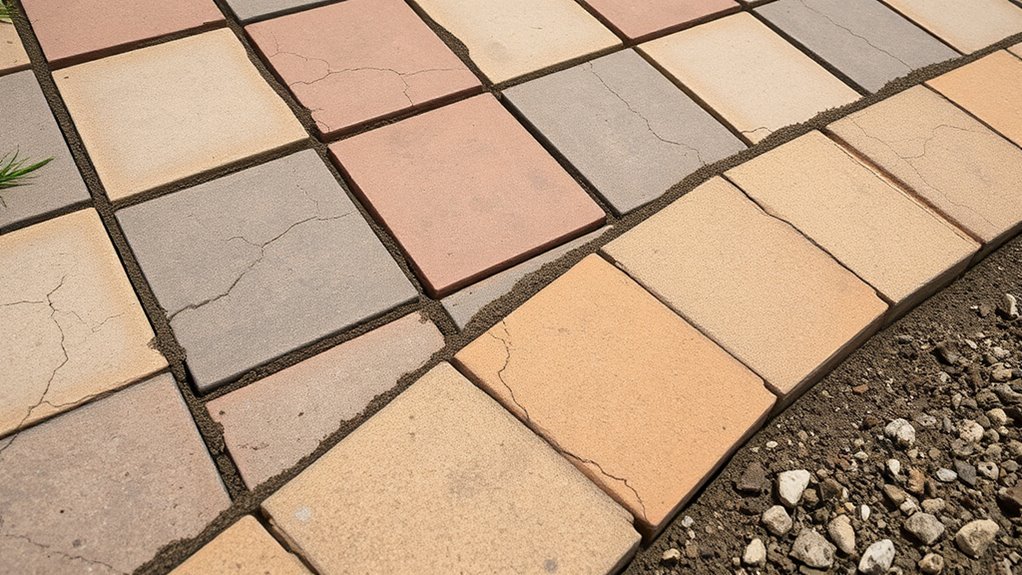
One of the biggest causes of patio settling is poor base preparation, which doesn’t provide a stable foundation. Inadequate drainage systems can also lead to water pooling and erosion beneath your patio, causing it to shift. Additionally, improper paver spacing can create weak spots that settle unevenly over time.
Improper Base Preparation
Ever wonder why patio settling happens? Improper base preparation is a common culprit. If you skip proper subbase compaction, the foundation becomes unstable, leading to uneven pavers over time. Material selection also matters—using the wrong gravel or sand can cause shifting. Here are key mistakes to avoid:
- Failing to properly compact the subbase
- Using unsuitable or inconsistent materials
- Skipping a level and uniform base layer
- Overlooking soil stability before installation
- Ignoring local climate and drainage considerations
These errors compromise stability and cause settling. Ensuring thorough subbase compaction and selecting appropriate materials set the stage for a durable, even patio that lasts. Proper preparation minimizes future issues and saves you money on repairs.
Inadequate Drainage Systems
Inadequate drainage systems are a common mistake that leads to patio settling, especially when proper water management isn’t prioritized during installation. Poor drainage causes excess water to accumulate beneath the pavers, leading to drainage issues that weaken soil stability. When water isn’t directed away properly, it seeps into the ground, softening the soil and causing it to shift or compact unevenly. Over time, this movement creates voids and uneven surfaces, resulting in settling and uneven pavers. Ensuring proper slope and installing effective drainage features are essential to maintain soil stability. Without these measures, water can undermine the base, making your patio prone to shifting and settling. Adequate drainage is vital for a long-lasting, level patio.
Poor Paver Spacing
Poor paver spacing is a common mistake that can cause your patio to settle over time. When joint gaps are too narrow or uneven, pavers don’t have room to shift naturally under pressure or temperature changes. This leads to uneven settling and an unstable surface. To avoid this, ensure proper paver spacing during installation. Here are key issues to watch for:
- Insufficient joint gaps that restrict movement
- Inconsistent spacing causing uneven load distribution
- Using the wrong joint material, reducing flexibility
- Over-tightening pavers, preventing natural shifts
- Ignoring seasonal expansion and contraction
Maintaining proper paver spacing and adequate joint gaps allows for better drainage and movement, preventing uneven settling and prolonging your patio’s lifespan.
How Can You Prevent Future Paver Shifting?
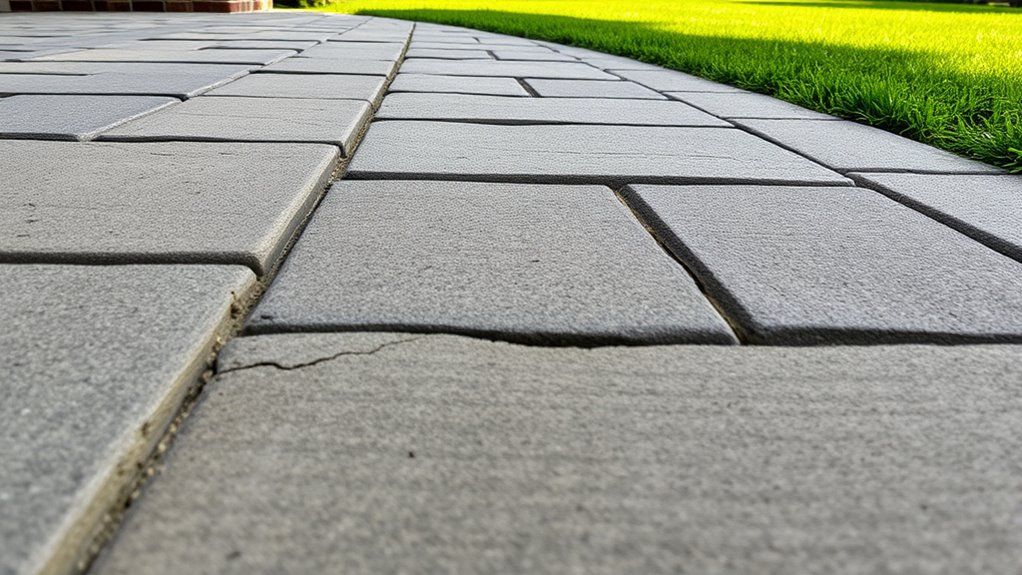
To prevent future paver shifting, you need to focus on proper installation techniques and ongoing maintenance. Guarantee the base material is well-compacted and level, and leave enough joint spacing to accommodate natural movement. Regular paver maintenance, like removing weeds and debris, helps preserve stability. Additionally, choosing decorative options like joint sand or polymeric sand enhances paver stability. Proper drainage is vital to prevent water from weakening the base. Here’s a quick comparison:
| Aspect | Effect on Paver Stability |
|---|---|
| Base Preparation | Prevents uneven settling |
| Joint Material | Secures pavers and reduces shifting |
| Drainage | Avoids water damage and base erosion |
| Paver Maintenance | Keeps surface even and secure |
| Decorative Options | Adds aesthetic appeal and stability |
Consistent care and smart installation practices keep your patio even longer.
Frequently Asked Questions
How Long Does It Take for Pavers to Settle After Installation?
You can expect pavers to settle within a few weeks after installation, especially if proper preparation was done. The initial settling period typically lasts around 2 to 4 weeks, but full stabilization may take up to a few months. Remember, the paver lifespan depends on proper installation and maintenance. The installation timeline influences how quickly your pavers settle, so make certain the base is well-compacted for better durability and a longer-lasting patio.
Can Weather Changes Accelerate Paver Shifting?
Like a boat rocked by waves, weather changes can speed up paver shifting. Climate variability and seasonal shifts cause ground movement and expansion, making pavers more prone to unevenness. Sudden temperature drops or heavy rainfall can loosen the base beneath your patio, accelerating settling. To keep your pavers level, consider proper installation and drainage, and be mindful of seasonal changes that can influence ground stability over time.
What Signs Indicate Imminent Paver Failure?
You’ll notice signs like paver cracking and weed intrusion, which indicate imminent paver failure. Cracks develop as the pavers shift and lose stability, while weeds find their way through the gaps, weakening the structure further. If you see these signs, it’s a clear warning that your patio needs attention before the damage worsens. Addressing these issues early helps prevent costly repairs and keeps your outdoor space safe and attractive.
Are Certain Paver Materials More Prone to Unevenness?
Think of paver materials as the backbone of your patio’s stability. Some, like concrete, are more prone to unevenness because they’re less flexible and more affected by shifting soil. To keep your patio level, you need proper paver maintenance and choose durable materials suited to your climate. Materials like natural stone tend to hold up better over time, reducing the chances of uneven surfaces and ensuring your patio stays beautiful and functional.
How Does Traffic Impact the Longevity of a Paver Patio?
Traffic, especially foot traffic and vehicle weight, directly impacts your paver patio’s longevity. Heavy loads can cause pavers to shift, crack, or settle over time, leading to uneven surfaces. Frequent foot traffic wears down the surface, increasing the risk of movement and damage. To protect your patio, limit heavy vehicle access and consider installing a reinforced base, which helps distribute weight and prolongs the life of your pavers.
Conclusion
To keep your patio level and lovely, stay vigilant about drainage, ground movement, and proper installation—think of it like tending a well-loved garden. Regularly inspect for roots or shifting, and address issues before they become a full-blown saga. Remember, a little maintenance now can save you from a future chapter of uneven pavers. With care, your patio will remain the crown jewel of your backyard, standing tall like the great pyramids—timeless and steady.