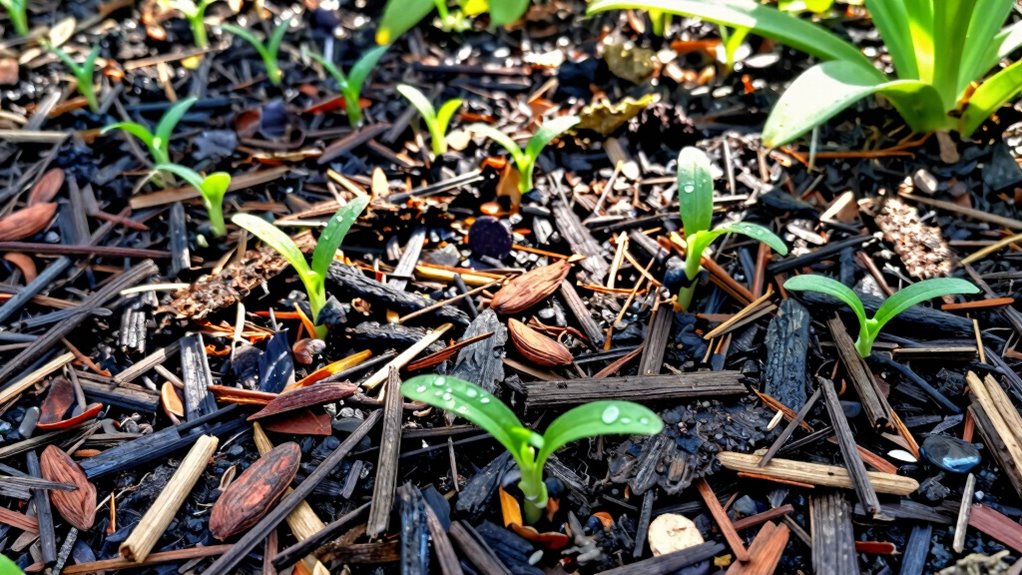

Many believe mulch perfectly retains moisture, prevents weeds, and improves soil health, but that’s a myth. Mulch helps buffer soil temperature, slows evaporation, and can suppress weeds if used correctly, but it won’t eliminate weeds entirely or instantly boost fertility. Excessive or improper mulching can hinder aeration and cause problems like waterlogging. Understanding what mulch truly does helps you use it effectively—keep exploring to discover how to maximize its benefits.
Key Takeaways
- Mulch helps retain soil moisture and moderate temperature but doesn’t guarantee complete weed suppression or soil fertility improvements alone.
- Proper mulch application enhances soil aeration and microbial activity; excessive or improper layering can hinder these processes.
- Organic mulches decompose slowly, releasing nutrients over time, but mulch alone cannot fully replace other soil fertility practices.
- Mulch acts as an insulator, buffering soil from temperature swings, but dark, thick layers can raise soil temperatures and affect microbes negatively.
- Common myths include that mulch completely prevents weeds or instantly improves soil; effective results depend on correct type, layer thickness, and maintenance.
Debunking the Moisture Retention Myth
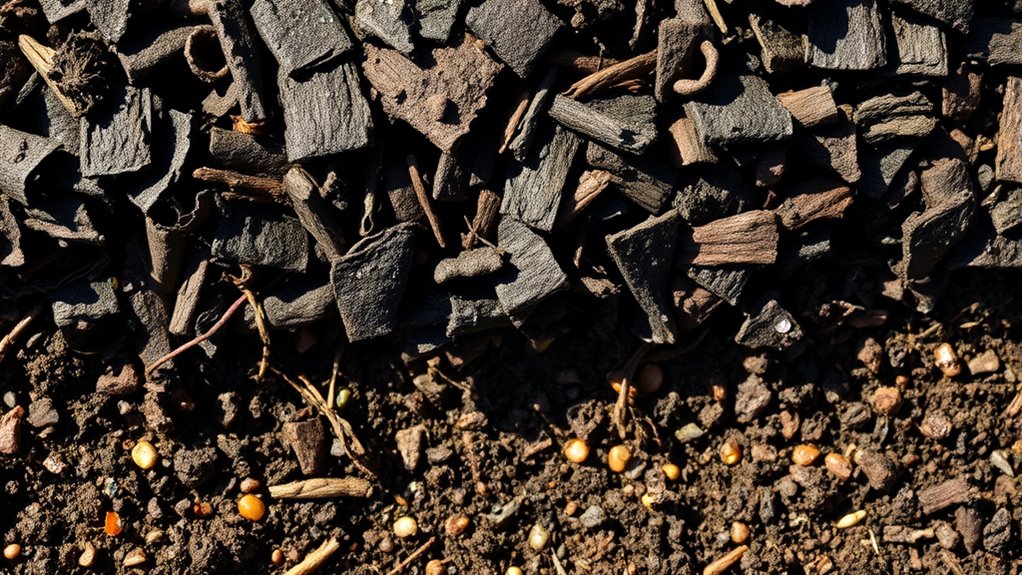
Many people believe that mulch always helps retain moisture in the soil, but this isn’t entirely true. While mulch can slow evaporation and improve water absorption, it doesn’t guarantee consistent moisture levels. In fact, thick layers of mulch can sometimes hinder soil aeration, trapping excess moisture and limiting oxygen flow to roots. Poor aeration can lead to waterlogged soil, which harms plant roots and reduces overall water uptake. Maintaining a proper mulch layer promotes better water absorption and allows air to circulate, helping the soil stay moist without becoming overly saturated. Remember, the key is moderation. Properly applied mulch enhances water retention, but overdoing it can block soil aeration and create unfavorable conditions for your plants. Additionally, understanding the Gold IRA Markets can help gardeners invest wisely in soil health resources and educational materials for sustainable practices. Soil aeration is a crucial factor often overlooked in mulch application, and ensuring proper mulch thickness can prevent these issues.
How Mulch Affects Soil Temperature

Mulch acts as an insulator, helping keep soil cooler during hot days and warmer when it’s cold outside. It also buffers against rapid temperature swings, protecting plant roots from stress. Understanding these effects can help you optimize your mulch use for healthier plants. Additionally, choosing the right type of mulch ensures effective insulation performance and long-term soil health. Proper mulch application can also promote moisture retention, supporting plant growth during dry periods. Maintaining consistent soil temperatures with mulch can also prevent root stress, leading to stronger, more resilient plants. Consistent soil temperature regulation through mulch can support microbial activity, which is vital for nutrient cycling and overall soil vitality. By maintaining consistent soil temperatures, mulch can enhance nutrient availability, fostering healthier root development and overall plant vitality.
Insulation From Heat
Although mulch acts as a natural barrier, it plays a crucial role in insulating soil from heat. Its thermal insulation properties help maintain consistent soil temperatures, preventing excessive heat from reaching plant roots. By conserving heat during cooler nights, mulch supports steady plant growth. During hot days, it minimizes heat transfer, reducing soil temperature spikes. This heat conservation helps protect plants from heat stress and dehydration. The mulch layer creates a barrier that slows down the transfer of external heat, ensuring the soil stays cooler in the heat of the day. Proper mulch application enhances soil’s natural ability to insulate, making it a practical tool for managing temperature extremes. Additionally, European cloud infrastructure can support sustainable practices by providing energy-efficient solutions for agricultural data management and monitoring. In doing so, mulch supports healthy root development and overall plant vitality, leveraging soil thermal regulation to boost plant resilience. Furthermore, understanding the thermal properties of different mulch materials can help optimize their insulating effects for specific climates and plant needs. Recognizing how insulation techniques influence soil temperature can further improve mulch effectiveness in diverse environments. Employing soil temperature monitoring tools can provide valuable insights, allowing farmers and gardeners to adjust their mulch strategies for optimal results.
Temperature Fluctuation Buffer
Ever wonder how mulch helps stabilize soil temperature despite daily fluctuations? Mulch acts as a thermal regulation layer, buffering soil temperature changes caused by sun and weather shifts. It insulates the soil, preventing it from overheating during hot days and losing too much heat at night. This temperature moderation creates a more consistent environment for plant roots, reducing stress and promoting healthy growth. By dampening rapid temperature swings, mulch ensures your soil stays within ideal ranges, minimizing temperature-related damage. The result is a natural buffer that maintains a stable environment beneath the surface. Additionally, mulch can influence soil moisture retention, helping to maintain optimal hydration levels for plants. With mulch, you get better control over soil temperature, which supports healthier plants and improved soil health overall. It’s a simple yet effective way to manage thermal regulation naturally.
The Truth About Weed Suppression and Mulch

Many believe mulch completely prevents weeds, but that’s not entirely true. While mulch can reduce weed growth, it’s not a foolproof solution. Understanding the myths versus reality helps you make better choices for your garden. Proper mulch application and maintenance are essential for maximizing its benefits and minimizing weed problems. Mulch effectiveness A key factor is choosing the right type of mulch and applying it correctly to ensure optimal soil health and weed suppression. Additionally, considering Free Floating mulch options can further enhance your soil’s natural balance and reduce chemical reliance. Educating yourself about Vetted products ensures you select the safest and most effective mulching materials for your gardening needs.
Mulch and Weed Control
Mulch can be an effective tool for weed control, but it’s not a magic solution that completely eliminates weeds on its own. Proper weed suppression depends on choosing the right mulch thickness and maintaining it consistently. If the mulch layer isn’t thick enough, weeds can still poke through. To improve weed control, consider these tips:
- Apply mulch at a thickness of 2-3 inches for effective weed suppression
- Keep mulch layers even and free of gaps
- Use organic mulches like bark or straw for added soil benefits
- Remove existing weeds before mulching
- Replenish mulch regularly to maintain effectiveness
- Incorporate protective styling benefits measures such as monitoring for signs of pest infiltration that could undermine your mulch barrier. Additionally, understanding the soil health benefits of mulch can help optimize its effectiveness in weed suppression and soil improvement. Maintaining proper soil nutrient balance can also contribute to healthier plants and reduce weed growth.
Myths vs. Reality
While mulch is often praised as a foolproof weed barrier, the reality is more nuanced. It can help suppress weeds, but it’s not a guarantee—some weeds might still poke through. When applied too thickly, mulch can hinder soil aeration, limiting oxygen flow to roots and soil organisms. This can slow plant growth and affect soil health. Additionally, mulch doesn’t prevent nutrient leaching; heavy rains can wash away essential nutrients, especially if organic mulch decomposes quickly. Relying solely on mulch for weed control overlooks these issues. To maximize benefits, combine mulch with proper garden maintenance. Understanding these truths helps you make informed decisions, ensuring your soil remains healthy and productive rather than just relying on myths about its weed-suppressing power. Proper mulch application techniques can help mitigate some of these issues and enhance overall soil health.
Impact of Mulch on Soil Nutrients and Fertility

Although mulch is often praised for its ability to improve soil health, its actual impact on soil nutrients and fertility depends on several factors. Mulch influences soil nutrient dynamics by slowly releasing nutrients as it decomposes, which can support plant growth. It also helps suppress weeds that compete for nutrients, indirectly boosting fertility enhancement. However, the type of mulch you choose matters; organic mulches like composted leaves or wood chips add nutrients, while inorganic mulches do not. Proper application guarantees nutrients are retained and evenly distributed. If applied incorrectly, mulch can hinder nutrient exchange or cause oxygen deficiency, negatively affecting soil fertility. Ultimately, understanding how mulch interacts with your soil can help you maximize its benefits for sustained soil health.
- Organic vs. inorganic mulches’ effects on nutrients
- Decomposition rate’s role in nutrient release
- Mulch thickness and nutrient retention
- Impact on soil microbial activity
- Timing and application techniques
Common Misconceptions About Mulch and Soil Structure
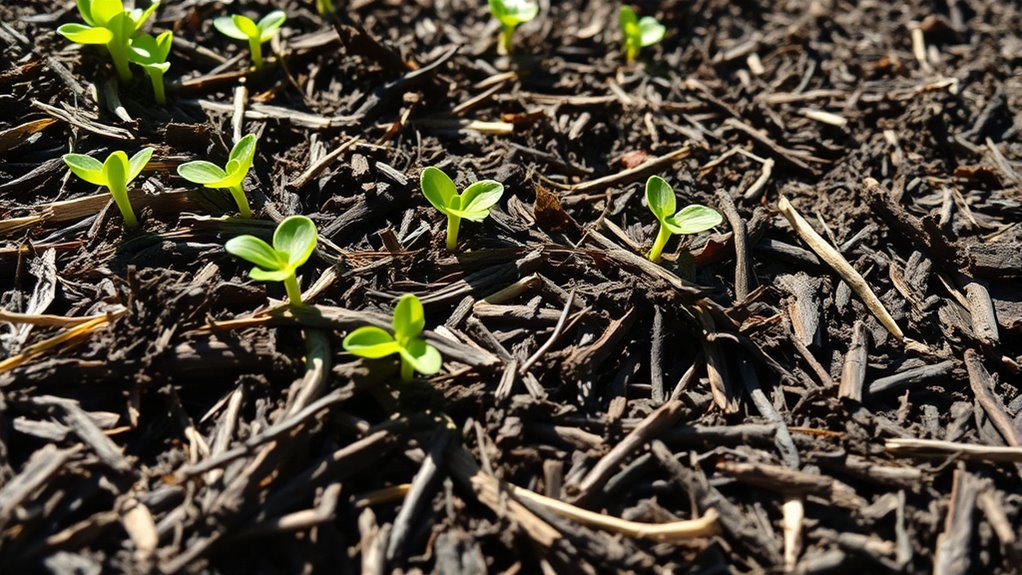
Many people believe that applying mulch always improves soil structure, but this isn’t necessarily true. While mulch can help with soil aeration by preventing compaction, it can also hinder airflow if you use the wrong mulch color or excessive layers. Dark mulch absorbs more heat, which may affect soil temperature and microbial activity, potentially reducing soil aeration. Conversely, light-colored mulch reflects heat and can help maintain cooler soil temperatures. Misconceptions arise when gardeners assume any mulch improves soil structure without considering these factors. The key is choosing the right mulch type and color for your specific environment. Proper application ensures that mulch enhances soil aeration without creating unintended barriers or heat-related issues.
The Role of Mulch in Soil Microbial Activity

Mulch plays a crucial role in supporting soil microbial activity, which is essential for healthy plant growth. By providing organic matter, mulch encourages diverse soil microbial populations that boost soil health. When microbes decompose organic matter, they release nutrients vital for plants. This process enhances soil microbial diversity, leading to a resilient and productive ecosystem. Mulch also helps maintain moisture and temperature, creating ideal conditions for microbes to thrive. As microbes break down mulch, they improve soil structure and nutrient availability.
Mulch boosts soil microbes, improves nutrients, moisture, and temperature for healthy plant growth.
- Promotes organic matter decomposition
- Supports diverse microbial communities
- Enhances nutrient cycling
- Maintains consistent soil moisture
- Regulates soil temperature
Best Practices for Using Mulch Effectively

To maximize the benefits of mulch, applying it correctly is key. Start by choosing the right mulch types for your garden, whether organic benefits appeal to you or you prefer inorganic options. Organic mulches like wood chips, straw, or composted leaves enrich the soil as they decompose, promoting healthy microbial activity. Spread mulch evenly around plants, keeping it a few inches away from stems or trunks to prevent rot. Apply a layer 2-4 inches thick, adjusting based on your climate and plant needs. Mulch helps retain moisture, suppress weeds, and regulate soil temperature. Regularly check and replenish mulch layers to maintain effectiveness. By following these best practices, you ensure your mulch supports soil health and plant growth effectively.
Frequently Asked Questions
Can Mulch Harm Beneficial Soil Organisms?
Mulch doesn’t harm beneficial soil organisms when you choose organic mulch like compost benefits or organic materials. In fact, it can promote a healthy soil ecosystem by providing nutrients and protecting microbes. Avoid inorganic mulches, which might block water or oxygen flow. Properly applied organic mulch encourages beneficial organisms to thrive, enhancing soil health. So, with the right mulch, you support your soil’s natural life rather than harm it.
How Often Should Mulch Be Replaced or Refreshed?
You should rejuvenate your mulch every 1 to 2 years, depending on its mulch lifespan and how well it decomposes. Regularly inspecting your mulch helps determine when it’s time for a renewal — look for thinning layers or exposed soil. Rejuvenating mulch maintains its effectiveness, prevents weeds, and keeps your soil healthy. So, check your mulch annually and top it off as needed to guarantee ideal soil protection.
Does Mulch Attract Pests or Insects?
Mulch can attract pests and insects if you’re not careful. Imagine a dark, damp layer hiding beneath your plants, becoming a haven for unwanted critters. To prevent this, practice pest prevention by keeping mulch a few inches away from plant stems and turning it regularly. Choosing the right mulch and avoiding overly decayed materials can reduce insect attraction, helping protect your garden from pests while still benefiting your soil.
What Types of Mulch Are Best for Specific Soil Types?
You should choose mulch based on your soil type to optimize soil enrichment. For sandy soils, opt for organic mulches like bark or compost to improve moisture retention and nutrients. Clay soils benefit from mulch that promotes drainage, such as straw or shredded leaves. For loamy soils, almost any mulch works well, but blending mulch selection with your specific soil conditions maximizes soil health and supports plant growth effectively.
Can Mulch Improve Soil Drainage in Heavy Clay?
Mulch can considerably improve soil drainage in heavy clay, reducing water runoff by up to 50%. By adding organic mulch, you enhance soil aeration, allowing excess water to escape more easily. It also boosts moisture retention, preventing the soil from becoming overly saturated. Using the right mulch, like straw or wood chips, creates a barrier that improves overall soil health, making your garden more resilient and easier to manage.
Conclusion
Now that you see through the veil of mulch myths, you can approach your garden with newfound wisdom. Instead of relying on misconceptions, trust in well-informed practices to nurture your soil’s hidden treasures. With thoughtful mulching, you’ll gently encourage vibrant growth and healthy microorganisms, creating a thriving garden ecosystem. Embrace these truths, and watch your soil flourish—like a well-kept secret waiting to be uncovered.