Mosquitoes love your yard because of standing water in buckets, clogged gutters, and debris that hold moisture. Dense foliage, overgrown plants, and shaded areas create perfect hiding and breeding spots. Excess moisture from overwatering or poor drainage makes your yard more inviting. Uncovered containers and certain plants attract them, while a lack of natural predators allows populations to grow. Continue exploring to discover simple ways to make your yard less appealing to mosquitoes.
Key Takeaways
- Standing water in items like bird baths, buckets, and clogged gutters provides breeding sites for mosquitoes. Regularly empty and cover water sources.
- Dense, overgrown vegetation and leaf litter create shady, moist areas ideal for mosquito resting and hiding. Maintain tidy, trimmed plants.
- Poor drainage and uneven grading lead to puddles and stagnant water, attracting mosquitoes to breed. Improve drainage and fix grading issues.
- Certain plants and decaying organic matter emit scents that attract mosquitoes; manage these to reduce attraction points.
- Lack of natural predators and excess moisture from overwatering or poor drainage increase mosquito populations; introduce predators and improve landscape drainage.
Standing Water: The Perfect Breeding Ground

Standing water provides an ideal environment for mosquitoes to breed. Items like bird baths and pet water bowls often collect water that remains stagnant for days, creating perfect breeding spots. If you forget to change the water regularly, it becomes a haven for mosquito larvae to develop. Even small containers, such as plant saucers or buckets, can hold enough water to attract these pests. Make sure to empty or scrub bird baths weekly, and refill pet water bowls daily. Keeping water moving or dry helps prevent standing water from forming. Removing these sources minimizes mosquito breeding sites, reducing their population in your yard. Staying vigilant about any standing water around your home is key to controlling mosquito numbers and enjoying a more comfortable outdoor space. Additionally, understanding the importance of contingency plans can help homeowners prepare for unexpected mosquito infestations. Proper drainage techniques are also crucial in preventing water accumulation around your property. Incorporating herbal remedies like citronella or eucalyptus plants around your yard can naturally repel mosquitoes and further reduce their presence. Regularly inspecting your yard for potential breeding grounds helps ensure that stagnant water does not go unnoticed.
Dense Foliage and Overgrown Areas
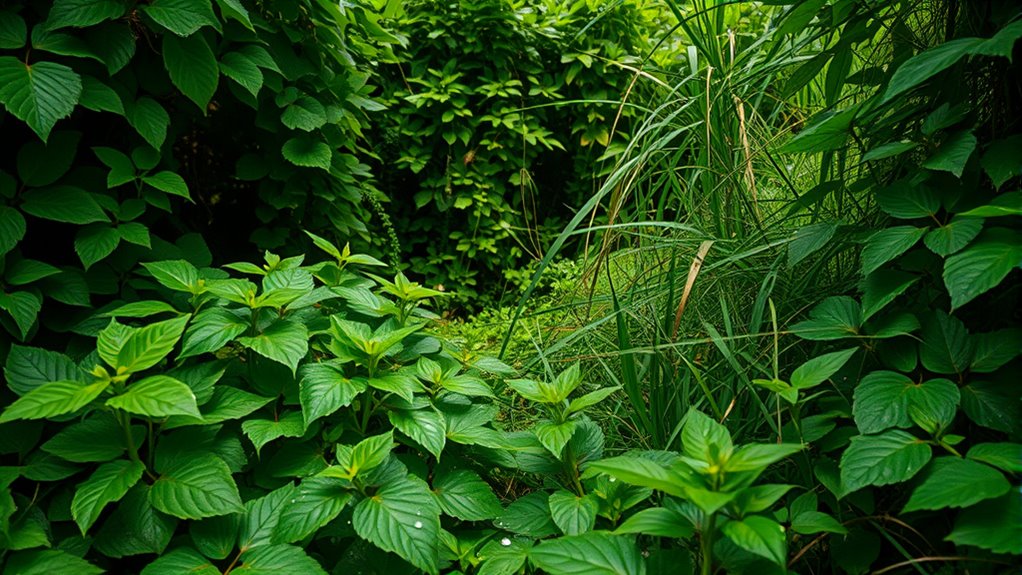
Dense foliage, overgrown shrubs, and leaf litter create ideal hiding spots for mosquitoes. When your yard has thick plant coverage, it becomes harder to spot and eliminate these pests. Clearing out excess vegetation and debris can markedly reduce their presence. Additionally, maintaining your yard with professional landscaping about the importance of a tidy outdoor space can motivate consistent upkeep. Regularly trimming plants and removing leaf litter not only enhances the aesthetic appeal but also minimizes mosquito habitats, ensuring a safer, more enjoyable outdoor environment. Incorporating proper yard maintenance practices such as regular inspections and targeted removal of standing water further diminishes mosquito breeding sites. Using landscape design techniques to improve airflow and sunlight can also help reduce areas where mosquitoes thrive. Employing environmental management strategies, such as introducing natural predators, can further control mosquito populations naturally.
Dense Plant Coverage
If your yard has thick foliage or overgrown areas, mosquitoes can find plenty of places to hide and breed. Dense plant coverage creates ideal mosquito habitat and makes yard maintenance harder. To reduce these hiding spots, consider these steps:
- Trim overgrown trees and shrubs regularly to improve airflow and sunlight.
- Remove fallen leaves and plant debris that collect water.
- Clear dense underbrush to eliminate shaded, moist areas.
- Maintain a tidy yard by pruning and thinning dense foliage to reduce mosquito sheltering spots.
Overgrown Shrubs and Bushes
Have overgrown shrubs and bushes taken over your yard? These dense, tangled areas create perfect hiding spots for mosquitoes. To reduce their breeding grounds, you need to focus on pruning shrubs regularly and maintaining shrub health. Proper shrub maintenance involves trimming back overgrown branches and removing dead or decaying foliage, which improves airflow and sunlight penetration. By pruning shrubs, you eliminate thick foliage that traps moisture and provides shelter for mosquitoes. Keep in mind that overgrown plants can also trap rainwater, creating stagnant pools ideal for mosquito breeding. Regular maintenance not only keeps your yard looking tidy but also considerably reduces mosquito populations. Additionally, choosing sustainable planting options can help maintain healthier, less mosquito-friendly landscapes. Maintaining proper drainage is also essential to prevent water accumulation around overgrown shrubs. Incorporating integrated pest management strategies can further reduce mosquito habitats and protect your yard. Taking steps to reduce stagnant water around your shrubs can make a significant difference in mosquito control. Take the time to prune shrubs properly and stay on top of shrub maintenance to make your yard less inviting for these pests.
Leaf Litter Accumulation
Ever notice how leaf litter and fallen debris pile up under overgrown trees and shrubs? This accumulation creates perfect mosquito breeding spots. To reduce their habitat, focus on: 1. Clearing out leaf litter regularly to eliminate standing water. 2. Removing yard debris like sticks and grass clippings that trap moisture. 3. Raking fallen leaves and yard debris into compost bins or trash. 4. Trimming overgrown foliage to improve airflow and sunlight, discouraging damp spots. Additionally, maintaining proper landscaping using natural pools can help improve drainage and reduce dampness around your yard. Proper landscape management practices are essential for controlling mosquito habitats and promoting a healthier yard. Regular inspection and maintenance of drainage systems can further prevent water buildup in problem areas. Incorporating proper grading techniques can also enhance water runoff and decrease stagnant pools. Implementing effective water management strategies can significantly reduce standing water and minimize mosquito breeding sites.
Excessive Moisture and Humidity

Did you know that excess moisture and humidity create the perfect breeding grounds for mosquitoes? When your yard stays damp, mosquito larvae thrive in standing water and moist soil. To reduce these conditions, consider using a dehumidifier indoors, especially in nearby sheds or garages, to lower humidity levels. Outside, improve drainage and remove excess water to prevent puddles. Humidity control around your yard minimizes the damp environments mosquitoes favor. Ensure gutters are clean and direct water away from your foundation. Proper moisture management is a straightforward step to help you enjoy your outdoor space mosquito-free. Additionally, monitoring indoor humidity levels can prevent excess moisture buildup that might contribute to outdoor humidity issues. Incorporating moisture control strategies can further enhance your efforts to keep mosquitoes at bay. Being mindful of damp environments around your yard can make a significant difference in mosquito prevention.
Uncovered Containers and Debris

Uncovered containers and debris are common mosquito breeding sites in your yard. They collect standing water, creating perfect conditions for mosquitoes to lay eggs. Discarded tires are a prime example—water can pool inside, turning them into breeding hotspots. Clogged gutters trap leaves and debris, holding water that mosquitoes thrive in. To reduce breeding sites, consider these steps:
- Empty or cover discarded tires to prevent water accumulation.
- Clear out clogged gutters regularly to ensure proper drainage.
- Remove debris like leaves and trash from your yard.
- Store containers upside down or inside to prevent water collection.
- Use barrier methods like screens or mosquito nets around outdoor seating areas to keep mosquitoes away.
- Regular maintenance and understanding of mosquito breeding behaviors can further help in controlling their population.
- Incorporating smart yard management tools, such as sensors that monitor standing water levels, can provide real-time alerts to prevent mosquito breeding.
Warm Temperatures and Shady Spots

Mosquitoes thrive in areas where warm temperatures and shade meet. You’ll find them hiding in cool, moist spots that stay hidden during the heat of the day. Managing the balance of sunlight and shade can help reduce their preferred breeding and resting places.
Sunlight and Shade Balance
Warm temperatures and the right balance of sunlight and shade considerably influence mosquito activity in your yard. Mosquitoes prefer areas with specific solar exposure and shade preferences, which affect where they rest and breed. To optimize your yard:
- Limit sun-exposed areas that stay warm and attract mosquitoes.
- Create shaded spots using trees or shade sails to reduce solar exposure.
- Remove standing water from shady spots, as mosquitoes lay eggs in moist areas.
- Adjust shade to prevent overly damp, shaded zones that can become mosquito havens.
Balancing sunlight and shade helps control mosquito populations by making your yard less inviting. While mosquitoes thrive in warm, shaded spots, exposing certain areas to sunlight can help dry out breeding sites and reduce their presence.
Cool, Moist Hidden Areas
Shady areas that stay cool and moist create ideal hiding spots for mosquitoes seeking refuge from the sun. These moist, hidden areas often develop around dense shrubbery, leaf litter, or clogged gutters, providing perfect conditions for mosquito breeding. Mosquitoes thrive in these damp environments because they need standing water or moist soil to lay eggs. If you notice puddles under decks, shaded flower beds, or piles of debris, these are prime spots for mosquitoes to hide and breed. Reducing moisture and improving airflow can make your yard less inviting. Regularly clearing out clutter, trimming dense foliage, and fixing leaks help eliminate these hidden, moist areas. By targeting these cool, damp spots, you can considerably cut down on mosquito activity around your yard.
Certain Plants That Attract Mosquitoes

Certain plants naturally draw mosquitoes into your yard, making it easier for them to find a blood meal. Native plants and ornamental flowers often emit scents or provide habitats that attract these pests. To identify the culprits, watch for plants that produce strong scents or have standing water nearby. Here are four common attractors:
- Certain native plants like marsh marigold and cattails
- Ornamental flowers such as marigolds and petunias
- Plants with decaying or rotting parts, like fallen leaves
- Water-loving plants that thrive in moist soil
Poor Yard Drainage Systems
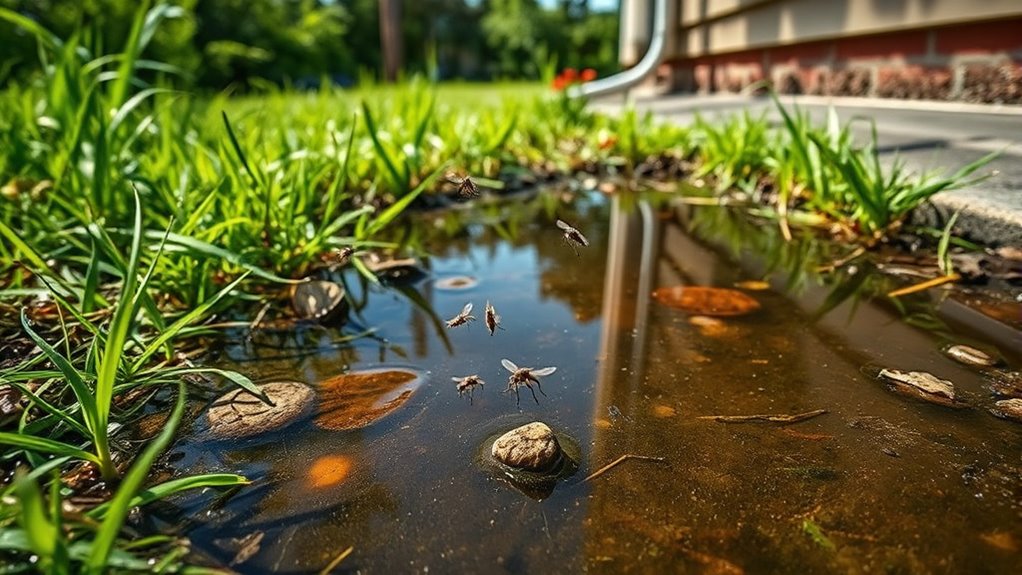
Poor yard drainage creates the perfect environment for mosquitoes to thrive. Drainage problems lead to water pooling in low spots, creating stagnant areas where mosquitoes lay their eggs. When water doesn’t drain properly, these standing pools become ideal breeding sites, especially after heavy rain or overwatering. If your yard has soggy patches or persistent puddles, you’re increasing your mosquito population without realizing it. To fix this, you need to address the drainage issues by grading your yard to slope away from your home, installing drainage systems like French drains, or adding soil to level uneven areas. Ensuring proper water flow reduces stagnant water and makes your yard less inviting to mosquitoes, helping you enjoy outdoor space mosquito-free.
Lack of Natural Predators in Your Area
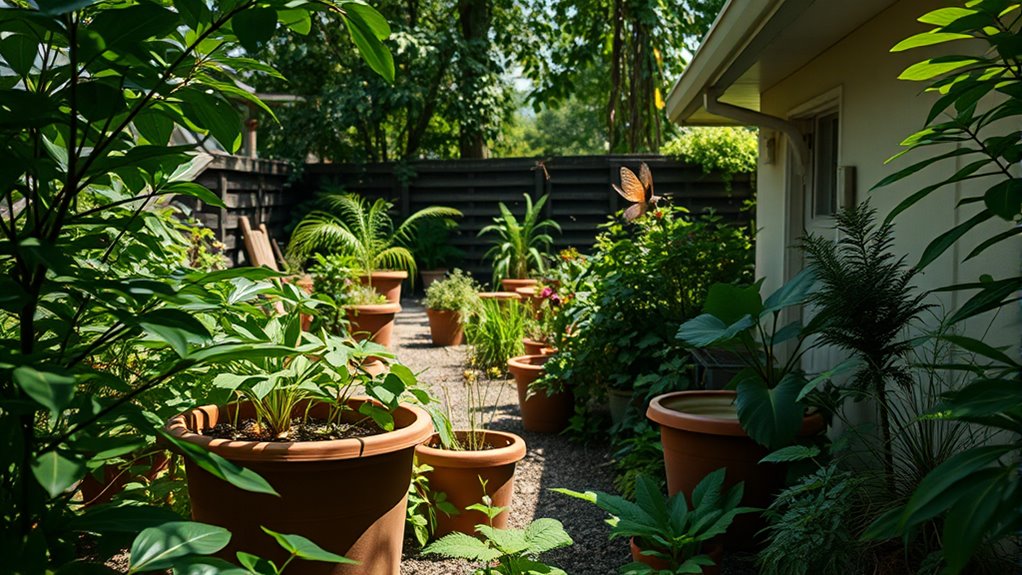
Even with proper drainage fixed, your yard can still host many mosquitoes if there aren’t enough natural predators to keep their populations in check. A natural predator decline reduces the natural control that keeps mosquitoes in balance. Without these predators, mosquito numbers can spike. To improve this situation, consider:
- Introducing fish like Gambusia in ponds to eat larvae.
- Encouraging beneficial insects such as dragonflies and damselflies.
- Supporting bird populations that feed on adult mosquitoes.
- Participating in mosquito control programs that enhance predator presence.
Frequently Asked Questions
How Long Does It Take for Mosquitoes to Breed in Standing Water?
Mosquitoes can breed in stagnant water within 4 to 14 days, depending on conditions like temperature. During the mosquito lifecycle, eggs hatch quickly in standing water, turning into larvae and then pupae before emerging as adult mosquitoes. Stagnant water provides the perfect environment for this process. To prevent breeding, eliminate or regularly empty sources of stagnant water around your yard, disrupting the mosquito lifecycle and reducing their population.
Can Certain Types of Plants Actually Repel Mosquitoes Instead of Attracting Them?
Imagine a garden where nature itself fights back—certain plants act as plant repellents, creating botanical barriers that deter mosquitoes. You can plant citronella, lavender, or basil around your yard; these natural defenses confuse and repel pests. By integrating these botanical barriers, you not only beautify your space but also harness the power of nature’s own repellents, making your yard less inviting for mosquitoes and more enjoyable for you.
What Are the Most Effective Natural Predators to Control Mosquito Populations?
You can introduce natural predators like fish, dragonflies, and certain birds to control mosquito populations effectively. Fish such as Gambusia eat mosquito larvae, making them great biological control agents. Dragonflies and their larvae also prey on mosquitoes. By incorporating natural predator introduction into your yard, you enhance biological control methods, reducing the need for chemical repellents. These eco-friendly options keep your yard mosquito-free while supporting local ecosystems.
How Often Should I Inspect My Yard for Hidden Mosquito Breeding Sites?
Did you know that mosquitoes can breed in just a week? You should inspect your yard weekly to catch hidden breeding sites early. An inspection schedule helps you stay ahead of mosquito populations, especially in warm, damp areas. Check flower pots, birdbaths, and gutters regularly—these are common breeding sites. Regular, thorough inspections guarantee you prevent mosquito larvae from developing and keep your yard safe and comfortable.
Do Outdoor Lighting Choices Influence Mosquito Activity Around My Yard?
Yes, your outdoor lighting choices do influence mosquito activity around your yard. Garden illumination and lighting design can either attract or repel mosquitoes. Opt for yellow or amber LED lights, which are less appealing to these insects compared to white or blue lights. Keep lighting fixtures away from seating areas, and use motion-activated lights to reduce attraction. Proper lighting can make your yard less inviting to mosquitoes, helping you enjoy outdoor space more comfortably.
Conclusion
By turning your yard into a well-guarded fortress, you can send mosquitoes packing and reclaim your outdoor sanctuary. Remove standing water, trim overgrowth, and tidy up debris to cut off their breeding grounds. Think of your yard as a castle wall—strong, clear, and mosquito-free. With a little effort, you’ll create a safe haven where mosquitoes can’t find a foothold, allowing you to enjoy the outdoors without their relentless buzzing.