When choosing between propane, charcoal, and pellet grills, consider how each impacts flavor and convenience. Propane offers quick, precise temperature control but produces less smoke flavor, making it ideal for quick cooks. Charcoal delivers deep, smoky richness perfect for authentic grilled taste but requires more effort to manage. Pellet grills blend ease with rich smoke flavor and consistent heat. To discover which best suits your style and taste, explore the details behind each option.
Key Takeaways
- Charcoal grills produce the deepest, most complex smoky flavors through natural combustion, while propane offers quick, clean heat with minimal smoke.
- Pellet grills provide a balanced smoke flavor using wood pellets, mimicking traditional smoking with added convenience.
- Propane’s consistent temperature control enhances flavor preservation but lacks natural smoke infusion.
- Charcoal and pellet grills naturally generate smoke, enriching food with hearty, robust aromas and flavors.
- The flavor profile depends on fuel choice: charcoal for traditional smoky taste, propane for quick heating, and pellets for versatile, smoked nuances.

When choosing a grill, understanding the differences between propane, charcoal, and pellet options is essential to finding the best fit for your cooking style. Each type offers unique advantages and challenges, especially when it comes to grill temperature control and smoke flavor enhancement. If you value precise temperature management, propane grills excel because they allow you to dial in your desired heat quickly and accurately. With a simple turn of a knob, you can go from low-and-slow to searing heat, giving you consistent results for everything from burgers to delicate fish. This level of control is especially helpful when you’re trying to cook foods to specific internal temperatures or keep a steady temperature over long periods. However, while propane offers excellent temperature regulation, it doesn’t naturally produce the same rich smoke flavor as other grills.
Charcoal grills, on the other hand, are renowned for their ability to produce a deep, smoky flavor that enhances the taste of your food. When you light charcoal, you introduce a natural fuel source that, when burned, creates smoke that infuses meats with a complex, hearty aroma. The trade-off is that charcoal can be challenging to regulate precisely. You need to manage the airflow by adjusting vents and carefully monitor the amount of charcoal to maintain a consistent temperature. This process takes more effort but results in a superior smoke flavor enhancement. Many grilling enthusiasts prefer charcoal for its ability to deliver a traditional, robust smoky taste that’s difficult to replicate with gas or pellets. If you’re willing to invest time in learning the nuances of airflow and fuel management, you’ll find that charcoal can give your foods a flavor profile that’s unmatched.
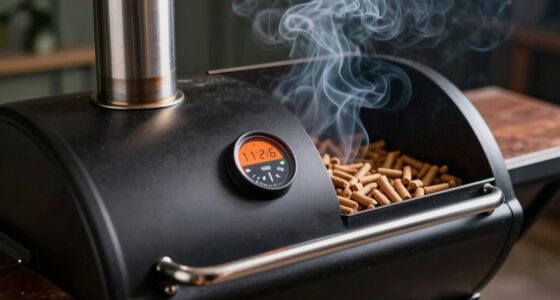
Pellet grills sit somewhere in the middle, combining convenience with flavor. They use wood pellets that burn efficiently and produce smoke as they feed into an electronically controlled firepot. This setup offers excellent grill temperature control, often with digital readouts and precise adjustments, making it easier to maintain a consistent heat. Plus, because the wood pellets are a natural source of smoke, they provide a balanced smoke flavor enhancement that can mimic both charcoal and traditional smoking methods. Pellet grills are especially popular for their versatility—they can function as smokers, grills, or even oven-like cookers. If you want a mix of ease and flavor, a pellet grill might be your best option. It’s perfect for beginners who want control but also want the rich taste of smoked foods without the hassle of managing charcoal or propane.
In the end, your choice depends on how much you value grill temperature control and smoke flavor enhancement. Propane gives you quick, precise heat but less smoky flavor; charcoal offers intense smoke flavor with more effort to control temperature; and pellets strike a balance, delivering both convenience and good smoke flavor.

OXO Brew 8-Cup Coffee Maker - Single-Serve & Carafe, Thermal Stainless Steel, SCA Certified
Rainmaker shower head evenly distributes water over grounds
As an affiliate, we earn on qualifying purchases.
Frequently Asked Questions
How Does Grill Temperature Impact Flavor Development?
When you adjust your grill temperature, it directly influences flavor development. Higher temperatures enhance caramelization and Maillard reactions, creating richer tastes. They also boost smoke production, which adds depth. Conversely, lower temperatures permit better flavor extraction from marinades and rubs without burning. Finding the right balance ensures you get complex, smoky flavors while preventing overcooking or charring, giving your food that perfect, mouthwatering taste.
Are There Health Differences Between These Grilling Methods?
You should consider grill safety and environmental impact when choosing your grilling method. Propane grills are generally cleaner-burning, producing fewer harmful emissions, but require proper handling to prevent accidents. Charcoal grills can emit more pollutants, affecting air quality and health if used improperly. Pellet grills burn renewable wood pellets, offering a more environmentally friendly option, but still pose safety risks if not maintained correctly. Your choice impacts both your health and the environment.
Which Grill Type Is Most Energy-Efficient?
You’ll find that pellet grills are the most energy-efficient, thanks to their precise temperature control and insulated design that minimize energy consumption. Propane grills also score well in fuel efficiency because they heat up quickly and maintain consistent temperatures with less fuel. Charcoal grills, however, tend to use more energy and have higher energy consumption due to longer heating times and less controlled heat. Overall, pellet and propane grills save you energy and reduce waste.
How Do Weather Conditions Affect Each Grill’s Performance?
Imagine a gentle summer breeze or a chilly winter gust; weather conditions do impact your grill’s performance. Propane grills handle weather adaptability well, maintaining consistent heat in most seasons. Charcoal grills, however, are more sensitive, needing stable conditions for ideal performance. Pellet grills may struggle in high humidity or strong winds, affecting their seasonal performance. You should consider these factors to guarantee tasty results, no matter the weather.
Can These Grills Be Used for Smoking Meat?
Yes, you can use propane, charcoal, and pellet grills for smoking meat. They all allow smoke infusion and flavor absorption, giving your meat a rich, smoky taste. Charcoal and pellet grills are especially great for slow-smoking, while propane grills can be modified with smoker boxes or wood chips. Just maintain low temperatures and add wood or chips to enhance smoke flavor and achieve that perfect smoked meat.
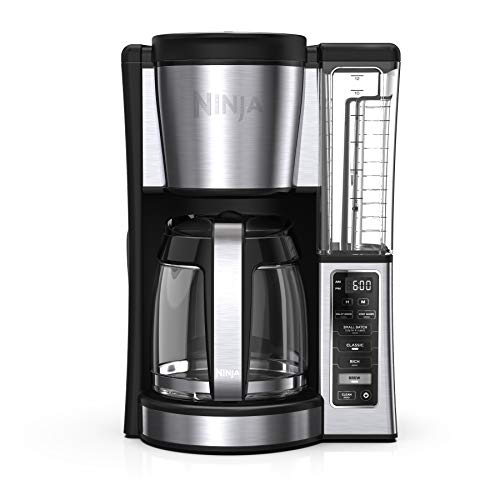
Ninja 12-Cup Programmable Coffee Brewer, 2 Brew Styles, Adjustable Warm Plate, 60oz Water Reservoir, Delay Brew - Black/Stainless Steel
2 BREW STYLES: Classic or Rich, each brew is flavorful and never bitter with custom brew strengths.
As an affiliate, we earn on qualifying purchases.
Conclusion
Choosing between propane, charcoal, and pellet grills isn’t just about convenience; it’s about flavor. Propane offers quick, clean heat for ease, while charcoal delivers that smoky depth you crave. Pellet grills strike a balance, blending flavor with simplicity. Each has its own charm—like a quick sprint, a slow burn, or a smooth ride. Ultimately, your choice depends on what flavor journey you seek—speed or smoky richness. The grill’s your canvas; the flavor, your masterpiece.

Mueller 12-Cup Drip Coffee Maker - Borosilicate Carafe, Auto-Off, Reusable Filter, Anti-Drip, Keep-Warm Function, Clear Water Level Window Coffee Machine, Kitchen Essentials & Accessories
Generous Capacity & Durable Design: Glass carafe with 60oz capacity, this allows you to brew a large amount...
As an affiliate, we earn on qualifying purchases.

Cuisinart 14-Cup Coffee Maker, Programmable PerfecTemp Glass Carafe Coffee Machine with 1-4 Cup Setting, Brew Strength Control and Pause, Stainless Steel, DCC-3200NAS
ADJUSTABLE CARAFE TEMP: Our Cuisinart 14-Cup* Coffee Maker with adjustable carafe temp feature adjusts the warming plate temperature...
As an affiliate, we earn on qualifying purchases.