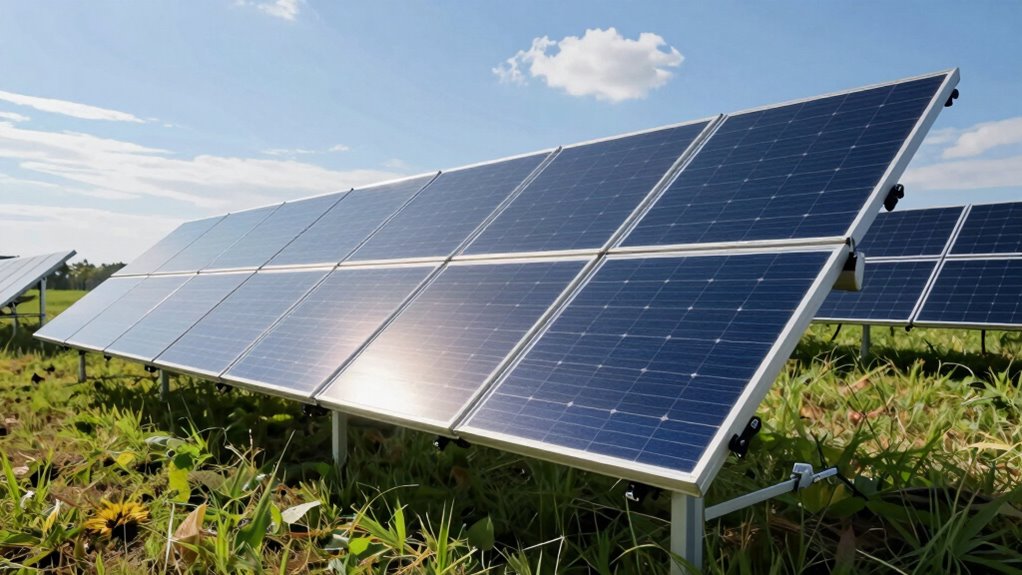
To maximize your foldable solar panel output, angle your panels toward the sun based on your location and season—more flat in summer, steeper in winter. Keep your panels free from shade; even small shadows can cut efficiency considerably. Reposition the panels during the day to follow the sun’s path and avoid obstructions like trees or tents. Proper setup guarantees you get the most power; continue for more tips on optimizing your outdoor solar experience.
Key Takeaways
- Adjust the panel angle to face the sun directly, aligning with your geographic location and seasonal sun position.
- Tilt panels at lower angles during summer and steeper angles in winter for optimal sunlight capture.
- Keep panels free from shadows caused by trees, tents, or other obstructions to maximize energy absorption.
- Reposition foldable panels throughout the day to follow the sun’s movement for continuous optimal exposure.
- Avoid shading from nearby objects, as even small shadows can significantly reduce the panel’s power output.
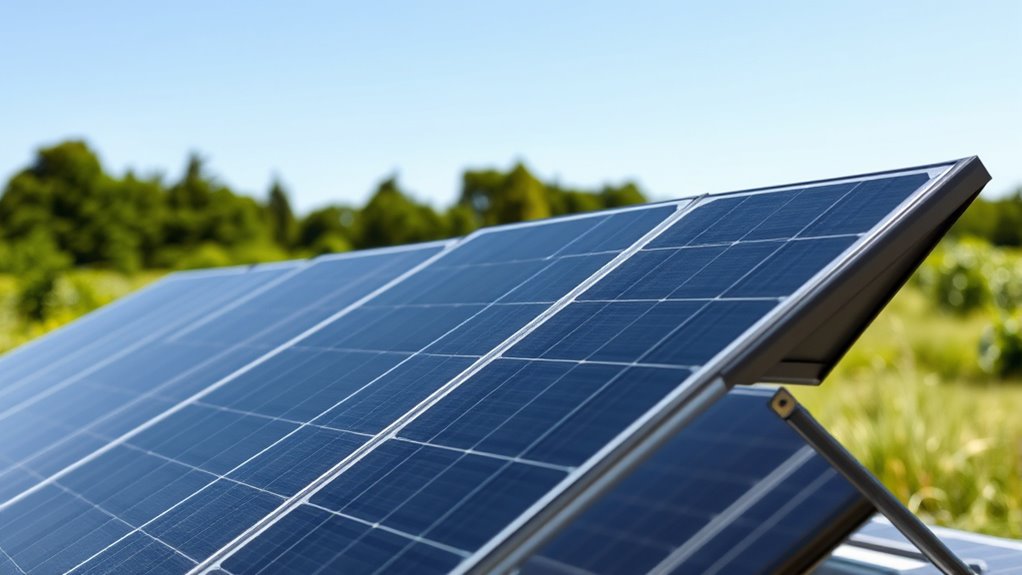
Are foldable solar panels the future of portable energy solutions? If you love outdoor camping, you know how essential reliable power sources can be when you’re away from the grid. Foldable solar panels offer a compact, efficient way to generate portable energy, making them an ideal companion for camping trips, hiking adventures, or any outdoor activity where electricity isn’t readily available. Their lightweight, foldable design allows you to carry them easily and set them up quickly, making the most of your limited space and ensuring you stay connected, charged, and powered up throughout your trip.
To maximize the output of your foldable solar panels, understanding the importance of angle and shade is critical. The angle at which you position your panels directly impacts how much sunlight they capture. Typically, you want to tilt the panels toward the sun, which varies depending on your geographic location and the time of year. During summer, when the sun is higher, a lower tilt angle works best, while in winter, adjusting to a steeper angle can greatly increase energy absorption. For outdoor camping, it’s helpful to find a stable spot where you can set your panels at the ideal angle, ensuring they face the sun directly for the longest possible period during the day.
Adjust your panel angle seasonally for maximum solar efficiency during outdoor adventures.
Shade is another essential factor that can dramatically reduce your panels’ efficiency. Even a small shadow cast on part of the panel can cause a significant drop in power output. When camping, make sure to position your foldable solar panels where they’ll receive unobstructed sunlight, away from trees, tents, or other objects that could cast shadows. If you notice a shadow moving across your panels throughout the day, adjust their position accordingly. Keep in mind that the shading effect isn’t only about direct shadows; even partial shading from nearby objects can decrease energy production. So, vigilance and strategic placement are key to getting the most out of your portable energy setup.
In outdoor camping scenarios, the flexibility of foldable solar panels becomes especially advantageous. You can easily reposition them as the sun shifts, ensuring continuous exposure and maximum power generation. By paying close attention to the angle and avoiding shade, you enhance your panels’ efficiency, which means more reliable power for your devices, lights, or small appliances. Additionally, the high efficiency of modern foldable solar panels ensures you get the most energy output possible from limited sunlight. Properly setting up your foldable solar panels ensures you’re making the most of natural sunlight, giving you peace of mind and a steady stream of portable energy wherever your adventures take you.
foldable solar panel with adjustable tilt
As an affiliate, we earn on qualifying purchases.
As an affiliate, we earn on qualifying purchases.
Frequently Asked Questions
How Do Foldable Solar Panels Perform in Cloudy Weather?
On cloudy days, your foldable solar panels still generate energy, but their performance drops due to increased cloud cover blocking sunlight. They rely on diffused light, so while efficiency decreases, they can still produce some power. To maximize energy efficiency, keep panels angled toward the sun and free of shade, even on cloudy days. This way, you get the most out of your panels despite less-than-ideal weather conditions.
Can I Leave Foldable Panels in the Sun Overnight?
You shouldn’t leave foldable panels in the sun overnight. Doing so can affect their storage precautions and reduce panel durability. Prolonged exposure to sunlight, especially when not in use, can cause wear and tear. Instead, fold them properly and store them in a cool, dry place. This helps protect the panels from damage and maintains their efficiency, ensuring you get the best performance when you need them.
Are Foldable Solar Panels Waterproof and Weather-Resistant?
Like a knight’s armor, foldable solar panels offer some weather resistance, but they’re not fully waterproof. Most are designed with waterproof durability and weather resistance, protecting against splashes and light rain. However, prolonged exposure to heavy rain or immersion can damage them. Always check your specific model’s IP rating to make sure it meets your weather conditions. Treat them like delicate gear—best stored indoors during storms for long-lasting performance.
What Is the Lifespan of a Typical Foldable Solar Panel?
A typical foldable solar panel’s lifespan ranges from 5 to 10 years, depending on panel durability and how well you look after it. You can maximize its lifespan by protecting it from extreme weather and storing it properly when not in use. Regularly cleaning the surface and avoiding physical damage also help guarantee you get the most out of your panel’s lifespan estimation.
How Do I Safely Transport and Store Foldable Solar Panels?
Transport and store your foldable solar panels like a precious treasure. When moving, handle them carefully to avoid damage, and always clean the panels gently to keep their efficiency shining. For safe storage, fold them properly and secure them in a cool, dry place away from sharp objects and extreme temperatures. Proper handling and secure storage make certain your panels stay powerful, lasting longer than you’d ever imagine.
portable foldable solar charger for camping
As an affiliate, we earn on qualifying purchases.
As an affiliate, we earn on qualifying purchases.
Conclusion
By mastering the dance of angle and shade, you unveil the true power of your foldable solar panels. Think of them as your personal sunlight chariots, riding the rays to fuel your dreams. When you position them just right, you’re not just generating energy—you’re harnessing the sun’s fiery passion and transforming it into your own sustainable symphony. Embrace these rules, and watch your solar journey blossom with radiant promise.
outdoor foldable solar panel kit
As an affiliate, we earn on qualifying purchases.
As an affiliate, we earn on qualifying purchases.
As an affiliate, we earn on qualifying purchases.