
📊 Full opportunity report: How Google Trends Tracks Interest In Shampoo Contamination on IdeaNavigator AI — validation score, market gap, and execution plan.

Get school and study supplies delivered free — and shop member deals
- Fast, free delivery on millions of items
- Access to Prime Big Deal Days deals on October 6–7
- Prime Video, Amazon Music and more included
TL;DR
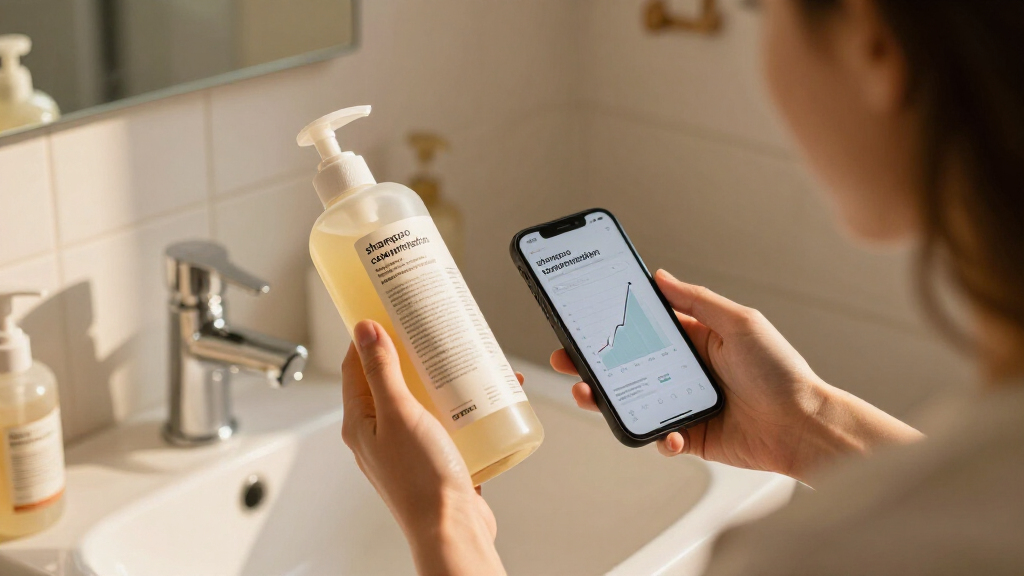
IdeaNavigator AI proposes testing a focused monitor for fast-moving beauty-industry developments after Google Trends reportedly surfaced searches related to Pluralibacter gergoviae and shampoo contamination with an 88/100 signal. The material does not identify a contaminated product, recall, health warning or underlying Trends data, so the signal should not be read as confirmation of a safety incident.
IdeaNavigator AI says Google Trends surfaced an 88/100 signal for interest in “Pluralibacter gergoviae shampoo contamination,” and proposes testing a monitor that turns fast-moving beauty-industry developments into short, role-specific briefs. The proposal describes a product opportunity, not confirmation that a shampoo is contaminated: it names no brand, product, recall, regulator notice or verified incident.
The proposed service would track Google Trends and similar feeds, filter developments for people who need to act on industry changes, and produce a brief explaining what changed, why it matters and what to do. The intended users are described broadly as operators who need to respond to fast-moving developments in their field. The market identified is beauty, and the suggested business model is a subscription.
The reported 88/100 figure is presented as a “signal,” but the material does not explain what the score measures, when it was recorded, which search terms were included or how the value compares with a baseline. Google Trends reports relative search interest rather than establishing whether an event occurred. Without the underlying chart or methodology, the number cannot show whether searches rose, how many people searched, or whether the interest reflects a verified product-safety issue.
For validation, IdeaNavigator AI proposes hand-delivering a brief on this topic and two other fast-moving developments to five prospective users during the week of the test. It says the test should measure whether any recipient changes a decision or forwards the brief to a colleague. No test results, customer commitments, product launch details or evidence of paying demand are provided.
Turning Search Signals Into Decisions
The proposal addresses a practical information problem: developments that matter to a beauty-business operator may appear across news coverage, online discussions and official filings, rather than in one place. A service that separates relevant updates from noise could help users decide when to investigate, communicate with colleagues or take another business step. Its value would depend on accuracy, speed and relevance, not merely on detecting a search spike.
That distinction matters especially for consumer-product safety. A search trend can be an early cue to check reliable reporting or official notices, but it is not evidence that a product is unsafe. Treating attention as confirmation could spread an inaccurate claim or prompt unnecessary action. Any useful monitor would need to distinguish verified notices and documented facts from online discussion, questions and unsubstantiated allegations.
The suggested five-person test could offer an initial indication of whether the format is useful to its intended audience. It would not, by itself, establish broad market demand or demonstrate that the proposed service can reliably identify important developments. The proposal frames the idea as a narrow first test, rather than reporting an operating product or a proven business.
As an affiliate, we earn on qualifying purchases.
What The Trends Score Can Show
Google Trends is a tool for examining search interest over a selected period and location. Its values are normalized within the chosen comparison settings; they are not a count of searches or a direct measure of contamination, product sales or public-health risk. A score quoted without its time window, geography, query settings and comparison basis is difficult to interpret or reproduce.
The idea presented by IdeaNavigator AI connects a search-interest observation to a possible monitoring workflow. It suggests combining Google Trends with other feeds, then tailoring summaries to an operator’s responsibilities. That is different from a report by a regulator, laboratory or manufacturer confirming that a named shampoo contains a bacterium. The material gives no such finding and does not cite a specific official advisory or product action.
As an affiliate, we earn on qualifying purchases.
Incident And Signal Details Missing
The material does not establish that any shampoo contamination occurred. It identifies no affected product or manufacturer, test result, batch, location, date, consumer warning or recall. It also does not cite a regulator, laboratory, company statement or independent news report confirming an incident involving Pluralibacter gergoviae and shampoo.
The meaning of the reported 88/100 signal remains unclear. The measurement period, geographic scope, exact query configuration and comparison baseline are absent, as is a link to the underlying Trends result. It is not possible to tell from the information provided whether the score reflects a new increase, sustained interest or a selected snapshot.
It is also unknown whether the proposed monitor has been built, whether any prospective users have reviewed a brief, or whether the five-person validation test produced a response. The subscription concept and expected customer value remain proposals rather than demonstrated outcomes.
professional shampoo safety testing
As an affiliate, we earn on qualifying purchases.
As an affiliate, we earn on qualifying purchases.
Validation Before A Wider Launch
The next step described is a small, hand-delivered test with five intended users, using this topic and two other developments. The proposal says to record whether recipients change a decision or share a brief. No timetable beyond “this week,” named participants, completed results or later launch date is given.
To judge the search signal itself, readers would need the underlying Google Trends settings and a clearly dated chart, alongside independently attributable information about any alleged product-safety event. Until those details are available, the development is best understood as a business concept prompted by a reported search-interest signal, not a confirmed contamination report.
Source: IdeaNavigator AI
beauty industry trend analysis tools
As an affiliate, we earn on qualifying purchases.
As an affiliate, we earn on qualifying purchases.
Key Questions
Does this report confirm that shampoo was contaminated?
No. It identifies no product, manufacturer, test result, recall or official notice confirming contamination. It describes a search-interest signal and a proposed monitoring service.
What does the 88/100 Google Trends signal mean?
The proposal gives the score but does not explain its measurement window, location, query settings or comparison baseline. It should not be treated as a search count or proof of a safety incident.
What would the proposed monitor do?
It would watch Google Trends and other feeds, select developments relevant to beauty-industry operators, and prepare short briefs covering what changed, why it matters and possible next steps.
Has the service been tested with customers?
No test results are reported. IdeaNavigator AI proposes giving briefs on three developments to five prospective users and tracking whether they affect a decision or are forwarded.
Source: IdeaNavigator AI
Fall Picks
fall essentials
As an affiliate, we earn on qualifying purchases.