📊 Full opportunity report: Phone-based injury-risk movement screening for hiring on IdeaNavigator AI — validation score, market gap, and execution plan.
TL;DR
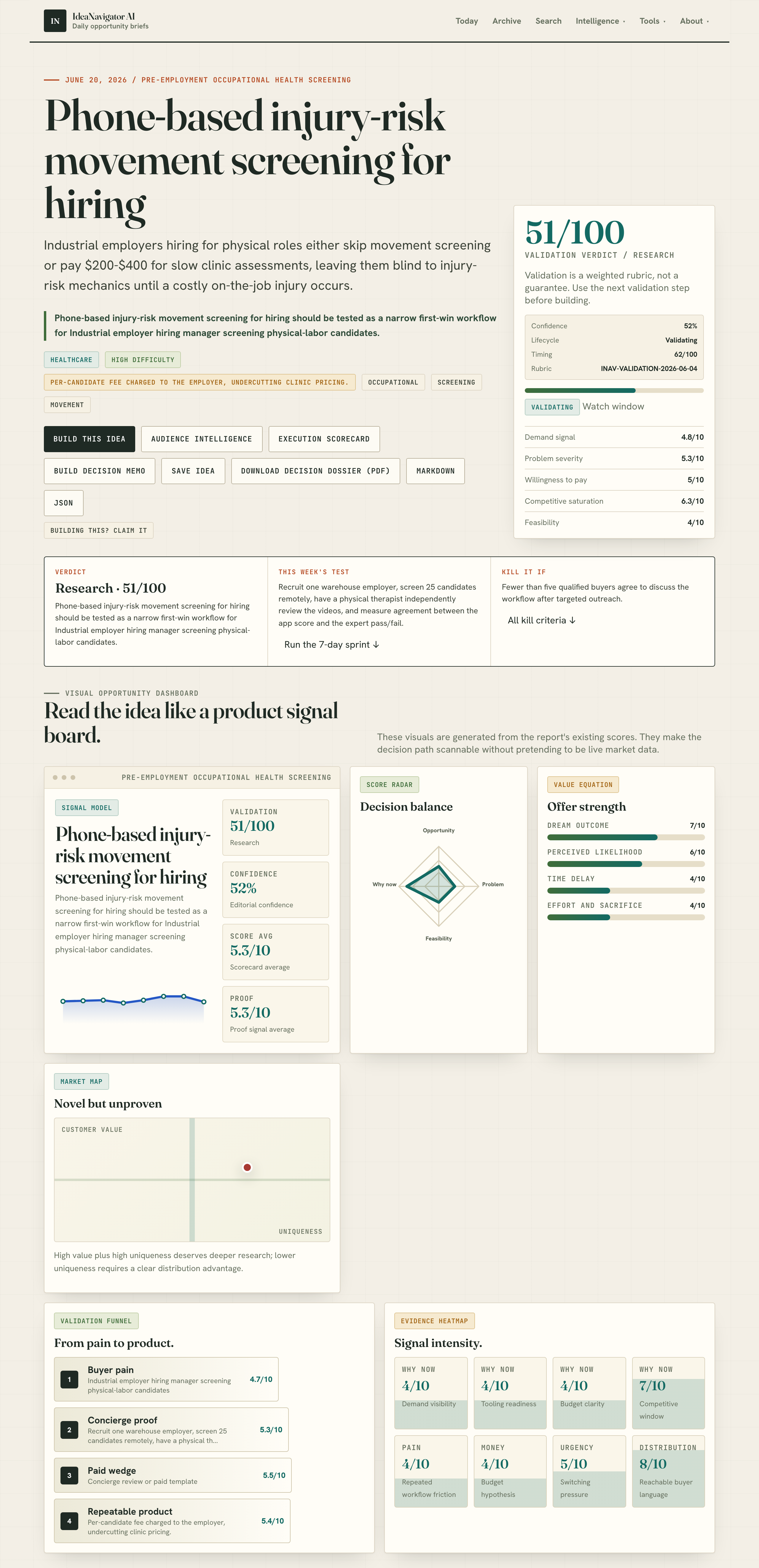
A pilot program is testing a phone-based movement screening system for hiring industrial workers. It aims to identify injury risks remotely, reducing costs and improving safety screening accuracy.
A new phone-based movement screening system is being tested to evaluate injury risk for industrial job candidates remotely, offering a faster, cheaper alternative to traditional clinic assessments.
The system involves candidates recording 5-7 specific movements, such as squats and lifts, using their phone cameras. An app analyzes these videos with pose estimation technology to produce a pass/fail injury risk score within 24 hours, at a cost of approximately $30-50 per candidate. This approach aims to address the current gap where employers either skip movement screening or pay $200-$400 for clinic assessments, often too late to prevent injuries. The pilot involves screening 25 warehouse candidates, with independent review by physical therapists to validate the app’s scoring accuracy. If successful, this method could significantly reduce injury-related costs and improve pre-employment safety measures in physically demanding roles.Potential Impact on Industrial Hiring Practices
This development could transform how employers screen physical-labor candidates by providing a quick, affordable, and remote assessment tool. It addresses rising workers’ compensation costs and the need for early injury risk identification, potentially reducing on-the-job injuries and associated expenses. The approach also offers a scalable solution that could be adopted widely across industries relying on manual labor, improving overall workplace safety and efficiency.
As an affiliate, we earn on qualifying purchases.
Growing Need for Remote Injury Risk Screening
Currently, industrial employers often rely on in-person assessments or costly clinic evaluations to gauge injury risk, which can delay hiring or miss early warning signs. Rising workers’ compensation claims and costs have increased pressure to implement more effective pre-employment screening methods. Advances in smartphone camera technology and pose estimation algorithms now make remote movement analysis feasible, opening new possibilities for scalable, low-cost injury risk assessments before hiring.
“Using phone cameras to evaluate movement mechanics can provide a reliable injury risk assessment at a fraction of the cost of traditional clinic tests.”
— an anonymous researcher
video analysis movement screening app
As an affiliate, we earn on qualifying purchases.
As an affiliate, we earn on qualifying purchases.
Validation and Accuracy of Phone-Based Screening
It is not yet confirmed how accurately the app’s injury risk scores will match assessments by physical therapists or predict actual injuries on the job. The pilot study aims to measure agreement between app scores and expert reviews, but results are still pending.
industrial worker injury risk assessment tool
As an affiliate, we earn on qualifying purchases.
As an affiliate, we earn on qualifying purchases.
Next Steps in Pilot Testing and Validation
The ongoing pilot involves screening 25 candidates and comparing app scores with physical therapist evaluations. If results show high agreement, plans include expanding testing to more employers and refining the technology for broader deployment. Further validation will be necessary before widespread adoption.
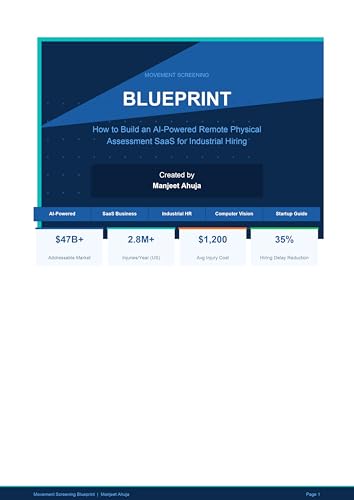
Movement Screening Blueprint: How to Build an AI-Powered Remote Physical Assessment SaaS for Industrial Hiring
As an affiliate, we earn on qualifying purchases.
As an affiliate, we earn on qualifying purchases.
Key Questions
How does the phone-based screening work?
Candidates record 5-7 movements using their phone camera, which are analyzed by an app to generate an injury risk score within 24 hours.
Will this replace traditional clinic assessments?
The system aims to supplement or replace in-person assessments for initial screening, especially for high-volume hiring, but validation is still ongoing.
What are the cost benefits?
The app-based screening is expected to cost $30-50 per candidate, significantly less than clinic assessments priced between $200 and $400.
When will this technology be widely available?
If pilot results are positive, wider deployment could occur within the next 12-24 months, following further validation and industry acceptance.
Source: IdeaNavigator AI