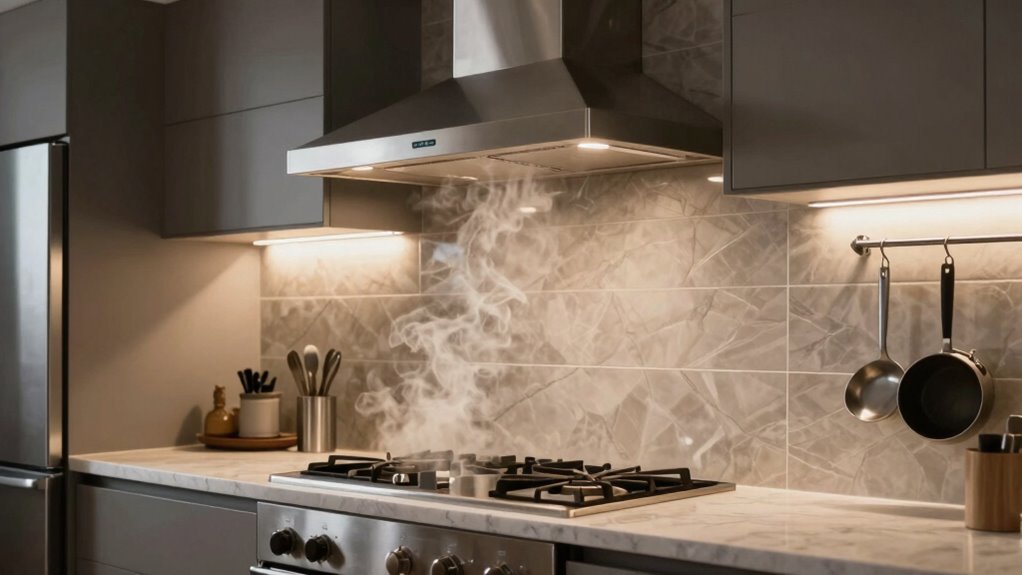

Cooking releases smoke, grease particles, and VOCs that pollute your indoor air, which can affect your health over time. Without proper ventilation, these pollutants can linger, causing poor air quality and health issues. Using an appropriately sized and well-maintained exhaust fan helps remove these fumes quickly and efficiently. Proper design and regular upkeep are key. If you want to discover how to keep your kitchen safe and air clean, continue exploring the essentials of kitchen ventilation.
Key Takeaways
- Cooking releases smoke, grease particles, VOCs, and moisture that can accumulate indoors and degrade air quality.
- Without proper ventilation, pollutants from cooking can cause health issues over time.
- Exhaust fans help remove airborne contaminants, preventing their spread into other rooms.
- Effective kitchen ventilation requires appropriately sized, well-placed, and maintained exhaust systems.
- Higher air exchange rates dilute indoor pollutants, maintaining a healthier cooking environment.
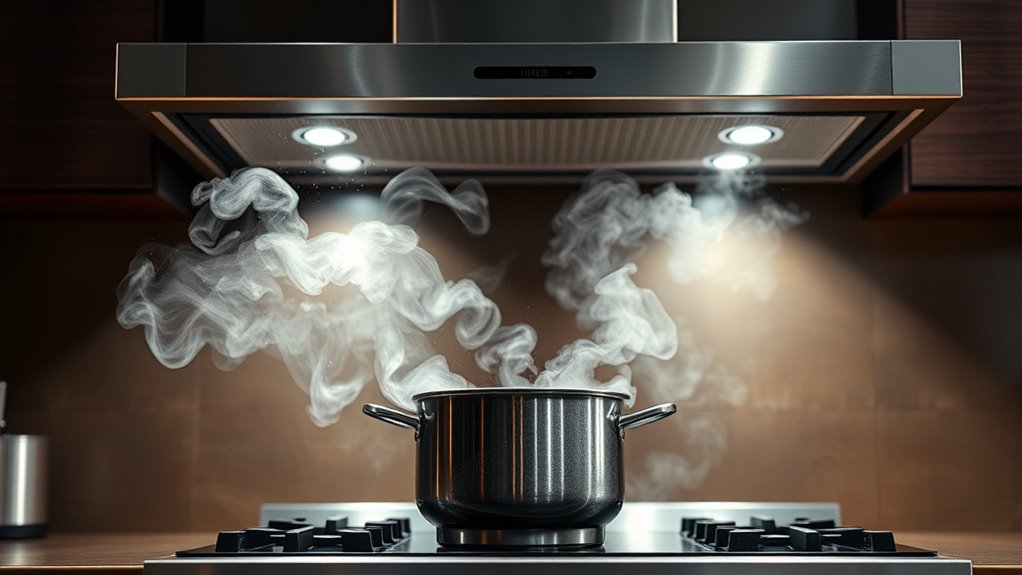
Have you ever wondered why proper kitchen ventilation is essential? When you cook, your kitchen isn’t just a place for preparing food; it also becomes a source of indoor air pollution. Cooking releases smoke, grease particles, volatile organic compounds (VOCs), and moisture into the air. Without effective ventilation, these pollutants can accumulate quickly, impacting your health and the overall air quality in your home. That’s why understanding the role of exhaust fan design and air exchange rates becomes crucial in maintaining a safe cooking environment.
Proper kitchen ventilation prevents indoor air pollution from cooking fumes and pollutants.
Exhaust fans are the backbone of kitchen ventilation systems. Their design directly influences how efficiently they remove airborne pollutants. A well-designed exhaust fan doesn’t just vent air out; it’s optimized to maximize airflow while minimizing noise and energy consumption. The size and placement of the fan matter too. For instance, a fan that’s too small won’t handle the volume of air generated during cooking, leading to stagnant, polluted air lingering in your kitchen. Conversely, an improperly placed exhaust fan may not capture all the pollutants at their source, reducing its effectiveness. Good exhaust fan design ensures that fumes and particles are swiftly pulled away from your cooking area, preventing them from spreading into adjacent rooms. Additionally, proper maintenance of the fan ensures continuous optimal performance.
Another essential factor is air exchange rates, which measure how many times the air in your kitchen is replaced per hour. Higher air exchange rates mean your kitchen’s contaminated air is continually replaced with fresh air, diluting pollutants and reducing their concentration. Achieving the right air exchange rate depends on your kitchen’s size, the intensity of cooking, and the capacity of your ventilation system. Most experts recommend an air exchange rate of at least 15-20 air changes per hour for kitchens that see frequent or heavy cooking. If the rate is too low, pollutants can linger, causing health issues over time. Too high, and you might waste energy or create drafts, making your kitchen uncomfortable.
To optimize your kitchen’s air quality, ensure your exhaust fan is appropriately rated for your space and cooking habits. Regularly clean and maintain the fan to keep it functioning efficiently. Consider installing a range hood with a high-quality exhaust fan that’s designed with airflow and noise levels in mind. Pair this with a ventilation system that ensures sufficient air exchange rates, so pollutants are effectively removed without compromising comfort. By paying attention to exhaust fan design and air exchange rates, you’re taking proactive steps to keep your indoor air clean, safe, and healthy, turning your kitchen into a space where you can cook confidently without worrying about airborne pollutants. Proper ventilation planning can make a significant difference in maintaining a healthy indoor environment.
Frequently Asked Questions
How Often Should Kitchen Filters Be Replaced?
You should replace your kitchen filters every 3 to 6 months, depending on your filter maintenance routine. Regularly checking your filters helps make certain they work efficiently and keep indoor air clean. If you notice reduced airflow or lingering odors, it’s time for a replacement. Following a consistent replacement schedule prevents buildup of grease and pollutants, maintaining good ventilation and healthier indoor air quality in your kitchen.
What Are the Best Natural Ventilation Options?
Imagine cooking in a small apartment; opening a window across from your stove can markedly improve air exchange. Natural ventilation options like strategically placing windows on opposite sides of your kitchen maximize airflow, reducing indoor pollutants. Keep windows open during cooking and use cross-ventilation to efficiently clear fumes. This simple method enhances air quality, reduces indoor pollution, and costs nothing, making it an effective natural ventilation solution.
Can Indoor Plants Improve Kitchen Air Quality?
Indoor plants can improve your kitchen air quality by offering natural air purification. They absorb pollutants, increase humidity, and remove toxins, enhancing overall indoor air benefits. While they won’t replace proper ventilation, adding plants like pothos or spider plants can boost your air quality and create a healthier environment. Keep in mind, regular cleaning and good ventilation are essential to maintain fresh, pollution-free indoor air.
How Do I Detect Poor Indoor Air Quality?
Think of your home as a ship sailing through cloudy waters; if the air quality deteriorates, it’s like fog thickening around you. To detect poor indoor air quality, conduct air quality testing using sensors that measure pollutants like VOCs and particulates. Also, assess ventilation effectiveness by checking for stale smells, condensation, or dust buildup. These steps help you spot issues early and keep your environment safe and clear.
Are There Health Risks From Long-Term Exposure to Kitchen Fumes?
Yes, long-term exposure to cooking emissions can pose health risks. Breathing in fumes from daily cooking releases pollutants like particulate matter and volatile organic compounds, which may lead to respiratory issues, allergies, or even cardiovascular problems over time. To protect your long-term health, guarantee proper ventilation, use exhaust fans, and consider air purifiers. Keeping indoor air clean helps reduce these risks and promotes overall well-being.
Conclusion
So, next time you’re cooking up a storm, remember that your kitchen’s ventilation isn’t just a fancy feature—it’s your best defense against turning your home into a pollution hotspot. Ironically, while you’re busy creating delicious meals, you might also be filling your air with harmful pollutants. Don’t let your culinary creations turn into indoor air villains. Keep those vents on and breathe easy—you’ve got this covered, even when you’re just trying to cook dinner.