When bread sits for a day or two, its texture changes due to both microbial activity and physical processes. Microbes produce enzymes that break down starches and proteins, making the bread firmer and crumblier. Meanwhile, starch molecules recrystallize, causing moisture to migrate and the bread to become dry. Storage conditions, packaging, and environment greatly influence this process. If you want to understand how these factors interact to create that “day two” texture, keep exploring.

Prime made for students and young adults
- Fast, free delivery for dorm and study essentials
- Prime Video and Amazon Music included
- Member-only deals
Key Takeaways
- Staling involves starch recrystallization, causing bread to become firmer and crumbly over time.
- Microbial activity and enzymes break down bread components, accelerating texture changes on day two.
- Storage conditions like humidity and temperature influence the rate of staling and moisture loss.
- Refrigeration speeds up starch recrystallization, leading to faster staling despite cooling.
- Proper packaging and room temperature storage can help maintain freshness and delay the “day two” texture.
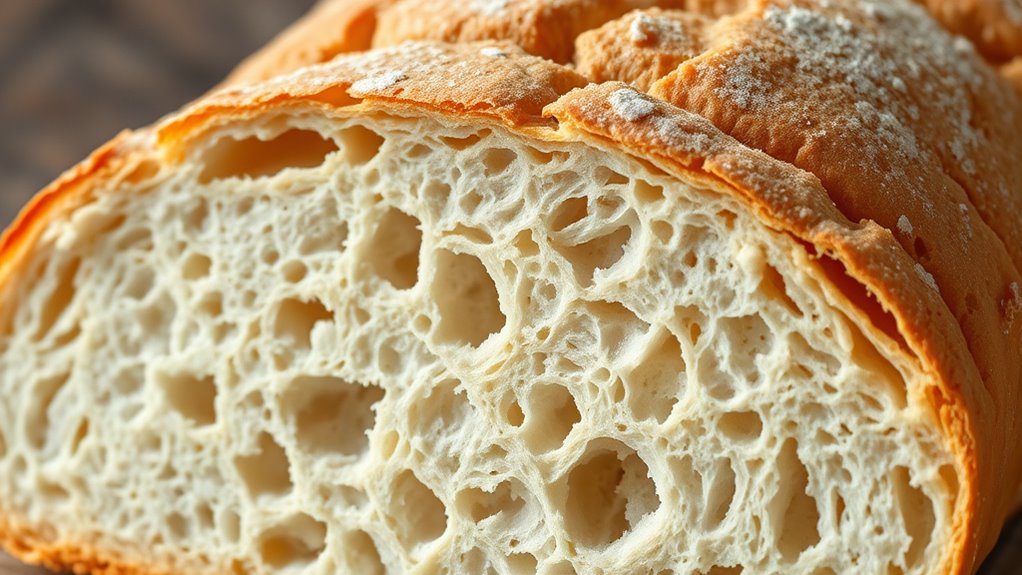
Bread staling occurs when freshly baked bread loses its softness and becomes firm and crumbly over time. While many think staling is just about moisture loss, it’s actually a complex process influenced by various factors, including microbial activity and storage conditions. Understanding these elements can help you better preserve your bread’s freshness and texture.
Microbial activity plays a significant role in bread staling, especially when bread is stored improperly. When bread is exposed to warm, humid environments, molds and bacteria can thrive on its surface, accelerating spoilage. These microbes produce enzymes that break down starches and proteins in the bread, altering its structure and causing it to become dry and crumbly faster. This microbial activity not only affects the bread’s safety but also its texture, making it less appealing and harder to enjoy after just a day or two.
Storage conditions are vital in determining how quickly bread stales. If you store bread in a warm or humid place, moisture will either evaporate or be absorbed unevenly, leading to an uneven texture and accelerated staling. Conversely, storing bread in a cool, dry place helps slow down microbial activity and moisture loss, extending its freshness. However, refrigeration, although convenient, can actually hasten staling because cold temperatures cause starch molecules to recrystallize, making the bread firmer. To keep your bread fresh longer, it’s best to store it at room temperature in a paper bag or cloth bread box, which allows just enough airflow to prevent mold while maintaining moisture levels.
Another factor is the packaging. Airtight plastic bags trap moisture and inhibit microbial growth, but they can also create a humid environment that encourages mold if moisture is present. Conversely, loosely wrapped bread allows excess moisture to escape, reducing the risk of mold but increasing dryness. Finding a balance—like using paper bags or breathable containers—can help maintain ideal storage conditions for longer freshness.
As an affiliate, we earn on qualifying purchases.
Frequently Asked Questions
How Can I Prevent Bread From Becoming Stale?
To prevent bread from becoming stale, you should store it properly to maintain bread freshness and delay staling. Keep your bread in a paper bag or a bread box to allow airflow while preventing excessive moisture loss. Avoid refrigerating, as it accelerates staling. For longer storage, freeze it and toast slices when needed. These steps help you enjoy fresh bread longer and delay staling effectively.
Does Freezing Bread Stop the Staling Process?
Freezing bread slows down the staling mechanisms, but it doesn’t completely stop them. The freezing effects reduce moisture migration and enzyme activity, which helps preserve freshness longer. However, once you thaw the bread, it may still become stale faster than fresh. To maximize freshness, wrap the bread tightly before freezing, and consume it within a few months. Remember, freezing is a good way to delay staling, not entirely prevent it.
Are There Specific Ingredients That Slow Staling?
Think of bread as a dance, where ingredients interact and influence each other’s moves. To slow staling, you can add ingredients like fat or sugar, which act as subtle partners, creating additive effects that keep the crumb soft. Emulsifiers like lecithin help maintain ingredient interactions, preventing the starches from crystallizing. These additions work together, extending freshness and maintaining that inviting texture even on day two.
How Does Storage Temperature Affect Bread Freshness?
You’ll notice that storing bread at lower temperatures slows down moisture migration and enzyme activity, helping it stay fresh longer. When kept in the fridge, the cooler environment reduces starch retrogradation, but it can also cause it to become dry or gummy. Conversely, room temperature preserves moisture better initially, but staling happens faster. For ideal freshness, store bread in a cool, dry place or freeze it if you won’t eat it soon.
Can You Reverse Staling Once Bread Is Stale?
You can’t fully reverse staling once bread becomes stale, but you can improve its texture. To do this, reheat the bread gently, which helps restore some moisture retention and softens the crumb. Be cautious, as reheating too much can encourage microbial growth, leading to spoilage. Using methods like steaming or microwaving with a damp cloth can help revive it, but the bread won’t be exactly like fresh.
As an affiliate, we earn on qualifying purchases.
Conclusion
While bread may seem to settle into a familiar routine after a day or two, a gentle shift in texture hints at its evolving story. Instead of viewing staling as a flaw, consider it a quiet reminder of the bread’s journey, inviting you to explore new ways to enjoy it. Embrace these subtle changes, for they reveal the bread’s natural rhythm—an invitation to savor it differently and appreciate its ongoing life.
bread freshness preservation bag
As an affiliate, we earn on qualifying purchases.
As an affiliate, we earn on qualifying purchases.
As an affiliate, we earn on qualifying purchases.
Columbus Day / Indigenous Peoples' Day Picks
long weekend sales
As an affiliate, we earn on qualifying purchases.