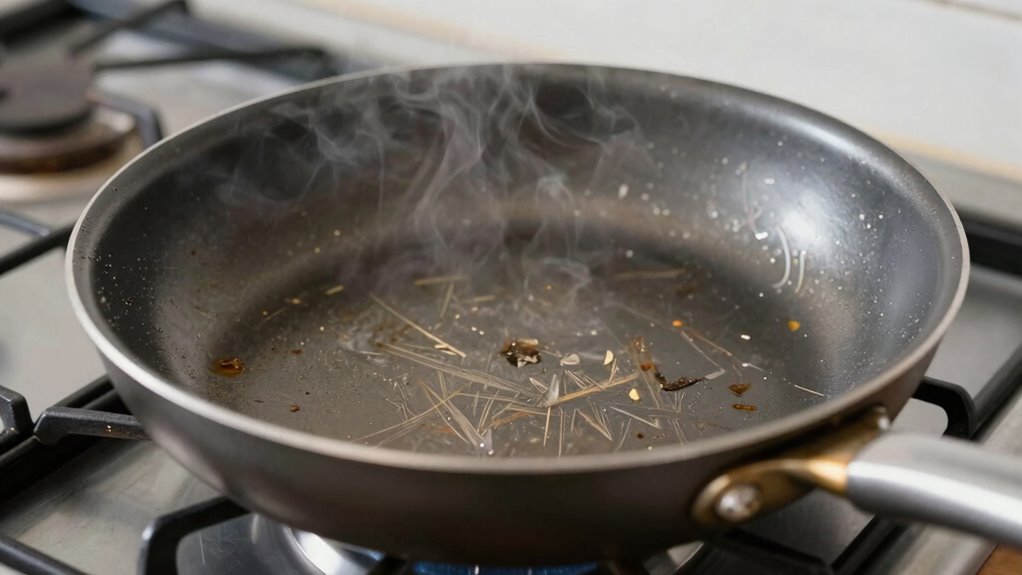
Your nonstick pan may stick because the coating wears down over time, especially with frequent use or improper cleaning. Overheating can damage the surface, and using metal utensils can cause scratches that expose metal, leading to sticking. Dirty buildup and using high heat also degrade the coating’s effectiveness. If your pan is old or has manufacturing flaws, it’s more prone to sticking. Want to know how to keep your pan performing like new? Keep exploring for more tips.
Key Takeaways
- Nonstick coatings degrade over time due to scratches, chips, and regular wear, reducing their effectiveness and causing sticking.
- Overheating or cooking at too high a temperature damages the coating, leading to cracks and increased food sticking.
- Using metal utensils or abrasive cleaning tools scratches and damages the nonstick surface, exposing metal and causing sticking.
- Residue buildup from food, oil, or sprays creates a sticky film that diminishes the nonstick properties.
- Poor maintenance, improper storage, or manufacturing defects can lead to surface damage and early nonstick failure.
nonstick pan scratch repair kit
As an affiliate, we earn on qualifying purchases.
As an affiliate, we earn on qualifying purchases.
Wear and Tear of the Nonstick Coating
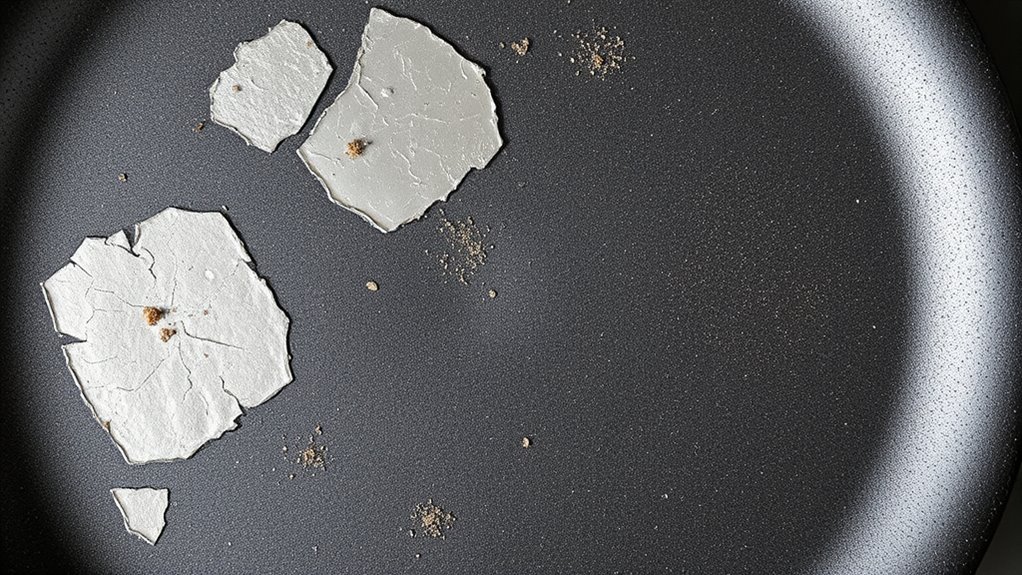
Over time, the nonstick coating on your pan inevitably begins to wear down, especially with frequent use. This nonstick degradation occurs as the microscopic layers of the coating deteriorate, reducing its ability to prevent food from sticking. Everyday utensils, abrasive cleaning tools, and repeated heating contribute to coating deterioration, accelerating the process. As the coating breaks down, tiny scratches and chips form, creating pathways for food to stick and making your pan less effective. Once the nonstick layer is compromised, you might notice more food adhering during cooking, even when using oil or butter. Regular wear and tear gradually diminish the pan’s nonstick properties, reminding you that no coating lasts forever. Proper care can slow this process, but eventual coating deterioration is inevitable. Wear and Tear of the Nonstick Coating can be minimized with gentle cleaning practices and avoiding metal utensils. Free Floating techniques can help minimize damage and extend the lifespan of your nonstick cookware. Additionally, understanding the coating durability helps set realistic expectations for how long your cookware will perform optimally. Using appropriate cookware maintenance methods can further prolong its effectiveness and delay the need for replacement.

OXO Good Grips Dish Brush, Nylon Bristles with Built-in Scraper, Safe for Non-Stick Cookware, Non-Slip Handle, Dishwasher Safe
Durable nylon bristles: Safely scrub away baked-on food, grease and tough messes while protecting non-stick cookware from scratches…
As an affiliate, we earn on qualifying purchases.
As an affiliate, we earn on qualifying purchases.
Overheating the Pan
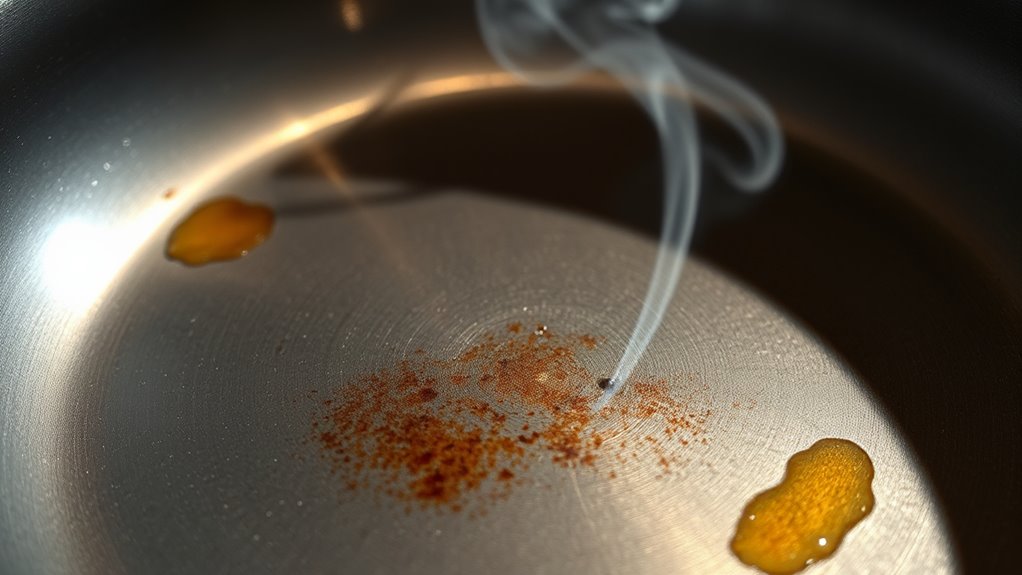
When you heat your pan too quickly or on high heat, it can cause the nonstick coating to break down more rapidly. Overheating leads to oil buildup on the surface, which can create a sticky residue and damage the coating over time. Additionally, seasoning missteps—such as overheating the pan when applying or maintaining seasoning—can cause the nonstick surface to degrade faster. High temperatures can cause the polymer layers of the coating to crack or peel, making your pan more prone to sticking. To prevent this, heat your pan gradually over medium or low heat, allowing the coating to stay intact. Proper heating techniques are essential for maintaining the integrity of your nonstick surface. Proper heating and seasoning practices preserve the nonstick surface, ensuring your pan remains nonstick longer and avoids sticking issues. Understanding cookware materials can help you choose and maintain pans that resist sticking and last longer. Using appropriate cookware care methods also plays a critical role in extending the lifespan of your nonstick pans. Additionally, temperature control is vital for preventing damage to the coating and ensuring optimal performance.
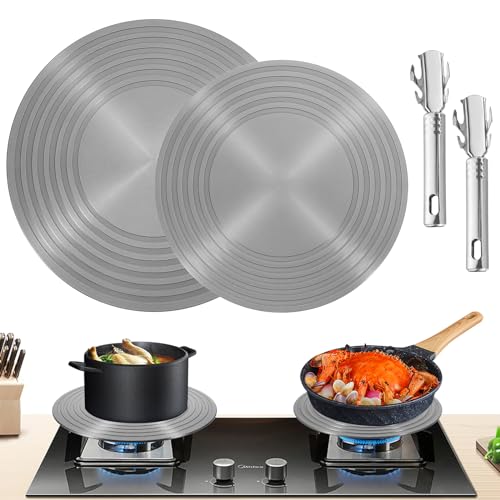
2 Pack Gas Stove Heat Diffuser Plate, Round Fast Defrosting Tray Aluminum Non-Stick Coating Cookware Simmering Thawing Plate Conduction Multifunctional, Flame Guard Protection Stovetop (9.3'' & 11'')
HIGH-QUALITY MATERIAL: Crafted from a combination of non-stick coating and aviation aluminum, our heat diffuser is a testament…
As an affiliate, we earn on qualifying purchases.
As an affiliate, we earn on qualifying purchases.
Using the Wrong Utensils
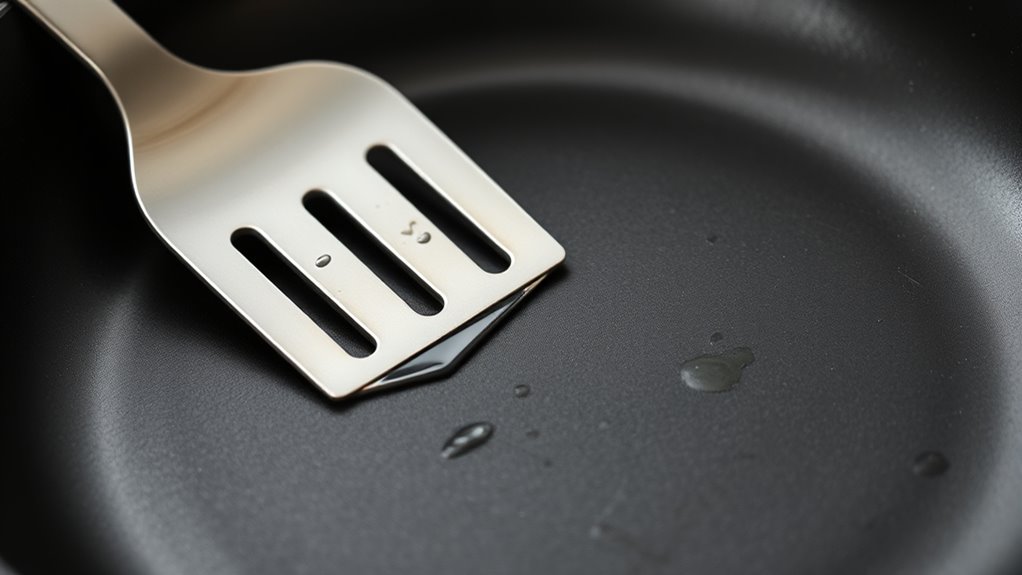
Using the wrong utensils can quickly damage your pan’s surface. Metal tools can scratch or chip the coating, and sharp edges may scrape away the non-stick layer. Always choose utensils made from appropriate materials to protect your cookware.
Metal Utensils Damage Coating
Metal utensils can quickly damage your non-stick coating if you’re not careful. Using them during cooking causes metal utensil damage, which scratches and deteriorates the surface. Over time, these scratches lead to coating deterioration, making your pan more prone to sticking and reducing its lifespan. Even if the utensil seems harmless, the metal’s hardness can chip away at the delicate coating. This damage not only affects performance but can also introduce metal particles into your food. To prevent this, opt for silicone, wooden, or plastic tools that won’t harm the surface. Avoiding metal utensils preserves the integrity of your non-stick coating and keeps your cookware in better condition longer. Remember, gentle tools are key to maintaining non-stick performance. Using smart kitchen technology, such as monitoring cookware wear, can help you identify when your non-stick coatings are compromised. Additionally, proper maintenance practices, like hand washing and avoiding abrasive scrubbers, can extend the life of your non-stick cookware. Incorporating coating protection measures, like gentle cleaning routines, further prolongs the effectiveness of your non-stick surface. To better protect your cookware, understanding coating durability and how everyday use impacts it can be very helpful. Regularly inspecting your cookware and being aware of signs of wear is also an important aspect of sound therapy in maintaining optimal cookware condition.
Sharp Edges Scrape Surface
Sharp-edged utensils can quickly damage your non-stick surface by scraping or gouging it with force. When you use tools with sharp edges, they create surface scratches that compromise the coating’s integrity. These scratches expose the underlying metal, making it more prone to sticking and further damage over time. Even small, unnoticed scratches can lead to uneven heating and food sticking. To protect your pan, avoid utensils with sharp edges like metal spatulas or knives. Instead, opt for softer materials that won’t scratch the surface. Using appropriate kitchen tools helps maintain the longevity of your non-stick coating.
Improper Tool Material Use
When you choose utensils made from the wrong materials, you risk damaging your non-stick surface more quickly. Material compatibility is essential; metal utensils can scratch or gouge the coating, creating tiny holes that cause food to stick. To protect your pan, opt for silicone, wooden, or plastic tools, which are gentle and won’t harm the surface. Proper utensil selection preserves the non-stick coating and extends its lifespan. Using the wrong tools might seem harmless, but over time, it causes scratches that compromise non-stick properties. Always check the utensil material before cooking, especially with newer pans. Being mindful of surface protection and material durability can help you choose utensils that will last longer and protect your cookware. Additionally, selecting appropriate cookware tools can reduce the need for frequent repairs or replacements, saving you money and effort. Recognizing the importance of material safety can further help prevent accidental damage during cooking.

Lodge Cast Iron Seasoning Spray – Seasoning Spray Made with 100% Canola Oil to Restore, Cure, and Care for Cast Iron Cookware – 8 Ounce
YOUR NEW GO-TO SEASONING SPRAY: The Lodge Seasoning Spray is the perfect seasoning spray to maintain your cast…
As an affiliate, we earn on qualifying purchases.
As an affiliate, we earn on qualifying purchases.
Improper Cleaning and Maintenance
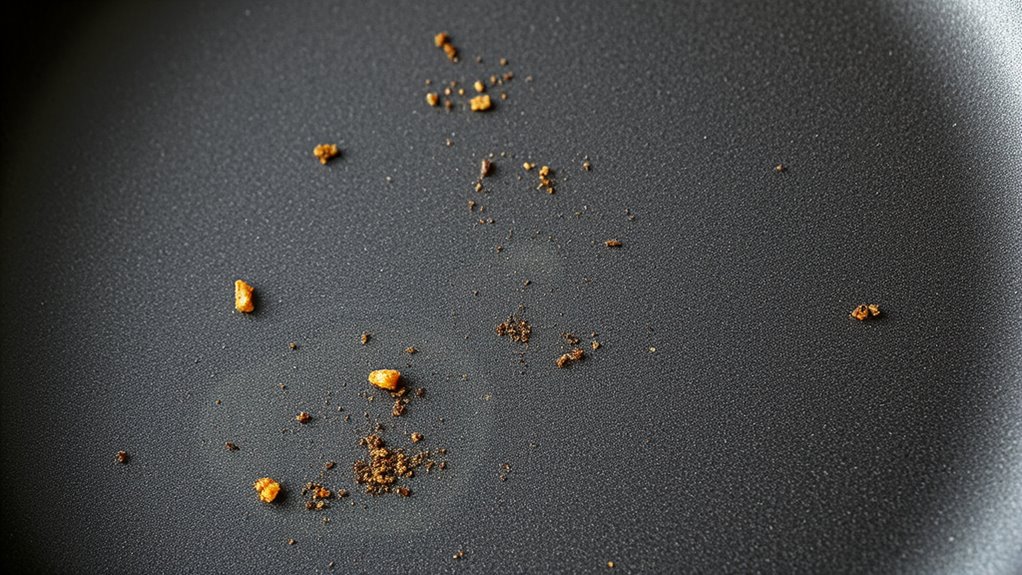
If you don’t clean your pan properly, residue can build up and cause sticking. Using harsh scrubbing tools or skipping thorough cleaning can also damage the coating. These mistakes make it easier for food to stick and shorten the lifespan of your pan. Additionally, neglecting proper maintenance can lead to family photoshoot fails, where small issues compound into more significant problems over time. Proper cleaning and maintenance, such as following manufacturer guidelines and avoiding harsh chemicals, are essential to prevent these issues. Regularly inspecting your cookware and proper storage can also help maintain its nonstick properties and extend its usability. Understanding cooking surface materials can further guide you in choosing and caring for your cookware to maximize its longevity. Moreover, using the right oil for airless sprayers can ensure your tools function smoothly, much like maintaining your cookware for optimal performance.
Residue Build-Up Causes Sticking
Residue buildup from incomplete cleaning can cause your pan to stick over time. Oil buildup and food residue left behind after cooking create a sticky film that degrades the pan’s nonstick surface. When you don’t thoroughly clean your pan, these residues accumulate, making it harder for food to slide off. Over time, this layer becomes thicker, increasing the likelihood of sticking even when using proper heat and oil. Regularly scrubbing away food residue and removing excess oil prevents this buildup. Use gentle cleaning tools and avoid abrasive scrubbers that might damage the coating. Proper maintenance ensures your pan stays smooth and nonstick, reducing sticking issues caused by residue buildup. Consistent cleaning habits are key to preserving your pan’s performance and longevity. Developing a methodical approach to cleaning helps maintain the nonstick surface effectively over time.
Improper Cleaning Harms Coating
Improper cleaning and maintenance can quickly damage your pan’s delicate coating, making it more prone to sticking. Using harsh cleaning techniques or abrasive scrubbers can scratch or peel the surface, reducing its nonstick properties. Residue removal is essential; neglecting to clean thoroughly leaves baked-on grease that hampers performance. Avoid hot water with abrasive cleaners, and opt for gentle scrubbers and soft sponges. Here’s a quick comparison:
| Good Cleaning Techniques | Bad Cleaning Techniques |
|---|---|
| Use mild soap and warm water | Steel wool or abrasive pads |
| Soft sponge for residue removal | Scrubbing aggressively |
| Let pans cool before cleaning | Cleaning while hot |
Proper cleaning preserves your coating, ensuring your pan stays nonstick longer.
Cooking at Too High a Temperature
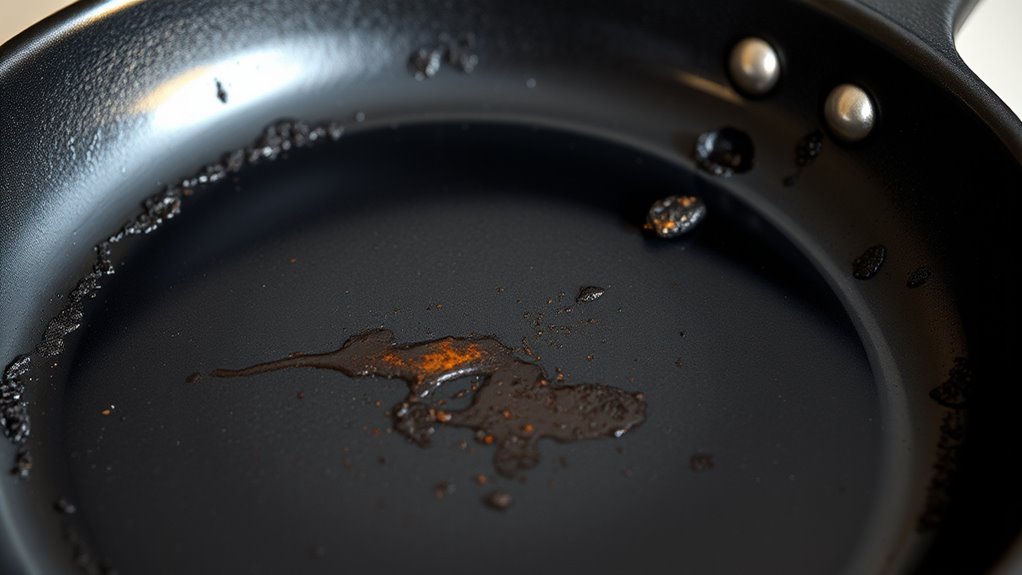
Cooking at too high a temperature is a common mistake that causes food to stick to your pan. When you don’t manage temperature control, the heat becomes uneven, leading to hotspots that can burn or stick. High heat causes the nonstick coating to break down faster, reducing its effectiveness. Instead, turn down the heat to guarantee proper heat distribution across the surface. This allows your pan to heat evenly, preventing sticking and preserving the coating’s integrity. Using moderate heat also gives you better control over cooking and reduces the risk of food burning or sticking due to excessive temperatures. Remember, patience with lower heat often results in better, nonstick outcomes, keeping your pan in good condition longer.
Lack of Proper Preheating
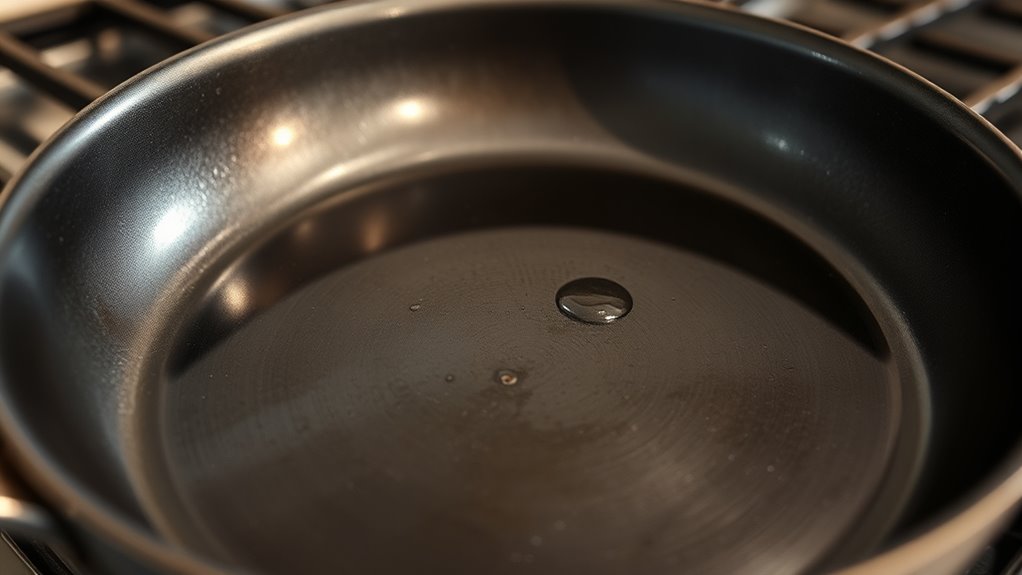
Preheating your pan properly is essential for preventing food from sticking. Without adequate pan preheating, your pan won’t develop a proper nonstick surface, even if it’s seasoned or labeled as nonstick. Proper seasoning techniques rely on heating the pan first, allowing the oil to bond with the surface and create a natural barrier. If you skip this step, food can stick because the surface isn’t hot enough to release easily. Make sure to heat your pan over medium heat until it’s evenly warmed before adding oil or ingredients. This not only improves the effectiveness of your seasoning but also ensures even cooking. Neglecting proper preheating is a common mistake that can cause sticking, regardless of your pan’s nonstick claims.
Accumulation of Residue and Buildup
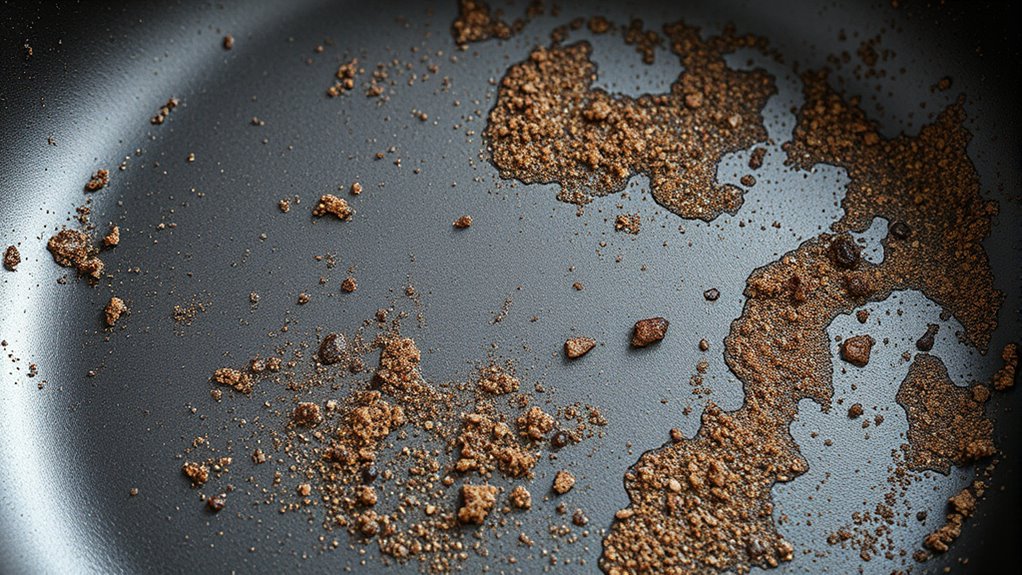
Over time, residue from food, oils, and cooking sprays can build up on your pan’s surface, creating a sticky layer that makes food more likely to stick. This buildup, often a mix of seasoning residue and oil residue, gradually deteriorates the nonstick coating’s effectiveness. When oils and food particles aren’t thoroughly cleaned, they form a stubborn film that hampers the pan’s ability to release food easily. Over time, this layer becomes thicker, reducing the pan’s nonstick properties even further. Regularly cleaning your pan and avoiding harsh abrasives helps prevent this accumulation. If ignored, seasoning buildup and oil residue can cause your pan to become sticky and less efficient, even if it’s marketed as “nonstick.” Proper maintenance is key to keeping your pan performing at its best.
Age of the Nonstick Pan
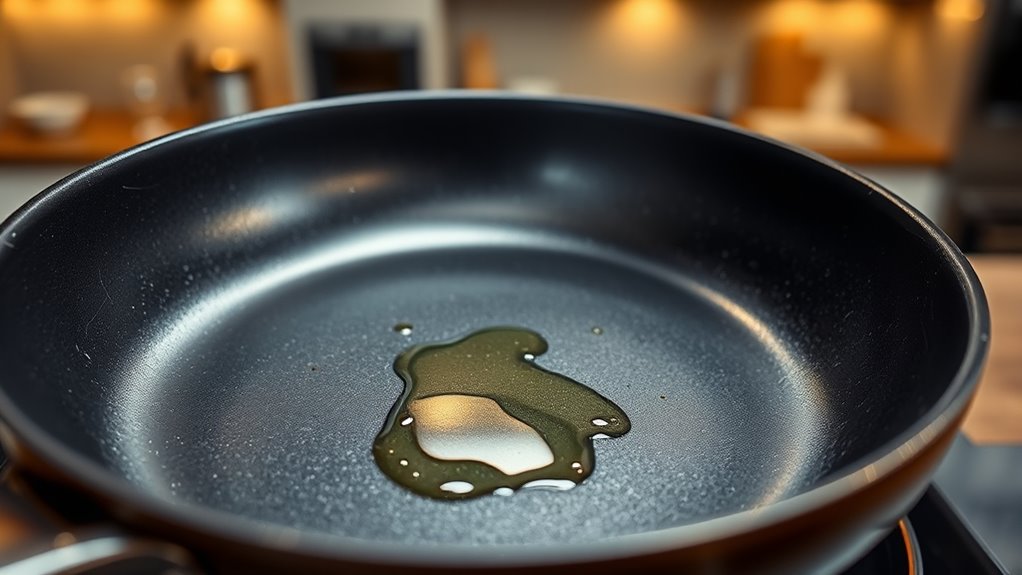
As your nonstick pan ages, its ability to prevent food from sticking naturally declines, even with proper cleaning. Over time, the nonstick coating’s durability diminishes, affecting nonstick longevity. Frequent use and washing wear down the coating, making food more likely to stick. You might notice scratches or uneven surfaces, signaling it’s time for a replacement. Here’s a quick comparison:
| Age of Pan | Coating Durability | Nonstick Longevity | Food Sticking | Recommended Action |
|---|---|---|---|---|
| New | High | Long | Minimal | Use regularly |
| 1 Year | Good | Moderate | Slightly more | Monitor and clean |
| 2-3 Years | Fair | Limited | Noticeable | Consider replacement |
| 4-5 Years | Low | Short | Frequent | Replace soon |
| Over 5 Years | Very Low | Very Short | Persistent | Switch to new pan |
Your pan’s age directly impacts its coating durability and nonstick performance.
Manufacturing Defects or Low-Quality Coatings
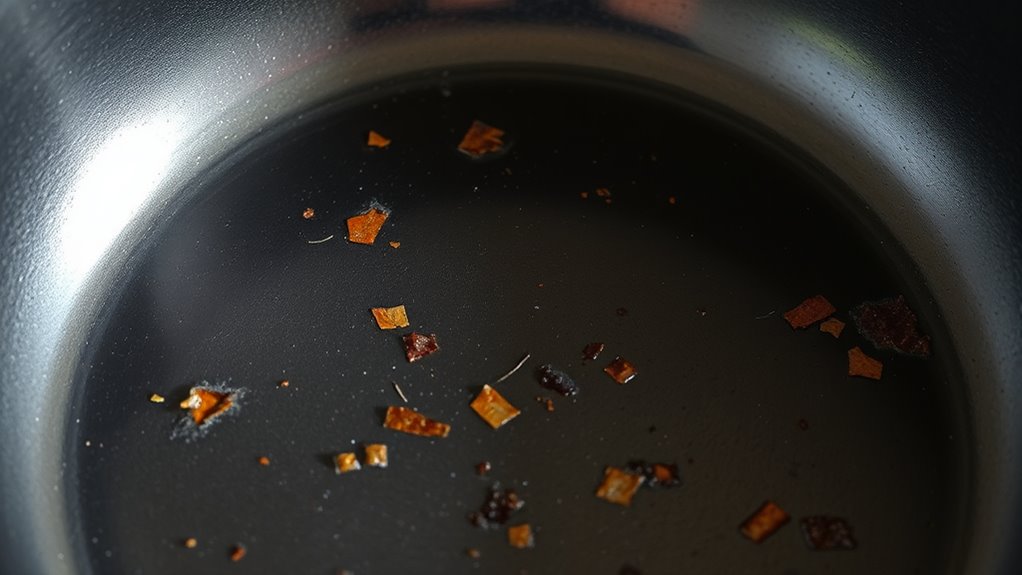
Manufacturing defects or low-quality coatings can cause your nonstick pan to stick prematurely, even if you’ve used it carefully. Poor manufacturing flaws or inferior low-quality coatings often result in uneven, thin layers that don’t adhere well. This compromises the pan’s nonstick properties from the start.
To identify these issues, look for:
- Visible peeling or bubbling on the surface
- Uneven coating application or discoloration
- Worn spots that expose the base material
These problems happen when coatings are poorly applied or made from subpar materials. Such manufacturing flaws lead to reduced durability and sticking, regardless of how gentle you are with your pan. Choosing reputable brands and inspecting your pan before use can help prevent these issues.
Frequently Asked Questions
Can Using Metal Utensils Damage My Nonstick Pan?
Using metal utensils can scratch your nonstick pan, which damages the nonstick coating. When the coating gets scratched, it becomes less effective, making food stick and reducing its lifespan. To protect your pan, avoid metal utensils and opt for wood, silicone, or plastic tools. This way, you prevent metal utensil scratches and keep your nonstick coating intact, ensuring smoother cooking and longer-lasting cookware.
How Do I Restore a Scratched Nonstick Surface?
A gentle touch is needed for nonstick surface repair. To restore scratched coatings, try a DIY approach with baking soda and water to create a mild abrasive paste, then gently scrub the surface. Avoid harsh chemicals or metal utensils. If damage is extensive, consider replacing the pan, as restoring heavily scratched coatings isn’t always effective. Proper care helps maintain your nonstick pan’s performance and prolongs its lifespan.
Does Dishwasher Cleaning Harm Nonstick Coatings?
Dishwasher cleaning can harm nonstick coatings because the harsh detergents and high temperatures may reduce coating durability over time. While some pans claim dishwasher safety, it’s generally better to hand wash your nonstick cookware to preserve its surface. Avoid abrasive scrubbers and harsh chemicals, which can scratch or degrade the coating, ensuring your pan stays nonstick longer and performs best.
What’s the Best Way to Store Nonstick Pans?
The best way to store your nonstick pans is to be gentle—no stacking like a game of Jenga. Use careful seasoning to keep the coating intact, and always place a soft cloth or paper towel between pans to avoid scratches. Proper storage preserves that shiny surface, so your nonstick pans stay slick and ready for action. Remember, treat them like royalty, and they’ll reward you with years of nonstick magic.
How Often Should I Replace My Nonstick Cookware?
You should replace your nonstick cookware when the nonstick coating durability has considerably diminished, usually after 3 to 5 years with regular use. Over time, the coating wears down, making your pans less effective and more prone to sticking. Pay attention to scratches or peeling, and if you notice these signs, it’s time for a new piece. Proper care can extend your cookware’s lifespan, but replacement ensures safe, effective cooking.
Conclusion
If your nonstick pan keeps sticking, it’s likely due to wear, overheating, or improper use. For example, a home cook who constantly uses metal utensils and ignores preheating might notice increased sticking over time. Regularly replacing worn coatings, using gentle utensils, and maintaining proper heat can extend your pan’s lifespan and keep it functioning smoothly. Remember, taking care of your nonstick pan guarantees better cooking results and saves you money in the long run.