
To keep your cutting boards hygienic, focus on thorough cleaning with soap and hot water after each use, especially when switching between raw meat and other foods. Use separate boards for different ingredients to prevent cross-contamination. Regularly sanitize with diluted bleach or heat treatments, like oven sterilization. Also, inspect for deep cuts or cracks that can harbor bacteria and replace boards as needed. Stick to these practices, and you’ll safeguard your kitchen from germs—more tips await to ensure your safety.
Key Takeaways
- Use separate cutting boards for raw meats, vegetables, and cooked foods to prevent cross-contamination.
- Thoroughly clean with soap and hot water after each use, paying attention to grooves and cuts.
- Regularly sanitize boards with diluted bleach or vinegar solutions to reduce bacteria buildup.
- Inspect for deep cuts, cracks, or odors, and replace boards when they can no longer be properly cleaned.
- Properly dry and store boards in a clean, dry area to inhibit bacterial growth and maintain hygiene.
As an affiliate, we earn on qualifying purchases.
Understanding Common Kitchen Germs and Their Risks
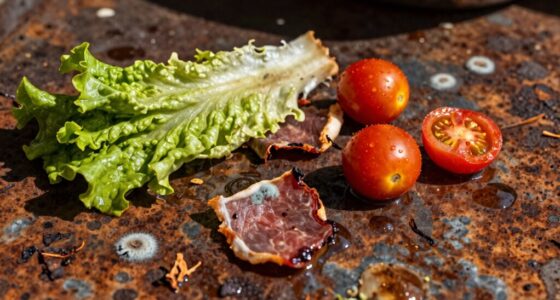
Many common germs lurk on kitchen surfaces, especially on cutting boards, and they can pose serious health risks if not properly managed. Kitchen surface contamination occurs when bacteria, viruses, or fungi transfer from raw foods to surfaces, increasing the risk of foodborne pathogen transmission. Common culprits include Salmonella, E. coli, and Campylobacter, which can cause severe illness. These pathogens thrive on cutting boards if not cleaned thoroughly, especially after preparing raw meat, poultry, or seafood. Proper cleaning and sanitizing are crucial because effective sanitation can significantly reduce microbial presence. Without proper hygiene, you risk cross-contamination, spreading germs to other foods or surfaces. Understanding that cutting boards can harbor these dangerous microbes is essential for food safety. Vigilance in cleaning and sanitizing helps prevent the spread of harmful germs and protects your health during food preparation. Additionally, contrast ratio in cleaning methods can determine how effectively these microbes are eliminated from surfaces. Regularly replacing or deep-cleaning wooden or plastic cutting boards can also help minimize microbial buildup, further enhancing food safety protocols. Incorporating appropriate cleaning techniques, such as using hot water and proper disinfectants, can dramatically improve sanitation efforts.
plastic and wooden cutting boards set
As an affiliate, we earn on qualifying purchases.
As an affiliate, we earn on qualifying purchases.
The Effectiveness of Washing With Soap and Water
Washing your cutting board with soap and water is one of the most effective ways to remove germs. Using the right technique guarantees you eliminate bacteria and prevent cross-contamination. Understanding soap’s cleaning power helps you get the most out of your cleaning routine. Proper cleaning techniques ensure that you maximize hygiene and keep your kitchen safe. Additionally, incorporating regular maintenance practices, such as checking and cleaning your cleaning tools, can further enhance overall sanitation. Recognizing toilet maintenance and repairs in your cleaning routine can help prevent buildup and ensure your kitchen stays hygienic. Being aware of kitchen hygiene principles can also guide you in establishing comprehensive cleaning habits.
Soap’s Cleaning Power
Soap’s cleaning power relies on its ability to break down oils and remove dirt from surfaces, including your cutting board. Dish soap is specially formulated to enhance this cleaning power, making it effective against grease and bacteria. To maximize its effectiveness, consider these points:
- Use enough dish soap to cover the entire surface.
- Let the soap sit briefly to loosen stubborn contaminants.
- Scrub thoroughly to ensure contact with all areas.
- Rinse well with clean water to remove residual soap and debris.
- Proper hygiene practices help prevent cross-contamination and ensure your cutting board remains safe for food preparation. Additionally, understanding the effectiveness of washing with soap and water can help you optimize your cleaning routines for better food safety, especially when combined with proper drying and storage techniques.
Proper Washing Techniques
To effectively clean your cutting board, you need to wash it with soap and water thoroughly. Use warm water and a scrub brush to remove food particles and bacteria from the surface. Pay special attention to the cutting surface, ensuring all grooves and cuts are cleaned well, as bacteria can hide there. After washing, rinse thoroughly to remove soap residue. Proper knife storage also plays a role in cutting surface maintenance; keep knives dry and stored separately to prevent cross-contamination. Regularly cleaning your knives and cutting surface minimizes bacterial buildup and keeps your cutting board hygienic. Avoid using harsh chemicals or soaking wood boards for long periods, which can damage the surface. Consistent proper washing is essential for safe, hygienic food prep. Additionally, using proper cleaning techniques helps ensure that bacteria and germs are effectively eliminated. Implementing effective drying methods further reduces moisture that can foster bacterial growth on your cutting surfaces. Incorporating proper maintenance practices can prolong the lifespan of your cutting board and maintain its hygienic condition. Understanding hygiene standards in food preparation can help you adopt the best practices for sanitation and safety.
As an affiliate, we earn on qualifying purchases.
The Role of Heat and Sanitizing Devices
Heat treatment can effectively kill bacteria on your cutting board when used correctly, but you need to reach the right temperatures. Sanitizing devices like UV sterilizers and electric steamers offer convenient options, each with specific instructions for proper use. Knowing how to operate these tools guarantees your cutting surfaces stay hygienic and safe for food preparation. Additionally, understanding the importance of air quality in your environment can further reduce microbial contamination, supporting overall kitchen hygiene. Proper placement of your sanitizing devices can optimize their effectiveness and safety, ensuring thorough sanitation. Proper storage of your utensils and cutting boards can further reduce the risk of bacterial growth between uses.
Effectiveness of Heat Treatment
Since heat treatment can effectively eliminate bacteria and other pathogens on cutting boards, many sanitize their surfaces using heat or specialized devices. Thermal sterilization is a proven method, killing germs with high temperatures. Oven baking is a common technique, where you heat the board at 350°F for about 10-15 minutes to ensure bacteria are destroyed. Here are four key points to contemplate:
- High temperatures are essential for effective sterilization.
- Consistent heat exposure ensures thorough cleaning.
- Oven baking is suitable for wooden and plastic boards.
- Safety precautions prevent damage or warping during heat treatment.
- Using proper jewelry materials and ensuring no damage occurs during heating can prolong the lifespan of your cutting board. Additionally, understanding the science of heat transfer can help optimize sterilization methods and prevent unintended damage during the process.
Sanitizing Device Types
Various sanitizing devices utilize heat to effectively eliminate bacteria from cutting boards, making them a convenient alternative to traditional methods. UV sterilizers use ultraviolet light to destroy microorganisms quickly, while ultrasonic cleaners harness high-frequency sound waves to dislodge dirt and bacteria from surfaces. These devices offer efficient, chemical-free sanitization options for home kitchens. Modern kitchen technology continually advances, providing smarter solutions for maintaining hygiene. Both options provide quick, effective sanitation, reducing your reliance on scrubbing or chemical disinfectants. Incorporating hygienic practices with these devices can further enhance your kitchen’s cleanliness and safety. Choosing the right device depends on your needs and convenience, ensuring your cutting boards stay hygienic with minimal effort.
Proper Usage Techniques
Using heat and sanitizing devices correctly is essential for effectively killing bacteria on your cutting boards. Proper techniques guarantee safety, knife safety, and prevent cross-contamination. Here are four key tips:
- Always follow manufacturer instructions for sanitizing devices to avoid damage and ensure effectiveness.
- Use high heat settings or boiling water to disinfect wooden and plastic boards thoroughly.
- Store your cutting boards in dry, well-ventilated storage solutions to prevent mold and bacterial growth.
- When sanitizing, handle knives carefully to avoid accidents and maintain their sharpness, reducing the risk of injury.
food-safe disinfectant spray for cutting boards
As an affiliate, we earn on qualifying purchases.
As an affiliate, we earn on qualifying purchases.
Material Matters: Plastic vs. Wood Cutting Boards
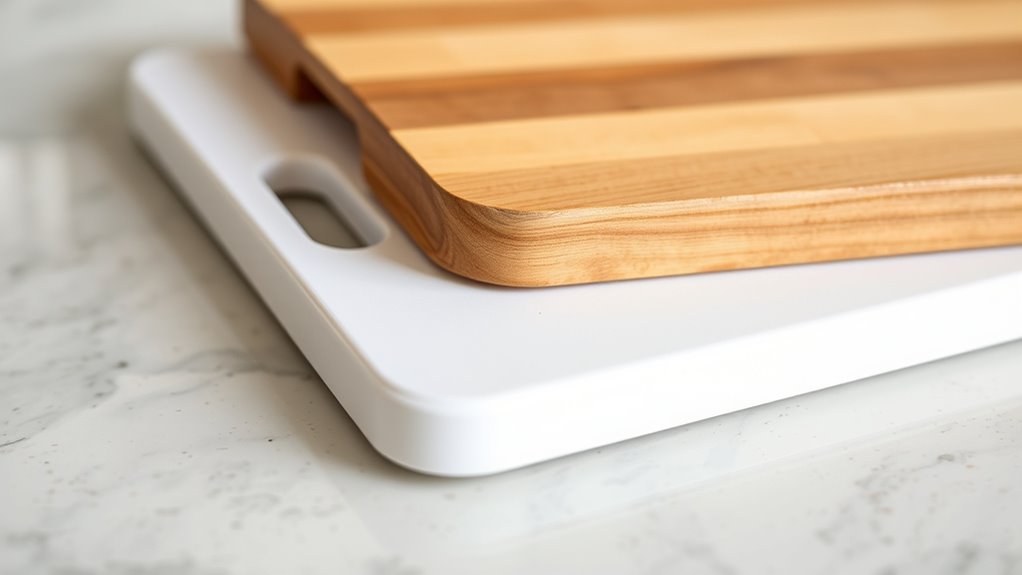
When choosing a cutting board, the material you select can considerably impact hygiene and maintenance. Wood boards are known for their durability, resisting deep cuts that can harbor bacteria. Their natural fibers help close small cuts over time, making them less prone to bacterial buildup. In contrast, plastic boards offer greater flexibility, which makes them easier to clean thoroughly and more resistant to warping or cracking. Plastic’s smooth surface also makes it easier to sanitize with high-temperature washes or dishwasher cycles. However, plastic can develop deep grooves from knife cuts, potentially trapping bacteria if not replaced regularly. Choosing between wood and plastic depends on your priorities: durability and natural antibacterial properties versus ease of cleaning and flexibility. Both can be hygienic choices when maintained properly.
Proper Cleaning Techniques for Different Types of Boards
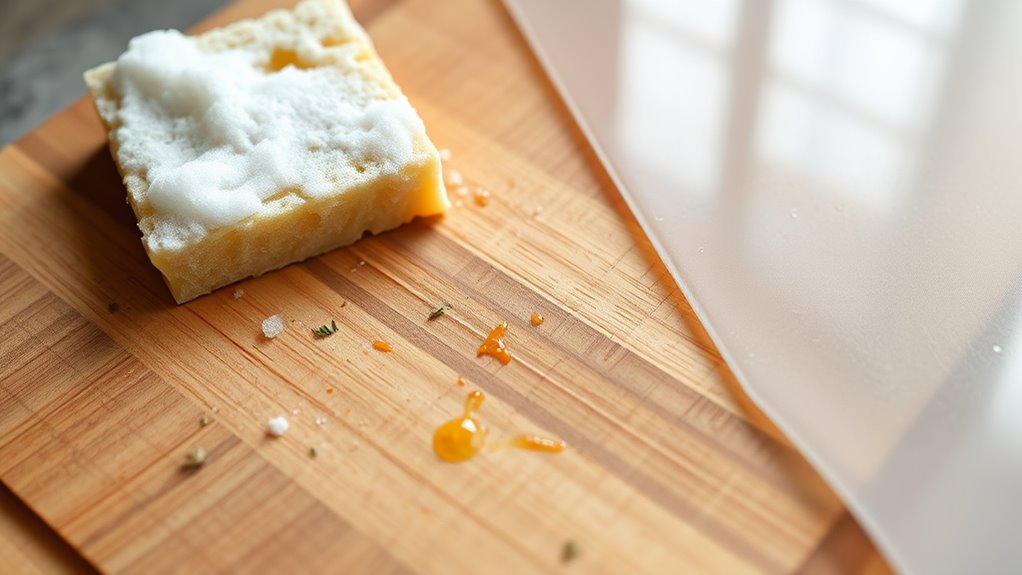
To keep your cutting boards hygienic, it’s essential to use proper cleaning techniques tailored to their material. Different cutting board materials require specific care to prevent bacteria buildup. Here are four key steps:
- Wash plastic boards with hot, soapy water after each use, and sanitize weekly with a diluted bleach solution.
- For wooden boards, scrub with a brush and hot water, then dry thoroughly. Avoid soaking to prevent warping.
- Use a vinegar solution for both types to reduce bacteria, especially if you handle raw meat frequently.
- Rotate cleaning frequency based on use—more often if you prepare raw meats or seafood daily.
Adapting your cleaning techniques to the material and maintaining regular cleaning frequency guarantees your boards stay safe and hygienic.
The Importance of Regular Replacement and Maintenance
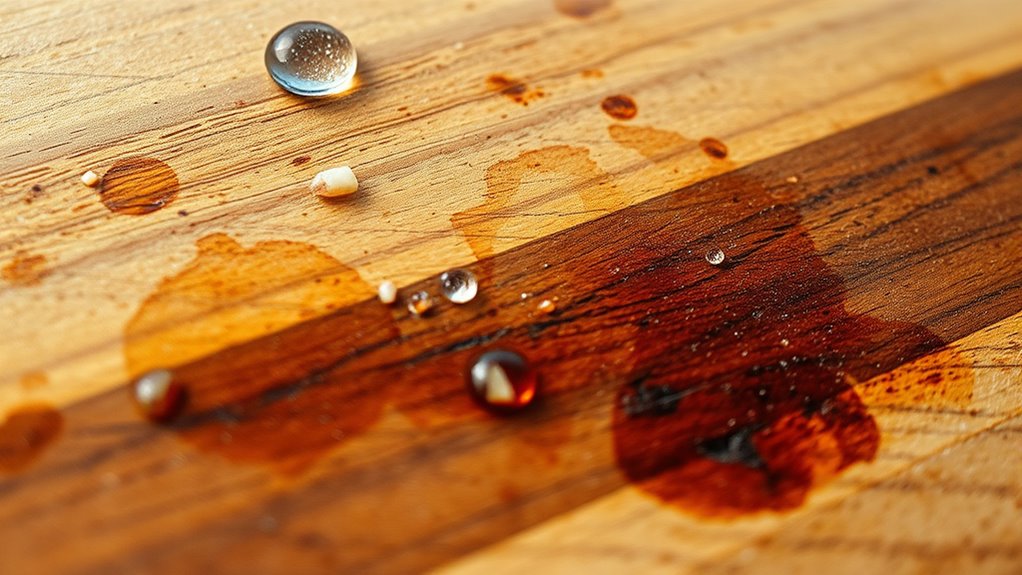
Even with proper cleaning, cutting boards don’t last forever. Over time, their surface becomes more prone to deep grooves and bacteria buildup, reducing their effectiveness and safety. Recognizing your board’s lifespan is key; most wooden boards need replacement every one to three years, while plastic ones might last slightly longer with regular maintenance. Regularly inspect your cutting board for cracks, deep cuts, or signs of wear. If it shows significant damage or develops persistent odors, it’s time for a replacement. Maintaining your board also involves proper cleaning and sanitizing, but don’t rely on this alone—routine replacement ensures you’re not risking cross-contamination. Staying aware of your board’s condition and replacement frequency helps keep your kitchen hygienic and your food safe.
Cross-Contamination Prevention Strategies
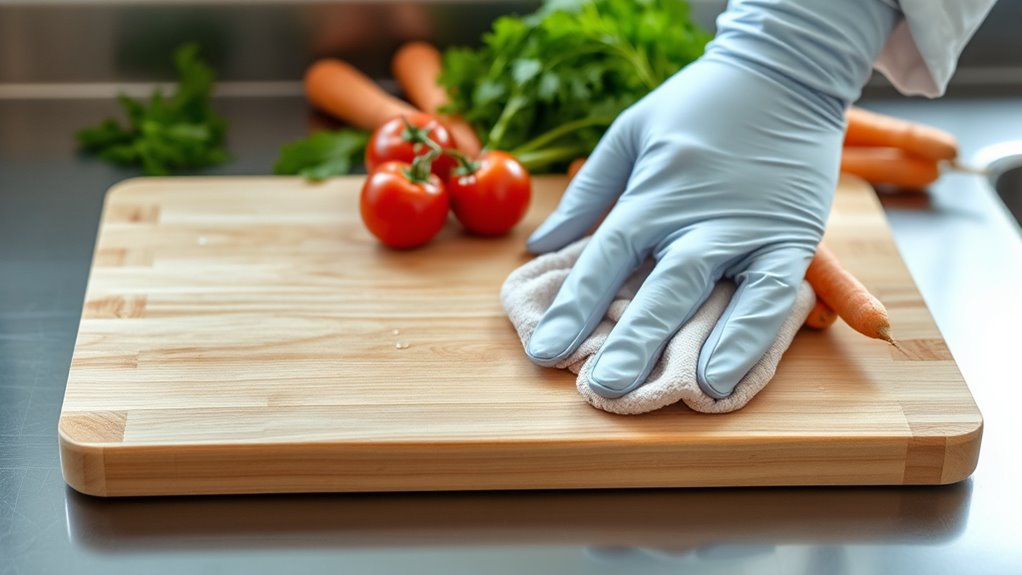
Cross-contamination can occur easily if you don’t handle your cutting boards properly. To prevent this, focus on these strategies:
- Use separate boards for raw meats, vegetables, and cooked foods to maintain ingredient separation.
- Sharpen your knife skills to reduce tearing and prevent juices from spreading.
- Always clean and sanitize your cutting board thoroughly after each use, especially when switching between ingredients.
- Develop a habit of cross-checking your work area, ensuring no residue or debris remains.
Practical Tips for Ensuring Safe Cutting Board Practices
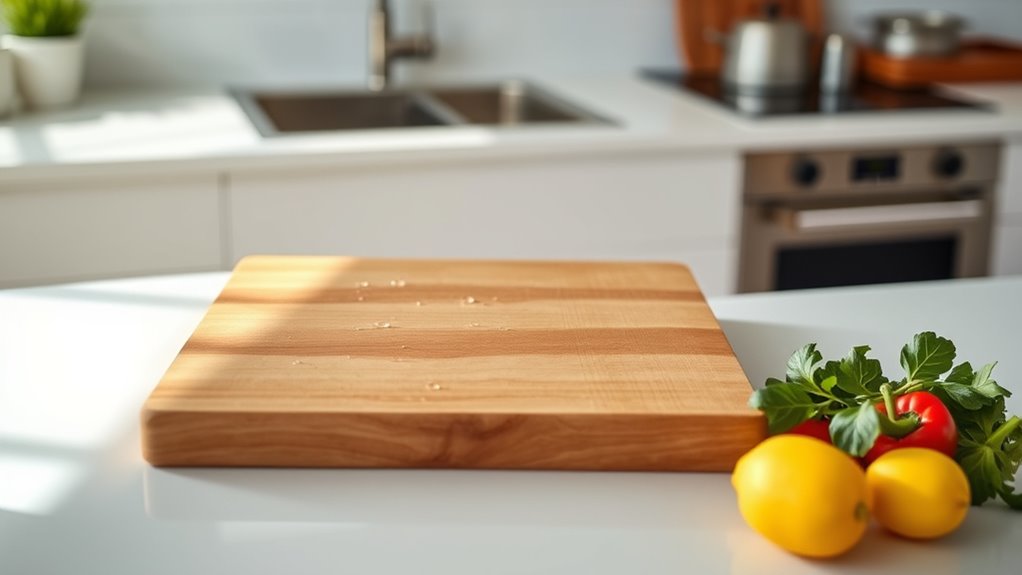
Ensuring safe cutting board practices requires consistent attention and proactive habits. Start by regularly sharpening your knives; dull blades can cause slips and accidents. Use separate cutting boards for raw meats, vegetables, and cooked foods to prevent cross-contamination. When storing cutting boards, make sure they’re dry and stored upright or in a way that allows air circulation to prevent mold. Clean your cutting boards thoroughly after each use with hot, soapy water or a sanitizing solution, especially if they’ve been in contact with raw meat. Consider replacing wooden or plastic boards that become deeply scored or stained, as bacteria can hide in these crevices. Prioritize storage safety by keeping cutting boards away from high-traffic areas to avoid accidental falls or contamination. These habits help maintain hygiene and reduce risks in your kitchen.
Frequently Asked Questions
How Often Should I Replace My Cutting Boards for Optimal Hygiene?
You should replace your cutting board every 1 to 3 years to guarantee ideal hygiene. The board’s longevity depends on how well you care for it and how often you use it. Look for deep cuts, cracks, or excessive wear, which can harbor bacteria. Regularly inspect your board and prioritize replacement when it shows signs of significant damage, maintaining a safe and clean cooking environment.
Are There Specific Cleaning Products Recommended for Sanitizing Different Board Materials?
Think of your cutting board as a battlefield—each surface needs the right weapon to fight germs. For wood and bamboo, use a mixture of warm water and mild dish soap, then disinfect with white vinegar or hydrogen peroxide. For plastic or silicone boards, a good scrub with dish soap followed by a sanitizing spray of cleaning agents like diluted bleach or vinegar works best. Always rinse thoroughly and air dry to keep germs at bay.
Can Dishwasher Cleaning Fully Eliminate Bacteria From Cutting Boards?
Dishwasher effectiveness can markedly help eliminate bacteria from cutting boards, especially when using hot water and proper detergents. While it’s effective for plastic and some composite boards, it might not fully sanitize wooden ones due to their porous nature. To guarantee thorough bacteria elimination, you should also scrub boards with soap and water after dishwasher cleaning, and consider sanitizing with vinegar or a diluted bleach solution for added safety.
What Are the Signs That a Cutting Board Needs to Be Discarded?
Your cutting board’s telling you it’s time to retire it if you see visible stains that won’t fade and odors that cling stubbornly despite washing. These signs mean bacteria may be hiding in deep pores, risking cross-contamination. When scrubbing no longer brightens its surface or masks the smell, it’s like trying to fix a sinking ship—better to replace it and keep your kitchen safe and clean.
Do Antimicrobial Cutting Boards Provide Better Protection Against Germs?
Antimicrobial cutting boards do offer better protection against germs because their antimicrobial coatings help resist germ buildup. These coatings actively inhibit bacteria, making your board safer to use. However, they aren’t foolproof—you still need to clean your board thoroughly after each use. Combining antimicrobial features with proper cleaning habits ensures better germ resistance and reduces the risk of cross-contamination. So, yes, they provide extra protection, but good hygiene practices remain essential.
Conclusion
To keep your kitchen safe, remember that a clean cutting board is the backbone of good hygiene. Regularly wash, sanitize, and replace your boards to stay ahead of germs. Pay attention to different materials and proper techniques—don’t let cross-contamination sneak up on you. Think of your cutting board as the first line of defense; if you keep it in top shape, you’ll prevent problems before they start. It’s worth the effort to stay safe!