Salt types vary greatly in crystal size and structure, affecting their appearance, texture, and flavor. Smaller crystals feel smooth and dissolve quickly, making them perfect for seasoning or baking, while larger crystals provide a crunchy texture and burst of flavor. Production methods control crystal size by managing factors like evaporation rate and mineral content. Understanding these differences helps you choose the right salt for cooking or finishing, and there’s more to discover about how these factors shape your culinary options.
Prime for Young Adults — start your free trial
Fast free delivery, streaming and member deals for eligible 18–24 year olds.
As an affiliate, we earn on qualifying purchases.
Key Takeaways
- Crystal size varies from fine, powder-like to coarse, gritty grains, affecting texture and dissolution rate.
- Natural salt types like Himalayan pink, fleur de sel, and Celtic sea salt form distinct crystal structures due to geological processes.
- Production control factors such as evaporation rate, temperature, and seed crystals influence crystal size and uniformity.
- Larger crystals dissolve slowly, offering burst flavor and crunch; smaller crystals dissolve quickly for even seasoning.
- Selecting the right salt involves considering harvesting methods, mineral content, and intended culinary use for optimal results.
As an affiliate, we earn on qualifying purchases.
What Are the Different Salt Crystal Sizes?
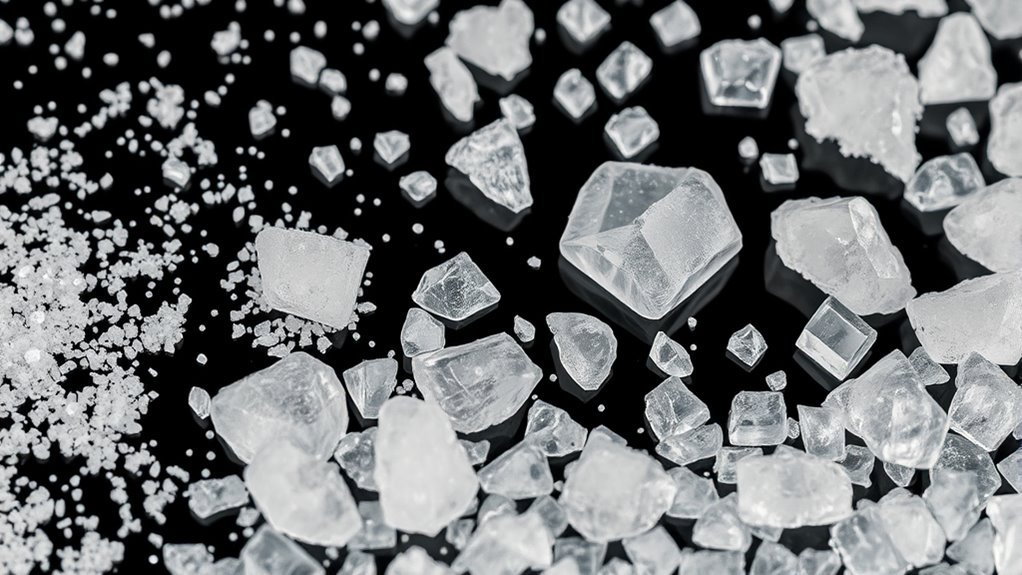
Have you ever noticed that some salts feel grainy while others dissolve smoothly? That difference comes down to their grain size and crystal morphology. Smaller crystals create a finer, powder-like texture, making the salt feel smooth and easy to dissolve. Larger crystals, on the other hand, have a coarser grain size, giving a gritty sensation when you handle or taste it. The crystal morphology, or shape of the salt crystals, also influences how it looks and feels. Well-formed, uniform crystals tend to be more consistent in size and shape, while irregular crystals can be more coarse or uneven. These variations affect not just texture but also how quickly the salt dissolves in water or food, impacting your cooking and seasoning experience. Additionally, understanding salt crystal structure can enhance artistic expression by inspiring creative culinary presentations and craft projects.
As an affiliate, we earn on qualifying purchases.
Which Salt Types Have Unique Crystal Structures?
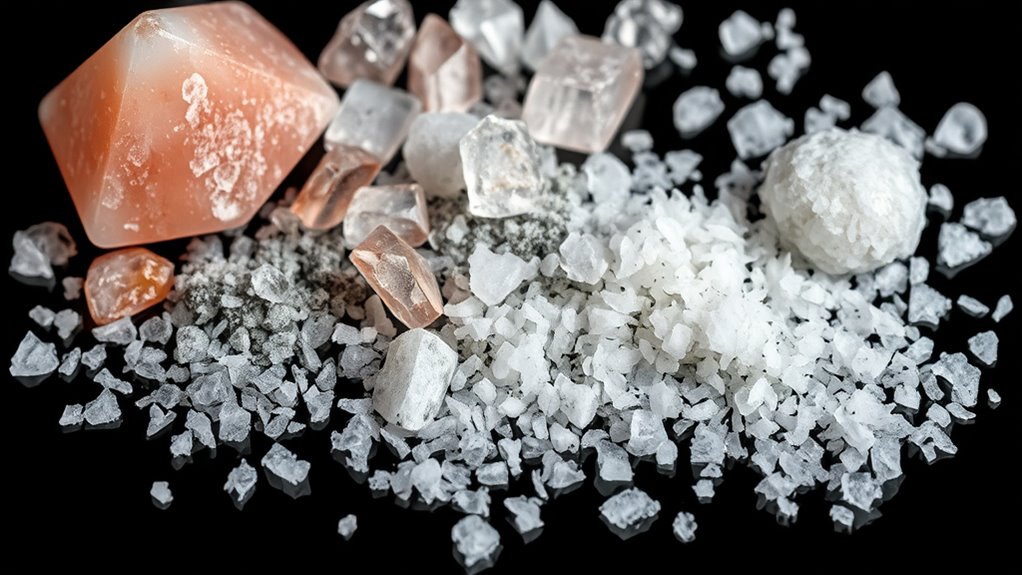
Certain salt types stand out because of their distinctive crystal structures, which influence their appearance, texture, and culinary uses. These unique formations arise from specific geological processes and mineral purity levels, creating visually striking salts. For example, Himalayan pink salt forms in ancient underground deposits, producing large, pink crystals. Similarly, fleur de sel has delicate, flaky crystals that develop on salt ponds. These differences reflect their geological formations and mineral content. The crystal formation process plays a crucial role in determining the final structure and appearance of each salt type. Here’s a quick comparison:
| Salt Type | Crystal Structure | Notable Feature |
|---|---|---|
| Himalayan Pink | Large, blocky crystals | Pink mineral impurities |
| Fleur de Sel | Thin, flaky crystals | Delicate surface formation |
| Celtic Sea Salt | Coarse, irregular crystals | High mineral purity |
These unique structures showcase how natural processes shape salt at a microscopic level.
As an affiliate, we earn on qualifying purchases.
How Is Salt Crystal Size Controlled During Production?
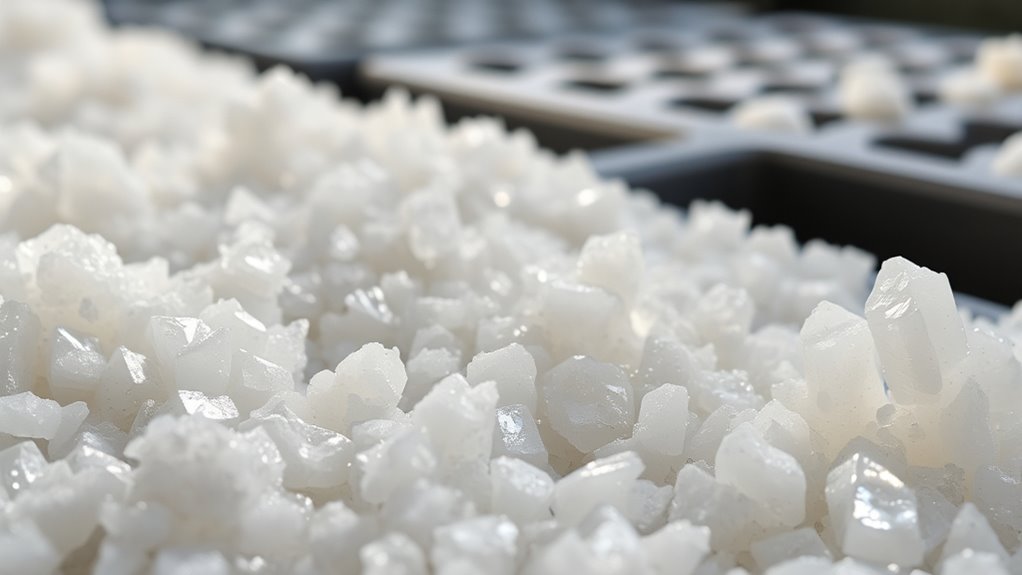
Controlling salt crystal size during production relies on carefully managing environmental conditions and processing techniques. The mineral composition influences how crystals form, affecting their size. During the crystal formation process, factors like temperature, evaporation rate, and salinity are adjusted to achieve the desired crystal size. Additionally, understanding the impact of color accuracy on overall image quality can help producers optimize their processes for specific salt types. You can influence this by:
- Regulating evaporation speed to control crystal growth
- Adjusting mineral composition through mineral-rich brine
- Using seed crystals to guide overall size
- Controlling temperature to slow or accelerate crystallization
- Managing humidity levels to prevent undesired nucleation
These techniques ensure consistent crystal sizes, whether for fine table salt or larger finishing salts. Proper control over these variables results in salt with specific characteristics suited for different uses.
As an affiliate, we earn on qualifying purchases.
How Does Crystal Size Impact Cooking and Tasting?
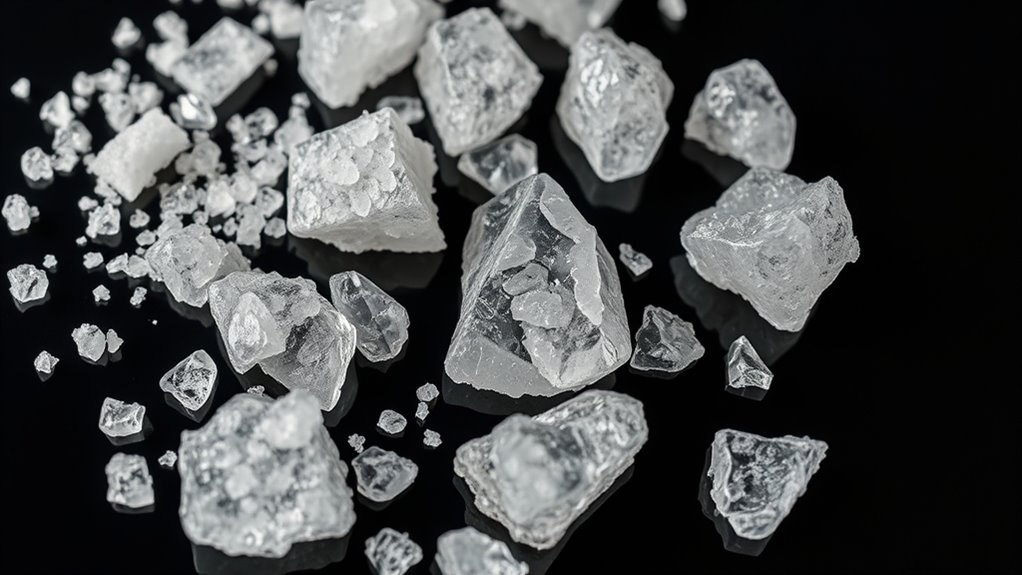
The size of salt crystals substantially influences how they perform in cooking and tasting. Larger crystals have a coarser grain texture, which means they dissolve more slowly, offering a burst of saltiness when bitten or sprinkled on food. This slower dissolution affects flavor diffusion, giving dishes a more controlled seasoning and a distinctive texture. Smaller crystals, like fine salt, dissolve quickly, dispersing evenly and seamlessly throughout a dish, enhancing flavor consistency. The crystal size also impacts how you experience the salt’s crunch and mouthfeel, adding a sensory layer to your tasting. Additionally, understanding the dissolution rate of different salt types can help you better control seasoning and texture in your cooking. Knowing this relationship helps you choose the right salt for specific culinary tasks, whether you want a subtle seasoning or a visible, crunchy finishing touch.
How to Pick the Best Salt for Your Kitchen Needs
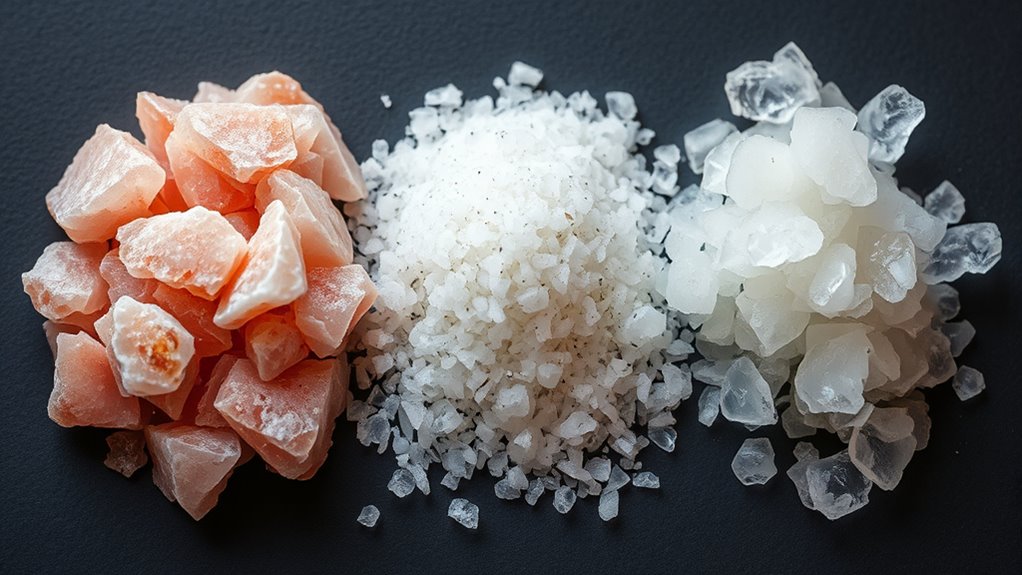
Choosing the right salt for your kitchen starts with understanding how different types suit various cooking needs and preferences. Consider salt harvesting methods, which influence flavor and texture, and salt mineral composition, affecting taste and health benefits. For example, sea salts undergo evaporation, preserving trace minerals, while mined salts like Himalayan have a unique mineral profile. To pick the best salt, think about your cooking style and desired flavor. Here are some options:
- Fine table salt for quick seasoning and baking
- Coarse sea salt for finishing dishes
- Flavored salts for added complexity
- Himalayan pink salt for mineral richness
- Specialty salts like fleur de sel for finishing touches
Matching these factors ensures you select a salt that complements your culinary style and enhances your dishes.
Frequently Asked Questions
How Does Mineral Content Influence Salt Crystal Formation?
Mineral content influences salt crystal formation by affecting crystal morphology and growth patterns. When you encounter salts with varied mineral composition, you’ll notice differences in crystal size and shape, as impurities can inhibit or promote specific crystal structures. These mineral impurities can lead to diverse morphologies, creating unique textures and appearances. So, your salt’s mineral content directly shapes how the crystals develop, giving each type its distinct characteristics.
Are There Health Benefits Linked to Specific Salt Crystal Sizes?
Yes, specific salt crystal sizes can offer nutritional benefits and enhance taste. Coarser crystals, like sea salt, retain trace minerals that may support your health, while fine salts are easier to use and can improve flavor absorption. Larger crystals provide a satisfying crunch and better taste enhancement in dishes, making your meals more enjoyable. Choosing the right crystal size allows you to balance health benefits with culinary preferences effectively.
Can Salt Crystal Size Affect Shelf Life or Storage?
Yes, salt crystal size can affect shelf life and storage. Larger crystals generally resist clumping and moisture absorption better, making salt easier to store and maintain its quality over time. Proper salt storage involves keeping it in airtight containers to preserve crystal integrity and prevent moisture, which can cause clumping or deterioration. Effective crystal preservation guarantees your salt stays fresh longer and maintains its intended texture and flavor.
What Tools Are Best for Measuring Salt Crystal Size?
Imagine wielding a tiny sword or a laser beam to size up salt crystals. You’ll want tools like microscopes for close-up views and laser diffraction for precise measurements. Microscope techniques give you detailed images, revealing crystal shapes and sizes, while laser diffraction analyzes crystal size distribution rapidly. These tools help you control salt quality, ensuring consistent crystal size—no more guessing if your salt’s tiny or huge!
How Do Environmental Factors During Production Alter Crystal Structures?
Environmental factors during production notably influence crystal growth and structure. You can alter these factors, such as temperature, humidity, and airflow, to control how crystals develop. For example, higher temperatures may speed up crystal growth, resulting in larger crystals, while controlled airflow can produce more uniform structures. By maintaining strict environmental control, you guarantee consistent crystal quality and size, tailoring the salt’s properties to your specific needs.
Conclusion
Now that you know the secrets behind salt’s crystal size and structure, you’re practically a salt wizard! With this knowledge, you can conquer any recipe, impress everyone with your perfect seasoning, and turn ordinary dishes into culinary masterpieces. Don’t settle for bland, boring salt—embrace the crunch, the sparkle, the magic! Your kitchen will never be the same, and your taste buds will thank you for the glorious, flavorful adventure ahead.
Fall yard work Picks
leaf blowers
As an affiliate, we earn on qualifying purchases.