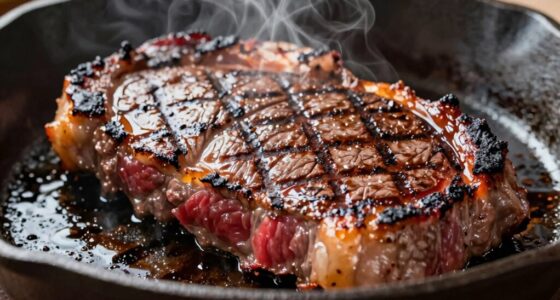
Your food browns unevenly in the oven because of hot spots and poor heat circulation. Ovens aren’t perfectly uniform, and design or element placement can create areas that are hotter, especially at the top or back. Without proper air flow, certain spots cook faster, causing uneven browning. Adjusting rack positions, rotating trays, or using a convection oven can help. Keep exploring to learn more tips for getting evenly browned dishes every time.
Key Takeaways
- Hot spots caused by oven design or element placement lead to uneven browning.
- Poor heat circulation creates stagnant zones, resulting in inconsistent cooking.
- Food placed in the same spot repeatedly may brown unevenly over time.
- Lack of oven calibration and hot spot awareness hinder uniform browning.
- Not rotating or adjusting trays during cooking allows hot spots to cause uneven results.

Have you ever wondered why your food sometimes browns unevenly, even when cooked in the same oven? The answer often lies in oven hot spots and uneven heat distribution. Ovens aren’t perfectly uniform heat sources; they tend to have areas that are hotter than others. These hot spots can cause parts of your dish to cook faster and brown more quickly, while other sections lag behind. If you’ve noticed uneven browning, it’s likely because the heat isn’t spreading evenly across the oven’s interior.
Many ovens have hot spots due to their design, the placement of heating elements, or the way heat circulates inside. For example, in a conventional oven, the top or back areas tend to be hotter, especially near the heating elements. This means that when you place your baking tray or casserole in the same spot every time, you might be unintentionally positioning food where the heat is most intense. Over time, this can lead to uneven browning because certain parts of your food are exposed to higher temperatures than others.
Oven hot spots from design and element placement cause uneven browning in traditional baking.
Uneven heat distribution isn’t just about hot spots; it also involves how well your oven circulates air. If the oven’s fan isn’t functioning properly or if your oven doesn’t have a convection feature, heat can become stagnant in certain areas. This creates pockets of hot and cooler zones, making it challenging to achieve uniform browning. Without proper air circulation, some sections of your dish may brown quickly, while others remain undercooked or pale. Improving heat circulation with a convection setting can make a significant difference. Additionally, understanding heat distribution can help you better manage your cooking process and avoid common pitfalls.
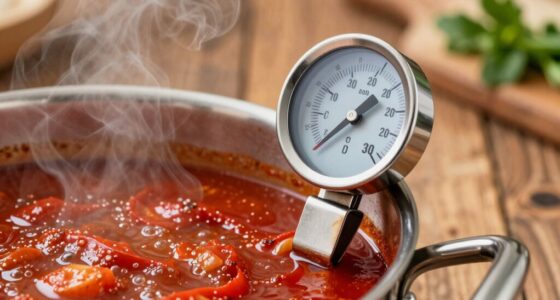
To combat uneven browning caused by hot spots, you can rotate your food during cooking. Turning or shifting trays halfway through can help expose all parts of your dish to more even heat. Using an oven thermometer can also help you identify hot spots, so you can adjust your rack positions accordingly. Additionally, investing in a convection oven or adding a fan-assisted setting can improve heat circulation, promoting more uniform browning. Recognizing the importance of heat circulation and hot spots can help you make more effective adjustments.
Understanding how oven hot spots and uneven heat distribution affect your cooking can make a big difference. Recognizing these issues allows you to adapt your baking techniques—like rotating trays or adjusting rack positions—to ensure your food browns evenly. A properly calibrated oven can significantly reduce these uneven browning problems, leading to more consistent results. Ultimately, a little awareness and some strategic adjustments can turn unevenly browned dishes into perfectly cooked, beautifully browned meals every time.
As an affiliate, we earn on qualifying purchases.
Frequently Asked Questions
Does the Type of Baking Sheet Affect Browning?
Yes, the type of baking sheet affects browning. Different baking sheet materials, like aluminum or steel, conduct heat differently, impacting how evenly your food browns. Non-stick coatings can also influence browning, often preventing crispness or browning in some cases. Uncoated sheets usually promote better browning because they allow heat to transfer directly. Choosing the right material and considering coating effects can help you achieve more even and desirable browning in your baked goods.
Can Altitude Influence Even Browning?
Did you know that at higher altitudes, air pressure drops by about 1 inch of mercury per 1,000 feet? Altitude effects can cause uneven browning because lower pressure and humidity alter heat transfer and moisture evaporation. This change impacts browning consistency, often resulting in faster or uneven browning of baked goods. To compensate, you might need to adjust oven temperature or baking time to achieve better, more even browning.
How Does Oven Cleaning Impact Baking?
Oven cleaning greatly impacts baking because a clean oven maintains consistent oven temperature and even heat distribution. When you clean your baking surface and oven walls, it helps prevent hotspots that cause uneven browning. Residue buildup can insulate the oven’s heating elements, affecting oven temperature accuracy. Regularly cleaning your oven ensures that heat reaches your baked goods evenly, leading to better browning and more consistent results every time you bake.
Do Different Recipes Require Different Oven Settings?
Different recipes definitely need different oven settings. For example, if you’re baking a delicate soufflé, you might set a lower cooking temperature to prevent over-browning. Ingredients with high moisture content, like bread dough, require a higher temperature to develop a crust. Adjusting oven temperature based on the recipe guarantees even cooking and ideal browning, avoiding uneven results caused by varying moisture levels and cooking needs.
How Does the Placement of Racks Affect Browning?
Rack placement greatly impacts browning because it influences heat distribution. When you position racks closer to the top, the food gets more direct heat, leading to quicker browning. Conversely, lower racks receive less heat, resulting in more even or slower browning. Adjusting rack positioning helps you control how evenly your food browns, especially in ovens with uneven heat. Proper rack placement ensures consistent results and prevents over-browning in certain areas.
As an affiliate, we earn on qualifying purchases.
Conclusion
So, next time your cookies look like they’ve been through a lightning storm while your bread’s still pale, remember—your oven’s just playing favorites! It’s not your fault; even the best ovens can be unpredictable. Embrace the quirks, move your trays around, and maybe even give your oven a little pep talk. With a bit of patience and some strategic placement, you’ll have perfectly browned goodies, no matter how mischievous your oven feels!
As an affiliate, we earn on qualifying purchases.
As an affiliate, we earn on qualifying purchases.