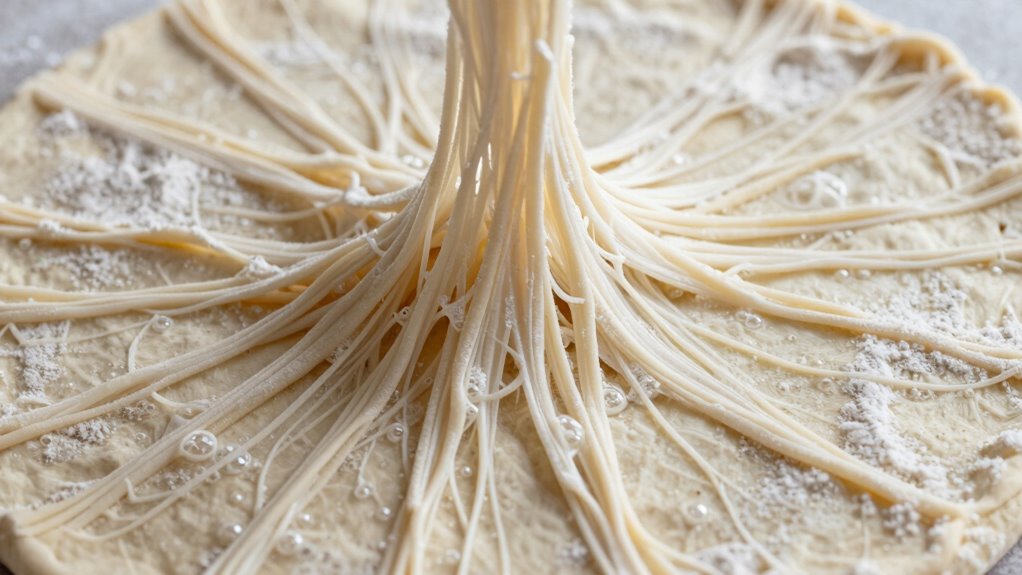
Gluten develops when water interacts with wheat proteins glutenin and gliadin, creating a resilient network that traps gases and provides elasticity. The kneading process stretches and aligns these proteins, strengthening the dough’s structure. Resting and fermentation further enhance gluten’s elasticity and extensibility. If gluten develops too much or too little, your bread can turn out chewy or fragile. To master perfect texture, understanding how to control gluten formation is essential—keep exploring to learn more.
Key Takeaways
- Excessive kneading or hydration promotes strong gluten networks, resulting in a chewier dough texture.
- Water activates glutenin and gliadin, enabling gluten cross-linking that enhances elasticity and chewiness.
- Longer fermentation and resting allow gluten strands to relax and develop, increasing dough resilience and chewiness.
- Overdevelopment of gluten creates a dense, tough structure, contributing to a chewy final product.
- Adjusting kneading, hydration, and fermentation controls gluten strength, directly influencing dough chewiness.

BOORIKA Sourdough Bread Baking Tool Set with Danish Dough Whisk, Bread Lame & Blades, Bench Scraper, Dough Scrapers and Silicone Brush – Sourdough Starter Kit
* All-in-One Artisan Bread Kit – Includes everything you need to bake like a pro: Danish dough whisk,…
As an affiliate, we earn on qualifying purchases.
As an affiliate, we earn on qualifying purchases.
What Causes Gluten to Form in Dough
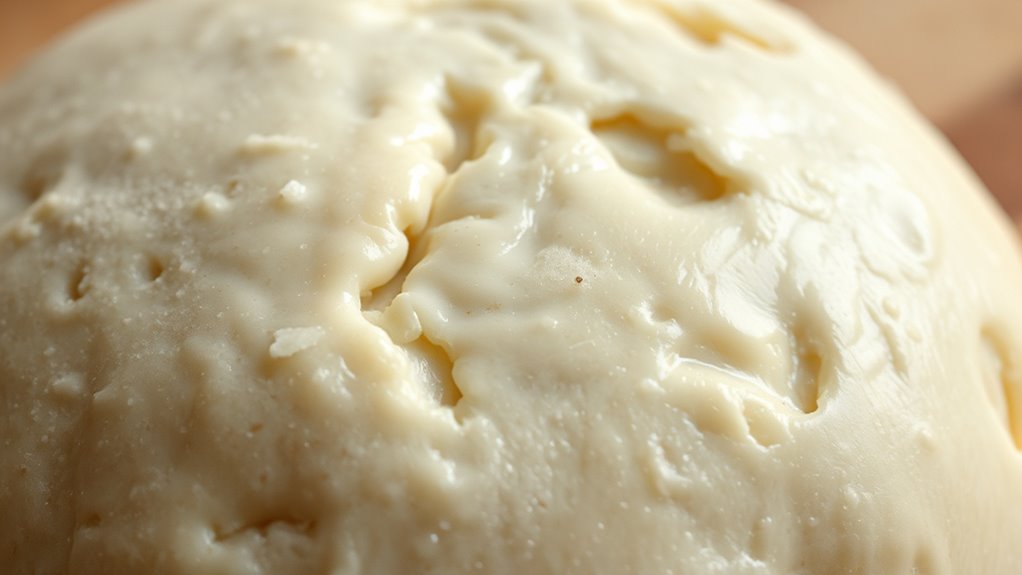
Gluten forms in dough when water interacts with wheat proteins, mainly glutenin and gliadin. This interaction triggers gluten cross linking, where these proteins bond to create a network that gives dough its elasticity. Enzyme activity also plays a role; enzymes like transglutaminase can enhance protein bonding, strengthening the gluten network. As you knead the dough, the physical action encourages more gluten cross linking, developing the chewy texture you want. The balance between hydration and enzyme activity determines how strong and elastic the gluten becomes. If you add too much water, it can weaken the structure, but the right amount promotes ideal gluten formation. The process of protein bonding is essential for developing the desired dough texture. Understanding these processes helps you control dough consistency, ensuring a perfect rise and texture in your baked goods.

Global Grub Focaccia Bread Art Kit for Kids, Teens, Adults – Fun DIY Professional Bread Baking Kit Comes with Bread Flour, Food Tweezers for Decorating, Art Gallery and Step by Step Instructions
MAKE BEAUTIFUL HOMEMADE FOCACCIA: Turn homemade Italian flatbread into an edible art masterpiece! Express your creative side and…
As an affiliate, we earn on qualifying purchases.
As an affiliate, we earn on qualifying purchases.
How Glutenin and Gliadin Build Dough Strength
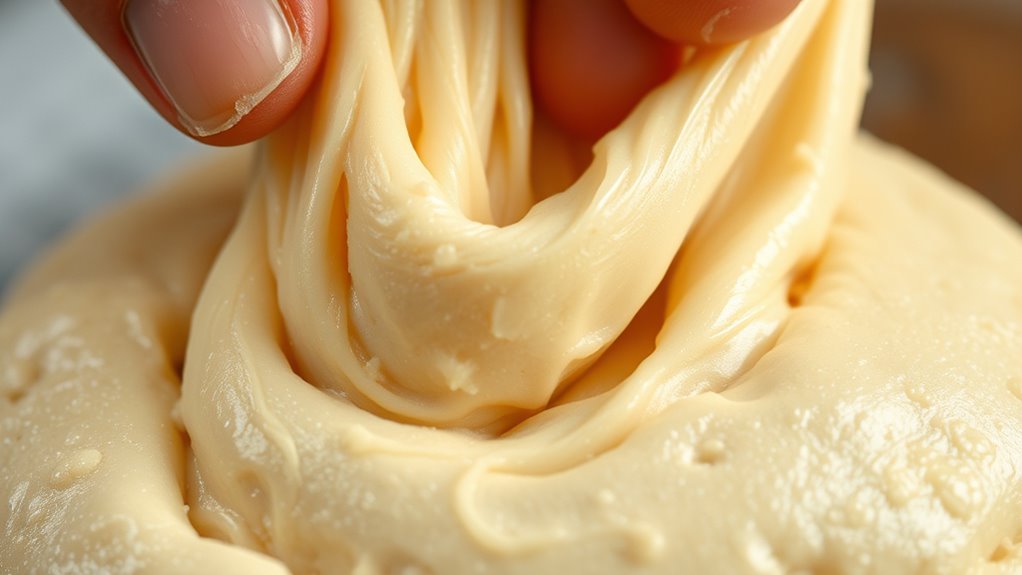
Glutenin and gliadin are the two main proteins responsible for building the strength of your dough. When combined with water, they form a network that gives dough its elasticity and structure. Glutenin contributes to dough elasticity, allowing it to stretch without tearing, which is essential for trapping gas during fermentation. Gliadin, on the other hand, provides extensibility, helping the dough expand smoothly. Together, these proteins create a resilient matrix that supports rising and shape retention. As the gluten network develops, it also influences flavor development, since fermentation processes interact with this structure. The balance between glutenin and gliadin determines whether your dough is chewy or tender. Understanding the properties of reconditioning batteries can help you maintain the optimal texture in your baked goods. By understanding how these proteins work, you can better control the texture and flavor of your baked products.

BOORIKA Dough Scraper & Bench Scraper Kitchen – Stainless Steel Sourdough Tools – Dough Cutter for Sourdough Bread, Pizza, and Flat Top Griddles – Chef Approved (Light)
Precision Crafting: Our dough scraper set features meticulously calibrated stainless steel and plastic scrapers with precise measurement guides,…
As an affiliate, we earn on qualifying purchases.
As an affiliate, we earn on qualifying purchases.
How Kneading Develops Gluten in Bread
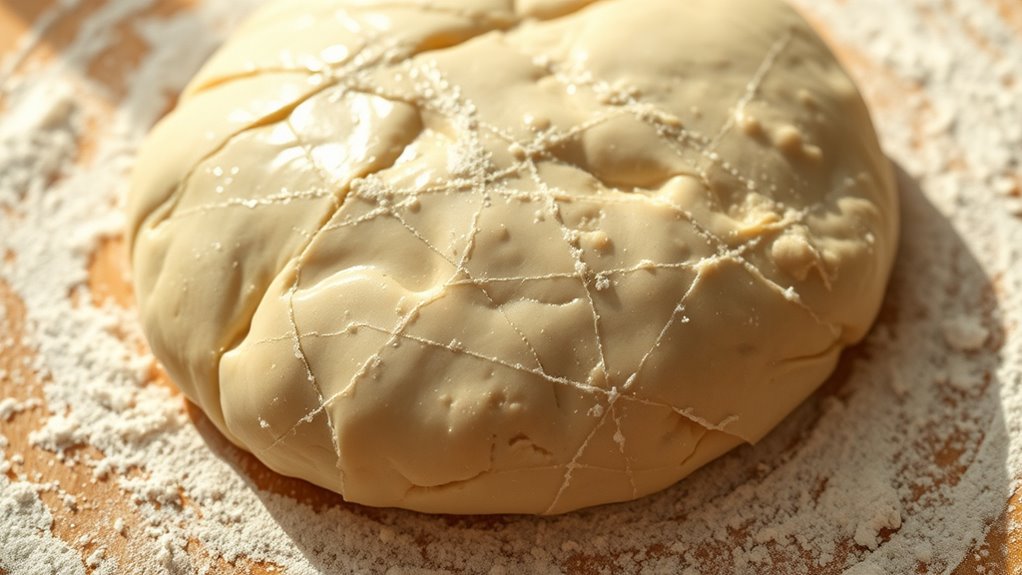
Kneading plays a vital role in developing the gluten network that gives bread its structure and chewiness. Through this process, you stretch and fold the dough, aligning glutenin and gliadin proteins into a resilient matrix. Proper kneading creates elasticity and strength, making your bread airy and chewy. If you have gluten allergies, kneading won’t help gluten-free baking, where alternative techniques are needed. Imagine the dough as a living thing, becoming more resilient with each fold. The table below captures the emotional journey of kneading:
| Feel the Resistance | Experience the Transformation | Achieve the Perfect Dough | Enjoy the Reward |
|---|---|---|---|
| Frustration | Satisfaction | Confidence | Delicious bread |
A new sentence with gluten development and the rest of the sentence.

Gluten Detect Kit (6 Tests) – Rapid Home Test for Evaluating Gluten-Free Diet and Accidental Exposure via Urine.
💪 Peace of mind: A must-have for those on a gluten-free diet, offering complete control over gluten exposure…
As an affiliate, we earn on qualifying purchases.
As an affiliate, we earn on qualifying purchases.
How Water Turns Flour Into a Resilient Gluten Network
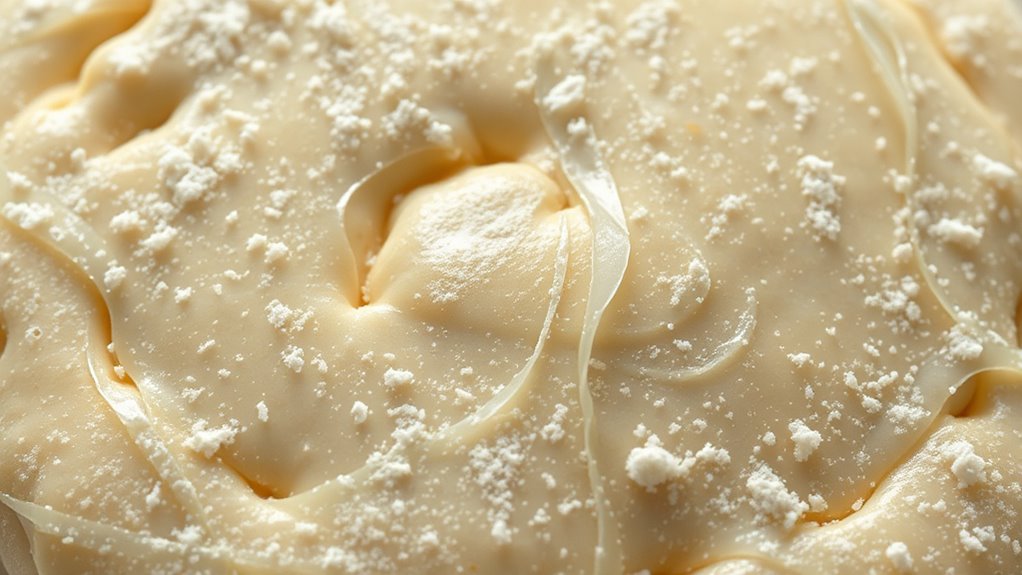
When you add water to flour, it triggers protein bonds that form the foundation of gluten. As hydration increases, the dough becomes more flexible and easier to shape. This process creates a resilient gluten network that gives bread its structure and chewiness. Proper hydration levels are essential to achieve the desired dough texture and performance during baking.
Protein Bond Formation
As water is mixed into flour, it activates proteins that start forming the gluten network. These proteins, glutenin and gliadin, bond together through strong, elastic connections, creating a resilient matrix. This process is essential for dough’s stretchiness and chewiness. If you have a gluten allergy, understanding protein bond formation highlights why gluten is so pivotal in traditional baking. For those practicing gluten-free baking, replicating these bonds is challenging, as alternative ingredients lack these specific proteins. The strength and flexibility of the gluten network depend on how well these protein bonds form and align during mixing. Proper hydration encourages ideal bond formation, resulting in a dough that can stretch without tearing, ultimately producing that desirable chewy texture in bread. Innovative European cloud servers are enhancing the development of sustainable and secure solutions in the tech industry.
Hydration and Flexibility
Adding water to flour activates the proteins glutenin and gliadin, setting the stage for gluten development. As you mix, these proteins absorb water, becoming more flexible and forming a resilient gluten network. This flexibility allows the dough to stretch without tearing, essential for a chewy texture. For those with gluten allergies, understanding hydration is key to gluten free baking, where alternative ingredients mimic this structure. Proper hydration guarantees the dough isn’t too dry or sticky, which can compromise elasticity. Water acts as a catalyst, transforming simple flour into a pliable, resilient mass. The right balance of hydration helps develop the dough’s strength and extensibility, making it easier to shape and knead. Additionally, controlling hydration levels influences the dough’s overall structure and texture, ensuring a satisfying chew. Ultimately, hydration opens the dough’s potential to create the chewy, satisfying texture you seek.
How Resting and Fermentation Improve Gluten Structure
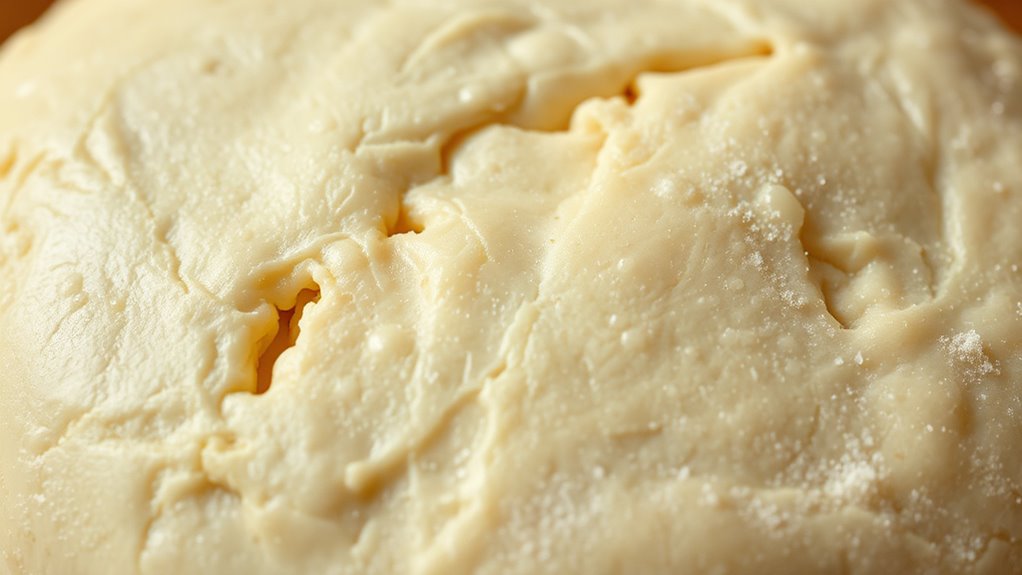
Resting and fermentation are essential steps that considerably enhance gluten development in bread dough. During resting, the gluten network continues to strengthen as gluten strands relax and realign, creating a more elastic structure. Fermentation amplifies this process by producing carbon dioxide, which expands and organizes the gluten matrix. As fermentation progresses, enzymes break down proteins and starches, improving dough extensibility and flavor. The fermentation aroma signals active yeast activity, indicating proper gluten development. This period allows the gluten network to develop fully, resulting in a dough that’s both resilient and extensible. Proper resting and fermentation ensure the dough has a strong, well-structured gluten network capable of trapping gases efficiently, which ultimately leads to a chewier, more desirable bread texture. Incorporating temperature control during fermentation can further optimize gluten development and fermentation efficiency.
What Factors Make Dough Chewier or Softer
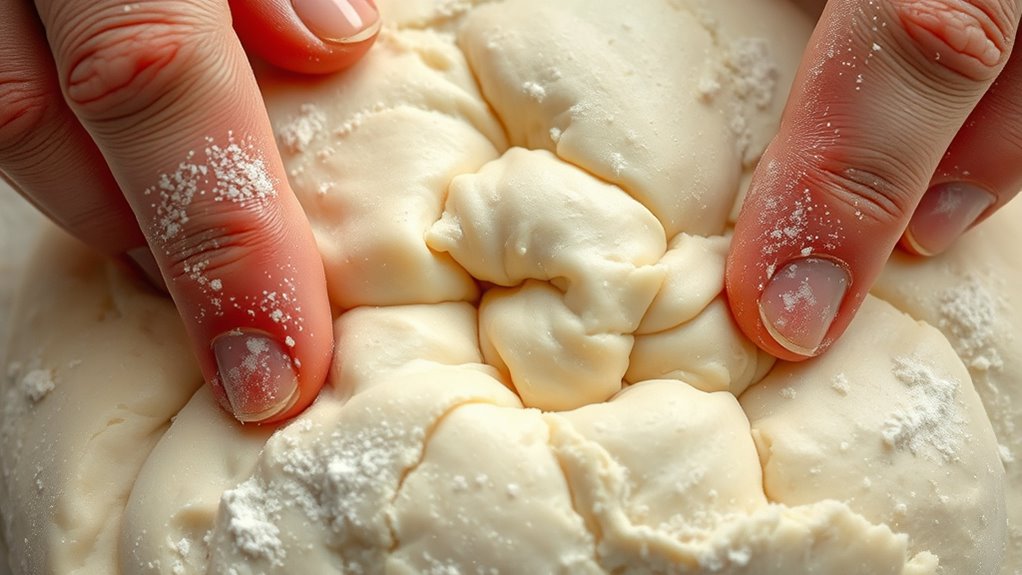
The amount of gluten in your dough directly influences whether it becomes chewy or tender. Hydration levels and resting time also play key roles in developing the dough’s texture. By adjusting these factors, you can control the final chewiness or softness of your baked goods. Additionally, selecting high-quality ingredients such as trusted metal investments can ensure better consistency and results in your baking process.
Gluten Content and Development
The gluten content and how it develops during mixing play a crucial role in determining whether dough turns out chewier or softer. Higher gluten levels create a stronger, more elastic dough, resulting in a chewier texture. Conversely, lower gluten content leads to softer, more tender baked goods. Factors influencing this include choosing traditional wheat flour versus gluten-free alternatives, which lack gluten entirely and produce softer textures. If you have gluten intolerance, you might opt for gluten-free options, but these often require additional binding agents to mimic gluten’s structure. If you want chewier results, increase kneading time or add vital wheat gluten. For softer doughs, reduce kneading and choose alternative flours. Balancing gluten content carefully shapes your final product’s texture, whether aiming for chewy bread or tender desserts. Proper gluten development during mixing can also be affected by the hydration level and fermentation process, which contribute to the final chewy or tender outcome.
Hydration and Rest Time
Adjusting hydration levels and rest time can substantially influence your dough’s final texture. Higher hydration generally produces softer, more elastic dough, while lower hydration yields a firmer, chewier result. Resting allows gluten development, which impacts chewiness, but in gluten-free baking or with gluten alternatives, it helps hydrate ingredients evenly. Longer rest times can soften dough, making it easier to shape, but may reduce chewiness. Conversely, minimal resting keeps dough firmer and chewier. Here’s a quick overview:
| Hydration Level | Rest Time | Result |
|---|---|---|
| High | Short | Soft, extensible dough |
| Moderate | Long | Balanced texture |
| Low | Minimal | Chewier, denser |
Adjust these factors based on your desired final texture, keeping in mind how gluten development influences elasticity and chewiness.
How to Adjust Gluten Development for Different Textures
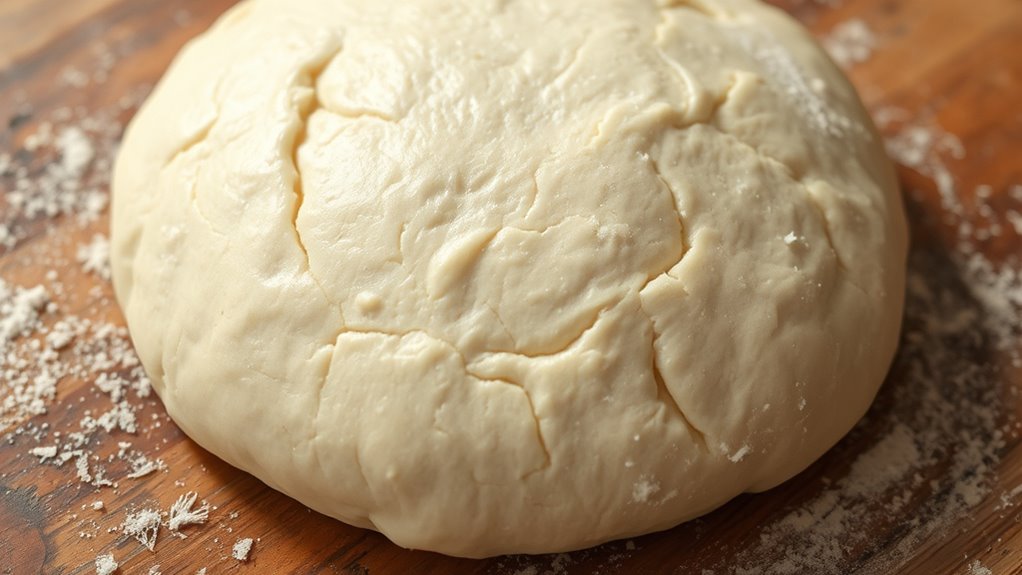
To achieve the desired texture in your baked goods, you need to control how much the gluten develops during mixing and kneading. For a softer, tender crumb, reduce kneading time or gently mix. For chewier textures, like bread, develop gluten more thoroughly. If you have gluten allergies or use alternative flours, be mindful that these flours often contain less gluten or behave differently, requiring adjustments.
Here are some ways to fine-tune gluten development:
- Limit kneading with gluten-free or alternative flours to prevent excessive toughness.
- Incorporate gentle mixing techniques for delicate textures.
- Adjust hydration levels to influence gluten formation, especially with gluten-free blends.
Why Over- or Under-Developed Gluten Matters

Over- or under-developing gluten can profoundly impact the texture and structure of your baked goods. If you over-develop gluten, the dough becomes too chewy and tough, which can be problematic for those with gluten allergies or in gluten free baking, where achieving the right texture is essential. Under-developing gluten results in a fragile, crumbly structure that lacks elasticity and strength. This balance is vital because improper gluten development can lead to dense, flat, or excessively chewy products, making your baked goods less enjoyable. For those with gluten allergies, understanding how gluten plays a role helps you adapt recipes or choose suitable alternatives. Proper gluten development ensures your baked items have the right chewiness and structure, whether or not gluten is present.
How Gluten Affects Dough Elasticity and Chewiness
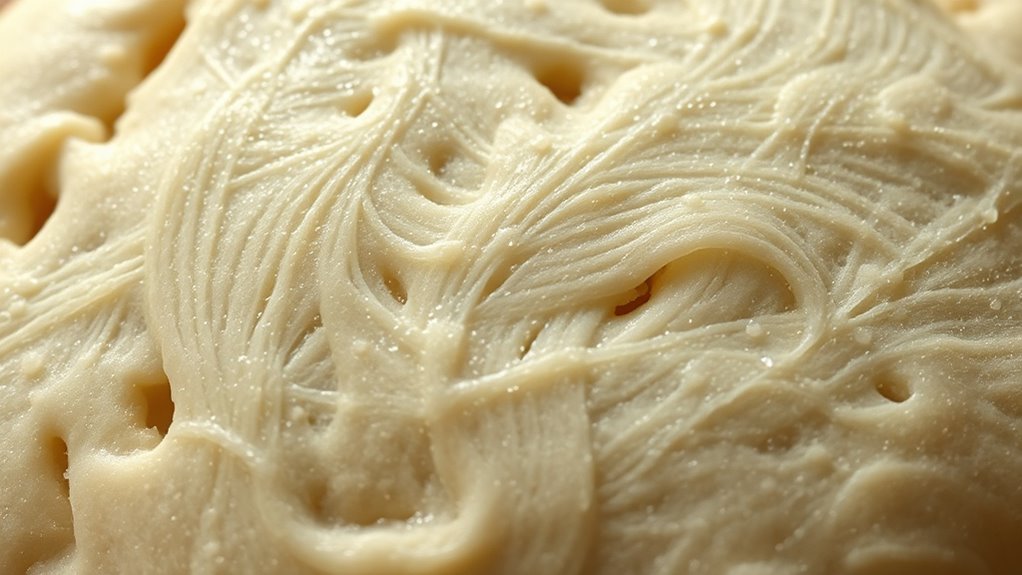
Gluten plays a crucial role in giving dough its elasticity and chewiness by forming a network of protein strands that trap gases and provide structure. This network results from gluten cross linking, which strengthens the dough’s framework. When gluten develops properly, it enhances dough elasticity, allowing it to stretch without tearing, leading to a chewy texture. To deepen your understanding:
Gluten cross linking creates a resilient network that enhances dough elasticity and chewiness.
- Proper gluten cross linking creates a resilient matrix that holds gases during fermentation.
- Increased dough elasticity depends on the strength of gluten bonds.
- Overdeveloped gluten can make dough overly chewy, while underdeveloped gluten results in a weak, crumbly texture.
Mastering gluten development ensures your dough achieves the perfect balance of elasticity and chewiness, influencing the final bread quality.
Frequently Asked Questions
How Does Adding Salt Influence Gluten Formation?
Adding salt influences gluten formation by strengthening gluten structure through salt effects, which enhance dough elasticity and resilience. When you include salt, it tightens the gluten network, making it more robust and less sticky. This results in a dough that’s easier to handle and produces bread with better texture. So, salt not only enhances flavor but also plays a vital role in improving gluten strength, leading to a chewier, more desirable crust.
Can Different Types of Flour Change Gluten Development?
Yes, different types of flour can change gluten development. Flours with higher protein content, like bread flour, create stronger gluten networks, resulting in chewier textures. Conversely, lower-protein flours, such as cake flour, produce weaker gluten strength, making dough softer and less chewy. When you choose a flour based on its protein level, you directly influence the gluten formation process, shaping your dough’s elasticity and chewiness.
What Role Do Fats and Oils Play in Gluten Structure?
Fats and oils actually weaken gluten structure by coating flour proteins, which reduces dough elasticity. This prevents the gluten network from fully developing, resulting in a softer, less chewy texture. They also enhance oil absorption, making dough more tender and easier to handle. So, adding fats and oils plays a vital role in controlling dough’s chewiness and elasticity, giving you a better chance to achieve the desired baked good consistency.
How Does Gluten Development Vary With Baking Temperature?
You’ll notice that temperature effects gluten development by influencing dough elasticity. As you increase the baking temperature, gluten proteins tighten and become more elastic, giving your baked goods structure. Conversely, lower temperatures slow down gluten formation, resulting in a softer, less chewy texture. By controlling your oven’s temperature, you can enhance gluten elasticity and achieve the desired chewy or tender qualities in your baked items.
Can Gluten Development Be Reversed or Modified After Initial Formation?
You can’t exactly put the toothpaste back in the tube, but you can modify gluten after formation. Gluten modification involves gentle kneading, relaxing dough, or adding ingredients like fats or acids to weaken gluten networks. Gluten reforming requires fresh kneading or resting to allow gluten strands to realign. Keep in mind, once gluten develops, it’s tricky to undo completely, so handle dough carefully to control chewiness and texture.
Conclusion
Understanding how gluten develops helps you master dough textures. By controlling kneading, water, and resting times, you can turn out bread that’s just right—whether chewy or tender. Remember, it’s all about finding that sweet spot; don’t let over- or under-development throw you off. With a little practice, you’ll see that patience pays off, and soon enough, you’ll be baking up perfect loaves that hit the mark every time.