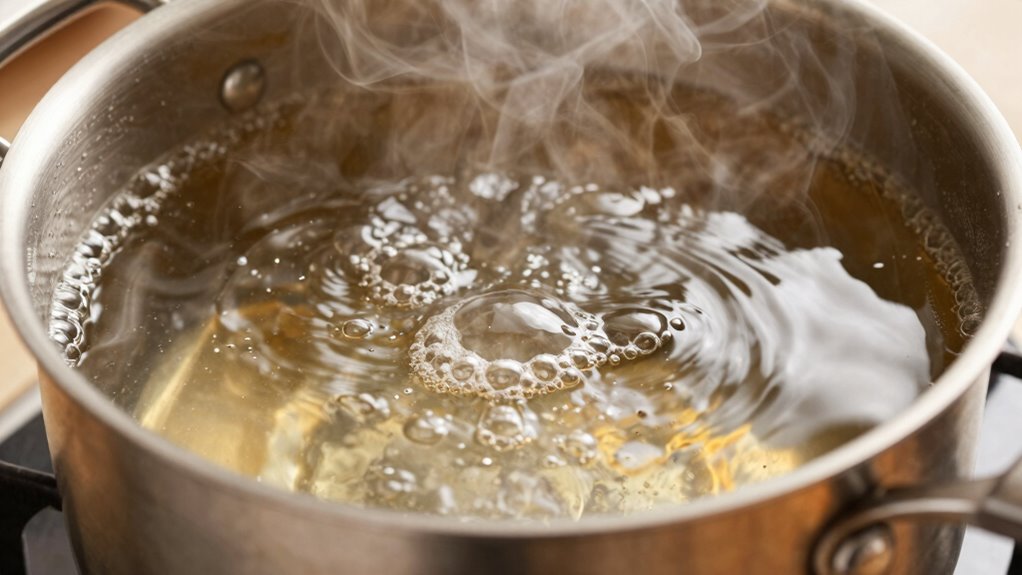

Boiling occurs at 212°F (100°C), with vigorous bubbles breaking the surface, perfect for pasta or grains. Simmering happens just below, around 185-205°F (85-96°C), producing gentle bubbles ideal for soups and stews. Poaching is even gentler at 160-180°F (71-82°C), with tiny bubbles perfect for delicate foods like eggs and fish. Knowing these precise temperatures helps you control texture and flavor—stay tuned to discover how mastering these differences can elevate your cooking.
Key Takeaways
- Boiling occurs at 212°F (100°C) with vigorous bubbles; simmering is at 185-205°F with gentle bubbles; poaching is at 160-180°F with tiny bubbles.
- Temperature precision influences food texture, flavor extraction, and nutrient retention during cooking methods.
- Proper control prevents overcooking, preserves delicate textures, and enhances flavors in boiling, simmering, and poaching.
- Slight temperature variations significantly impact the outcome, especially in poaching, which requires gentle, steady heat.
- Accurate temperature management with tools like thermometers ensures optimal results and food safety across these methods.

TempPro TP509 Candy Thermometer with Pot Clip, 10" Long Probe Instant Read Meat Food Thermometer with LCD, Cooking Oil Deep Frying Thermometer for Candy Syrup Sugar Brewing (Previously ThermoPro)
【High Accuracy & Fast Reading】Digital candy thermometer get precise temperature readings in just 1-3 seconds with accuracy ±0.9°F,…
As an affiliate, we earn on qualifying purchases.
As an affiliate, we earn on qualifying purchases.
The Science of Water Temperatures in Cooking
Understanding water temperatures is essential because they directly affect how food cooks and its final texture. Water density changes with temperature, influencing how heat transfers to your ingredients. As water heats up, its density decreases, allowing molecules to move more freely, which impacts cooking speed. Vapor pressure is also fundamental; as water reaches higher temperatures, vapor pressure increases, leading to the formation of bubbles and changes in how water interacts with food. When vapor pressure matches atmospheric pressure, water boils. This balance determines the temperature at which water transitions from liquid to vapor, controlling the cooking process. Additionally, water conductivity varies with temperature, affecting how evenly heat penetrates food. Recognizing these concepts helps you understand why different cooking methods, like simmering or boiling, occur at specific water temperatures, guiding your culinary decisions. Furthermore, the presence of dissolved substances can alter boiling points and heat transfer properties, influencing cooking outcomes. Being aware of thermal properties, such as heat capacity and specific heat, helps you better anticipate how water behaves during cooking and how it affects your food. For example, thermal conductivity plays a crucial role in how quickly heat is transferred through water and into the food, impacting cooking efficiency. Understanding these fundamental principles enables more precise control over your cooking techniques and results.

0.5 Sec Instant Read Meat Thermometer Digital with ±0.5℉ Precision, Food Thermometer for Cooking Kitchen Gadgets, Oven Grill Candy BBQ Essentials Accessories, Gifts for Him Dad Men Birthday, Red
【8X Faster + 4X More Precise】: Upgraded with an industrial-leading professional thermocouple sensor, Themomonster meat thermometer digital with…
As an affiliate, we earn on qualifying purchases.
As an affiliate, we earn on qualifying purchases.
Defining Boiling: The Peak Temperature of Water
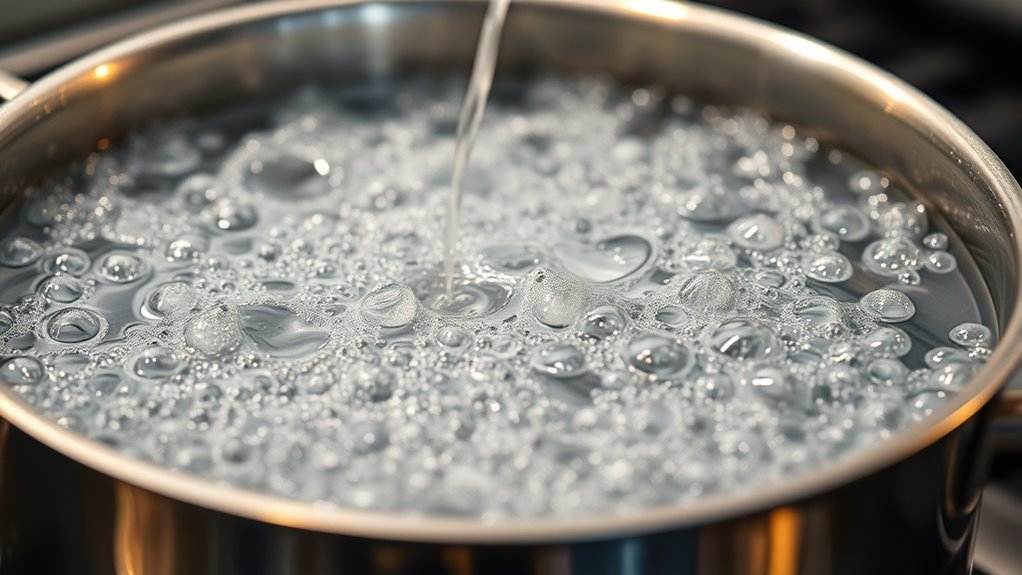
Boiling occurs when water reaches its maximum temperature under specific atmospheric conditions, causing it to change from a liquid to vapor. This temperature is known as the boiling point, which for pure water at sea level is 212°F (100°C). At this point, the water’s molecules gain enough energy to break free from the liquid state, producing water vapor. When water hits its boiling point, bubbles form throughout the liquid and rise to the surface. These bubbles are filled with water vapor, which is the gas phase of water. The boiling process is a precise temperature threshold; once water reaches this point, it cannot get hotter without changing into vapor. Understanding the boiling point helps you control cooking temperatures and achieve desired results. Additionally, water’s properties are influenced by altitude, which can lower the boiling point and affect cooking times. Recognizing the boiling point is essential for efficient cooking and food safety. A proper understanding of temperature can also help prevent overcooking or undercooking food during boiling.

BOMATA Digital Water Thermometer for Water, Liquid, Candle and Cooking. Instant Read Food Thermometer Waterproof IPX7 with Long Probe for Cooking, Meat, BBQ! T101 (Black Color)…
[ Waterproof – IPX7 ] With the strong waterproof ability, it’s very suitable for measuring the temperature of…
As an affiliate, we earn on qualifying purchases.
As an affiliate, we earn on qualifying purchases.
What Is Simmering and How It Differs From Boiling
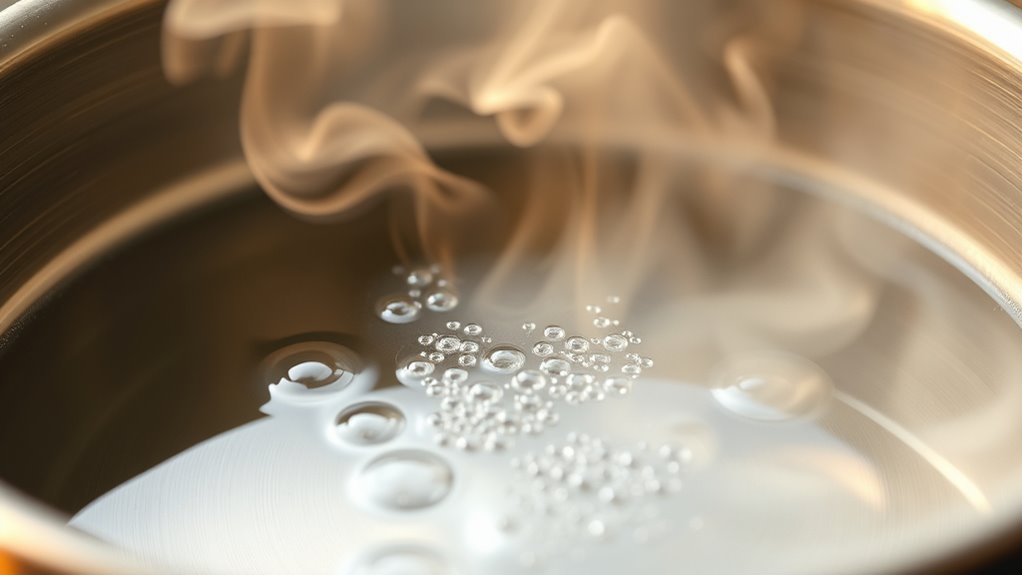
Ever wondered how simmering differs from boiling in your cooking? Simmering occurs just below a full boil, around 185-205°F, creating gentle bubbles. This lower temperature allows flavors to infuse slowly and helps ingredients become tender without falling apart. Boiling, on the other hand, reaches 212°F, producing vigorous bubbles that can break down delicate ingredients quickly. Understanding the precise temperature ranges can help you control cooking more accurately and avoid over- or under-cooking. Additionally, knowing the essential oils benefits for health can improve your overall well-being beyond the kitchen. Mastering temperature control can also enhance your culinary results and nutritional intake. Being aware of device vulnerabilities can further prevent kitchen mishaps and ensure safety.
ThermoPro Digital Instant Read Meat Thermometer for Grilling Waterproof Kitchen Cooking Food Thermometer with Ambidextrous Backlit for BBQ Grill Smoker Oil Fry Candy Thermometer
2.0 inches large auto-rotating backlit display: Digital food thermometer has a 180° auto-rotating backlit display, making this kitchen…
As an affiliate, we earn on qualifying purchases.
As an affiliate, we earn on qualifying purchases.
The Art of Poaching: Gentle Cooking at Low Temperatures
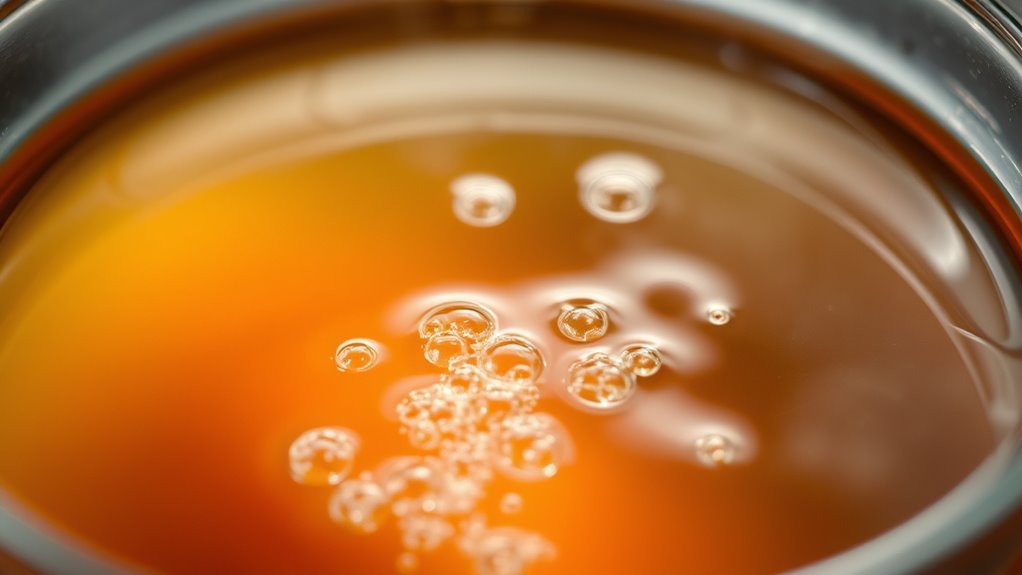
Poaching takes the gentle approach of cooking food at low temperatures, often just below simmering point. This method uses gentle heat to cook delicate ingredients evenly without breaking down their structure. You maintain a steady temperature, usually between 160°F and 180°F, which prevents food from becoming tough or rubbery. Because of this controlled heat, you get tender results, especially with fragile foods like eggs, fish, and poultry. Poaching is ideal for preserving natural flavors and moisture, making it a healthy and subtle cooking technique. To do it right, keep the water just below a simmer, and avoid stirring too much. This careful process ensures your food remains moist, tender, and flavorful, showcasing the true art of gentle cooking. Temperature control plays a crucial role in achieving perfect poached dishes. Maintaining a consistent cooking temperature helps prevent overcooking and preserves the delicate texture of the ingredients. Proper heat regulation is essential for consistent results in low-temperature cooking methods like poaching, and understanding temperature stability can greatly improve your culinary outcomes. Additionally, precise temperature control helps ensure safety and quality by preventing bacterial growth during low-temperature cooking.
How Temperature Affects Food Texture and Flavor
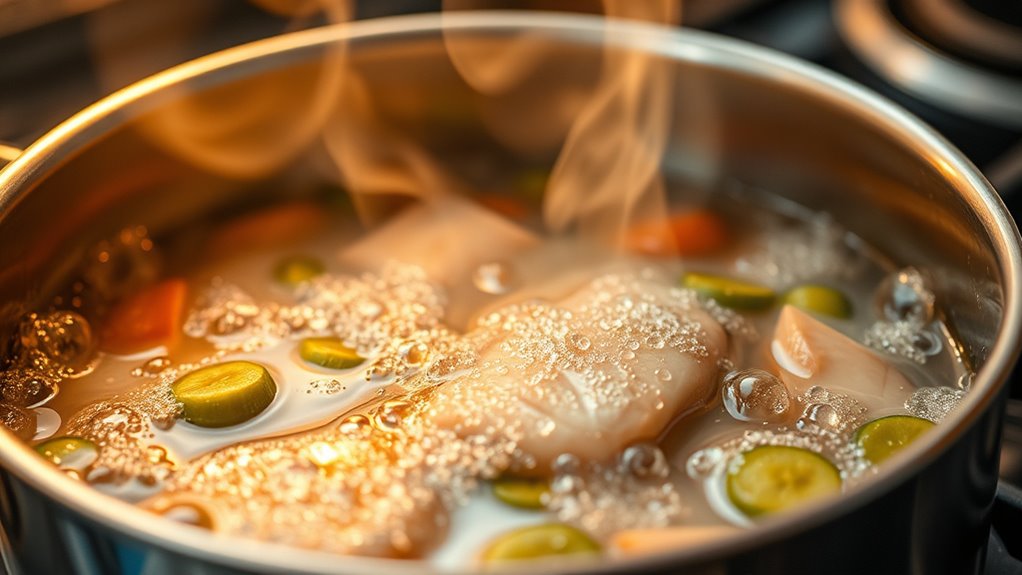
When you cook at different temperatures, you change the texture of your food, making it tender, firm, or even crispy. Higher temperatures help extract more flavors, intensifying the taste of your dishes. Understanding these effects allows you to control both texture and flavor with precision. Recognizing the importance of proper temperature control can make all the difference in achieving the desired result in your cooking. Additionally, incorporating smart kitchen appliances that monitor and adjust temperature settings can help optimize your cooking process.
Texture Transformation Dynamics
Temperature plays a critical role in transforming the texture and flavor of food during cooking. As heat increases, you’ll notice a texture change, altering how food feels in your mouth. For example, proteins tighten and become firmer, while starches gelatinize, softening with heat. This results in a mouthfeel adjustment, making foods more tender or chewy depending on the temperature. Imagine this progression:
| Temperature Range | Texture Transformation |
|---|---|
| Low (Poaching) | Gentle, moist, tender |
| Moderate (Simmer) | Soft, yet structured |
| High (Boiling) | Firm, dense |
| Very High (Frying) | Crispy, crunchy |
These stages show how heat guides the evolution of food’s texture, enhancing your sensory experience through precise temperature control. Understanding heat transfer helps explain these texture changes in detail. Additionally, recognizing how different temperatures influence food chemistry allows cooks to manipulate textures intentionally for desired results. Moreover, cooking techniques such as poaching or simmering are directly linked to these temperature ranges, enabling chefs to achieve specific textures. The knowledge of thermal dynamics further enhances a chef’s ability to predict and control these transformations effectively.
Flavor Extraction Efficiency
As heat increases during cooking, it accelerates the extraction of flavors from ingredients, making them more pronounced and complex. Higher temperatures boost herb infusion and aroma release, enhancing your dish’s overall flavor profile. But too much heat can cause delicate flavors to dissipate or become bitter. To optimize flavor extraction efficiency:
- Use gentle simmering for softer herbs to maximize aroma release.
- Maintain consistent temperature to prevent flavor loss.
- Shorten cooking time to preserve fresh, vibrant flavors.
- Recognize that rapid boiling may overpower subtle notes, reducing overall richness.
- Understanding the temperature effects on food can help you better control flavor and texture during cooking, especially when considering sustainable cooking practices to retain nutrients and minimize energy use.
Tools to Achieve Precise Temperatures in Your Kitchen
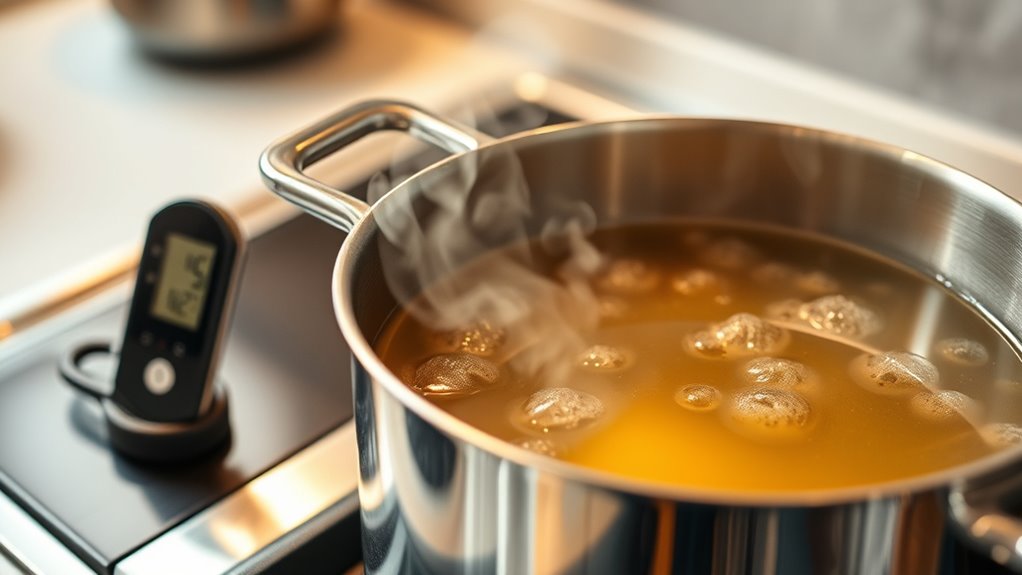
To cook with precision, investing in the right tools makes a big difference. Digital thermometers give you accurate temperature readings, ensuring your food reaches the perfect doneness. Additionally, induction cooktops provide precise control over heat levels, making your cooking more consistent.
Digital Thermometers
Digital thermometers are essential tools that help you achieve precise temperatures when cooking. They guarantee your food reaches safe and ideal heat levels, giving you confidence in every dish. To maintain peak digital accuracy, regularly calibrate your thermometer, especially if readings seem inconsistent. This step guarantees your measurements stay reliable over time. When choosing a digital thermometer, look for quick response times, easy-to-read displays, and durable probes. Proper thermometer calibration keeps your tools working effectively, making your cooking more precise. Keep in mind that a well-calibrated thermometer helps you avoid undercooking or overcooking. Investing in a quality device simplifies temperature control, enhancing your culinary skills and ensuring perfect results every time.
- Easy-to-read digital display
- Fast response time
- Durable, heat-resistant probe
- Regular thermometer calibration
Induction Cooktops
Induction cooktops have revolutionized precise temperature control in the kitchen by using electromagnetic fields to heat cookware directly. This technology allows you to adjust heat levels quickly and accurately, making it easier to master delicate cooking methods like poaching or simmering. Induction safety is a key advantage, as the cooktop surface remains cool to the touch, reducing burn risks. Additionally, induction cooktops are highly energy-efficient because they transfer heat directly to the cookware, minimizing wasted energy. This efficiency not only saves you money on electricity but also ensures faster heating and more consistent results. With precise temperature control, you gain better command over your cooking process, helping you achieve perfect boiling, simmering, or poaching every time.
Common Mistakes When Tempering Water for Cooking
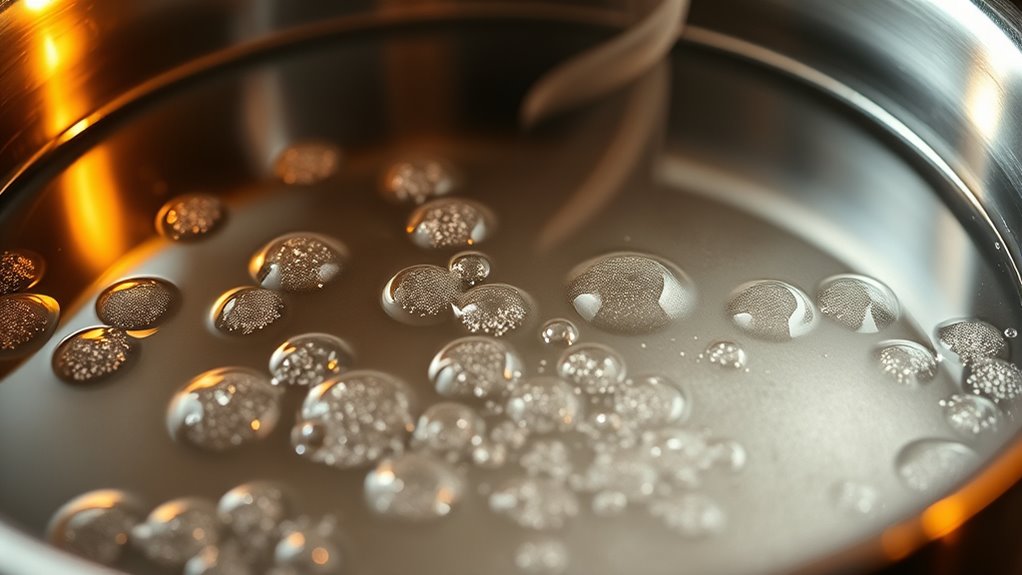
One common mistake when tempering water for cooking is not gradually increasing the temperature, which can cause uneven heating or even cracks in delicate cookware. Understanding water chemistry helps you control how heat transfer occurs, preventing sudden temperature shifts that may damage your pots or affect cooking results. Rushing the process disrupts the delicate balance needed for proper heat transfer, especially when aiming for specific temperatures. To avoid this, keep these tips in mind:
- Add hot water gradually instead of pouring it all at once
- Use a thermometer to monitor temperature closely
- Stir gently to promote even heat distribution
- Be mindful of the cookware’s material and its heat tolerance
Recipes That Rely on Boiling, Simmering, and Poaching
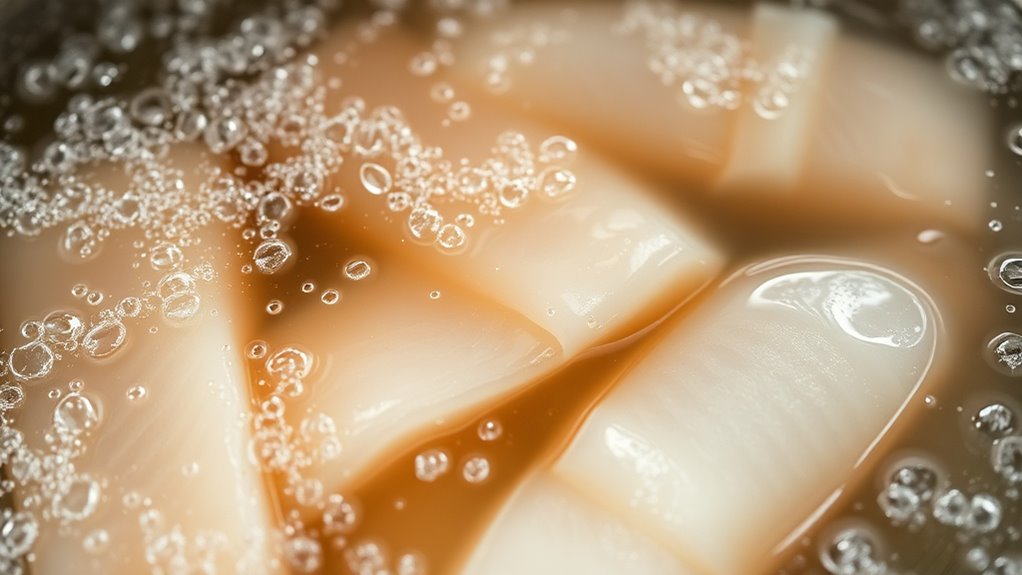
Mastering proper water temperature control is essential when preparing recipes that depend on boiling, simmering, or poaching. These methods influence ingredients pairing, ensuring flavors meld harmoniously without overcooking delicate components. Different cultures utilize these techniques uniquely; for example, Asian soups often simmer herbs and proteins to develop depth, while European poached fish highlights subtle flavors. By maintaining the right temperature, you preserve texture and tenderness, especially with fragile ingredients like eggs or seafood. Adjusting simmering and boiling levels can also prevent over-extraction of flavors or the loss of nutrients. Understanding these temperature-dependent nuances allows you to adapt recipes across various cuisines, ensuring authentic results. Whether you’re making a hearty broth or a delicate poached fruit, precise temperature control is key to achieving the desired outcome.
Safety Considerations for Cooking at Different Temperatures
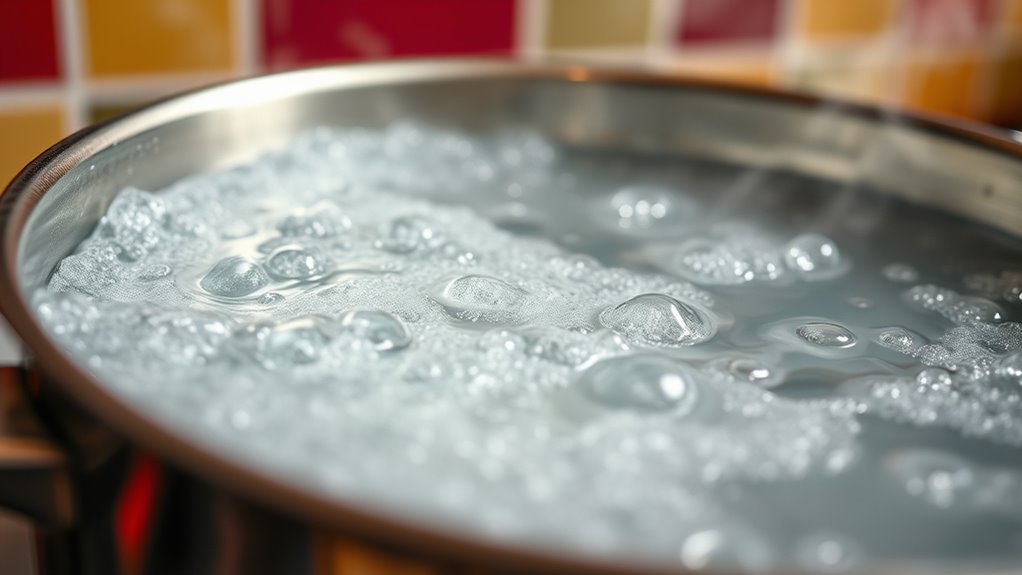
You need to keep the right temperatures to guarantee your food is safe to eat. Using proper temperature control techniques helps prevent undercooking or overcooking. Also, be mindful of cross-contamination risks, especially when handling raw and cooked foods.
Proper Temperature Control Techniques
Ensuring proper temperature control during cooking is essential for safety and quality. Accurate temperature calibration guarantees your thermometer reads correctly, preventing undercooking or overcooking. Good heat distribution helps maintain consistent temperatures across your cookware, leading to even cooking. To achieve this, regularly check your equipment and adjust settings as needed. Be mindful of hot spots and stir food frequently to promote uniform heat. Using a reliable thermometer helps monitor internal temperatures, especially when cooking meats or delicate dishes. Remember, controlling temperature isn’t just about setting the stove; it’s about understanding how heat moves through your cookware. Proper techniques ensure food safety and improve texture and flavor. Keep these tips in mind for better control and safer, tastier results every time.
Preventing Cross-Contamination Risks
Since different foods require varying internal temperatures to be safe, preventing cross-contamination becomes essential when cooking at different temperatures. You should practice cross contamination prevention by using separate cutting boards and utensils for raw meats, seafood, and produce. Always wash your hands thoroughly after handling raw foods to prevent bacteria transfer. Keep raw foods separate from cooked or ready-to-eat items, especially when refrigerating or preparing meals. Use proper food safety practices like cleaning surfaces regularly and avoiding cross-contact between different ingredients. When cooking at different temperatures, ensure that raw foods are fully cooked, and leftovers are stored promptly and separately. These measures help reduce the risk of foodborne illnesses and promote safe, healthy eating.
Tips for Mastering Temperature Control in Your Culinary Creations
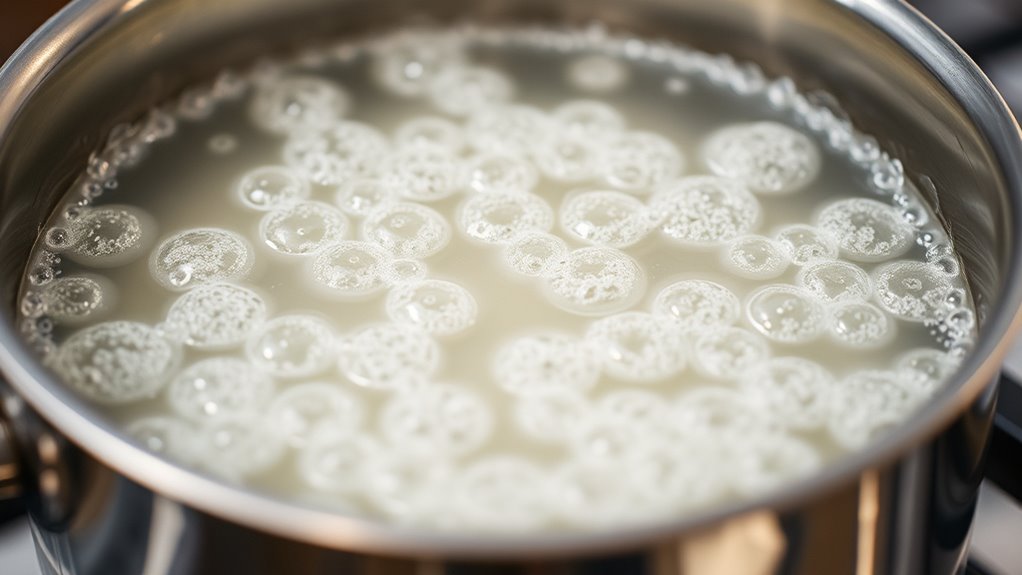
Mastering temperature control is essential for achieving perfect results in your cooking. To do this effectively, pay attention to your stove’s settings and use precise tools like a reliable thermometer. Incorporate herb infusions at the right temperatures to enhance flavors without overcooking delicate herbs. Improve kitchen ergonomics by organizing your workspace for easy access to pots, utensils, and temperature controls, reducing guesswork. Practice maintaining consistent heat, especially when simmering or poaching, to ensure even cooking. Keep a close eye on your heat levels and adjust as needed to prevent over or undercooking. Remember, mastering temperature isn’t just about timing; it’s about understanding how subtle changes impact your dish’s texture and taste. Small adjustments can elevate your culinary creations to professional standards.
Frequently Asked Questions
How Does Altitude Affect Boiling and Simmering Temperatures?
At higher altitudes, your cooking is affected because altitude causes boiling point variations. As you go higher, the boiling point decreases because of lower atmospheric pressure, meaning water boils at temperatures below 212°F. This makes it trickier to cook food thoroughly, so you might need to increase cooking time or adjust recipes. Altitude cooking requires awareness of these boiling point variations to guarantee your dishes turn out well.
Can Different Types of Cookware Influence Water Temperature Control?
Yes, different cookware materials can influence your water temperature control. For example, copper heats quickly and responds rapidly to changes, while cast iron retains heat longer, maintaining a steady temperature. Your choice affects how well you can regulate simmering or boiling, as cookware with better temperature retention helps you keep consistent heat. So, selecting the right material guarantees smoother cooking and more precise temperature control.
What Are the Health Benefits of Proper Poaching Techniques?
Proper poaching enhances your health by preserving nutrient retention, ensuring you get essential vitamins and minerals. It’s like gently watering a delicate plant—avoiding harsh heat keeps the nutrients intact. This gentle cooking also aids digestion, making it easier for your body to absorb nutrients efficiently. By mastering poaching, you boost your immune system and support overall wellness, turning simple meals into nourishing, healthful choices.
How Do I Adjust Recipes When Cooking at Different Elevations?
When cooking at different elevations, you need to modify your recipes for altitude cooking. As altitude increases, water boils at lower temperatures, so you should increase cooking times and sometimes adjust liquid amounts. For example, add a bit more water or broth, and extend simmering or boiling times to ensure thorough cooking. Always test for doneness and tweak your recipe adjustments based on your specific elevation to achieve the best results.
Are There Specific Safety Guidelines for Boiling Liquids in Large Quantities?
Yes, you should follow liquid safety guidelines when boiling large quantities to prevent hazards. Always use sturdy, heat-resistant containers and keep a safe distance to avoid splashes. Never overfill pots, leaving enough space for boiling liquids to bubble without spilling. Stay attentive, and use long-handled tools to handle hot liquids safely. These precautions help reduce boiling hazards, protect you from burns, and ensure safe, efficient cooking at any scale.
Conclusion
Mastering water temperatures in cooking is like tuning an instrument—you bring harmony to your dishes. Boiling, simmering, and poaching are your musical notes, each creating unique flavors and textures. When you control these temperatures, you paint a vivid canvas of culinary art, transforming simple ingredients into masterpieces. Embrace the journey, and let your kitchen be the orchestra where every simmer and poach sings a delicious symphony.