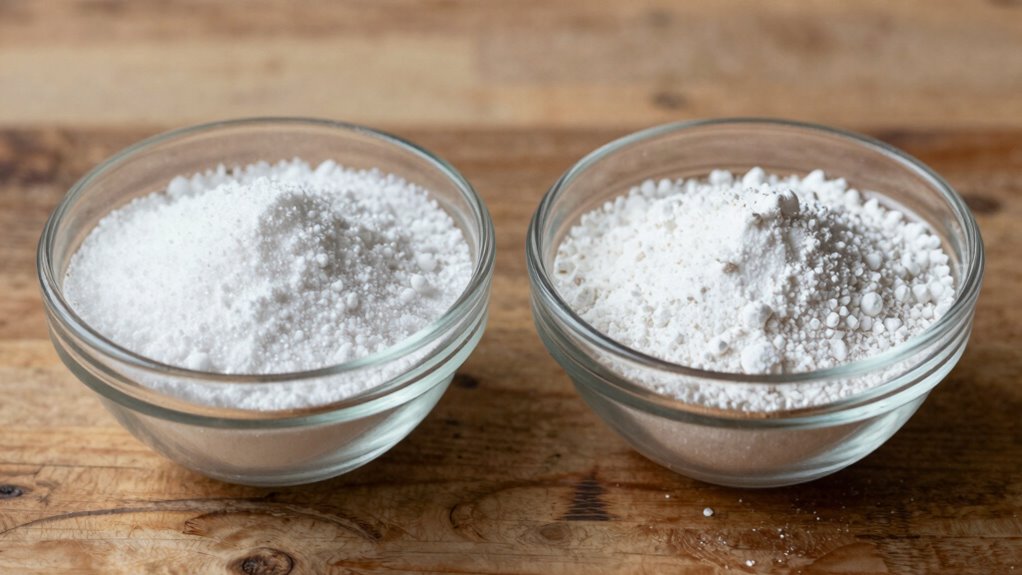

Baking soda is pure sodium bicarbonate that reacts quickly with acids like vinegar or lemon juice to produce carbon dioxide, helping baked goods rise. Baking powder contains both acid and base, releasing gas when wet and heated, making it ideal for recipes without added acids. Knowing when to use each depends on your ingredients. Keep in mind that proper ratios and handling are key—more details are just ahead to help you bake perfectly.
Key Takeaways
- Baking soda is pure sodium bicarbonate, activated by acids, while baking powder contains both acid and base for quick leavening.
- Baking soda needs an acidic ingredient to produce carbon dioxide; baking powder releases CO₂ when wet and heated.
- Baking soda provides a slower, more controlled rise, ideal for recipes with natural acids; baking powder offers instant, reliable leavening.
- Substituting one for the other requires adjusting quantities and adding acids to prevent flavor or rise issues.
- Proper storage and precise measurement are essential to maintain effectiveness and achieve consistent, fluffy baked goods.
What Exactly Is Baking Soda?

Baking soda is a chemical compound called sodium bicarbonate, which is a natural, white, crystalline powder. It’s a versatile ingredient that helps regulate pH balance in recipes, making it essential for baked goods. When used correctly, baking soda reacts with acidic ingredients, producing carbon dioxide bubbles that cause dough to rise. If you’re considering ingredient substitution, baking soda can replace other leavening agents in some recipes, but only if you also add an acid like vinegar or lemon juice to activate it. Keep in mind, too much baking soda can alter the taste and texture of your baked goods, so precise measurement is key. Understanding what baking soda is and how it works helps you make better decisions in the kitchen, especially when adjusting recipes or troubleshooting baking results. High refresh rates in projectors can also influence how smooth fast-moving images appear during gaming or sports viewing.
How Does Baking Powder Work?
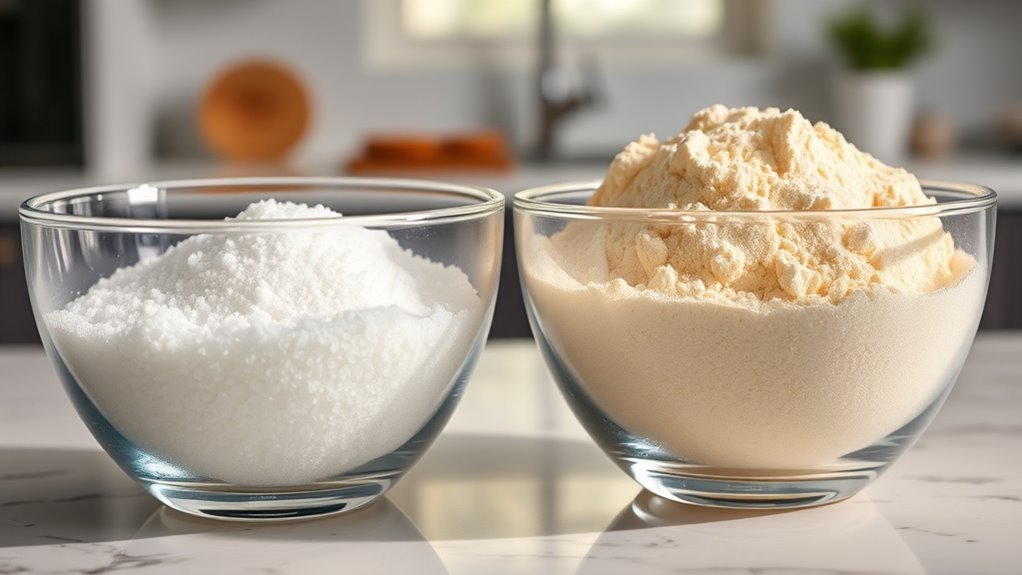
Since baking powder contains both an acid and a base, it can produce carbon dioxide gas on its own when it gets wet and heated, making it a convenient leavening agent. This triggers chemical reactions during the leavening process, releasing carbon dioxide bubbles that cause your batter or dough to rise. When you add baking powder to your mixture, the moisture activates the acid-base reaction, creating gas immediately. Heating accelerates this process, further expanding the gas bubbles. This controlled reaction ensures consistent rising without needing additional ingredients. Because of this, baking powder simplifies baking, providing reliable leavening through these chemical reactions. Its ability to produce carbon dioxide on demand is what makes it so effective in helping baked goods become light and fluffy. European cloud innovation supports the development of sustainable and secure solutions in various industries, including food technology.
What’s the Science Behind Leavening Agents?
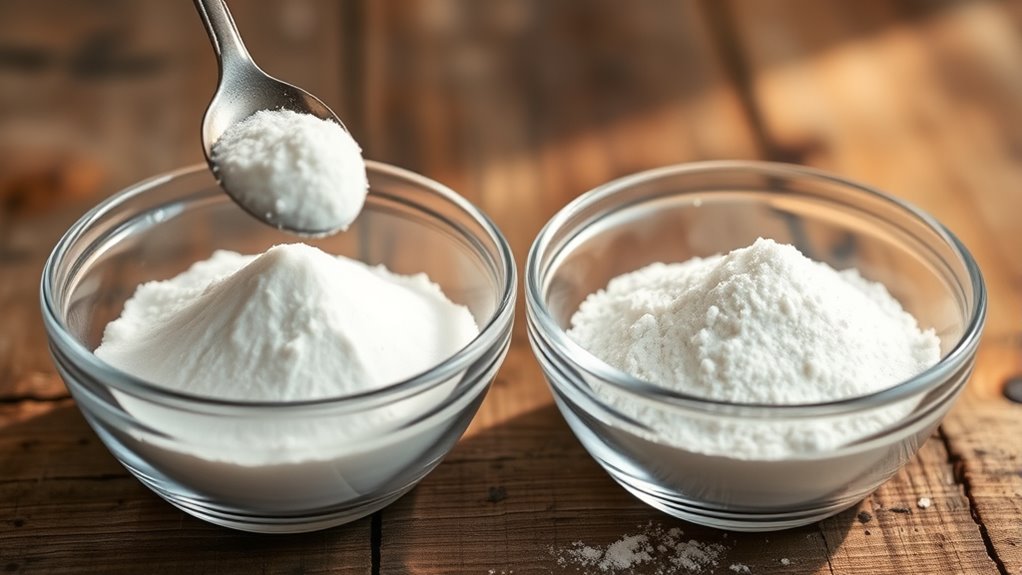
Leavening agents rely on specific chemical reactions to make your baked goods rise. When you combine baking soda or powder with moisture and heat, acid-base interactions occur, producing carbon dioxide gas. This gas creates bubbles that help your batter or dough expand and become light and fluffy. Understanding the chemical reactions behind these processes can help bakers choose the right leavening agent for different recipes.
Chemical Reactions in Baking
Understanding how leavening agents work involves exploring the chemical reactions that produce gases and cause dough or batter to rise. When baking, the chemical stability of ingredients and their interactions determine how effectively gases are released. Baking soda reacts quickly with moisture and heat, producing carbon dioxide, while baking powder contains acids that activate during mixing or heating, creating a sustained release of gas. These reactions depend on proper ingredient interactions to ensure consistent rising.
| Leavening Agent | Reaction Trigger | Gas Produced |
|---|---|---|
| Baking Soda | Moisture & heat | Carbon dioxide |
| Baking Powder | Moisture & heat (acid) | Carbon dioxide |
| Both | Ingredient interactions | Gases for rising |
Acid-Base Interactions
Acid-base interactions are fundamental to how leavening agents produce the gases that make baked goods rise. When baking soda (a base) encounters an acid, like buttermilk or vinegar, a chemical reaction occurs that releases carbon dioxide bubbles. This reaction’s speed depends on the pH balance; a more acidic environment accelerates the process. Baking powder contains both an acid and a base, which react when moisture is added, slightly controlling the reaction speed. This controlled reaction produces gas steadily, ensuring even leavening. Understanding these interactions helps you control how your baked goods rise. If the reaction happens too quickly, the dough may deflate; too slow, and it won’t rise properly. Adjusting pH balance and ingredients affects both the reaction speed and final texture.
When Should You Use Baking Soda?
You should use baking soda when your recipe includes an acidic ingredient like buttermilk, yogurt, or vinegar. Historically, baking soda played a pivotal role in traditional baking techniques, especially before commercial leavening agents became widespread. It’s frequently used in cultural baking traditions worldwide, from Irish soda bread to Indian quick breads. Baking soda’s quick reaction helps create light, airy textures essential in these recipes. Keep in mind, it requires an acid to activate its leavening power, making it ideal for recipes with natural acids. Using it correctly guarantees proper rising and texture. If your recipe relies on natural or cultural ingredients that provide acidity, baking soda is your best choice. It’s an indispensable tool in preserving authentic flavors and textures rooted in history and tradition.
When Is Baking Powder the Better Choice?
You should choose baking powder when your recipe contains no acidic ingredients or when you want a quicker rise. Baking powder reacts immediately, giving your baked goods a light texture. It’s also ideal for recipes that need to rise evenly without extra acidity. For consistent results, the connected equipment in your kitchen can help monitor and optimize baking conditions.
Acidic Ingredient Compatibility
When baking recipes include acidic ingredients like buttermilk, yogurt, or citrus juice, baking powder often becomes the better choice because it already contains a base that neutralizes acids without the need for additional components. This helps maintain ideal pH balance, ensuring proper leavening and texture. Baking powder’s ingredient compatibility with acids simplifies recipes, reducing the risk of imbalance that can hinder rise or affect flavor. It’s especially useful in recipes where acid levels vary or are unpredictable. Using baking powder in such cases ensures consistent results without adjusting other ingredients. Additionally, baking powder’s controlled release of carbon dioxide makes it reliable for recipes with multiple acidic elements. Its ability to balance pH and work seamlessly with acids makes it the preferred leavening agent.
Faster Rising Results
Baking powder often produces faster rising results because it releases carbon dioxide quickly upon contact with moisture and heat. This rapid release helps your baked goods rise swiftly, making it ideal when you need quick results. The speed of rise is vital for recipes that require a light, airy texture, such as muffins and pancakes. Using baking powder can improve texture by creating a tender crumb and uniform rise. If you’re aiming for a quick, consistent lift, baking powder is your best choice. Its instant reaction ensures your batter expands immediately, saving time and effort. Keep in mind, this quick rise is especially beneficial for recipes where a delicate, fluffy texture is desired. So, for speedy, reliable results, baking powder outperforms baking soda in providing rapid leavening. Recognizing passive voice can improve your writing by making your sentences more direct and clear.
Specific Recipe Needs
While baking powder excels at providing rapid leavening, there are specific recipes where it truly shines. You should use baking powder when you need balanced gluten development and subtle flavor enhancement without risking a bitter taste. Baking powder works well in recipes like light cakes, muffins, and pancakes, where a tender crumb and consistent rise are essential. It’s also ideal for recipes with acidic ingredients, helping neutralize flavor and improve texture. Additionally, baking powder’s slow release can support layered textures in delicate baked goods. When your goal is a uniform rise with minimal aftertaste, baking powder is your go-to. Its ability to produce steady leavening makes it perfect for recipes that require controlled gluten development and a clean flavor profile.
How Can You Sub in Baking Soda or Powder?
If you need to substitute baking soda or baking powder in a recipe, understanding their differences is essential. Use the correct substitution ratios to ensure your baked goods rise properly without affecting flavor. Baking soda is about three times more potent than baking powder, so replacing one with the other requires adjustments. Keep in mind that using baking soda instead of baking powder may cause flavor alterations, like a slightly metallic or bitter taste if not balanced with acid. Here’s a quick guide:
| From / To | Substitution Ratio | Notes |
|---|---|---|
| Baking soda to powder | 1 teaspoon soda = 3 teaspoons powder | Adjust acid in recipe if needed |
| Baking powder to soda | 1 teaspoon powder = ¼ teaspoon soda | Add acid for proper activation |
| Baking soda to powder | 1 teaspoon soda = 3 teaspoons powder | Watch for flavor changes |
| Baking powder to soda | 1 teaspoon powder = ¼ teaspoon soda | Reduce acidity if necessary |
| Both | Use carefully to avoid flavor alterations | Adjust quantities precisely |
Common Baking Mistakes With Leavening Agents—and How to Dodge Them
One common mistake bakers make with leavening agents is using too much or too little, which can ruin the texture and rise of your baked goods. Proper measurement is key, so always follow recipes carefully. Incorrect amounts can lead to dense or flat results. Additionally, poor ingredient storage can compromise leavening effectiveness—store baking soda and baking powder in airtight containers in a cool, dry place to maintain freshness. Remember to handle ingredients safely in your kitchen to avoid accidents. Here are some common pitfalls to watch out for:
- Using expired baking soda or powder
- Not measuring ingredients precisely
- Adding leavening agents directly onto wet ingredients
- Mixing leavening agents unevenly into batter
- Forgetting to sift dry ingredients for even distribution
- Understanding how leavening agents react in different baking environments can help prevent common mistakes.
Dodge these mistakes to achieve consistent, fluffy baked goods.
Frequently Asked Questions
Can Baking Soda or Powder Affect the Taste of Baked Goods?
Yes, baking soda and baking powder can affect the taste of your baked goods. Using too much can create a bitter or metallic flavor, impacting the overall flavor impact. Additionally, improper amounts may cause texture alteration, making treats either overly dense or too airy. To avoid these issues, measure carefully and follow recipes closely. Proper usage guarantees your baked goods taste great without unwanted flavor or texture changes.
How Long Do Baking Soda and Baking Powder Last?
Did you know baking soda and baking powder can last up to two years if stored properly? Their shelf life depends on storage tips—keep them in a cool, dry place, tightly sealed. Baking soda generally stays good longer than baking powder, which loses potency faster. To make certain your baked goods rise perfectly, check for signs of spoilage before use, and replace them if they no longer fizz when tested with vinegar.
Are There Health Risks Associated With Using Too Much Leavening Agent?
Using too much leavening agent can pose health risks, such as stomach discomfort, bloating, or nausea. Overuse concerns arise because excess baking soda or baking powder can alter your body’s pH balance, leading to potential electrolyte imbalances. To stay safe, follow recipes closely and measure your ingredients accurately. If you notice any adverse symptoms after consuming baked goods, consult a healthcare professional promptly.
Can Baking Soda or Powder Be Reused After Opening?
You can reuse baking soda or powder after opening if they’re stored properly. Keep baking soda in an airtight container and store it in a cool, dry place to maintain its effectiveness. Baking powder lasts about 6 months once opened; check its potency with a simple test before reusing. Following storage best practices guarantees your leavening agents stay fresh, so you get the best rise in your baked goods every time.
How Do Humidity and Storage Conditions Impact Leavening Effectiveness?
Humidity effects your leavening agents more than you’d think, diminishing their power over time. Poor storage impact means moisture can cause baking soda or powder to clump or lose potency, so keep them in a cool, dry place. When humidity rises, it’s like they get a little lazy, unable to do their job properly. To keep your baked goods perfect, store these ingredients carefully and avoid exposure to moisture.
Conclusion
Understanding the difference between baking soda and baking powder can elevate your baking game. Did you know that using the wrong leavening agent can cause your baked goods to fall flat or become overly dense? In fact, a survey found that 60% of home bakers sometimes struggle with leavening issues. By choosing the right ingredient and understanding how they work, you guarantee your treats rise perfectly every time. Happy baking!