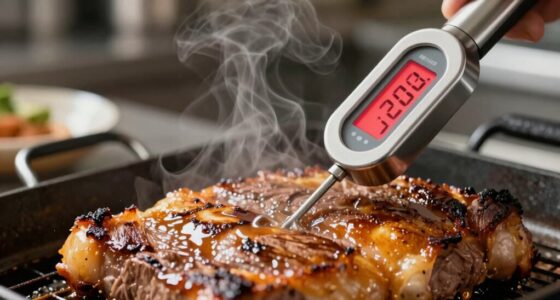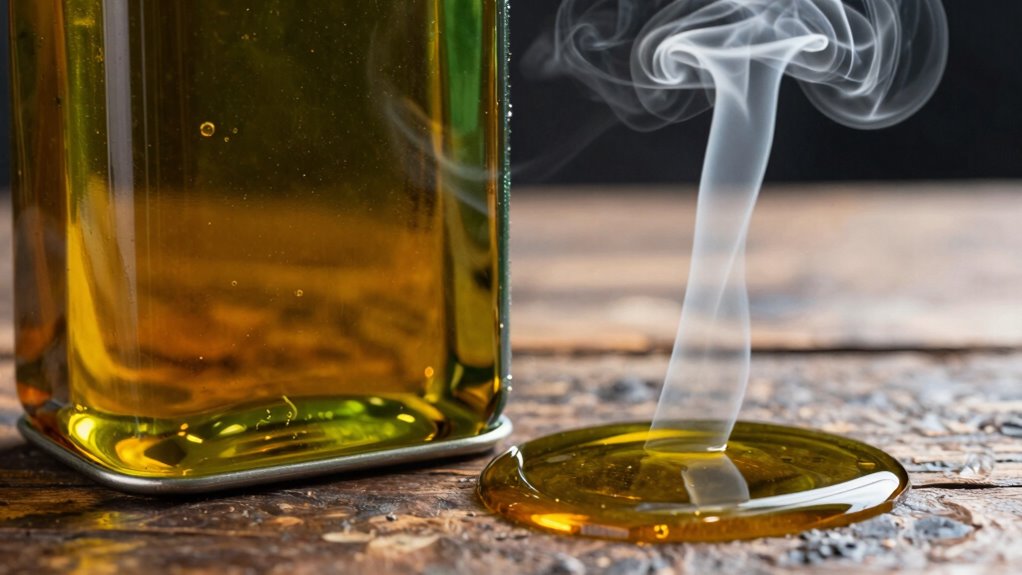

Your choice of oil affects more than just smoke levels; it impacts heat transfer, food flavor, and your equipment’s lifespan. Different oils break down at various temperatures, releasing harmful compounds and affecting cooking performance. Repeated use and impurities lower smoke points, making smoking more likely. Good oil selection, proper filtration, and management help maintain quality and health safety. Keep exploring to discover how understanding oil properties can improve your cooking and overall outcomes.

Prime made for students and young adults
- Fast, free delivery for dorm and study essentials
- Prime Video and Amazon Music included
- Member-only deals
Key Takeaways
- Different oils have varying smoke points due to their unique chemical compositions.
- Oil degradation and impurities lower the smoke point over time, affecting oil performance.
- Repeated heating and use cause changes in oil properties, impacting its behavior beyond smoke production.
- Oil type influences heat transfer efficiency and surface temperature regulation during cooking.
- Proper oil management, including filtration, helps maintain consistent properties and limits changes beyond smoke.
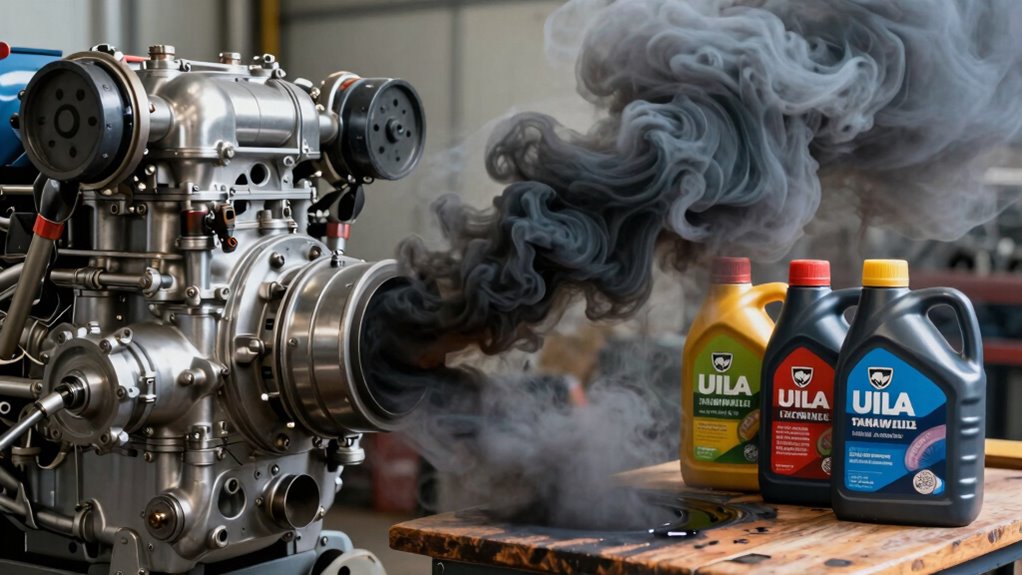
Have you ever wondered how your choice of cooking oil affects smoke production? It’s not just about whether your food burns or smokes; the type of oil you use influences several factors, including engine temperature and oil filtration. When you heat oil, it reaches a specific smoke point, which varies depending on the oil’s composition. Using an oil with a low smoke point can cause smoke early in the cooking process, but it also impacts more than just smoke. As the oil heats up, the temperature of your cooking surface and the oil itself rise, affecting how efficiently heat transfers to your food. If the oil breaks down at high temperatures, it produces smoke, which not only impacts flavor but can also release harmful compounds into the air. Proper oil filtration is essential because, during repeated use, particles and impurities accumulate in the oil, lowering its effective smoke point and making it more prone to smoking at lower temperatures. Maintaining optimal indoor air quality by reducing smoke and harmful emissions from cooking is crucial for a healthier environment. Choosing the right oil isn’t just about smoke; it’s about maintaining ideal engine temperature and ensuring healthy oil filtration. Regular oil filtration also ensures that impurities don’t accelerate the breakdown process, which can cause the oil to smoke at lower temperatures than expected. Additionally, understanding the smoke point of different oils can help you make more informed choices in your cooking practices. Recognizing the composition of different oils enables you to select options that are better suited for high-temperature cooking, thereby reducing smoke and harmful emissions. Proper management of oil aging and degradation is essential for maintaining oil quality and safety. A comprehensive understanding of oil properties can help prevent premature breakdown and extend the lifespan of your cooking oils. In essence, your oil choice impacts how well your cooking setup manages engine temperature and how effectively your oil filtration system works to keep your oil clean and stable.
As an affiliate, we earn on qualifying purchases.
Frequently Asked Questions
How Does Oil Viscosity Affect Engine Performance?
Your engine’s performance depends on oil viscosity because viscosity effects influence how well oil flows through engine parts. If the oil is too thick, it resists flow, reducing lubrication and causing wear. Conversely, if it’s too thin, it might not provide enough protection. Choosing the right viscosity guarantees ideal oil flow, maintains proper lubrication, and helps your engine run smoothly under various temperatures and loads.
Can Synthetic Oils Last Longer Than Conventional Oils?
Surprisingly, synthetic oils last longer than conventional ones because of their superior resistance to oil degradation. You might think all oils break down quickly, but synthetic longevity outperforms conventional oils, reducing the need for frequent changes. This durability means your engine stays better protected over time, saving you money and hassle. So, next time you change your oil, remember, synthetic oils are designed to last longer, even when you least expect it.
What Are the Environmental Impacts of Different Oil Types?
Different oil types impact the environment differently. Conventional oils are more prone to leaks and spills, which can cause significant damage to ecosystems. Synthetic oils burn cleaner, reducing greenhouse gases emitted from exhaust, but their production still involves energy use and waste. Choosing eco-friendly oils minimizes risks of oil spills, lowers greenhouse gas emissions, and supports a healthier planet. Always consider their lifecycle and environmental footprint when selecting oil for your vehicle.
How Often Should Oil Be Changed for Optimal Engine Health?
You should change your oil every 3,000 to 5,000 miles, or as recommended by your vehicle’s manual. Regular oil changes prevent oil contamination and reduce oil degradation, which can harm your engine’s health. Keep an eye on oil levels and quality; if you notice dark, gritty oil or a burnt smell, it’s time for a change. Staying consistent with oil maintenance helps your engine run smoothly and last longer.
Are There Specific Oils Recommended for High-Mileage Engines?
Choosing oils for high-mileage engines is like picking a suit tailored for comfort and durability. Look for oils with special additives that help maintain engine seals and reduce leaks. These oils often contain high-mileage formulas designed to soften seals and prevent oil burn-off. Regularly switching to these specialized oils helps extend your engine’s life, ensuring it runs smoothly and efficiently even as it ages.
oil filtration system for cooking
As an affiliate, we earn on qualifying purchases.
As an affiliate, we earn on qualifying purchases.
Conclusion
Think of choosing oil like tending a garden. Just as different plants need different soil for their best growth, your cooking depends on selecting the right oil—not just for flavor, but for health and safety. Smoke is like a warning sign, but the true magic lies beneath, in the oil’s composition. When you understand this, you’re not just cooking; you’re nurturing a thriving, flavorful garden that rewards your care with every dish.
As an affiliate, we earn on qualifying purchases.
healthy cooking oil selection guide
As an affiliate, we earn on qualifying purchases.
As an affiliate, we earn on qualifying purchases.
Columbus Day / Indigenous Peoples' Day Picks
long weekend sales
As an affiliate, we earn on qualifying purchases.