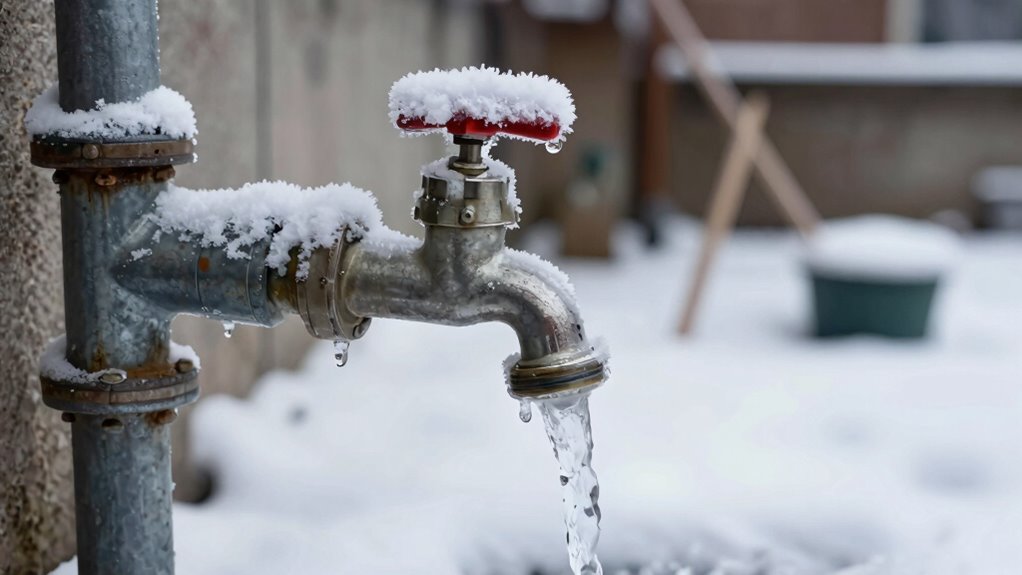

Before winter arrives, the main plumbing issue to address is preventing frozen pipes. As temperatures drop, water inside pipes can freeze and expand, risking costly bursts and water damage. To avoid this, you should insulate exposed pipes, protect outdoor faucets, and disconnect hoses early. Taking these precautions beforehand is essential to keep your plumbing system safe and functional throughout winter. If you proceed, you’ll discover more effective strategies to guarantee your pipes stay protected all season long.
Open a free Amazon Business account
Business pricing, bulk buying and tax-exempt orders.
As an affiliate, we earn on qualifying purchases.
Key Takeaways
- Cold weather signals the need to insulate pipes to prevent freezing and bursting.
- Outdoor faucet protection should be installed before temperatures drop.
- Monitoring weather forecasts helps plan early winterization measures.
- Disconnecting hoses and draining outdoor fixtures reduces freezing risks.
- Insulating unheated areas around pipes minimizes the chance of winter-related damage.
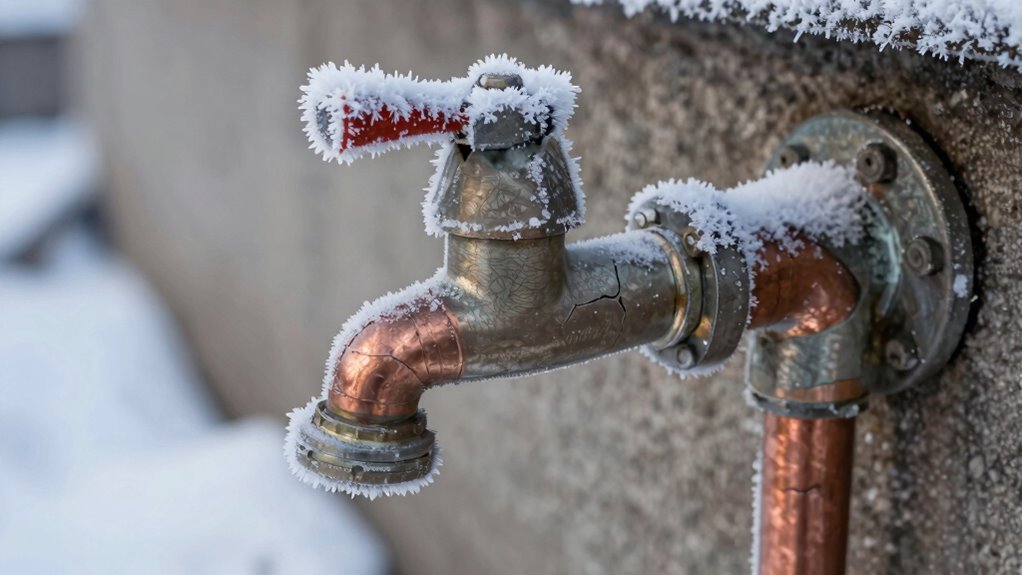
Have you ever noticed your pipes acting up during certain seasons? As temperatures drop, you might find yourself dealing with unexpected leaks, frozen pipes, or reduced water flow. This isn’t a coincidence. Seasonal changes, especially the approach of winter, can wreak havoc on your plumbing if you’re not prepared. One of the most effective ways to safeguard your pipes is by investing in proper pipe insulation. Insulation helps keep the water inside your pipes from freezing, which is pivotal because frozen water expands and can cause pipes to burst, leading to costly repairs. Don’t wait until the first freeze to think about insulating your plumbing. It’s best to start before temperatures plummet, especially in areas where cold snaps are common. When you insulate your pipes, particularly those running through unheated spaces like basements, attics, or garages, you create a barrier that maintains a more stable temperature around the pipes. This simple step can save you from a lot of trouble once winter hits. Additionally, proper insulation techniques can improve energy efficiency by reducing heat loss around your plumbing. Understanding climate patterns can help you better anticipate when to take preventative measures for your plumbing system. Recognizing local weather trends allows for more accurate planning and timely action, reducing the risk of sudden pipe damage. Outdoor faucets are another common point of concern during seasonal shifts. As the weather cools, water left in outdoor faucets can freeze and cause the fixture or the connecting pipes to crack or burst. To prevent this, you should disconnect hoses and drain any remaining water from outdoor faucets before temperatures drop below freezing. Installing faucet covers or insulated caps can provide an extra layer of protection for outdoor faucets during cold months. These covers trap heat and prevent cold air from directly reaching the faucet, reducing the risk of freezing. If you have the option, consider installing frost-proof outdoor faucets, which are designed to shut off water supply inside your home, away from the elements. Doing so minimizes the risk of damage and makes winter maintenance much easier. In addition, being aware of weather forecasts can help you prepare in advance and respond promptly to sudden cold snaps. Staying informed about temperature fluctuations enables you to take proactive steps to protect your plumbing. Preparing your plumbing for winter isn’t just about avoiding inconvenience; it’s about preventing serious damage that can lead to expensive repairs. Taking simple steps like adding pipe insulation and properly winterizing outdoor faucets can save you money and stress down the line. Remember, the earlier you prepare, the better your chances of avoiding frozen pipes and costly repairs when the cold weather arrives. It’s a small investment of time and effort that pays off by keeping your plumbing system secure and functional throughout the winter season. So, don’t wait until the first frost—start winterizing your plumbing now to stay ahead of the seasonal plumbing issues that tend to start before winter.
As an affiliate, we earn on qualifying purchases.
Frequently Asked Questions
How Early Should I Schedule Plumbing Inspections Before Winter?
You should schedule plumbing inspections at least 1-2 months before winter, giving you ample time for pipe maintenance and necessary plumbing upgrades. Early inspections help identify vulnerabilities, preventing pipes from freezing and bursting. By addressing issues early, you can guarantee your plumbing system’s efficiency and avoid costly repairs during cold weather. Don’t wait until temperatures drop; proactive planning keeps your home safe and functioning smoothly all winter long.
Are There Specific Pipe Materials That Resist Freezing Better?
Think of pipe durability as your home’s silent guardian against winter’s wrath. Copper pipes excel in material comparison, resisting freezing better due to their flexibility and thermal conductivity, while PEX pipes are more freeze-resistant because they expand when frozen. Both materials withstand cold better than standard PVC, making them smart choices. Choosing the right pipe material can prevent costly repairs and keep your home warm and safe all winter long.
What Signs Indicate My Plumbing Is Already at Risk?
You can tell your plumbing’s at risk if you notice a pipe leak or sudden drops in water pressure. These signs indicate that pipes may be cracking or freezing. Keep an eye out for unusual noises or bulging pipes, which also suggest potential issues. Addressing these early can prevent more serious damage when cold weather hits, so stay vigilant and act quickly if you spot any of these warning signs.
Can Insulation Alone Prevent Winter Pipe Bursts?
Insulation alone can’t fully prevent winter pipe bursts, but it’s a vital step. When you add pipe insulation, it helps keep water pressure steady and slows heat loss, reducing the risk of freezing. Coincidentally, many homeowners overlook water pressure’s role in pipe bursts. If pressure builds up due to freezing, pipes are more likely to burst. So, combine insulation with pressure regulation to better protect your plumbing during winter.
What Emergency Steps Should I Take During a Frozen Pipe Incident?
If you notice a frozen pipe, act quickly by turning off your main water supply with the emergency shutoff to prevent flooding. Start pipe thawing by applying gentle heat, such as a hairdryer or warm towels, focusing on the section closest to the faucet. Avoid open flames or high heat. Keep the faucet open to allow water to flow once the pipe thaws, reducing pressure buildup.
As an affiliate, we earn on qualifying purchases.
Conclusion
As winter approaches, don’t overlook this common plumbing issue—frozen pipes. Did you know that burst pipes cause an average of $5,000 in damages per incident? By insulating your pipes and maintaining consistent indoor temperatures, you can prevent costly repairs and avoid the hassle of water damage. Stay proactive and winter-proof your home now, so you won’t face surprise plumbing emergencies when the cold hits. Prevention is your best defense against this seasonal plumbing problem.
As an affiliate, we earn on qualifying purchases.
As an affiliate, we earn on qualifying purchases.
NFL season / tailgating Picks
team gear
As an affiliate, we earn on qualifying purchases.