Whole-house fans cool your home by pulling in cool outdoor air and exhausting warm indoor air, creating a natural breeze that lowers indoor temperatures quickly and quietly. They work best when outside air is cooler, such as evenings or mornings, but lose effectiveness during peak heat or if your attic isn’t properly ventilated. To get the most benefit, proper installation and operation are key—continue exploring to discover how to make yours work effectively.
Get ready for Prime Big Deal Days — try Prime free
Exclusive member deals on October 6–7, plus fast free delivery. Cancel anytime.
As an affiliate, we earn on qualifying purchases.
Key Takeaways
- Whole-house fans work by pulling in cooler outdoor air and exhausting warm indoor air through attic vents, creating natural airflow.
- They are most effective during cooler evenings and mornings when outdoor temperatures are lower.
- Proper installation and operation maximize airflow, cooling efficiency, and safety, while reducing noise and potential issues.
- Their cooling performance diminishes during peak daytime heat when outdoor air isn’t cool enough.
- Insufficient insulation or poor attic ventilation can limit their effectiveness, requiring proper sealing and setup.
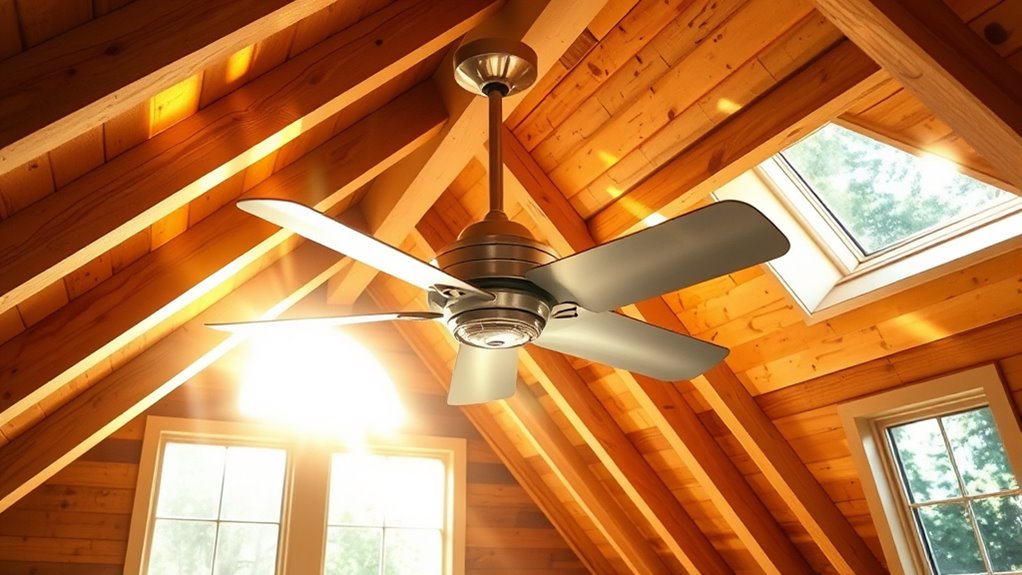
Have you ever contemplated how a whole-house fan can efficiently cool your home without relying on air conditioning? These fans work by pulling cool outdoor air into your home through open windows, then exhausting warm indoor air through attic vents. This process creates a natural airflow that lowers indoor temperatures, often more quickly and with less energy than traditional AC units. Because of their design, whole-house fans are a surprisingly energy-efficient option, especially during cooler evenings or mornings when the outside air is at its most revitalizing. They use considerably less electricity than running an air conditioner, which can lead to noticeable savings on your energy bills. Plus, in terms of environmental impact, they produce fewer greenhouse gases, making them a smart choice for eco-conscious homeowners. Proper installation and operation are crucial to maximize their effectiveness and safety.
However, it’s important to think about noise levels when installing and operating a whole-house fan. Many models are designed to operate quietly, but some can produce a noticeable hum or racket, especially if they’re older or poorly maintained. If noise is a concern, look for fans specifically engineered for quiet operation. The placement of the fan also matters; installing it in a location where sound can dissipate helps minimize disturbance. Keep in mind that during peak daytime heat, running a whole-house fan might not be as effective because the outdoor air isn’t cool enough to provide relief, and the fan may struggle to cool the home to a comfortable temperature. It’s best used during early mornings or evenings when outside temperatures drop, making it easier for the fan to bring in cooler air and circulate it effectively.
Another factor to ponder is the quality of your home’s insulation and ventilation. If your house isn’t well-insulated, the cool air brought in by the fan may quickly escape, reducing the overall efficiency. Conversely, if your attic isn’t properly ventilated, the warm air may not exhaust effectively, limiting the fan’s ability to lower indoor temperatures. Whole-house fans work best when your home is properly sealed and ventilated, allowing the fan to create a strong airflow that replaces hot, stale indoor air with fresh outdoor air.
whole house fan installation kit
As an affiliate, we earn on qualifying purchases.
As an affiliate, we earn on qualifying purchases.
Frequently Asked Questions
How Energy-Efficient Are Whole-House Fans Compared to Air Conditioning?
Whole-house fans are generally more energy-efficient than air conditioning, offering significant energy savings. They use less electricity because they rely on natural ventilation instead of compressors. This boosts cooling efficiency during mild evenings and mornings, helping you cut costs and reduce your carbon footprint. However, they work best in climates with cool nights and may not be as effective in very humid or hot conditions.
Can Whole-House Fans Be Used in Humid Climates Effectively?
In humid climates, whole-house fans aren’t very effective because humidity challenges can cause indoor moisture levels to rise, making it hard to cool the air. You may find that insulation impacts their efficiency, as poor insulation lets warm, humid air seep in. If you want to use a whole-house fan, consider pairing it with dehumidifiers or improving your home’s insulation to better manage humidity challenges and maximize cooling.
What Maintenance Is Required for Optimal Performance of a Whole-House Fan?
To keep your whole-house fan working effectively, you should regularly inspect the fan blades for dirt or damage and clean them as needed. Additionally, check the motor and apply lubrication if it’s specified by the manufacturer. This routine maintenance ensures smooth operation and prevents overheating. Don’t forget to clean the vents and filters periodically to maintain proper airflow and efficiency.
Are There Safety Considerations When Operating a Whole-House Fan?
When operating your whole-house fan, you should be aware of fire hazards and electrical safety. Always guarantee the fan is properly installed and maintained to prevent electrical issues. Never leave it running unattended, especially if you notice sparks or burning smells. Keep flammable materials away from the vent and regularly inspect wiring for damage. These precautions help protect you from potential fire hazards and ensure safe, effective operation.
How Do I Determine if My Home Is Suitable for a Whole-House Fan?
You can determine if your home is suitable for a whole-house fan by checking your attic insulation and window placement. Make sure your attic isn’t overly insulated, which can block airflow, and that your windows can be opened easily to create cross-ventilation. Homes with strategically placed windows and proper insulation allow the fan to effectively circulate air, cooling your house naturally without needing air conditioning.
As an affiliate, we earn on qualifying purchases.
Conclusion
Just like the Trojan horse, a whole-house fan can quietly bring in fresh air and offer relief when you need it most. But remember, it’s not a one-size-fits-all solution—sometimes, it’s better to wait for the right conditions. By understanding when and how to use it, you’ll harness its power effectively, turning your home into a sanctuary of comfort. So, stay savvy and keep your home breezy—your own secret weapon against the heat.
energy-efficient whole house fan
As an affiliate, we earn on qualifying purchases.
As an affiliate, we earn on qualifying purchases.
As an affiliate, we earn on qualifying purchases.
Fall yard work Picks
leaf blowers
As an affiliate, we earn on qualifying purchases.