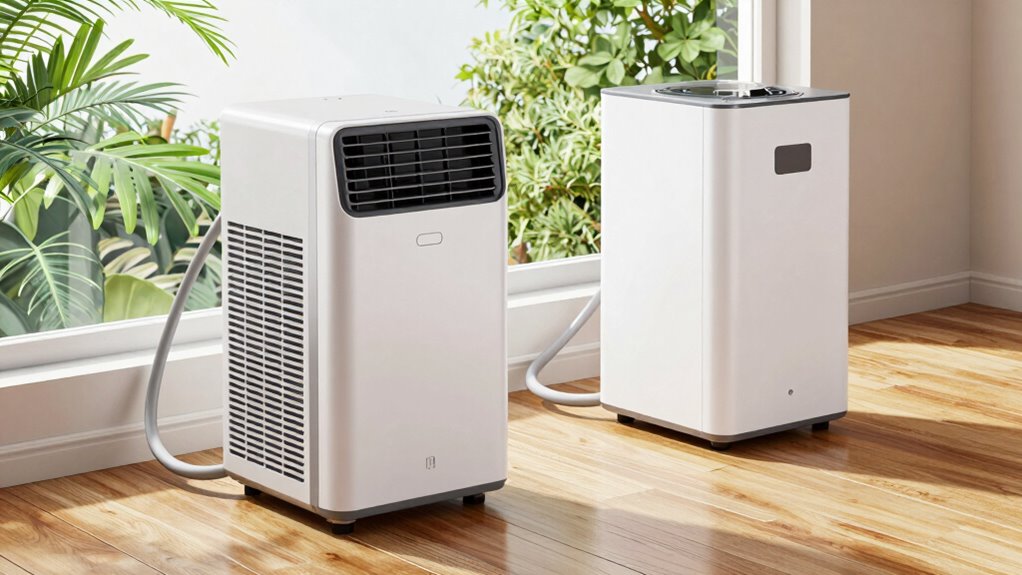

If you’re choosing between single and dual hose portable air conditioners, you’ll find that dual hoses are more energy-efficient because they maintain balanced airflow and prevent the formation of negative pressure that pulls in warm outside air. Single hoses are simpler and quicker to set up but tend to work harder, increasing energy use over time. To understand how these differences impact performance and installation, keep exploring the details.
Key Takeaways
- Dual hose units generally offer better energy efficiency by preventing negative pressure and reducing workload on the compressor.
- Single hose ACs can pull in warm outdoor air through leaks, increasing energy consumption and decreasing cooling efficiency.
- Dual hoses maintain balanced airflow, leading to more consistent and effective cooling performance.
- Single hose models are easier to install and move, but may work harder and less efficiently over time.
- Long-term energy savings favor dual hose units due to their superior design and reduced operational effort.
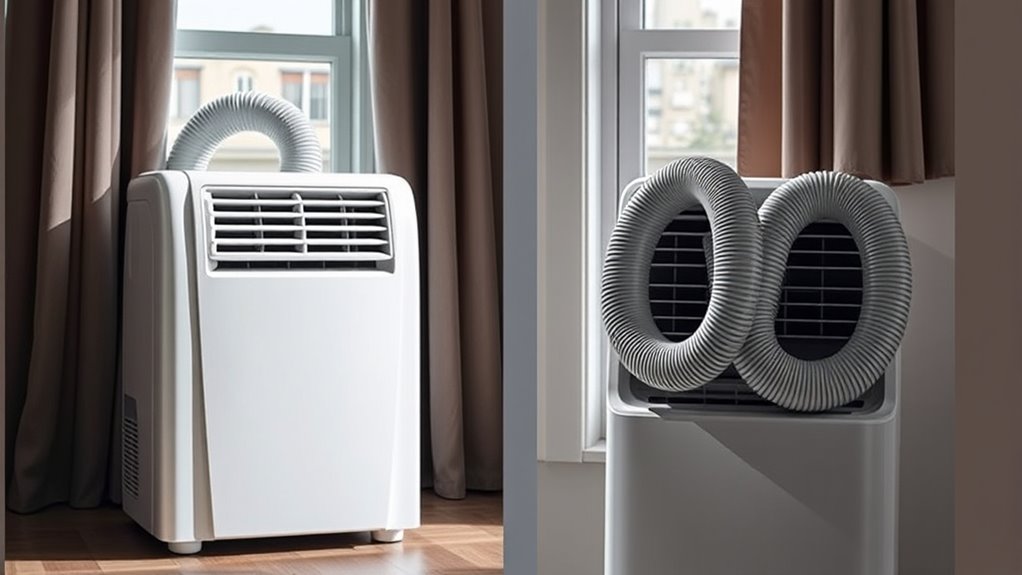
Are you trying to decide between a single hose and dual hose portable air conditioner? If so, understanding the differences in energy efficiency and installation complexity can help you make an informed choice. A single hose unit pulls in air from the room, cools it, and expels the warm air outside through one hose, making it generally simpler to set up. On the other hand, dual hose models use one hose to draw in outside air for cooling and another to vent hot air out, which can influence both efficiency and installation effort.
When it comes to energy efficiency, dual hose units often outperform single hose models. Because they use separate hoses for intake and exhaust, dual hose ACs don’t create negative pressure in the room. This means they don’t have to work as hard to compensate for air leaks, resulting in less energy consumption. Conversely, single hose units tend to be less efficient because they create a slight vacuum in the room as they pull air in and expel it outside. This can cause warm air from outside to seep in through gaps and leaks, forcing the unit to work harder to maintain the desired temperature. Over time, this increased workload translates into higher energy bills and less effective cooling.
In addition, the contrast ratio of a portable AC can significantly impact its performance, especially in rooms with varying lighting and decor. Installation complexity is another key factor to consider. Single hose models are typically easier to install and move around since they require only one vent and less setup. You can usually set them up quickly by attaching the hose to a window kit and plugging in the unit. Dual hose units, however, involve a slightly more complex installation process because they need two separate vents—one for intake and one for exhaust—and sometimes require more space for proper placement. They might also come with additional components or guidelines that make the initial setup more involved. If you’re looking for a quick, straightforward cooling solution, a single hose model might be more appealing. But if you’re willing to spend a bit more time on installation for better long-term efficiency, a dual hose unit could be worth considering.
Frequently Asked Questions
Which Portable AC Type Is More Environmentally Friendly?
You’ll find that dual hose portable AC units are generally more environmentally friendly because they use less energy, reducing overall energy consumption. They often utilize more efficient refrigerant types, which have a lower environmental impact. By choosing a dual hose model, you help cut down on electricity use and minimize emissions, making it a better option for eco-conscious users. Your choice can make a meaningful difference for the environment.
Can Dual Hose Units Operate More Quietly Than Single Hose Units?
Yes, dual hose units generally operate more quietly than single hose models. They provide better airflow stability, which reduces the strain on the compressor and minimizes noise levels. You’ll notice less humming and vibration, making your space more comfortable. The improved airflow also helps maintain consistent cooling, further reducing noise. So, if you want a quieter operation, a dual hose portable AC is a smarter, more peaceful choice.
Are There Specific Room Sizes Better Suited for Dual Hose ACS?
You’ll find dual hose ACs work best in larger rooms with higher cooling capacity needs. They efficiently handle bigger spaces, providing faster cooling and maintaining consistent temperatures. For small rooms, a single hose unit might suffice, but for larger areas or rooms with high heat loads, dual hoses deliver better performance. Consider your room size and cooling requirements to choose the right unit for ideal comfort and efficiency.
How Does Hose Length Impact Portable AC Efficiency?
Think of the hose as the lifeline of your portable AC; longer hoses can act like winding rivers, slowing the flow. As hose length increases, airflow restriction rises, making it harder for the unit to cool effectively. A thicker hose diameter helps maintain steady airflow, but extending the hose can still diminish efficiency. Keep the hose as short and wide as possible to make certain your AC runs smoothly and stays cool.
Do Dual Hose Units Require More Maintenance Than Single Hose Units?
Yes, dual hose units generally require more maintenance than single hose units. You’ll need to check the maintenance frequency more often, including cleaning or replacing filters regularly to guarantee peak performance. Dual hoses have more components, which can lead to increased wear and tear. Keeping up with filter replacement helps prevent dust buildup and maintains efficiency, but expect to spend a bit more time on upkeep compared to single hose models.
Conclusion
So, whether you choose a single or dual hose portable AC, remember that more efficiency often comes at a higher price—or so they claim. Ironically, no matter what you buy, you’re still stuck battling heat and paying the price. It’s almost poetic how the perfect cooling solution remains just out of reach, hidden behind technical jargon. In the end, maybe the real lesson is that comfort always costs something—sometimes even more than you bargained for.