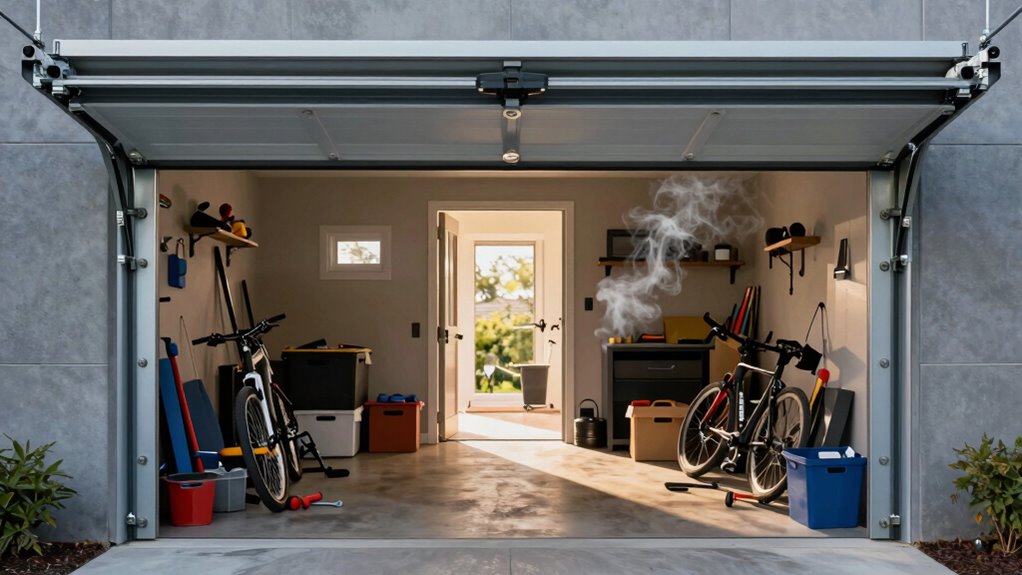

Garage air can affect your entire house because fumes, dust, and chemicals often seep through gaps, cracks, and open doors. Without proper ventilation, these pollutants build up and migrate into your living spaces, causing health issues like headaches, allergies, and respiratory problems. Since your garage is connected to your home, contaminated air can easily spread, especially if ventilation is poor. To find out how you can protect your indoor air quality, keep exploring this important topic.

Prime made for students and young adults
- Fast, free delivery for dorm and study essentials
- Prime Video and Amazon Music included
- Member-only deals
Key Takeaways
- Fumes and pollutants from the garage can migrate into living spaces through cracks, gaps, and open doors.
- Vehicle exhaust and chemical fumes are common sources that can seep into the home environment.
- Poor garage ventilation allows hazardous air to accumulate and spread throughout the house.
- Contaminants in garage air can cause health issues like respiratory problems and allergies indoors.
- Effective ventilation prevents harmful fumes from infiltrating and compromising indoor air quality.
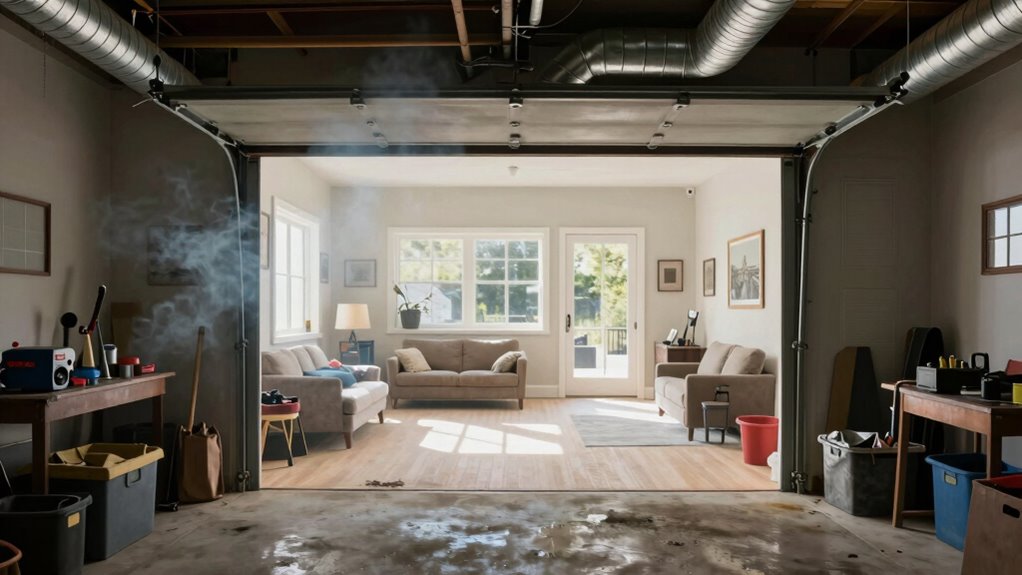
Your garage isn’t just a storage space—it’s a gateway that can influence the air quality throughout your entire home. Many homeowners overlook this, but the air in your garage can easily seep into your living spaces, affecting indoor air quality. This is especially true if your garage isn’t properly ventilated. Garage ventilation plays an essential role in controlling the fumes and pollutants that originate there. When ventilation is inadequate, harmful substances like vehicle exhaust, fumes from stored chemicals, and dust particles can linger and migrate into your home, impacting the air you breathe daily.
Garage air can easily infiltrate your home, making proper ventilation crucial for indoor air quality and health.
If you neglect proper garage ventilation, these pollutants can accumulate over time, creating a hazardous environment inside your house. Gasoline fumes, paint vapors, and cleaning product odors don’t just stay confined to the garage—they drift through open doors, gaps around windows, or even tiny cracks in walls. As these contaminants infiltrate your living areas, they can cause headaches, respiratory issues, or worsen allergies. Poor indoor air quality isn’t just uncomfortable; it can pose serious health risks, especially for children, seniors, or those with existing respiratory conditions.
You might think that keeping doors closed prevents this exchange, but that’s not always enough. Air naturally moves from areas of high pressure to low pressure, meaning fumes from the garage can easily find their way inside, especially if your home has poor sealing or ventilation. Installing an effective garage ventilation system helps to actively remove contaminated air and bring in fresh air, reducing the likelihood of pollutants migrating. Mechanical ventilation options like exhaust fans or air exchange systems ensure that stale garage air doesn’t linger and seep into your living space. Additionally, proper ventilation is essential for maintaining overall indoor air quality and preventing the buildup of airborne toxins. Incorporating air exchange systems can significantly improve the safety and health of your home environment.
Additionally, good garage ventilation supports the maintenance of better indoor air quality overall. When you keep the garage air fresh, it lessens the load of airborne toxins in your entire home, making your environment healthier. Proper ventilation also helps prevent the buildup of dangerous fumes that could otherwise accumulate unnoticed. Remember, your home’s ventilation isn’t just about comfort; it’s a critical part of safeguarding your health. Properly ventilating your garage creates a barrier, preventing harmful fumes from infiltrating your home’s air supply. This simple step can markedly improve the air you and your family breathe every day, making your entire home safer and more comfortable. Ensuring proper garage ventilation is key to maintaining a healthy indoor environment.
As an affiliate, we earn on qualifying purchases.
Frequently Asked Questions
Can Garage Air Leaks Be Detected Without Professional Help?
Yes, you can detect garage air leaks yourself. Start with visual inspections for gaps around doors, vents, and seals. You can also perform a simple smoke test using incense or a lit match near potential leak spots to see if the smoke moves. For more accurate results, consider DIY air quality testing kits, which can help identify pollutants from garage air. Proper garage sealing minimizes leaks and improves overall indoor air quality.
How Often Should Garage Ventilation Be Inspected or Maintained?
You should inspect your garage ventilation systems and garage insulation at least once a year. Regular maintenance guarantees proper airflow, reduces moisture buildup, and prevents harmful fumes from affecting your entire home. Check for blockages or damage in vents, and make sure insulation remains effective. Properly maintained ventilation systems keep air fresh, improve energy efficiency, and help prevent issues like mold or gas leaks that can impact your whole house.
Do Specific Garage Materials Release More Harmful Fumes?
Like a sponge soaking up fumes, some garage materials release more harmful fumes. Materials like paints, solvents, and certain plastics are common fume emission sources and pose higher risks. Garage material hazards vary, but those containing volatile organic compounds (VOCs) tend to emit more dangerous fumes. You should be cautious with these materials, guarantee proper ventilation, and store them safely to prevent fumes from seeping into your home.
Are There DIY Methods to Improve Garage Air Quality?
Yes, you can improve your garage air quality with DIY air purifiers like a simple box fan with a HEPA filter attached. Ventilation improvements are also effective—regularly opening garage doors or installing exhaust fans helps circulate fresh air. Keep fumes contained by sealing leaks around doors and windows, and consider adding activated charcoal filters to absorb odors and pollutants. These steps make your garage safer and healthier for everyone in your home.
How Long Does It Take for Garage Air to Impact Indoor Air?
You might notice garage odors impacting your indoor air within just a few hours, especially if your garage isn’t well-ventilated. Poor air filtration allows fumes from paints, chemicals, or vehicle exhaust to quickly seep into your home. Studies show indoor air can be polluted five times more than outdoor air, meaning contaminants can spread rapidly. To protect your home, improve garage ventilation and use air filtration systems to reduce odors and airborne pollutants.
As an affiliate, we earn on qualifying purchases.
Conclusion
So, next time you ignore that garage door’s little secrets, remember—you’re inviting the entire house to a not-so-welcome air party. Think of your garage as the rebellious teenager of your home, sneaking out and bringing all sorts of trouble back inside. Keep it in check, or face the delightful surprise of your whole house smelling like last week’s paint fumes or yesterday’s gasoline. Because who doesn’t love a little unintended, household-wide “aroma” adventure?
As an affiliate, we earn on qualifying purchases.
As an affiliate, we earn on qualifying purchases.
Fall Picks
fall essentials
As an affiliate, we earn on qualifying purchases.