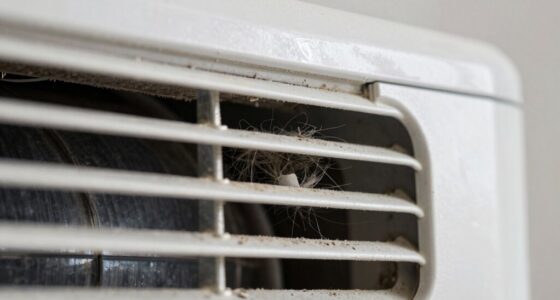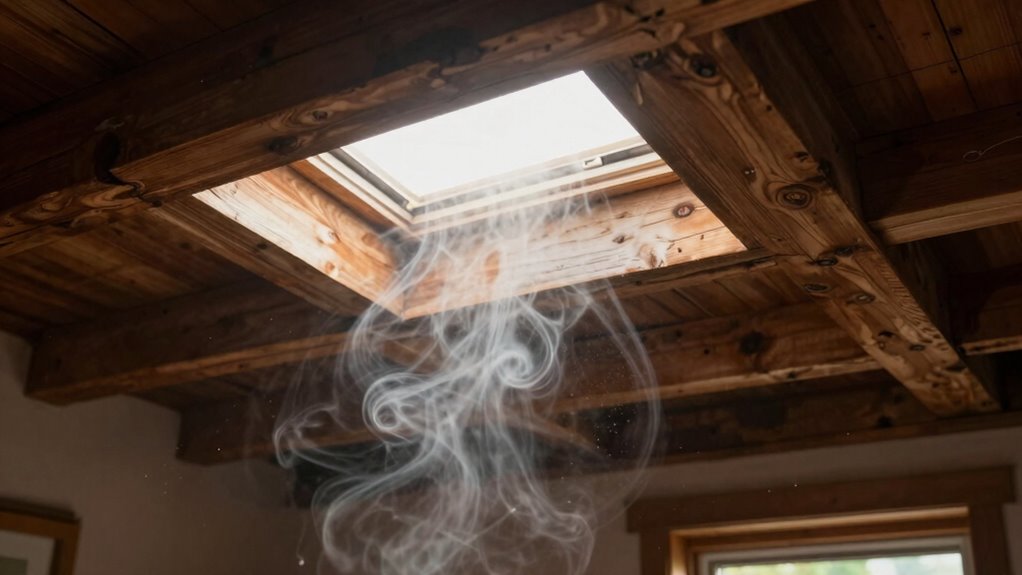

The stack effect occurs when warmer indoor air rises due to its lower density, creating pressure differences that draw in cooler outdoor air through leaks and vents. This natural airflow impacts your home’s comfort and energy efficiency, especially during colder months. As warm air escapes through leaks, more cold air enters, causing drafts and higher heating costs. To learn how to manage this effect effectively and improve your home’s comfort, keep exploring these strategies.
Open a free Amazon Business account
Business pricing, bulk buying and tax-exempt orders.
As an affiliate, we earn on qualifying purchases.
Key Takeaways
- The stack effect occurs due to temperature differences causing warm indoor air to rise and create pressure differences.
- Warm air rises toward the ceiling, pulling cooler outdoor air inward at lower levels through leaks.
- This airflow pattern is driven by natural convection and temperature-induced density changes inside the house.
- The effect is stronger in winter, increasing drafts and heat loss, and weaker in summer when outdoor temperatures are warmer.
- Proper sealing, insulation, and ventilation can mitigate unwanted air movement caused by the stack effect.
As an affiliate, we earn on qualifying purchases.
What Is the Stack Effect and How Does It Work?
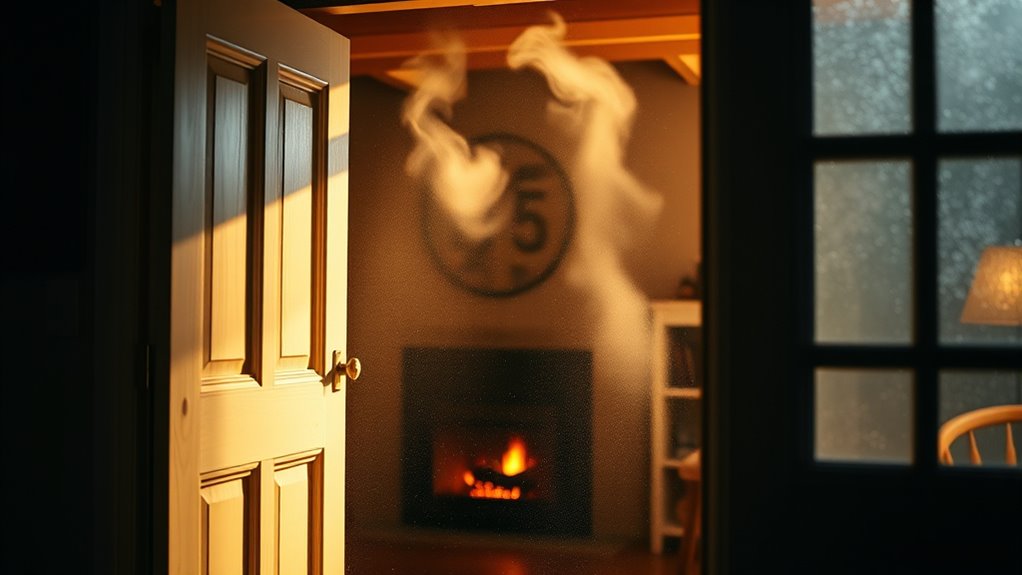
Have you ever wondered how air moves naturally through your home without fans or vents? That’s the stack effect in action. It happens because of differences in air pressure caused by heat transfer. When warm air inside your house heats up, it becomes less dense and rises toward the upper levels. As heat transfer occurs, the warm air pushes against cooler air, creating a pressure difference. This pressure difference pulls cooler air in through lower openings and pushes warm air out through upper vents or leaks. The stack effect relies on natural temperature gradients and air pressure variations to circulate air, making your home feel fresher without any mechanical help. It’s a simple process driven by heat transfer and the physics of air pressure. Additionally, insulation can influence the severity of the stack effect by affecting temperature differences across your home’s interior.
As an affiliate, we earn on qualifying purchases.
Why Does Warm Air Rise and Cold Air Sink?
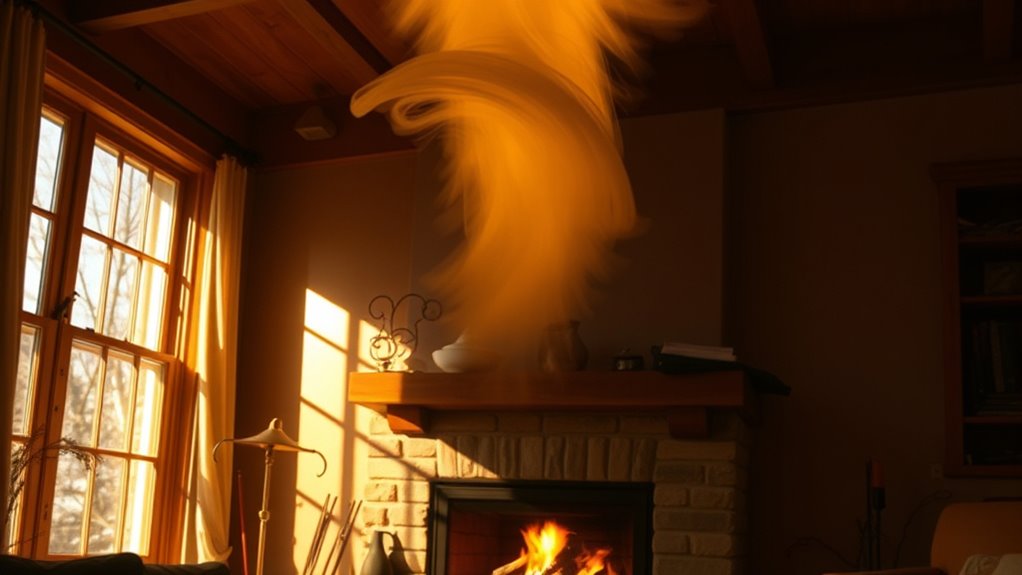
Warm air rises and cold air sinks because of differences in their densities caused by temperature variations. When air warms, it becomes less dense, causing it to naturally move upward through thermal stratification within your home. Conversely, cooler, denser air sinks toward the floor, creating a cycle driven by indoor convection currents. This process explains why warm air tends to gather near ceilings while cold air pools near the floor. These temperature-driven movements contribute to the overall airflow pattern inside your house, influencing comfort and energy efficiency. Understanding this natural tendency helps you grasp why heating systems often focus on warm air rising and how cold air sinks, setting the stage for the stack effect and its impact on indoor air movement. Additionally, European cloud innovation emphasizes energy-efficient systems that can help optimize indoor climate control.
As an affiliate, we earn on qualifying purchases.
How Does the Stack Effect Impact Your Indoor Comfort?
The stack effect influences how air moves through your home, affecting your comfort levels. Temperature differences create airflow that can make certain rooms drafty or stuffy, depending on the season. These air currents also impact your energy bills by making your heating or cooling systems work harder. Understanding airflow patterns can help you identify ways to improve indoor comfort and efficiency.
Air Movement Dynamics
As warm air rises inside your home, it creates a pressure difference that pulls cooler, outside air inward at lower levels. This movement results from changes in air pressure caused by thermal buoyancy—the tendency of warm air to rise due to its lower density. As warm air ascends, it reduces pressure at the top of your house, drawing in cooler air from outside through leaks and openings. This continuous cycle enhances airflow within your home, influencing indoor comfort. The dynamics of air movement driven by the stack effect depend on temperature differences and the building’s design. Understanding these air pressure shifts helps you identify how indoor air circulates and why certain areas may feel drafty or stuffy during colder months.
Temperature Differentials
When temperature differences between the inside and outside of your home grow larger, the stack effect becomes more pronounced, substantially impacting your indoor comfort. As warm air rises and escapes through leaks or vents, cooler outside air is drawn in through gaps in your thermal insulation or other openings. This cycle can cause drafts, uneven heating, and discomfort. Proper thermal insulation helps slow this process by creating a barrier against air leakage, reducing the temperature gradient’s impact. Without adequate insulation or sealed leaks, the stack effect intensifies, making your home harder to keep warm in winter. Recognizing how temperature differentials influence air movement allows you to address air leaks and improve your indoor comfort. Better sealing and insulation limit unwanted airflow caused by temperature differences. Additionally, understanding the stack effect can guide you in implementing effective home improvements to minimize energy loss.
Energy Efficiency Impact
Ever wonder how the stack effect can drain energy from your home? It causes warm indoor air to escape through leaks in your attic, walls, or foundation, while cold air is drawn in from outside. This continuous air leakage forces your heating and cooling systems to work harder, increasing energy consumption and utility bills. Proper insulation strategies help minimize these effects by reducing gaps and sealing leaks, keeping warm air inside during winter and outside during summer. When your home is well-insulated and airtight, the stack effect’s impact on energy efficiency diminishes, leading to improved indoor comfort. Addressing air leakage is essential not only for energy savings but also for maintaining better indoor air quality. Without addressing air leakage, you risk wasting energy and experiencing drafts, making it more difficult to maintain a consistent, comfortable temperature throughout your house.
ventilation system for energy efficiency
As an affiliate, we earn on qualifying purchases.
As an affiliate, we earn on qualifying purchases.
Does the Stack Effect Change With the Seasons?
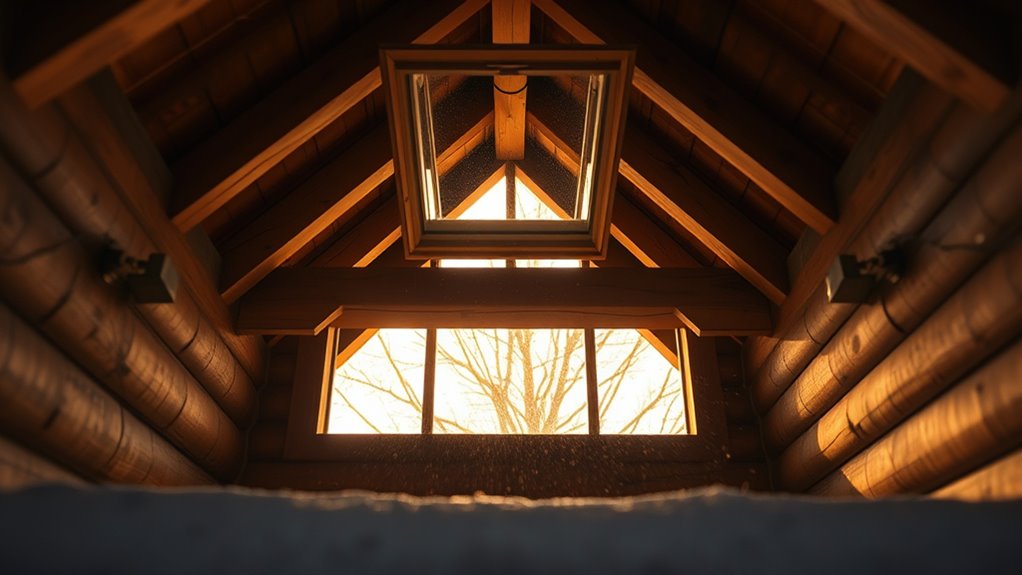
The stack effect indeed varies with the seasons because temperature differences between the inside and outside of your home shift throughout the year. During winter, the colder outdoor air creates a stronger temperature gradient, enhancing the stack effect and pulling more air through your house. Conversely, in summer, warmer outdoor temperatures diminish this pressure difference, reducing the effect. Seasonal variations and climate influence how much air is exchanged naturally. In colder months, the stack effect often intensifies, leading to increased drafts and heat loss. In milder seasons, it lessens but can still impact indoor air quality and comfort. Understanding these seasonal changes helps you better manage airflow and energy efficiency in your home year-round. Additionally, sound vibrations are believed to influence how effectively air moves through spaces, which can be relevant when considering ventilation strategies.
What Signs Show Your Home Is Affected by the Stack Effect?
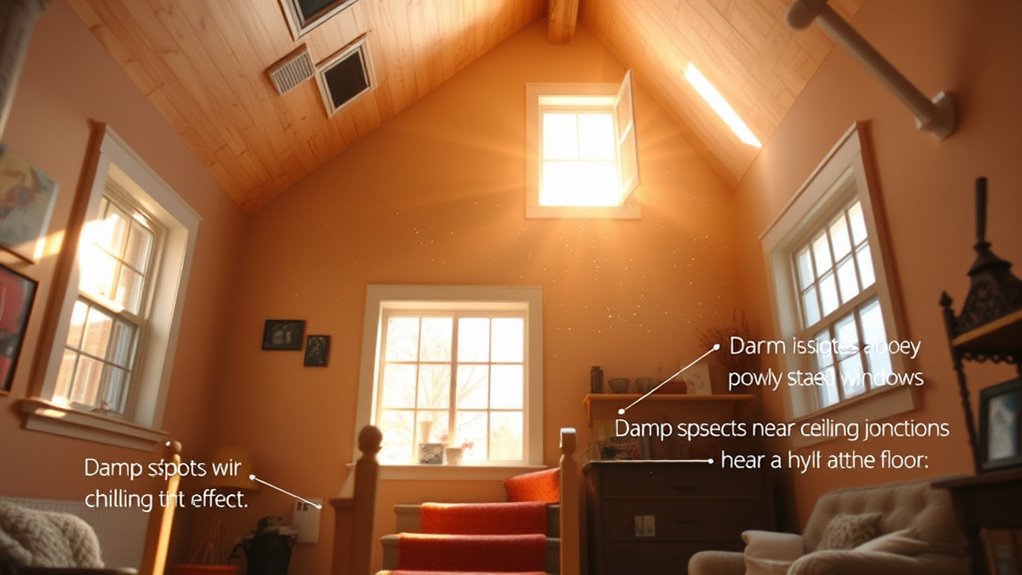
You might notice certain signs in your home that indicate the stack effect is at work. One common sign is drafty windows, especially during colder months, as air escapes and enters through gaps caused by pressure differences. You may also experience uneven heating, with some rooms feeling colder or hotter than others, because air is being pulled in or pushed out unevenly. Additionally, you might feel a constant rush of air near vents, fireplaces, or wall cracks. These signs suggest that the stack effect is creating unwanted airflow, impacting your comfort and energy efficiency. Recognizing these indicators helps you understand how air moves through your home and highlights the importance of addressing these issues to improve overall comfort. Understanding indoor air movement can help you better identify and mitigate the effects of the stack effect.
How Can You Reduce Unwanted Airflow and Save Energy?

To effectively reduce unwanted airflow caused by the stack effect, sealing leaks and gaps around windows, doors, and other openings is essential. Use sealing techniques like weatherstripping, caulking, and foam sealants to block drafts and prevent outside air from entering or conditioned air from escaping. Proper sealing improves HVAC optimization by ensuring your heating and cooling systems work more efficiently, reducing energy waste. Focus on common problem areas such as attic hatches, electrical outlets, and chimney gaps. Regularly inspect and maintain these seals to keep them effective over time. Additionally, understanding vetted weather and wind patterns can help you anticipate and address potential airflow issues more effectively. By minimizing unnecessary airflow, you create a more comfortable indoor environment and lower your energy bills, all while reducing strain on your HVAC system.
How Do Home Design and Ventilation Manage the Stack Effect?
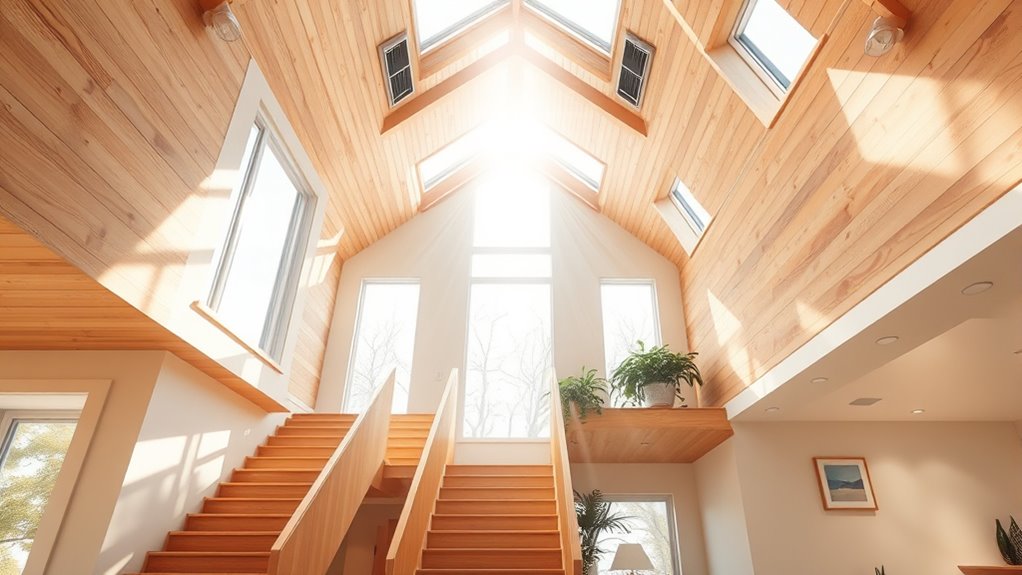
Smart home design and ventilation strategies play an essential role in managing the stack effect by controlling airflow patterns and reducing temperature differentials that cause unwanted drafts. Properly designed homes incorporate features like strategic placement of vents, operable windows, and mechanical ventilation to balance indoor air pressure. Good thermal insulation helps maintain consistent indoor temperatures, minimizing the upward airflow that fuels the stack effect. This not only improves energy efficiency but also enhances indoor air quality by reducing drafts and preventing pollutants from entering. To achieve this, consider:
- Sealing leaks around windows and doors
- Installing balanced ventilation systems
- Using thermal insulation to stabilize indoor temperatures
- Ensuring proper placement of vents for airflow control
Implementing building envelope improvements can further optimize airflow management and reduce the impact of the stack effect. These measures help you manage the stack effect effectively, creating a more comfortable and healthier living environment.
Frequently Asked Questions
Can the Stack Effect Cause Drafts in Specific Rooms?
Yes, the stack effect can cause drafts in specific rooms. When indoor temperature varies, warmer air rises and escapes through upper openings, pulling in cooler air from lower areas. This air circulation creates drafts, especially in rooms near vents or open windows. You might notice these drafts more in colder seasons when temperature differences are greater. To minimize this, sealing leaks and maintaining consistent indoor temperatures helps reduce unwanted drafts caused by the stack effect.
How Does Insulation Influence the Stack Effect?
Think of insulation as a suit of armor, shielding your home from temperature swings. It boosts insulation efficiency and acts as a thermal barrier, slowing the air movement caused by the stack effect. When your insulation is thick and well-installed, it reduces the drafts and unwanted air exchange, keeping your home warmer in winter and cooler in summer. Proper insulation is your best defense against the relentless pull of the stack effect.
Are Modern Building Codes Addressing the Stack Effect?
Yes, modern building codes address the stack effect by emphasizing improved insulation and airtightness, which enhance building air quality. They require effective ventilation strategies to manage air movement and prevent drafts caused by the stack effect. You should guarantee your home follows these codes, as they help maintain a healthier indoor environment, reduce energy loss, and improve overall comfort by controlling how air naturally moves through your house.
Can the Stack Effect Lead to Increased Energy Costs?
Yes, the stack effect can spike your energy costs by pulling indoor air out and letting in outdoor air. This forces your HVAC system to work harder to maintain comfort. To combat this, use effective ventilation strategies like sealing leaks and installing proper ventilation systems. Keeping indoor air balanced prevents unnecessary energy waste, saves money, and improves air quality, making your home more efficient and comfortable year-round.
What Role Do Fireplaces Play in the Stack Effect?
Fireplaces substantially contribute to the stack effect by creating a strong chimney draft that pulls air through your home. When you light a fire, warm air rises through the fireplace, drawing in cooler air from vents or gaps, which can lead to increased energy costs. Proper fireplace ventilation helps control this flow, but if not managed, it can intensify the stack effect, making your home less energy-efficient.
Conclusion
Understanding the stack effect is like holding a lit candle in a drafty room—you can feel the air shift, revealing hidden pathways. When you recognize these movements, you gain control over your home’s comfort and energy use. Just as sealing a window stops unwanted drafts, managing airflow keeps your house cozy and efficient. By paying attention to this natural phenomenon, you turn an invisible force into a helpful ally, ensuring your home feels just right year-round.
NFL season / tailgating Picks
team gear
As an affiliate, we earn on qualifying purchases.