
To save energy with a programmable thermostat, set a schedule that adjusts temperatures during when you’re home, sleeping, or away. Use different temperature zones and seasonally modify settings to optimize efficiency. Avoid complex programs; keep it simple and consistent with your routines. Regularly check sensor placement and maintain your device for accuracy. Want practical tips on creating the best schedule? Continue exploring to learn how to maximize your savings.

Prime made for students and young adults
- Fast, free delivery for dorm and study essentials
- Prime Video and Amazon Music included
- Member-only deals
Key Takeaways
- Proper scheduling reduces energy use by adjusting temperatures during occupancy and sleep periods.
- Seasonal and time-based programming optimizes comfort while minimizing heating and cooling costs.
- Setting zones and time blocks based on occupancy patterns ensures efficient climate control.
- Regularly reviewing and updating schedules maintains system efficiency and adapts to changing routines.
- Using smart features like remote control and sensors enhances schedule accuracy and energy savings.
programmable thermostat with remote control
As an affiliate, we earn on qualifying purchases.
As an affiliate, we earn on qualifying purchases.
How Do Programmable Thermostats Work?
Programmable thermostats work by allowing you to set specific temperatures for different times of the day, helping you save energy and stay comfortable. They rely on sensors that monitor your home’s temperature, and proper sensor calibration guarantees accurate readings, so your system responds correctly. Many models feature wireless connectivity, making it easy to control your thermostat remotely via smartphone or smart home systems. This wireless setup allows you to adjust settings on-the-go, ensuring your home remains comfortable without wasting energy. Inside, the thermostat’s internal algorithms analyze your schedule and preferences, automatically adjusting the temperature according to your programmed times. Sensor calibration is essential for maintaining accurate readings and optimal system performance. By maintaining precise sensor calibration and leveraging wireless connectivity, your programmable thermostat offers efficient, user-friendly control over your home’s heating and cooling.
smart Wi-Fi thermostat for energy savings
As an affiliate, we earn on qualifying purchases.
As an affiliate, we earn on qualifying purchases.
Why Use a Programmable Thermostat?
Using a programmable thermostat helps you save money by reducing energy costs. It also allows you to customize your comfort settings for different times and days. With efficient home management, you can enjoy a cozy home while wasting less energy. Additionally, many models include energy-saving features that optimize your heating and cooling schedules for maximum efficiency.
Energy Cost Reduction
A programmable thermostat helps you save money on energy bills by adjusting your home’s temperature automatically based on your schedule. By optimizing heating and cooling, you avoid wasting energy when you’re away or asleep. Smart home integration allows you to control your thermostat remotely, giving you flexibility and control, which further reduces costs. Environmental monitoring features help detect occupancy patterns and indoor conditions, ensuring the system responds efficiently. This continuous adjustment prevents unnecessary energy use and lowers your utility bills. Additionally, understanding the electrical concepts involved can help you ensure safe and proper installation. Over time, these savings add up, making a programmable thermostat a smart investment. Not only does it cut costs, but it also promotes energy efficiency and reduces your carbon footprint. With the right setup, you’ll see tangible financial benefits while maintaining a comfortable home environment.
Customizable Comfort Settings
One of the key advantages of a programmable thermostat is its ability to provide customizable comfort settings tailored to your preferences. You can set different temperature zones for various rooms, ensuring each space is comfortable without wasting energy. Seasonal adjustments allow you to modify your settings as the weather changes, keeping your home cozy in winter and cool in summer. This flexibility means you don’t have to manually change the thermostat constantly; instead, your system adapts automatically to your schedule and preferences. Whether you want a warmer bedroom at night or a cooler living room during the day, programmable thermostats give you control. Additionally, energy-efficient technology helps reduce your overall energy consumption, contributing to more sustainable living. This level of customization helps you maintain comfort while optimizing energy use, making your home both comfortable and efficient year-round.
Efficient Home Management
Efficient home management becomes effortless when you install a programmable thermostat that automatically adjusts temperatures based on your schedule. In a smart home, this seamless climate control helps you save energy and reduce utility bills without sacrificing comfort. You won’t need to remember to turn the heat or AC up or down; instead, your thermostat anticipates your needs, ensuring your home is always at the right temperature. This automation prevents energy waste, especially when you’re away or asleep. Plus, with remote access, you can adjust settings from your smartphone, giving you total control. By optimizing climate control, a programmable thermostat simplifies your daily routine, making home management smarter, easier, and more cost-effective.
zoned programmable thermostat system
As an affiliate, we earn on qualifying purchases.
As an affiliate, we earn on qualifying purchases.
Which Types of Programmable Thermostats Are Available?
Various types of programmable thermostats are available to suit different needs and preferences. Some models come with smart features, allowing you to connect to Wi-Fi, control your system remotely, and access advanced programming options through apps. These smart thermostats often learn your schedule over time, making adjustments automatically. On the other hand, manual options provide straightforward controls with simple buttons or dials, perfect if you prefer basic functionality without extra features. You can find thermostats that combine both, offering manual settings alongside smart capabilities. Choosing the right type depends on your comfort with technology and your desire for automation. Whether you want a high-tech device or a simple, reliable model, there’s a programmable thermostat designed to fit your lifestyle. Additionally, some thermostats incorporate thermal behavior insights to optimize energy efficiency and comfort levels.
energy-efficient programmable thermostat
As an affiliate, we earn on qualifying purchases.
As an affiliate, we earn on qualifying purchases.
How to Set an Efficient Heating and Cooling Schedule
Start by identifying your main temperature zones so you can prioritize comfort and energy savings. Next, determine the best time blocks to adjust your thermostat based on your daily schedule. Remember to update your settings seasonally to maintain efficiency as outdoor temperatures change. Incorporate local automation to streamline adjustments and reduce manual input, enhancing overall energy management.
Identify Key Temperature Zones
To create an effective heating and cooling schedule, you need to identify the key temperature zones in your home. This involves zoning strategies and temperature mapping to optimize comfort and efficiency. Start by analyzing which areas require different temperatures, such as bedrooms, living rooms, and workspaces. Use the table below to categorize your zones:
| Zone Type | Ideal Temperature | Usage Frequency |
|---|---|---|
| Primary Living Areas | 68-72°F | Daily |
| Bedrooms | 60-67°F | Nighttime |
| Utility Spaces | 55-60°F | Infrequent |
Additionally, understanding your home’s zoning strategies can help you tailor your thermostat settings more precisely, leading to better energy savings and comfort.
Determine Optimal Time Blocks
Setting up ideal time blocks for your heating and cooling system ensures your home stays comfortable while saving energy. To do this effectively, analyze your occupancy patterns—when you’re home and active—and identify peak hours when heating or cooling demand is highest. Schedule your thermostat to reduce heating or cooling during times when no one is home or when activity is minimal, typically during work hours or late at night. Conversely, set your system to operate more efficiently just before you wake up or arrive home, ensuring comfort during peak hours. Properly determining these time blocks helps prevent unnecessary energy use during low-occupancy periods. Incorporating smart technology can further optimize your schedule by adapting to real-time occupancy and weather conditions. By aligning your schedule with your lifestyle and occupancy trends, you maximize energy savings without sacrificing comfort.
Adjust for Seasonal Changes
As seasons change, your heating and cooling needs shift, making it essential to modify your thermostat schedule accordingly. A seasonal adjustment helps ensure your home remains comfortable without wasting energy. Start by recalibrating your thermostat’s temperature settings to match the current season—lower your heating setpoints in winter and raise cooling setpoints in summer. This process involves temperature calibration, ensuring your thermostat accurately reflects your desired comfort levels. Make small adjustments gradually rather than drastic changes to avoid unnecessary energy use. Also, review your programmed schedule to account for longer daylight hours or cooler nights. Regularly checking your system’s efficiency can help you identify opportunities to fine-tune your settings further. By regularly performing seasonal adjustments, you optimize your system’s efficiency, save on energy costs, and maintain a comfortable environment year-round.
Tips to Maximize Your Energy and Cost Savings
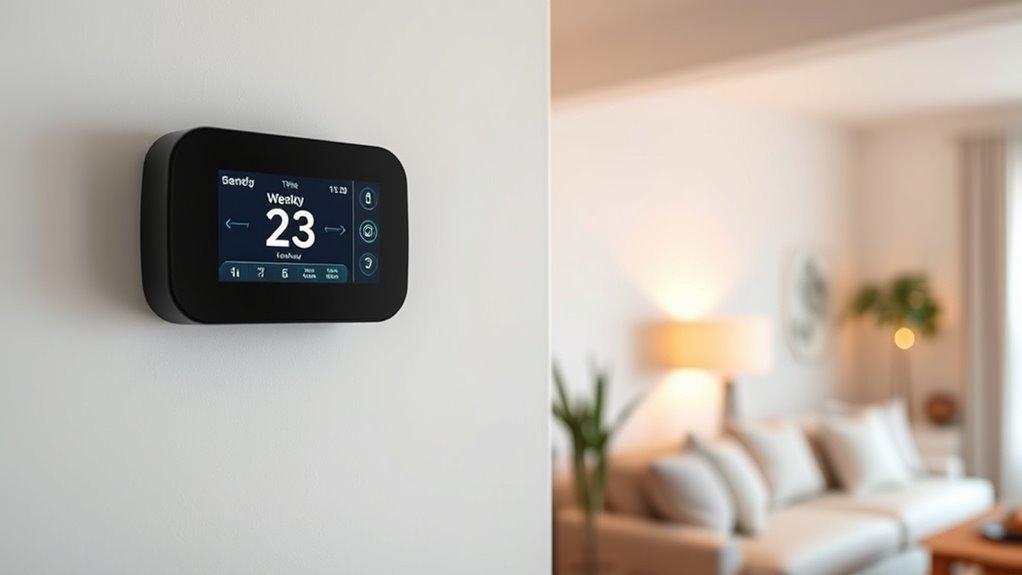
Maximizing your energy and cost savings with programmable thermostats starts with understanding how to use them effectively. First, take advantage of smart home integration to remotely adjust settings and monitor energy use. Second, enable voice control features to make quick changes without disrupting your routine. Third, set schedules that match your daily habits—avoid unnecessary heating or cooling when you’re away or asleep. Fourth, regularly review and update your programs to optimize efficiency. By leveraging these features, you guarantee your thermostat works smarter, not harder, saving you money in the long run. Proper use of these tips helps you maximize comfort while minimizing energy waste. Additionally, home safety features like temperature alerts can help prevent issues related to overheating or freezing, contributing to a safer living environment.
Common Mistakes When Programming Your Thermostat
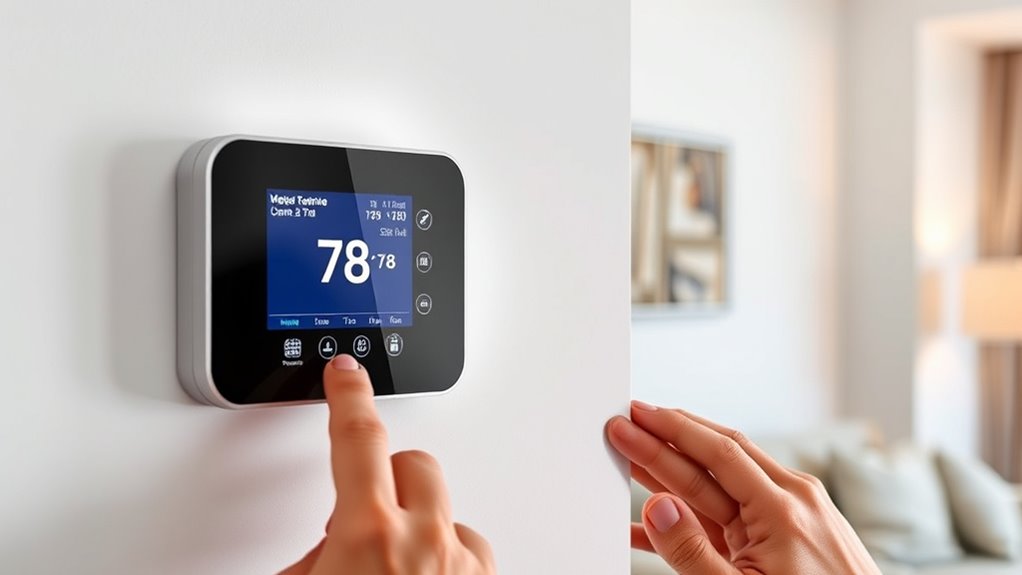
One common mistake is creating overly complex or inconsistent schedules that don’t match your routines. This often leads to unnecessary energy use and confusion. Proper sensor placement is vital; if sensors are placed in direct sunlight or near drafts, they’ll give false readings, causing your thermostat to adjust improperly. Additionally, don’t ignore your user interface—if it’s cluttered or confusing, you might program incorrect times or temperatures. Visualize your thermostat settings with this table:
| Proper Setup | Common Error | Result |
|---|---|---|
| Sensors in shade | Sensors in direct sunlight | Incorrect temperature readings |
| Simple schedule | Overly complex schedule | Difficulty maintaining comfort |
| Clear interface | Confusing interface | Programming mistakes |
Avoid these mistakes for a smarter, more efficient schedule.
How to Maintain and Troubleshoot Your Thermostat
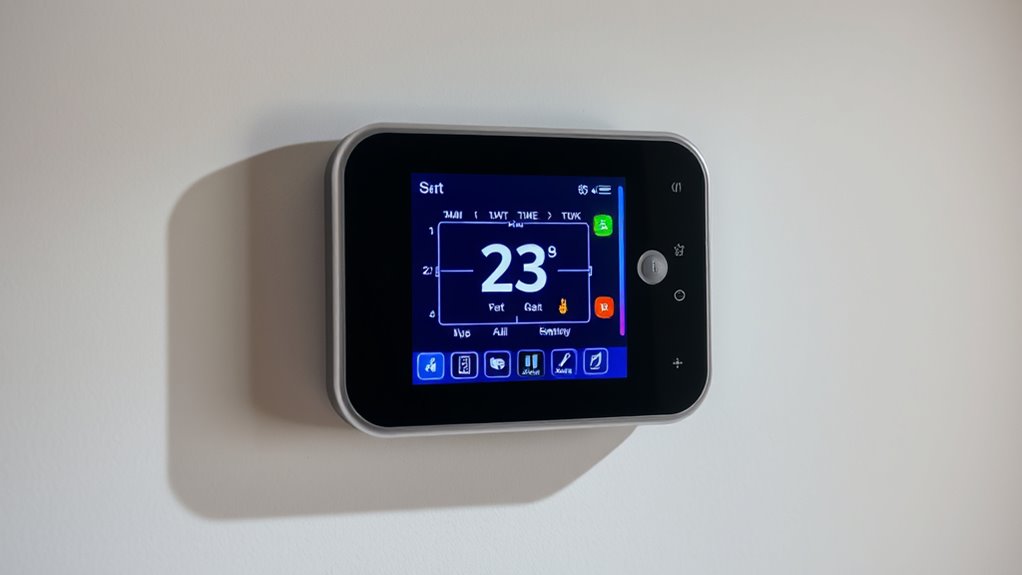
Regular maintenance and troubleshooting are essential to keep your thermostat functioning properly and guarantee your home stays comfortable. To do this effectively, focus on these key steps:
Routine thermostat checks ensure optimal performance and home comfort.
- Check sensor calibration to ensure your thermostat reads temperature accurately, preventing unnecessary heating or cooling.
- Inspect wiring connections for loose or damaged wires, which can cause erratic operation or system failure.
- Test the display and buttons to confirm they respond correctly, indicating proper functionality.
- Replace batteries if your thermostat is battery-powered, and reset it if you notice inconsistent behavior or errors.
Frequently Asked Questions
Can I Override the Schedule Temporarily Without Disrupting Settings?
Yes, you can perform a manual override for a temporary adjustment without disrupting your schedule. Most programmable thermostats let you manually set a temperature directly on the device, which overrides the scheduled programming temporarily. This manual override typically lasts until the next scheduled change, allowing you to enjoy a temporary adjustment without affecting your overall settings. Just remember to check your thermostat’s instructions for specific override options.
How Often Should I Update My Thermostat’s Schedule?
Like adjusting your dial on an old radio, you should update your thermostat’s schedule seasonally, at least every few months. This keeps your settings aligned with changes in your routine, ensuring ideal comfort and maximizing energy savings. If your schedule varies, consider updating more frequently. Regular tweaks prevent energy waste and keep your home cozy when you need it most, much like tuning a vintage radio for the clearest signal.
Are Programmable Thermostats Compatible With Smart Home Systems?
Yes, programmable thermostats are compatible with many smart home systems, allowing you to enhance your home’s energy efficiency and enjoy greater user customization. You can control your thermostat remotely, set energy-saving schedules, and integrate it with other smart devices for seamless automation. Just verify your thermostat supports your specific smart home platform, and you’ll benefit from improved comfort and savings while tailoring your climate control to your preferences.
What Security Features Do Modern Programmable Thermostats Offer?
Did you know that 78% of modern thermostats feature advanced security? These thermostats offer robust security features like multi-factor authentication, encrypted data transmission, and regular firmware updates, ensuring your user security stays protected. They also help with energy savings by preventing unauthorized access and tampering. With these features, you can control your home climate confidently, knowing your device is secure and optimized for efficiency.
How Do I Reset My Thermostat to Factory Settings?
To reset your thermostat to factory settings, start by locating the reset button, usually behind the front cover or in the menu. Press and hold it until you see a confirmation, which may take a few seconds. If it doesn’t reset, consider doing a firmware update or replacing the batteries first, as low power or outdated software can interfere with the reset process. Always check your user manual for specific instructions.
Conclusion
By programming your thermostat wisely, you not only save energy and money but also create a more comfortable home. Sometimes, it’s funny how a small change in your schedule can lead to big savings—like catching a cozy moment just as the weather shifts. So, set your schedule thoughtfully, and watch how these little adjustments unexpectedly make a big difference, proving that smart choices often come when you least expect them.
Columbus Day / Indigenous Peoples' Day Picks
long weekend sales
As an affiliate, we earn on qualifying purchases.