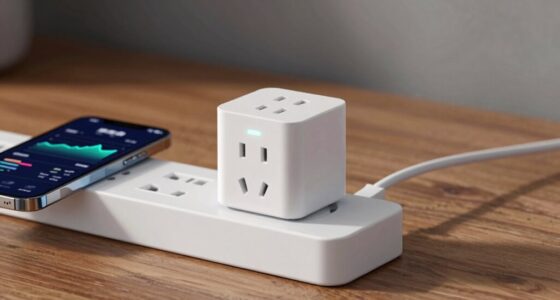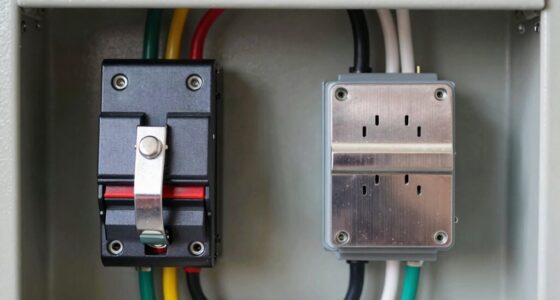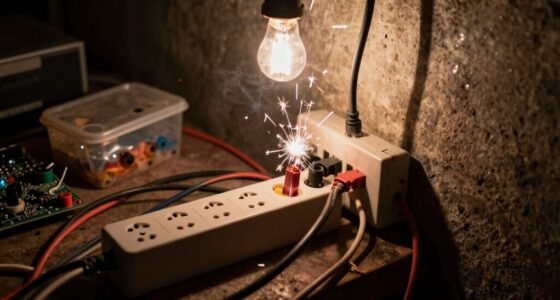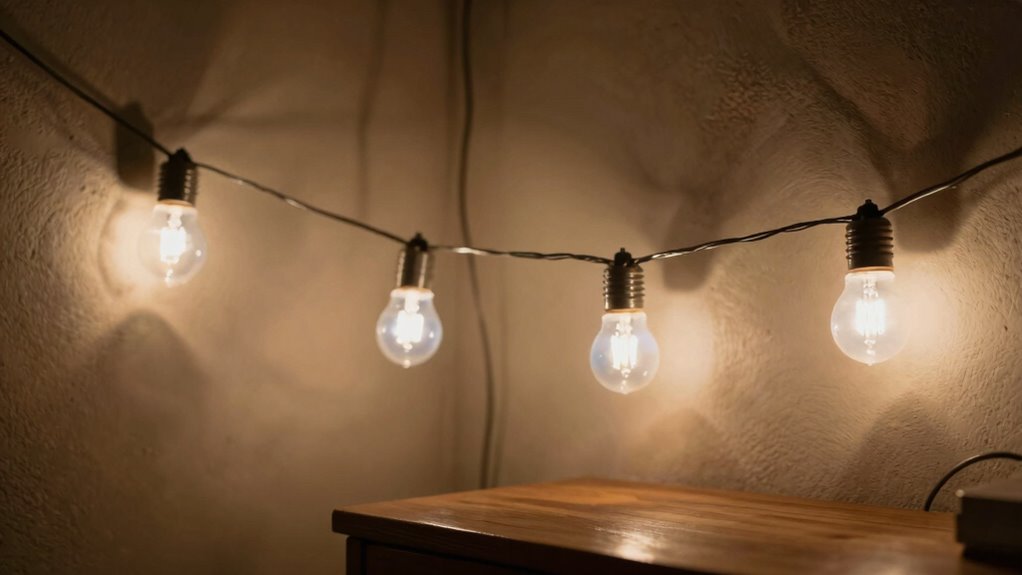

When electrical current flows through wires or devices, resistance can cause voltage drops, which reduce the voltage reaching your lights. During high loads, like when multiple appliances run simultaneously, the increased current makes this effect more noticeable. This drop can cause your lights to flicker or dim because they aren’t getting enough power. Understanding these factors helps explain flickering, and if you keep exploring, you’ll discover ways to prevent this issue effectively.

Prime made for students and young adults
- Fast, free delivery for dorm and study essentials
- Prime Video and Amazon Music included
- Member-only deals
Key Takeaways
- Voltage drops occur when electrical current passes through wires with inherent resistance, causing a decrease in voltage at the load.
- Large electrical loads increase current flow, amplifying voltage drops and causing lights to flicker or dim.
- Longer or thinner wires have higher resistance, leading to more significant voltage drops under load.
- Poor wiring connections or multiple resistance points can exacerbate voltage fluctuations and flickering.
- Managing load sizes and ensuring proper wiring helps maintain stable voltage and prevents flickering lights.
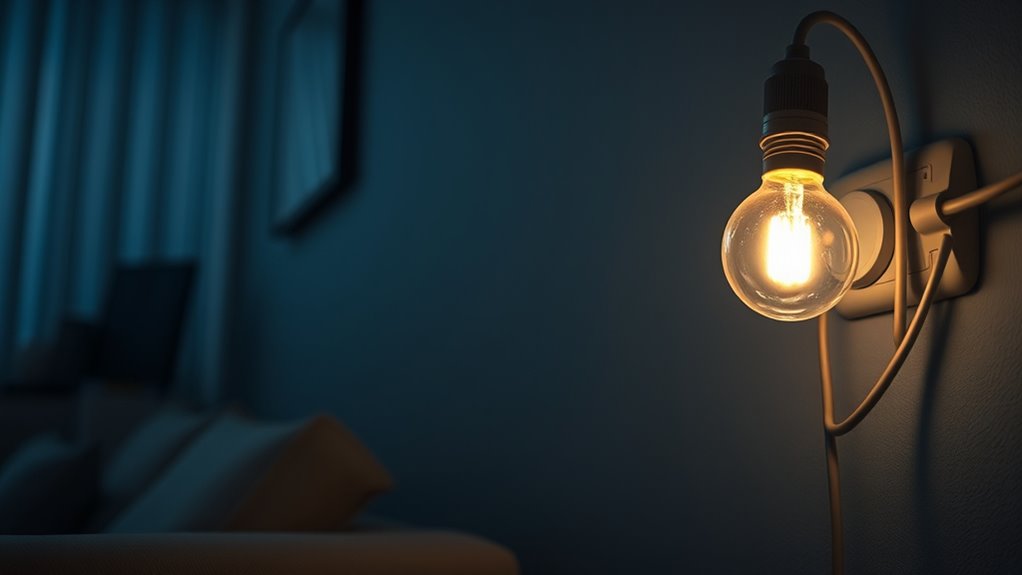
Voltage drops occur whenever electrical current travels through a wire or component, causing a decrease in voltage from the source to the load. This phenomenon is especially noticeable when you see lights flickering or dimming under certain conditions. The main factors behind voltage drops are power line resistance and electrical load effects. Power line resistance refers to the inherent opposition to current flow within the wires and connections. Even though wires are designed to conduct electricity efficiently, they still have some resistance, which causes a voltage reduction as current passes through. The greater the resistance, the more significant the voltage drop, especially when high current flows through the line. Additionally, the temperature of the wiring can influence resistance, with higher temperatures increasing resistance and further impacting voltage levels. Electrical load effects also play a vital role in voltage drops. When you turn on multiple appliances or heavy-duty equipment, the total electrical load on the circuit increases. As the load grows, more current is drawn from the source, amplifying the voltage drop across the wiring. This is why your lights might flicker or appear dimmer when you switch on a large appliance—because the increased current causes a larger voltage drop along the power lines. The combined effect of power line resistance and electrical load effects means that, under heavy loads, the voltage reaching your outlets or fixtures can fall below the ideal level, impacting performance and potentially damaging sensitive electronics.
Voltage drops happen when current passes through wires, reducing voltage and causing lights to flicker or dim.
Understanding how power line resistance influences voltage drops helps you grasp why these fluctuations happen. When current flows through wires, the resistance converts some electrical energy into heat, reducing the voltage available at the load. Longer or thinner wires have higher resistance, leading to more pronounced voltage drops. Similarly, circuits with multiple connections or poor-quality wiring can introduce additional resistance points, further exacerbating voltage loss. As the electrical load increases, especially during peak usage times, these resistance-related effects become more significant, causing noticeable flickering or dimming of lights. Managing power line resistance and electrical loads effectively is crucial for maintaining stable voltage levels and ensuring optimal performance of your electrical devices.
As an affiliate, we earn on qualifying purchases.
Frequently Asked Questions
Can Voltage Drops Cause Damage to Electrical Appliances?
Yes, voltage drops can damage your electrical appliances. When there’s a power surge caused by a circuit overload, your devices may experience inconsistent voltage levels, which can shorten their lifespan or cause immediate damage. Flickering lights often signal these issues. To protect your appliances, avoid overloading circuits and consider installing surge protectors. Regularly check your wiring and electrical system to prevent voltage drops from harming your devices.
How Can I Measure Voltage Drop in My Home?
Think of measuring voltage drop like checking the heartbeat of your home’s electrical system. To do this, use a multimeter for testing voltage at outlets and switches, then compare these readings to your main panel. Conduct circuit analysis by testing across different points to identify drops. Carefully follow safety procedures, and if you’re unsure, consult a professional. This helps you catch issues before they cause flickering or damage.
Are Voltage Drops More Common in Older Wiring Systems?
Yes, voltage drops are more common in older wiring systems because of age-related deterioration. Over time, wiring can corrode, loosen, or become damaged, leading to increased resistance and voltage drops. If you experience frequent flickering lights, consider wiring upgrades to improve safety and performance. Upgrading your wiring reduces the chance of voltage drops, guarantees better electrical flow, and helps prevent flickering caused by aging infrastructure.
What Are the Safety Concerns Related to Voltage Fluctuations?
You should be aware that voltage fluctuations can cause power surges, which pose electrical safety risks like damage to appliances or electrical fires. These surges can compromise your wiring, increasing the chance of electrical shock or fire hazards. To protect your home, make sure your system is properly grounded, use surge protectors, and have a professional evaluate any frequent flickering or voltage drops. Staying vigilant helps prevent potential safety dangers.
How Do Voltage Drops Affect the Lifespan of Bulbs and Devices?
Voltage drops shorten your bulbs’ and devices’ lifespan by causing inconsistent power quality and stressing wiring integrity. When voltage fluctuates, your equipment works harder to compensate, leading to overheating, wear, and early failure. You might notice flickering lights, dimming, or malfunctioning devices. To protect your system, verify wiring is sound, and maintain stable voltage levels, so your bulbs and devices last longer and perform reliably without risking damage.
surge protector with voltage regulation
As an affiliate, we earn on qualifying purchases.
As an affiliate, we earn on qualifying purchases.
Conclusion
Next time your lights flicker unexpectedly, remember it might just be a voltage drop happening right when you least expect it. Coincidences like sudden flickering often hide simple electrical issues, like load changes or loose connections. Staying aware of these subtle signs can save you from bigger problems later. So, keep an eye on your lights—sometimes, the smallest flicker is telling you something important about your home’s electrical health.
As an affiliate, we earn on qualifying purchases.
As an affiliate, we earn on qualifying purchases.
Halloween Picks
halloween
As an affiliate, we earn on qualifying purchases.