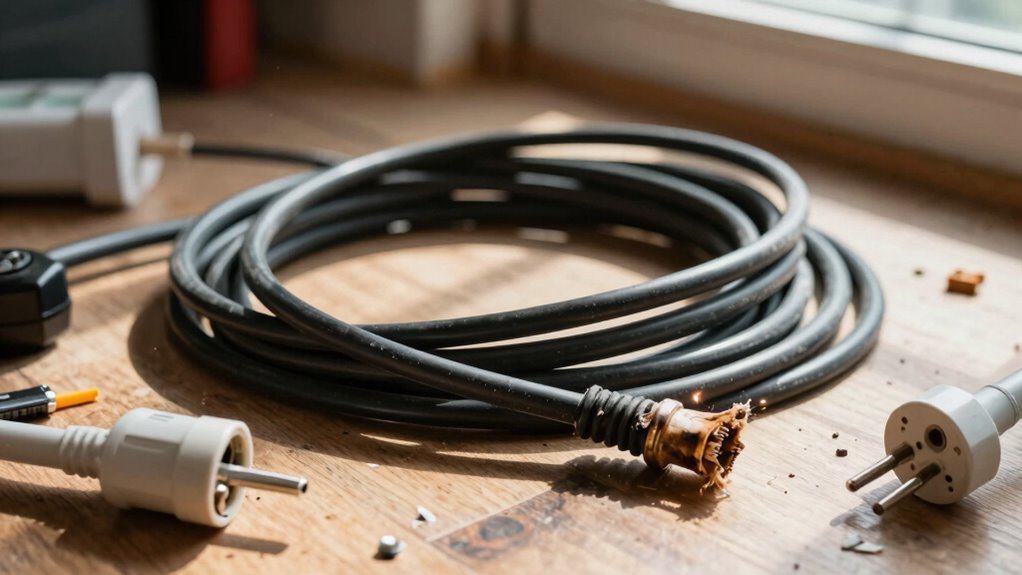

Ignoring the heat rule when using outdoor extension cords can lead to overheating, which causes damage, short circuits, or even fires. Always check the cord’s amperage ratings and avoid overloading it, especially in hot or enclosed areas. Don’t hide cords under rugs or near heat sources like grills or heaters, as trapped heat can weaken the insulation. Proper handling and storage help prevent hazards—continue exploring how to keep your outdoor safety in check.
Key Takeaways
- Overloading extension cords increases heat, risking insulation damage and potential fires.
- Running cords through heat-trapping areas like under rugs or near heaters causes overheating.
- Ignoring the heat rule can lead to insulation failure, short circuits, and electrical fires.
- Proper storage and avoiding tight coils prevent internal heat buildup and damage.
- Regular inspection for wear and damage helps prevent overheating and electrical hazards.
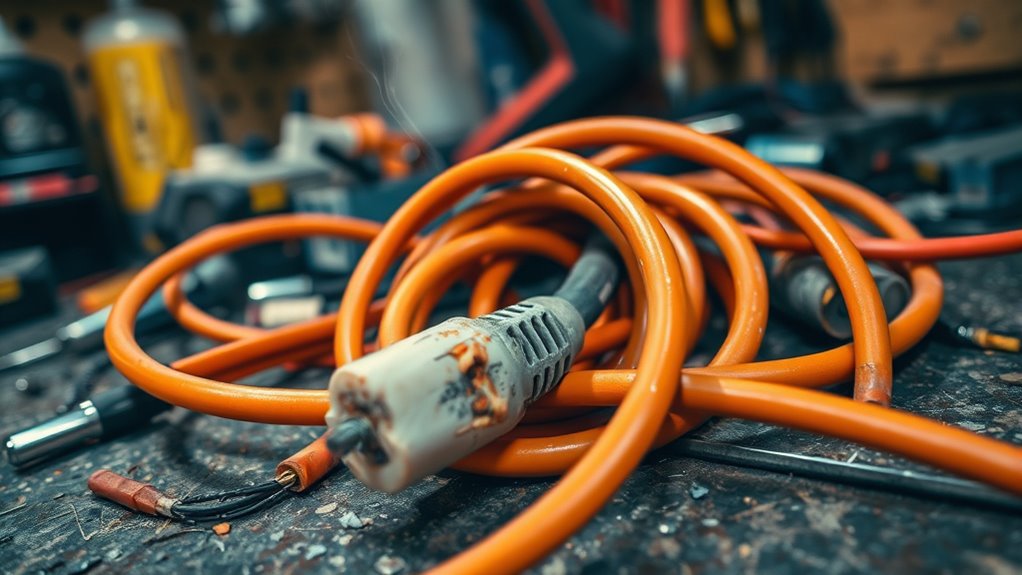
Have you ever considered how safe your extension cords really are? It’s easy to overlook the risks, especially when you’re in a hurry or working outdoors. When it comes to outdoor extension cords, safety should be your top priority. These cords are designed to withstand weather conditions, but they still need proper handling to prevent accidents. One common mistake people make is ignoring the heat rule, which can lead to overheating and potential fires. Outdoor cords can handle more demanding tasks, but they aren’t invincible. If you overload them or run them through areas where they can trap heat, you risk damaging the insulation or even causing a short circuit. To keep yourself safe, always check the cord’s amperage ratings and don’t push it beyond its capacity. Also, avoid running extension cords under rugs, through doorways, or across walkways where they can trap heat or become damaged.
Proper cord storage tips play an essential role in extending the life of your outdoor extension cords and maintaining safety. After use, you should store them somewhere cool, dry, and away from direct sunlight. Coil them loosely to prevent kinks or damage to the wiring. Wrapping cords tightly can cause internal damage and increase the risk of overheating when you use them again. If you notice any cracks, frayed wires, or other signs of wear, replace the cord immediately—don’t attempt to patch it up. Keeping your cords in a designated outdoor storage area helps protect them from the elements, which can degrade the insulation and make them unsafe over time. Using a proper cord reel or storage bin keeps them organized and reduces the chances of tripping hazards or accidental damage.
Additionally, understanding the importance of contrast ratio in electrical safety can help you recognize when a cord may be overheating or failing, as diminished contrast ratios often indicate electrical issues. It’s also important to think about how you lay out your extension cords during use. Never run them through areas exposed to direct heat sources, like a grill or a heater, and avoid covering them with insulation or other materials that can trap heat. Make sure connections are secure and dry before plugging in any devices. Regularly inspecting your outdoor extension cords and following these simple storage tips can greatly reduce the risk of overheating or electrical failure. Remember, safety isn’t just about the cords themselves; it’s about how you handle, store, and use them. By respecting the heat rule and practicing good cord storage habits, you protect yourself, your family, and your property from preventable accidents. It’s a small effort that pays off in peace of mind and safety during all your outdoor activities.

HUANCHAIN 12 Gauge Heavy Duty Outdoor Extension Cord 25 FT Waterproof
- Safety Indicator Light: Shows power status with lighted end
- Heavy Duty Design: Thicker, durable, high insulation safety
- Safe Power Plug and Socket: Extra size NEMA 5-15P and 5-15R
As an affiliate, we earn on qualifying purchases.
As an affiliate, we earn on qualifying purchases.
Frequently Asked Questions
Can Extension Cords Be Left Outdoors in the Rain?
You shouldn’t leave outdoor extension cords in the rain. Weatherproof wiring and outdoor extension cords are designed to resist moisture, but they aren’t completely waterproof. Rain can cause electrical shorts or damage the cord over time. Always use outdoor extension cords that are specifically rated for wet conditions, and unplug them when not in use to prevent potential hazards. Safety first keeps everyone protected.
How Do I Know if My Extension Cord Is Overloaded?
Your extension cord is overloaded if it feels scorching or warm to the touch, like a summer day in July. To prevent hazards, always check the wattage and amperage ratings, and don’t plug in too many high-power devices. For better power strip safety, avoid daisy-chaining cords. When not in use, follow cord storage tips by rolling them loosely and keeping them away from heat, water, and sharp objects to avoid overload risks.
Are There Specific Extension Cords for High-Heat Areas?
Yes, there are specific extension cords designed for high-heat areas. Look for heat resistant cords or high temperature extension cords that are rated for elevated temperatures, ensuring they can safely handle the environment. These cords are made with materials that resist melting and damage from heat, reducing fire risk. Always check the manufacturer’s specifications to confirm the cord’s suitability for high-heat situations, and never use regular cords in such environments.
What Is the Maximum Length for Safe Extension Cords?
Think of extension cords as a highway—longer routes mean more traffic and potential hazards. For safety guidelines, keep cord length restrictions around 50 feet for standard cords to prevent overheating and voltage drops. Beyond that, the risk increases, like a traffic jam causing a crash. Stick to recommended lengths, use high-quality cords, and avoid overloading to guarantee safe, reliable power without risking heat buildup or fire.
How Often Should I Inspect My Extension Cords for Damage?
You should inspect your extension cords every three to six months for damage. Check the cord insulation for cracks or fraying, and verify plug integrity—look for loose or bent prongs. If you notice any damage, replace the cord immediately to prevent electrical hazards. Regular inspections help you catch issues early and keep your workspace safe, especially when cords are heavily used or exposed to wear and tear.

DEWENWILS Extension Cord Reel with 30 FT Power Cord, Hand Wind Retractable, 16/3 AWG SJTW, 4 Grounded Outlets, 13 Amp Circuit Breaker, Blue/Black, UL Listed
- Easy Wind and Unwind: Effortless winding with hand crank
- Weatherproof and Durable: 30FT SJTW cord with plastic cover
- Multiple Outlets: 4 grounded outlets for multiple devices
As an affiliate, we earn on qualifying purchases.
As an affiliate, we earn on qualifying purchases.
Conclusion
Did you know that nearly 3,300 house fires each year are caused by extension cords? That’s a shocking reminder to never ignore the heat rule. Always check cords for signs of overheating, avoid overloading outlets, and unplug when not in use. By following these simple safety tips, you can prevent accidents and keep your home safe. Don’t let a small oversight turn into a big disaster—stay vigilant and prioritize extension cord safety every time.

Flemoon Large Outdoor Electrical Box (12.5 x 8.5 x 5 inch), IP54 Waterproof Extension Cord Cover Weatherproof, Protect Outlet, Plug, Socket, Timer, Power Strip, Holiday Light Decoration, Black
- Safety Certifications: UL and CSA approved standards
- Dimensions: 12.5 x 8.5 x 5 inches
- Entry Ports: 6 ports for 12AWG cords
As an affiliate, we earn on qualifying purchases.
As an affiliate, we earn on qualifying purchases.

VEVOR Outdoor Power Stake Waterproof, 100 FT Extension Cord, Outdoor Power Strip, Weatherproof with Cover and Overload Protection, 6 Outlets, 13A/1625W for Halloween/Christmas Lights Decorations
- Six Outlets: Six outlets for multiple devices
- 100 ft Extension Cord: Long reach for outdoor use
- Weatherproof Construction: Resistant to water and weather
As an affiliate, we earn on qualifying purchases.
As an affiliate, we earn on qualifying purchases.