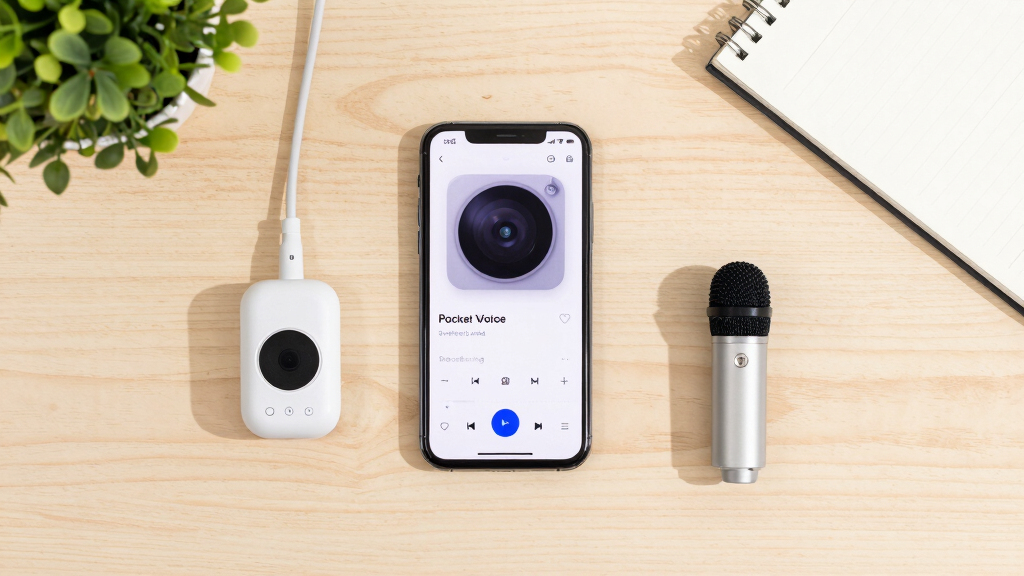

📊 Full opportunity report: The Prosumer’s Choice For Voice Training: Pocket Voice Lab Explored on IdeaNavigator AI — validation score, market gap, and execution plan.

Prime made for students and young adults
- Fast, free delivery for dorm and study essentials
- Prime Video and Amazon Music included
- Member-only deals
TL;DR
Pocket Voice Lab is a mobile app providing real-time voice biofeedback for individuals seeking voice modification or improvement. It aims to fill the gap in accessible, objective feedback outside clinical settings. The app is currently in development with planned pilot testing.
Pocket Voice Lab is a mobile application currently in development that provides real-time visual biofeedback on pitch, resonance, and strain, aimed at individuals doing voice work without access to in-person speech-language pathologists or vocal coaches. This tool is particularly targeted at transgender and gender-nonconforming people seeking voice feminization or masculinization, as well as public speakers and singers seeking ongoing coaching. The app aims to address a significant gap in objective, longitudinal feedback for voice training, which is currently limited by high costs and geographic barriers.
The app leverages smartphone microphones and onboard acoustic analysis to measure fundamental pitch, formant resonance, and harmonic-to-noise ratio, providing immediate visual feedback. It will include guided exercises tailored to gender-affirming voice work, session logging, and shareable progress reports for users to track improvements or share with clinicians. The initial version will focus on a single ‘wedge persona’—such as gender-affirming voice feminization—before expanding to other voice types and accents.
Developers plan to release a freemium model, offering limited daily exercises for free and a paid tier (~$8-15/month) with unlimited access, detailed progress history, and clinician-friendly reports. Validation will involve a four-week pilot with users recruited from trans voice-training and public-speaking communities, measuring engagement and willingness to pay. The project is still in prototype and testing phases, with no final release date announced.
Potential Impact on Voice Training Accessibility
This development could significantly improve access to objective voice training tools outside traditional clinical settings, especially for underserved populations such as transgender individuals. By providing real-time feedback and longitudinal tracking, Pocket Voice Lab aims to enhance motivation, accuracy, and progress monitoring, potentially reducing reliance on costly or geographically limited in-person coaching. If successful, it could influence the broader market of voice health and training apps, encouraging more scalable, affordable solutions.
As an affiliate, we earn on qualifying purchases.
Growing Demand for Accessible Voice Modification Tools
Current voice training for gender affirmation and public speaking often relies on intermittent, subjective feedback from clinicians or coaches, which can be expensive and geographically limited. Recent advances in smartphone hardware and acoustic analysis have made real-time biofeedback more feasible, with peer-reviewed research supporting voice as a clinical biomarker. Several free or low-cost prototypes like TruVox and Attuned have demonstrated consumer interest, with over 4 million downloads of AI-powered voice apps such as Vocal Image. The gender-affirming voice care gap remains large, creating a clear market opportunity for scalable digital solutions.
Developers are now exploring MVPs to validate demand, focusing on features like pitch and resonance tracking, guided exercises, and progress sharing, with plans to expand functionality based on user feedback and clinical validation.
“Smartphone microphones combined with on-device acoustic analysis can now provide real-time, objective feedback for voice training without lab hardware.”
— an anonymous researcher
As an affiliate, we earn on qualifying purchases.
Unconfirmed Details About App Development Timeline
Specific release dates for the final app and detailed features are not yet confirmed. The success of pilot testing and user acceptance remains to be seen, and further validation is ongoing.
gender affirmation voice training app
As an affiliate, we earn on qualifying purchases.
As an affiliate, we earn on qualifying purchases.
Next Steps: Pilot Testing and User Validation
The development team plans to launch a four-week pilot involving trans voice-training and public-speaking communities to assess engagement, usability, and willingness to pay. Results will inform further iterations and potential commercial launch, expected within the next year.
As an affiliate, we earn on qualifying purchases.
Key Questions
What features will Pocket Voice Lab offer in its initial release?
The initial version will include real-time visual feedback on pitch, resonance, and strain, guided exercises focused on gender-affirming voice work, session logging, and shareable progress summaries.
Who is the target audience for this app?
The primary users are transgender and gender-nonconforming individuals seeking voice modification, as well as public speakers and singers looking for affordable, ongoing coaching outside clinical settings.
How does the app generate feedback without lab hardware?
It uses smartphone microphones and onboard acoustic analysis algorithms to measure fundamental pitch, formant resonance, and harmonic-to-noise ratio, providing immediate visual feedback.
When will the app be available to the public?
There is no confirmed release date yet. Developers are currently in prototype and pilot testing phases, with a potential launch within the next year depending on pilot outcomes.
Will the app be free or paid?
The app will follow a freemium model, offering limited free daily exercises and a paid subscription (~$8-15/month) for unlimited access, detailed progress tracking, and clinician reports.
Source: IdeaNavigator AI
Halloween Picks
halloween
As an affiliate, we earn on qualifying purchases.