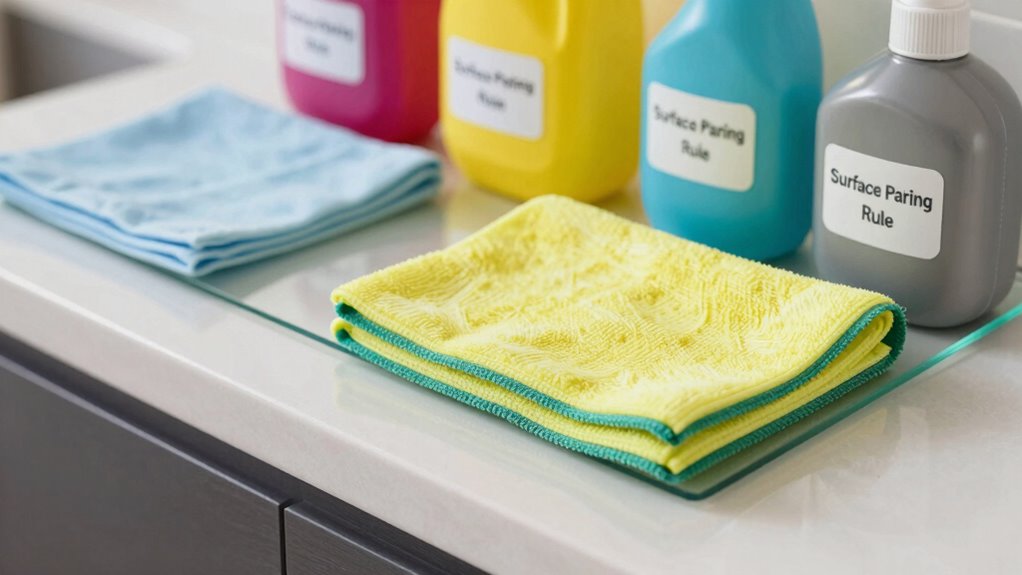

To follow the surface pairing rule for safer cleaning, you need to match cleaning agents with the proper materials to avoid damage. Check labels and product specs to guarantee compatibility, especially for delicate surfaces like marble or plastics. Avoid using harsh chemicals on porous materials, and always test small areas first. Proper pairing prevents discoloration, erosion, and weakening, ultimately extending the lifespan of your surfaces. If you keep exploring, you’ll discover how to optimize your cleaning for safety and effectiveness.

Prime made for students and young adults
- Fast, free delivery for dorm and study essentials
- Prime Video and Amazon Music included
- Member-only deals
Key Takeaways
- Match cleaning chemicals with surface materials to prevent chemical reactions that cause damage.
- Check product labels and specifications to ensure compatibility before cleaning.
- Test cleaning agents on small, hidden areas to avoid widespread damage.
- Use neutral cleaners for general maintenance; avoid strong chemicals on delicate surfaces.
- Proper pairing extends surface lifespan and reduces risks of discoloration, erosion, or structural weakening.

Cleaning surfaces safely isn’t just about choosing the right products; it’s also about understanding how different materials interact. When you mix cleaning chemicals with various surfaces, you risk unwanted chemical reactions that can damage the material or create hazardous conditions. That’s why the surface pairing rule emphasizes the importance of material compatibility—knowing which substances are safe to use together and which aren’t. If you overlook this rule, you might inadvertently cause discoloration, erosion, or structural weakening of the surface you’re trying to clean.
Chemical reactions occur when cleaning agents interact with the material of the surface. For example, using an acidic cleaner on marble can lead to etching because marble is calcium carbonate, which reacts with acids. Similarly, bleach can discolor or weaken certain plastics or painted surfaces. Understanding the chemistry behind these reactions helps you avoid damaging your belongings. You need to check the labels and specifications of cleaning products to guarantee they’re suitable for the specific material you’re working with. For instance, a gentle pH-balanced cleaner might be safe on glass or ceramic but too mild for heavy-duty grime on metal fixtures.
Understanding chemical reactions helps prevent damage when choosing cleaning products for different surfaces.
Material compatibility is central to the surface pairing rule because not all surfaces respond to cleaning agents in the same way. Porous materials like wood or stone require different approaches than non-porous surfaces like glass or stainless steel. Using the wrong cleaner can cause staining, deterioration, or even corrosion. It’s essential to identify the material first and select a compatible cleaning product. When in doubt, test a small, inconspicuous area before applying the solution broadly. This step helps you see how the surface reacts without risking significant damage. Material interactions play a critical role in preventing unintended consequences during cleaning.
Furthermore, understanding the interaction between chemicals and materials allows you to plan your cleaning routine more effectively. For example, you might choose a neutral cleaner for everyday maintenance and reserve stronger solutions for tough stains, but only after verifying they won’t harm the surface. Remember, the goal is to clean efficiently without compromising the integrity of what you’re cleaning. Proper pairing reduces the risk of accidental damage, extends the lifespan of surfaces, and keeps your environment safe. Ultimately, mastering the surface pairing rule means you’re making informed decisions based on material compatibility and chemical reactions, guaranteeing safer cleaning every time. Being aware of chemical reactions and their impact on surfaces is key to preventing damage and ensuring effective cleaning.
surface-safe cleaning products for marble
As an affiliate, we earn on qualifying purchases.
As an affiliate, we earn on qualifying purchases.
Frequently Asked Questions
How Does the Surface Pairing Rule Impact Everyday Cleaning Routines?
The Surface Pairing Rule impacts your everyday cleaning routines by emphasizing surface compatibility, ensuring you use the right cleaning products for each material. When you follow this rule, you improve cleaning safety, preventing damage or harmful reactions. You’ll know which cleaners are safe for delicate surfaces and which ones to avoid, making your routine more effective and safer for your household. This approach helps you achieve a cleaner, safer environment effortlessly.
Are There Specific Cleaning Products Recommended for Different Surface Pairings?
Think of cleaning products as keys, each fitting different locks of surface compatibility. For delicate surfaces like glass or electronics, use gentle, pH-neutral cleaners to guarantee product effectiveness without damage. For tougher surfaces like tiles or countertops, stronger disinfectants work better. Always choose products designed for specific surface pairings, because mismatched cleaning agents can weaken the surface or reduce cleaning effectiveness, making your routine less safe and efficient.
Can the Surface Pairing Rule Be Applied to Outdoor Cleaning Tasks?
Yes, you can apply the surface pairing rule to outdoor cleaning tasks. Focus on matching cleaning products that enhance outdoor durability and weather resistance. For example, use gentle cleaners on delicate surfaces like painted wood, and stronger, weather-resistant solutions on patios or decks. Proper pairing guarantees surfaces withstand outdoor elements, reduces damage, and prolongs their lifespan. Always consider the specific outdoor material and weather conditions to choose the safest, most effective cleaning approach.
What Are Common Mistakes to Avoid When Following the Surface Pairing Rule?
A stitch in time saves nine, and avoiding common mistakes guarantees safe cleaning. When following the surface pairing rule, you should double-check surface compatibility and consider chemical interactions to prevent damage. Don’t assume all cleaners work on every surface—test small areas first. Avoid mixing incompatible chemicals, as it can cause dangerous reactions. Being cautious and informed helps you clean effectively without risking harm to surfaces or yourself.
How Often Should Surfaces Be Cleaned Using the Pairing Rule?
You should clean surfaces using the pairing rule regularly, ideally aligning with your established cleaning schedules. This helps prevent surface contamination and keeps your environment safe. For high-touch areas, clean more frequently—daily or multiple times a day if needed. Maintain consistent intervals based on usage and risk level. By sticking to a disciplined schedule, you reduce contamination risks and guarantee surfaces stay safe and hygienic for everyone.
As an affiliate, we earn on qualifying purchases.
Conclusion
So, next time you’re cleaning, remember the Surface Pairing Rule—pair your products wisely, or risk turning your home into a chemical battleground. Ironically, the safer your cleaning routine, the less chance you’ll need a hazmat suit. It’s almost poetic how simple pairing can save you from future chaos. After all, who knew that a little surface science could make your life easier and your home safer—without turning it into a science experiment?
plastic and metal surface cleaner
As an affiliate, we earn on qualifying purchases.
As an affiliate, we earn on qualifying purchases.
porous surface cleaning solutions
As an affiliate, we earn on qualifying purchases.
As an affiliate, we earn on qualifying purchases.
Halloween Picks
halloween
As an affiliate, we earn on qualifying purchases.