Paint peeling doesn’t happen suddenly; the real problem usually starts underneath the surface. Poor surface prep, moisture intrusion, or using low-quality primer and paint can weaken adhesion and cause early failure. Environmental stressors like humidity and sunlight accelerate the process. If you want to avoid costly repairs, understanding these root issues is key. Keep going, and you’ll uncover what steps to take for long-lasting results.
Key Takeaways
- Poor surface preparation and inadequate priming weaken paint adhesion, leading to peeling over time.
- Environmental stresses like humidity and temperature fluctuations cause paint to lose flexibility and peel.
- Using substandard or incompatible paints increases the risk of early flaking and peeling.
- Rough or uneven surfaces trap moisture and air, compromising paint bonding and causing peeling.
- Improper application techniques, such as skipping primer or applying thick coats, undermine paint durability and longevity.
Common Causes of Paint Peeling
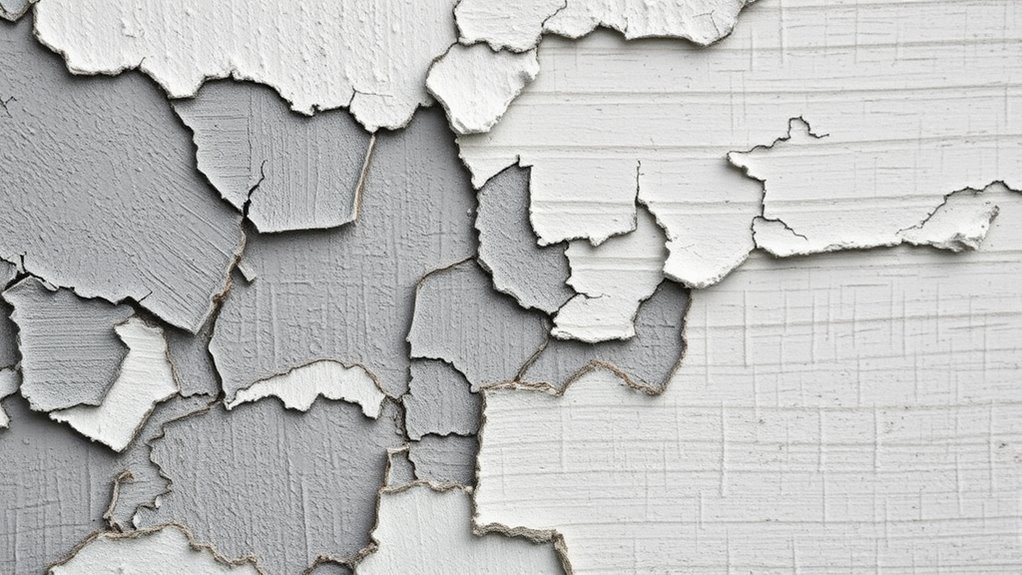
Paint peeling often starts with underlying issues that weaken the coating’s adhesion. One common cause is choosing the wrong paint color; dark or vibrant shades may require more prep work or specific finishes to stick properly. Paint texture also plays a role—rough or uneven surfaces can trap air or moisture, leading to poor adhesion and eventual peeling. Inconsistent application, such as applying thick coats or skipping primer, compromises the paint’s bond to the surface. High humidity or temperature fluctuations during or after painting can cause the paint to expand and contract, stressing the coating. Additionally, using low-quality paint or neglecting surface cleaning before painting can set the stage for peeling. Proper surface preparation and understanding paint technology can help you avoid mistakes that lead to early paint failure. Being aware of support for maintenance options can also assist in addressing underlying issues before they cause peeling. Recognizing environmental factors that affect paint durability is essential for long-lasting results. Incorporating proper drying conditions into your painting process can further reduce the risk of peeling and ensure a durable finish. Moreover, integrating smart home monitoring can help detect and manage environmental conditions that impact paint longevity, providing proactive solutions.
The Impact of Surface Preparation
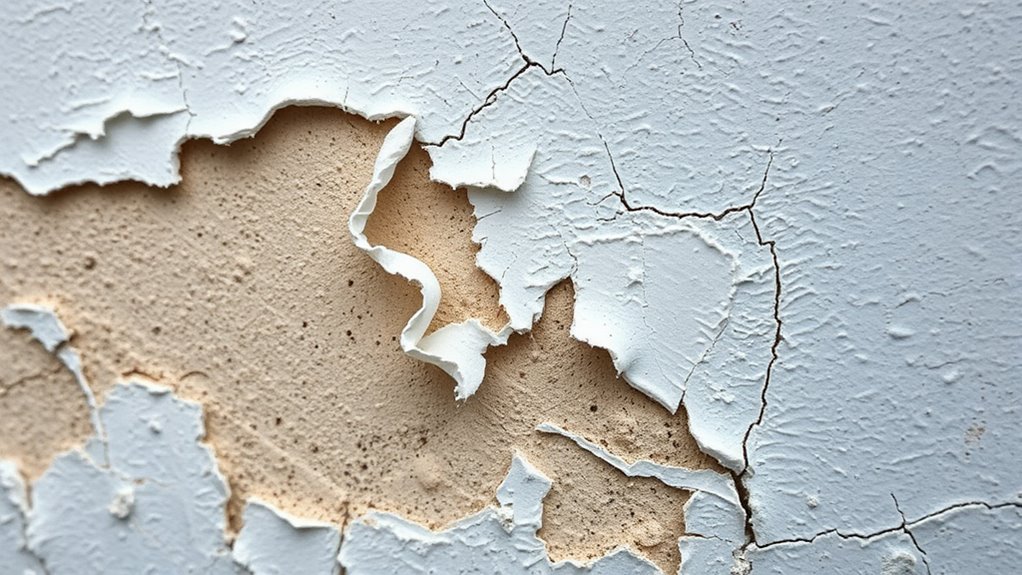
Proper surface cleaning removes dirt and grease that can prevent paint from sticking. Sanding creates a smooth, rough surface that helps paint adhere better and last longer. Applying primer guarantees better coverage and helps prevent peeling down the line. Incorporating surface preparation can also enhance your process by providing better tools and monitoring for optimal results. Additionally, using appropriate power tools for sanding and cleaning can improve efficiency and consistency. Paying attention to paint quality ensures a durable finish that resists peeling and chipping over time. When selecting paint types, choosing high-quality options can further reduce the risk of peeling and increase the longevity of your paint job.
Proper Surface Cleaning
Before applying a fresh coat, you need to guarantee the surface is thoroughly cleaned, as dirt, grease, and loose debris can prevent the paint from adhering properly. Proper surface cleaning ensures better paint adhesion and smooth finish. Use effective brush techniques to remove stubborn grime and ensure even coverage. This step also helps with color matching, as a clean surface reveals the true shade beneath. Here’s a quick guide:
| Step | Focus Area |
|---|---|
| 1 | Remove dirt and grease |
| 2 | Clean with appropriate solutions |
| 3 | Rinse thoroughly |
| 4 | Dry completely |
A clean surface forms the foundation for a long-lasting paint job, preventing peeling caused by contaminants. Additionally, ensuring proper air purifier maintenance can reduce airborne dust and particles that might settle on freshly painted surfaces, promoting a cleaner finish. Incorporating proper surface preparation techniques is essential for achieving optimal adhesion and durability in your paintwork. Recognizing the importance of surface cleaning in preparation, thorough cleaning reduces the risk of future peeling and enhances paint longevity. Similar principles in AI ethics emphasize attention to detail and thoroughness for better results.
Adequate Surface Sanding
Since the surface’s texture and imperfections directly affect paint adhesion, adequate sanding is essential for a smooth, durable finish. Sanding removes rough spots, peeling paint, and surface debris that can cause uneven texture. When you sand properly, you create a uniform surface that allows the new coat of paint to adhere firmly. This step reduces the risk of future peeling or flaking by eliminating barriers to adhesion. Remember, a rough or dirty surface hampers paint’s ability to bond effectively. Use the right grit sandpaper to smooth out imperfections without over-sanding. Proper surface sanding ensures a better surface texture, which in turn improves paint adhesion. Additionally, understanding the thermal behavior of surfaces can help you choose appropriate preparation methods for different materials. Recognizing the surface porosity can further optimize your preparation process. Being aware of moisture levels is also important, as excess moisture can compromise adhesion and lead to peeling. Proper ventilation during preparation can help control moisture and improve drying conditions. Skipping or rushing this step can lead to problems down the line, undermining your entire painting project. Moreover, surface cleanliness is crucial, as dust and oils can compromise adhesion even after sanding.
Primer Application Importance
After sanding your surface to create a smooth, clean foundation, applying primer becomes the next essential step. Primer sets the stage for a durable, long-lasting finish by promoting proper adhesion. When selecting a primer, consider your paint’s color and the surface’s condition; this helps with color selection and prevents unwanted bleed-through. A good primer also influences paint thickness, ensuring the coat isn’t too thin or thick, which can lead to peeling or cracking. Proper primer application fills in minor imperfections and seals porous surfaces, reducing the likelihood of future issues. Additionally, choosing the right primer can help prevent peeling or cracking caused by improper surface preparation. Skipping or rushing this step compromises the entire project, making surface preparation ineffective. Investing time in primer application not only enhances the overall appearance but also plays a crucial role in paint adhesion and durability over time. Moreover, understanding the surface chemistry involved can help you select the most compatible primer for your project. An understanding of primers and their types can further improve your results. Ultimately, investing time in primer application guarantees better paint coverage, color accuracy, and longevity of your finish.
Moisture and Its Role in Paint Failure
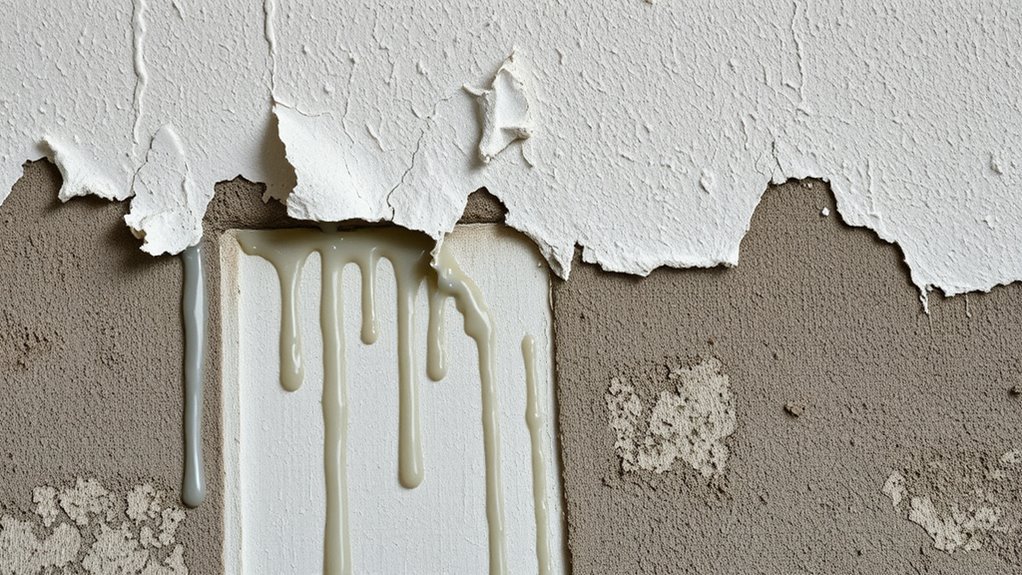
Moisture is a primary culprit behind paint failure because it penetrates surfaces, weakening the bond between the paint and the substrate. When moisture seeps in, it can cause the paint film to lift or peel, especially if the surface has high permeability. Understanding surface permeability helps you identify vulnerable areas where moisture can enter. Additionally, proper surface preparation and surface sealing are essential to creating a moisture-resistant barrier that prolongs the life of your paint. Recognizing hydrostatic pressure is also important, as it can force moisture through the substrate, exacerbating paint issues over time.
The Importance of Proper Primer Application
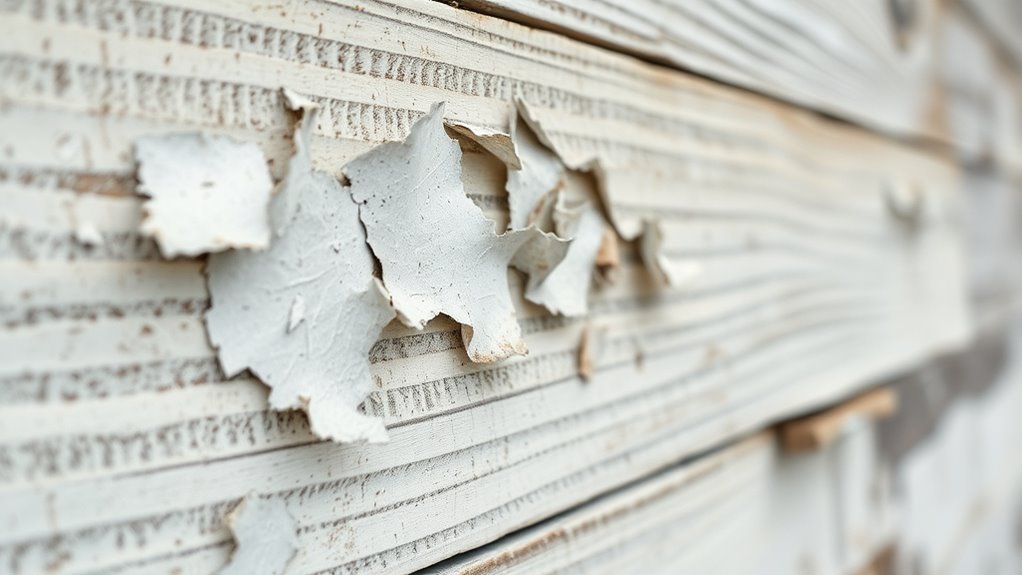
Proper primer application is essential for guaranteeing the longevity of your paint job. Using the right priming techniques helps create a strong bond between the surface and the paint, preventing peeling and flaking. Start by selecting the appropriate primer type for your surface—oil-based, latex, or specialty primers. Each has specific benefits, so choose based on material and condition. When applying, ensure the surface is clean, dry, and free of loose debris. Use smooth, even strokes to avoid missed spots or drips. Allow the primer to dry thoroughly before painting. Proper application techniques improve adhesion and durability, reducing the chances of early paint failure. Investing time in priming correctly sets a solid foundation, which is vital for a lasting, professional-looking finish.
Environmental Factors That Accelerate Peeling

Exposure to moisture and high humidity can weaken paint bonds and cause peeling over time. Sunlight and UV rays break down paint layers, speeding up deterioration. Understanding how these environmental factors impact your surfaces helps you take better protective measures.
Moisture and Humidity
When humidity levels rise or moisture seeps into your walls, it can quickly weaken the paint’s adhesion. Excess moisture causes paint to bubble, peel, or crack over time. To combat this, choose a paint color suited for humid environments and use the right brush selection to guarantee even application. Proper ventilation helps keep moisture at bay, preserving your paint job’s integrity.
| Factors Affecting Moisture | Tips to Prevent Damage |
|---|---|
| Poor ventilation | Increase airflow, use dehumidifiers |
| Leaky pipes | Repair leaks promptly |
| High humidity levels | Use moisture-resistant paint |
| Inadequate surface prep | Seal walls before painting |
Sunlight and UV Exposure
Moisture issues can weaken paint, but environmental factors like sunlight and UV rays also play a significant role in accelerating peeling. UV damage from prolonged sunlight exposure breaks down paint’s molecular structure, causing it to become brittle and lose adhesion. Over time, UV rays degrade the protective coating, leading to cracks and peeling. If your surfaces are exposed to direct sunlight for extended periods, the paint’s lifespan shortens considerably. To prevent this, choose UV-resistant paints and consider applying a reflective coating or installing shading. Regular inspections help identify early signs of UV damage, so you can address issues before peeling worsens. Protecting your paint from sunlight exposure is vital to maintaining a durable, long-lasting finish.
How Substandard Paints Contribute to Flaking
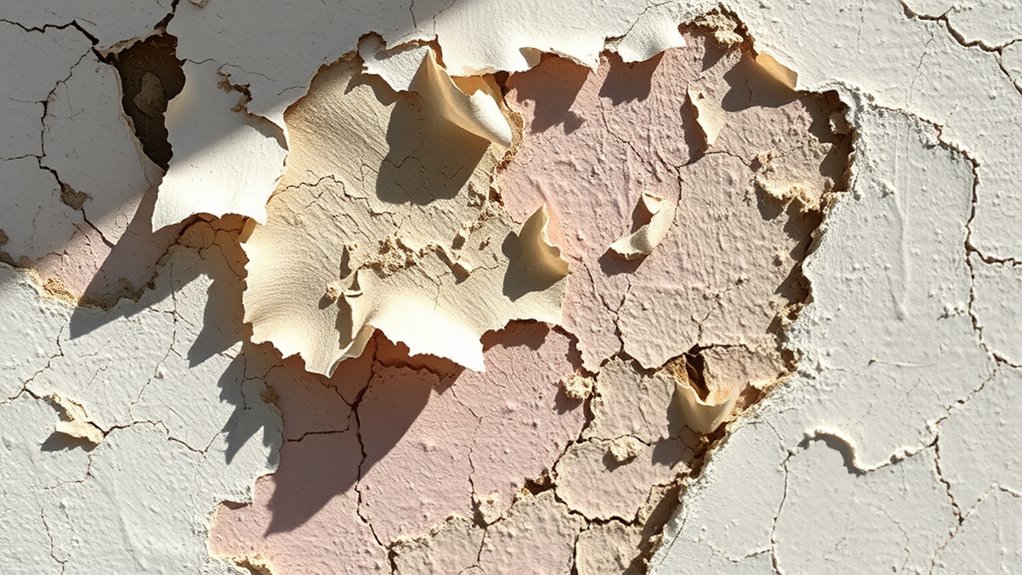
- Poor adhesion leading to easy peeling
- Quick fading and loss of color vibrancy
- Reduced resistance to environmental elements
- Shorter lifespan of the paint job
These issues happen because inferior paints don’t form a strong, flexible film that can withstand daily wear and environmental stress. Choosing high-quality, durable paints is key to preventing early flaking and maintaining a fresh, vibrant finish longer.
Strategies for Preventing Future Paint Problems

To prevent future paint problems, you need to adopt proactive strategies that address common causes of peeling and deterioration. Start with proper primer selection; choose a high-quality primer suited to your surface and environment. A good primer ensures better adhesion, seals imperfections, and improves paint durability. When selecting paint, prioritize durability by opting for products formulated for your specific conditions—exterior or interior, high humidity, or temperature fluctuations. Proper surface preparation is also vital: clean, dry, and smooth surfaces help the paint bond better. Applying paint in ideal weather conditions prevents premature failure. Regular maintenance, such as cleaning and inspecting painted surfaces, helps catch issues early. These strategies combined considerably reduce the likelihood of future paint problems, saving you time and money on repairs.
Frequently Asked Questions
How Can I Tell if My Paint Is Peeling Due to Underlying Issues?
You can tell if your paint is peeling due to underlying issues by checking the paint adhesion. If it chips easily or pulls away from the surface, underlying problems like surface moisture might be causing it. Look for signs of mold, damp patches, or peeling near areas prone to moisture. Addressing surface moisture and ensuring proper prep can prevent future peeling and improve paint longevity.
What Are the Signs of Improper Surface Preparation Before Painting?
If you skip proper surface prep, it’s like building a house on quicksand. Signs include lingering surface contamination like dirt, grease, or old paint, which prevent primer adhesion. You might notice uneven paint, bubbling, or peeling sooner than expected. Proper prep guarantees the primer bonds well, stopping these issues before they start. Always clean, sand, and prime thoroughly to avoid a paint job that’s doomed from the start.
How Does Climate Change Impact Paint Durability Over Time?
Climate effects can markedly reduce paint longevity over time. You might notice paint fading, cracking, or peeling faster in areas exposed to extreme weather conditions like intense sunlight, heavy rain, or high humidity. These factors accelerate the breakdown of paint’s protective qualities, making it less durable. To maintain the best results, choose weather-resistant paints suited for your climate and perform regular inspections and touch-ups.
Are There Specific Paints That Resist Peeling Better in Humid Environments?
Yes, you should look for paints with specialized formulations designed for humid environments. Moisture resistant coatings and flexible paint formulations help prevent peeling by accommodating surface movement and resisting moisture penetration. These paints typically contain advanced binders and waterproof additives, making them more durable in high humidity. By choosing these options, you improve your chances of maintaining a smooth, peel-free finish even in challenging, moist conditions.
What Maintenance Routines Can Prolong the Lifespan of Painted Surfaces?
Think of your painted surfaces as a shield that needs regular care. To prolong their lifespan, you should routinely inspect for damage, perform gentle paint removal when needed, and always surface prime before repainting. Regular cleaning with mild solutions prevents dirt buildup, and addressing issues early stops problems from spreading. This routine maintenance acts like a protective armor, keeping your paint vibrant and peeling at bay for years to come.
Conclusion
Remember, over 70% of paint failures stem from poor surface prep or moisture issues, not the paint itself. By paying attention to proper priming, ensuring the surface is dry, and choosing quality paints, you can markedly extend your paint’s lifespan. Don’t wait until peeling starts—address small problems early. Taking these steps now will save you time, money, and frustration in the long run, keeping your walls smooth and vibrant for years to come.