
Many believe that using a bubble level guarantees perfectly straight shelves, but perception tricks and wall imperfections can throw you off. Even if the level shows right, uneven walls or hardware placement can make shelves look crooked. Over time, weight and usage can also cause shelves to sag or shift. To avoid this common myth and guarantee stability, you need proper techniques, calibration, and awareness of hidden factors—keep going to discover how to get your shelves perfectly level and stay that way.
Play games included with Prime
Start a Prime free trial and play with Amazon Luna on your devices.
As an affiliate, we earn on qualifying purchases.
Key Takeaways
- Visual illusions from wall textures or imperfections can make level shelves appear crooked, despite proper installation.
- Relying solely on visual cues may mislead perception; using a bubble or laser level ensures true levelness.
- Wall irregularities, such as bumps or dips, can distort the eye’s judgment of shelf alignment.
- Proper hardware selection and wall surface preparation prevent shifts that cause shelves to become crooked over time.
- Regularly checking and calibrating tools helps maintain accurate leveling, avoiding the “myth” that visual cues alone suffice.
As an affiliate, we earn on qualifying purchases.
The Common Assumption About Level Shelves
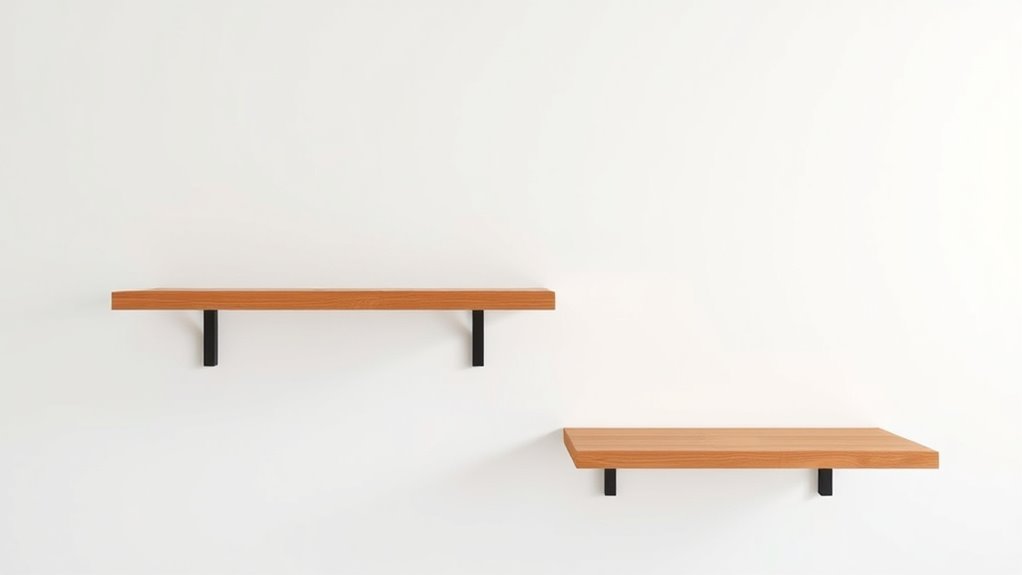
Many people believe that if a shelf is perfectly level, it will automatically look right and be stable. This common assumption stems from the idea that a level shelf ensures proper function and aesthetic appeal. However, in furniture design, decorative illusions can trick your eyes into perceiving balance even when the shelf isn’t perfectly aligned. Sometimes, a slightly tilted shelf can appear level due to surrounding elements or wall imperfections. Relying solely on a bubble level may not account for these visual cues. While a level surface is essential, trust your judgment of how the shelf looks in context. Recognizing visual perception tricks can help you create more balanced and appealing shelving arrangements. Additionally, understanding how optical illusions influence our perception can aid in making adjustments that appear more harmonious. Being aware of perception biases can further improve your ability to assess balance beyond just technical tools. Paying attention to visual cues in your environment can also assist in achieving a more visually pleasing setup.
As an affiliate, we earn on qualifying purchases.
Hidden Factors That Affect Shelf Alignment

Even when your shelf appears perfectly level, hidden factors can cause misalignment that’s not immediately obvious. Wall texture plays a significant role; rough or uneven surfaces can prevent proper contact between the mounting hardware and the wall, leading to slight shifts over time. Additionally, the quality and type of mounting hardware matter greatly. Inferior or mismatched anchors and screws may not hold securely, causing the shelf to tilt or sag gradually. These hidden issues often go unnoticed until the shelf looks crooked, despite your careful leveling. Recognizing that wall texture and mounting hardware influence shelf stability helps you understand why perfect alignment can be elusive. Proper installation techniques and the right hardware can greatly improve shelf stability and prevent crookedness over time. Furthermore, understanding wall surface preparation and choosing appropriate hardware can make a significant difference in long-term stability. For example, selecting the right mounting hardware based on wall type ensures a more secure hold and reduces the chance of misalignment over time. Additionally, paying attention to hardware installation details can help mitigate issues caused by hidden factors, emphasizing the importance of structural integrity in achieving lasting shelf alignment.
As an affiliate, we earn on qualifying purchases.
How Wall Irregularities Can Distort Perceptions

Wall irregularities can markedly distort your perception of a level shelf, making it seem crooked even when it’s perfectly aligned. Uneven wall surfaces or bumps can trick your eyes into thinking the shelf is off, regardless of how well you’ve mounted it. To counteract this, consider these points:
- Variations in wall surface texture can create optical illusions.
- Mounting hardware may sit unevenly on rough or irregular walls.
- Small dips or protrusions can mislead your perception of levelness.
- Adjusting for wall imperfections might require shimming or repositioning hardware.
- Utilizing simple tools like a bubble level can help verify true levelness despite wall irregularities.
- Recognizing wall surface irregularities can prevent unnecessary adjustments and save time.
- Taking wall irregularities into account during installation ensures a more accurate and visually pleasing result.
- Understanding how wall surface imperfections affect visual perception can help you make better adjustments during hanging.
- Being aware of visual perception distortions allows you to correct for illusions caused by wall irregularities.
As an affiliate, we earn on qualifying purchases.
The Impact of Shelf Weight and Usage
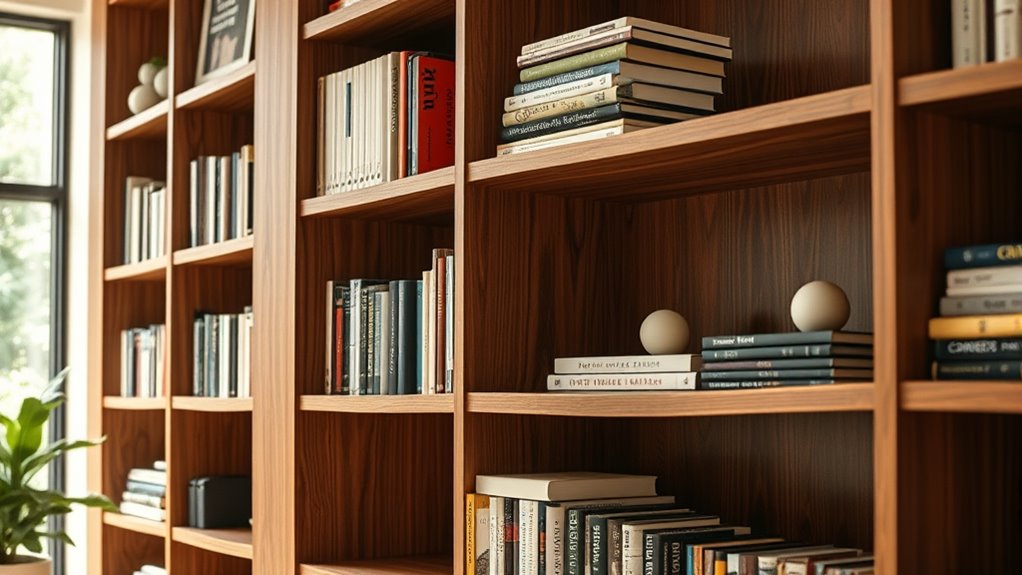
The weight and usage of a shelf can substantially influence its alignment over time. When you place heavy items unevenly, it causes uneven weight distribution, which increases the risk of shelf sagging. Over time, this sagging can lead to crooked shelves, even if they were initially installed perfectly level. Constantly adding or removing items shifts the load, stressing the shelf material and brackets. Heavier objects placed near the center or at the edges can cause more pronounced sagging. To prevent this, distribute weight evenly across the shelf and avoid overloading it. Regularly inspecting your shelves for signs of sagging helps catch issues early. Proper weight management ensures your shelves stay straight and functional, reducing the chances of misalignment caused by usage. Additionally, understanding the importance of shelf material durability can help in selecting the right materials for long-term stability. Recognizing the structural integrity of your shelves can further aid in preventing warping or bowing over time. Being mindful of shelf design can also enhance overall support and longevity. Incorporating high-quality brackets can also play a significant role in maintaining shelf stability and preventing deformation over years of use.
Proper Installation Techniques for Straight Shelves
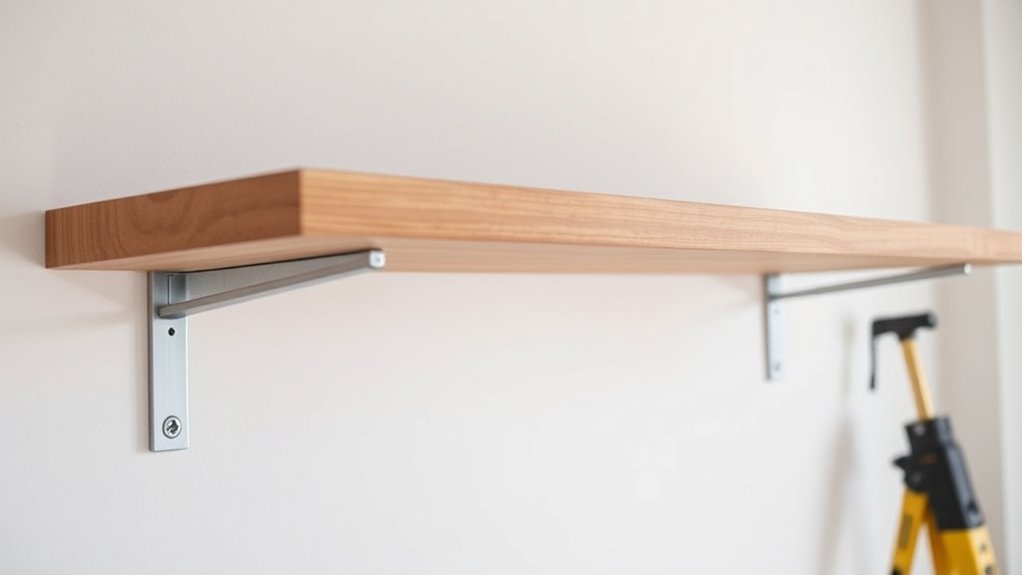
To install straight shelves correctly, start by using a level tool to guarantee your markings are even. Next, mark anchor points carefully, considering any wall imperfections or variations. Additionally, the correct wall preparation can significantly improve the stability and longevity of your shelves. Using the right cable management techniques can also help maintain a tidy and secure setup. Proper wall reinforcement can reduce the risk of shifting or damage over time, especially on older or uneven surfaces. For best results, regularly checking your shelf alignment and making adjustments as needed ensures ongoing shelf stability and safety. Finally, adjust your brackets or supports to account for these wall differences for a secure, straight installation. Incorporating proper wall preparation can also help ensure your shelves remain level and secure over time.
Use a Level Tool
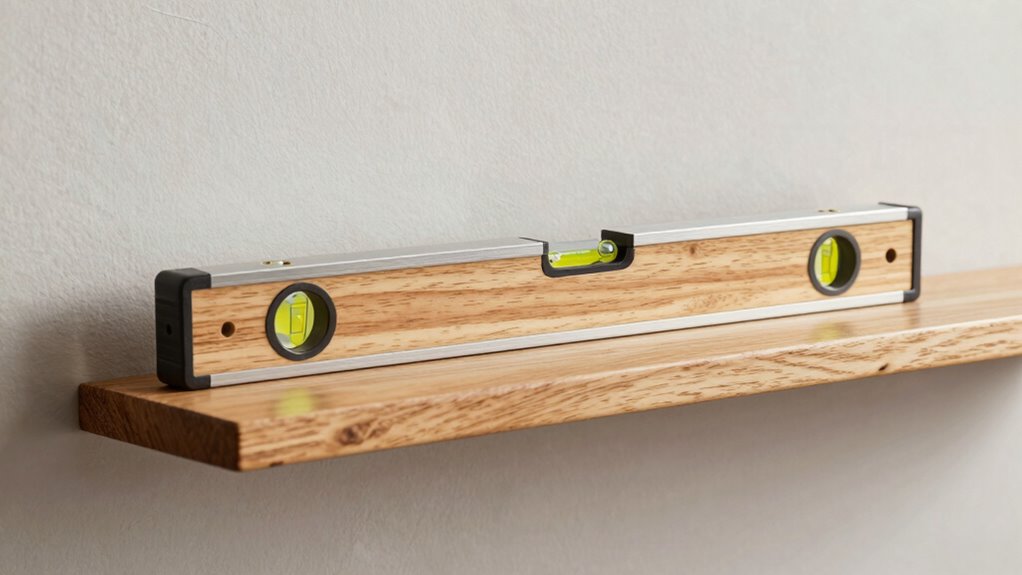
Using a level tool is essential for ensuring your shelves are perfectly straight. To achieve accurate results, start by checking the measurement accuracy of your level before use. Proper tool calibration ensures reliable readings, preventing crooked shelves. When using the level:
- Place it firmly on the shelf or wall, ensuring full contact.
- Confirm the bubble is centered, indicating a level position.
- Adjust the shelf or marks if the bubble isn’t centered, rechecking after each adjustment.
- Always verify the level’s calibration periodically, especially if it’s been dropped or stored improperly.
- Remember, calibrating your tools is a critical step to maintain measurement accuracy in all your projects.
Keeping your level properly calibrated guarantees precise measurements. Remember, a miscalibrated tool leads to inaccuracies that can cause crooked shelving, defeating the purpose of using a level in the first place.
Mark Anchor Points
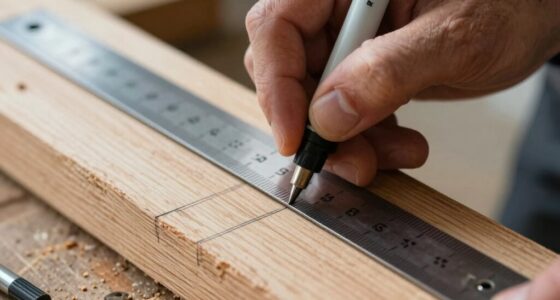
Before installing your shelves, carefully mark the anchor points to guarantee they stay straight and level. Use a pencil and a measuring tape to identify where the mounting hardware will go, ensuring the distance between points matches your shelf materials’ specifications. Double-check measurements before making marks to prevent misalignment. When selecting mounting hardware, consider the weight of your shelves and the type of wall you’re working with. For heavier shelves or uneven walls, choose appropriate anchors or studs. Marking precise anchor points helps distribute weight evenly, reducing the risk of crooked shelves. Once marked, drill carefully at each point, following the hardware instructions, to secure the shelf materials firmly and accurately. Proper marking guarantees a straight, sturdy installation every time.
Adjust for Wall Variations
Wall imperfections can cause shelves to appear crooked, even if your anchor points are perfectly aligned. To compensate, you need to modify for wall variations during installation. First, use measuring techniques to identify high and low spots along the wall. Mark these points clearly to understand where the wall dips or bulges. Next, when mounting brackets, account for these irregularities by adjusting their heights accordingly. For example, if one side is uneven, raise or lower the bracket to match the wall’s contour. Finally, double-check with a level after adjustments to ensure your shelf will sit straight. Remember, addressing wall imperfections early prevents crooked shelves and ensures a clean, professional look. Proper measuring and adjustments make all the difference.
Tips for Ensuring Your Shelves Stay Level Over Time

To keep your shelves level over time, regularly check their alignment with a spirit level or a laser level. This simple step helps catch any shifts early. Consider the shelf material—wood, glass, or metal—that may expand or contract with temperature changes, affecting balance. Adding decorative accents like small brackets or corner braces can reinforce stability and prevent warping. Use sturdy anchors suited for your wall type, especially if your shelves hold heavy items. Visualize your setup:
| Shelf Type | Reinforcement Method | Wall Support |
|---|---|---|
| Wooden | Corner braces | Wall studs |
| Glass | Metal brackets | Anchors |
| Metal | Support beams | Reinforced drywall |
Consistent checks and proper support keep your shelves level and looking perfect for years.
Frequently Asked Questions
Can Temperature Changes Affect Shelf Leveling Over Time?
Yes, temperature changes can affect shelf leveling over time. When temperatures fluctuate, materials undergo temperature expansion and contraction, especially with seasonal shifts. This movement can cause shelves to become uneven or crooked, even if they were perfectly level initially. To prevent this, regularly check and adjust your shelves, and consider using materials less sensitive to temperature changes for more stability.
Do Different Wall Materials Impact Shelf Stability?
Yes, different wall materials impact shelf stability. When you install shelves on drywall, you need proper wall anchors to guarantee they stay secure. Drywall alone isn’t strong enough to support heavy loads, so using the right anchors during drywall installation is essential. For brick or concrete, you’ll need different fasteners. Selecting appropriate anchors for each wall material helps prevent shelves from wobbling or falling over, ensuring long-lasting stability.
How Do Small Wall Imperfections Influence Shelf Appearance?
Small wall imperfections can make your shelves look uneven or crooked, especially if you don’t use proper wall anchors. Drywall texture might hide minor flaws, but if you don’t secure your shelves well, they’ll still appear misaligned. To improve appearance, guarantee your anchors fit snugly and compensate for surface irregularities. Leveling tools and adjusting for drywall texture can help you achieve a straight, professional look despite imperfections.
Are Certain Shelf Materials More Prone to Warping?
Certain shelf materials are more prone to warping, acting like fragile leaves in a storm. You’ll find that wood with low shelf material durability and poor moisture resistance warps easily when exposed to humidity or water. Opt for high-quality plywood, metal, or laminated options, as they resist warping better. These materials hold their shape longer, ensuring your shelves stay straight and sturdy no matter what weather throws at them.
What Tools Best Detect Slight Shelf Leveling Discrepancies?
You should use precision tools and leveling devices like a bubble level or a laser level to detect slight shelf leveling discrepancies. A bubble level, especially a torpedo or spirit level, provides quick, accurate readings for small deviations. For more precision, a laser level projects a straight line across the shelf, making it easier to spot even minor misalignments. These tools help make sure your shelves stay perfectly level and sturdy.
Conclusion
Remember, a good workman never blames his tools, but sometimes those tools and walls aren’t as perfect as they seem. Don’t get discouraged if your shelves aren’t perfectly level right away. By understanding hidden factors and following proper installation tips, you can keep your shelves straight and sturdy. With patience and attention to detail, you’ll turn that “level” myth on its head—because, in the end, a little effort goes a long way.
Fall yard work Picks
leaf blowers
As an affiliate, we earn on qualifying purchases.