
Load paths explain how the weight of a wall and structure moves down to the foundation, keeping your building stable. Key elements like load-bearing walls, beams, columns, and proper connections carry and transfer vertical and horizontal forces. These components work together to prevent cracks, sagging, or failure. If you want to understand how different walls support these loads and what signs to watch for, keep exploring further.
Key Takeaways
- Load-bearing walls transfer weight directly down to the foundation via vertical elements like studs, bricks, or concrete units.
- Beams and lintels distribute horizontal loads across openings, preventing stress concentration in walls.
- Columns support vertical loads from above, channeling weight efficiently through load paths.
- Proper materials (steel, concrete, timber) and secure connections ensure load transfer remains steady.
- Signs of load path issues include cracks, sagging walls, or uneven floors indicating support problems.
What Are Load Paths and Why Do They Matter?
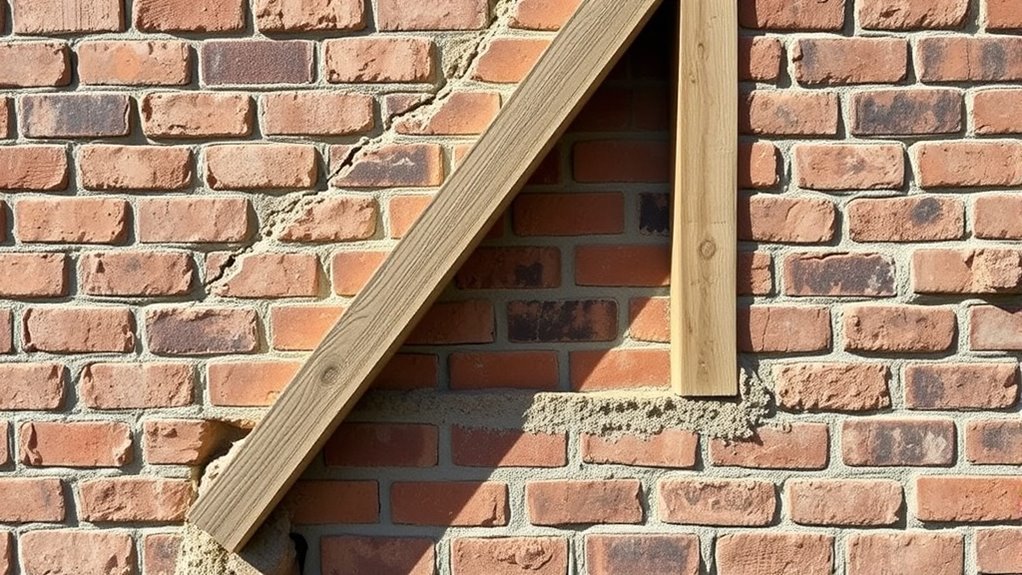
Have you ever wondered how forces travel through a structure to keep it stable? That’s where load paths come in. Load paths are the routes that force follow from where weight is applied to the foundation. They guarantee load distribution is efficient, preventing stress from concentrating in one spot. When load paths are clear and continuous, they maintain the structural integrity of the building. Proper load transfer reduces the risk of failure, cracks, or collapse. Think of load paths as the building’s internal traffic system, guiding forces safely downward. Without well-designed load paths, the structure can become unstable, jeopardizing safety. Understanding load paths helps builders create stronger, more durable walls and supports that perform reliably under various loads. In addition, a well-implemented load path considers the contrast ratio to ensure the visual stability of the structure’s appearance.
Main Structural Elements That Support Wall Weight
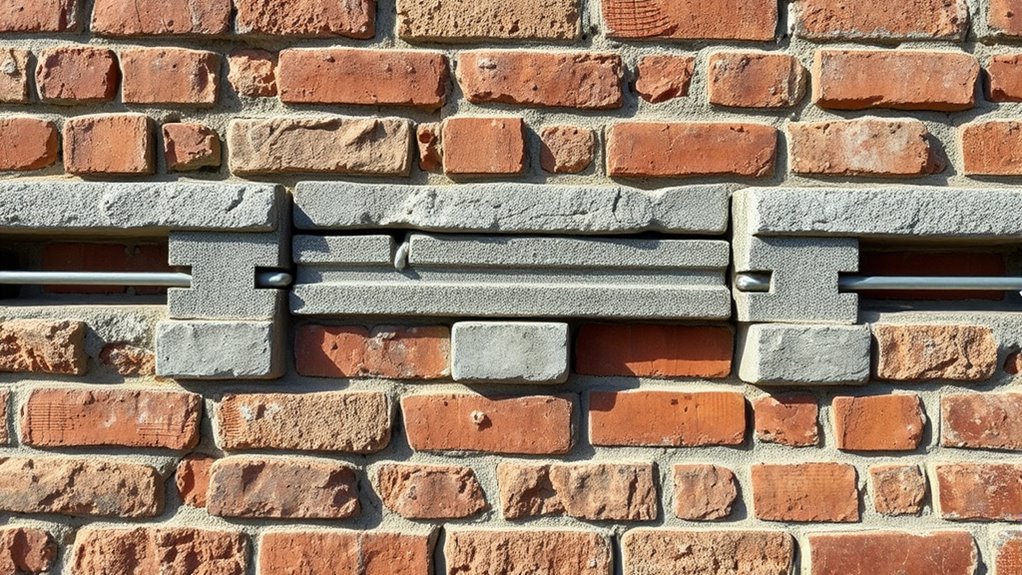
To support wall weight effectively, several main structural elements work together to transfer loads safely to the foundation. Load bearing capacity is vital; it determines how much weight a component can support without failure. Key elements include load-bearing walls, beams, columns, and lintels. Load-bearing walls carry vertical loads from above, ensuring structural stability. Beams and lintels span openings and distribute weight horizontally, preventing stress concentration. Columns act as vertical supports, especially in multi-story structures, aligning loads directly down to the foundation. These elements must be designed and constructed to handle specific loads, maintaining the overall structural stability of the building. Proper integration of these components ensures that wall weight is effectively managed, reducing the risk of structural failure. Understanding load distribution is essential for safe and durable building design.
How Load Paths Work in Different Wall Types

Different wall types distribute and transfer loads in distinct ways, depending on their construction and purpose. For example, a load-bearing wall directly transfers weight down to the foundation, ensuring wall stability. In contrast, non-load-bearing walls mainly separate spaces without supporting structural loads. Here’s a quick comparison:
| Wall Type | Load Transfer Method |
|---|---|
| Masonry Walls | Transfer loads through mortar joints and solid units |
| Stud Walls | Use vertical studs to carry loads to top plates |
| Curtain Walls | Transfer loads to supporting structure, not to foundation |
| Shear Walls | Resist lateral loads, transferring them to the foundation |
Understanding these differences helps you grasp how load paths are managed in various wall types to maintain stability. Proper load path management is essential for building safety and longevity, especially in modern construction that emphasizes connected building systems.
Materials and Connections That Keep Load Paths Steady
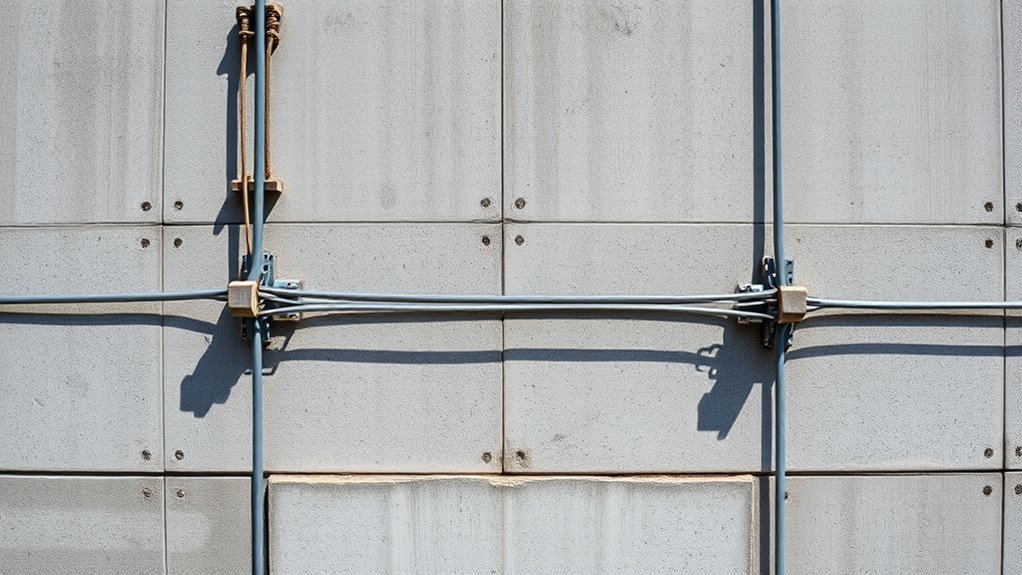
Materials and connections are crucial for maintaining steady load paths, as they guarantee that forces are effectively transferred through the structure. Strong materials like steel, concrete, and timber ensure the load transfer remains reliable, preventing weak points. Proper connections—bolts, welds, or adhesives—are equally important, as they keep components linked under stress. When these connections are secure, they support the overall structural integrity, allowing load paths to stay continuous and stable. If connections fail or materials weaken, the load transfer can become interrupted, risking structural failure. Innovative European cloud servers can provide insights into sustainable practices that emphasize robust material choices and secure connections. Consequently, selecting appropriate materials and ensuring high-quality connections are essential steps in designing walls that reliably carry and distribute loads, preserving safety and durability.
Troubleshooting: Signs of Load Path Issues in Walls

When load paths in walls are compromised, signs of trouble often become apparent through visible or structural clues. You might notice cracks in drywall, uneven floors, or doors that stick. These issues can indicate problems with foundation stability or load transfer failure. To help identify issues early, consider this table:
| Symptom | Possible Cause | Action Needed |
|---|---|---|
| Cracks in drywall | Load misalignment | Inspect load path connections |
| Sagging or bowing walls | Insufficient support | Reinforce or repair framing |
| Uneven floors | Foundation instability | Consult structural engineer |
| Doors that stick | Warped framing | Check for load transfer issues |
| Visible wall cracks | Structural stress | Evaluate load paths and foundation |
Monitoring these signs helps prevent further damage and guarantees the integrity of your load paths. Regular inspections can also detect early warning signs before significant issues develop.
Frequently Asked Questions
How Can I Identify Load Path Problems During Inspections?
During inspections, you can identify load path problems by looking for load bearing anomalies like sagging floors, cracking walls, or uneven surfaces. Conduct a thorough structural assessment, focusing on signs of stress or movement in the walls, beams, and supports. Be alert to any unusual shifts or damages, and verify that load paths are continuous and properly supported. Addressing these issues early helps prevent significant structural failures.
What Are Common Mistakes That Disrupt Load Paths in Walls?
Your wall’s load path can be severely disrupted by common mistakes like load misalignment and improper bracing. These issues are as dangerous as fireworks in a fireworks factory! When load misalignment occurs, weight isn’t transferred properly, weakening the structure. Improper bracing fails to support the load, causing instability. To avoid these mistakes, guarantee all components are aligned correctly and bracing is installed properly, maintaining the integrity of your wall’s load path.
Can Load Paths Be Modified or Improved After Construction?
Yes, you can modify or improve load paths after construction through load path modifications and reinforcement. Adding new framing members, such as beams or columns, helps redirect weight more effectively. You might also reinforce existing structures with additional bracing or supports. Always consult a structural engineer to guarantee these changes maintain safety and stability. Proper load path reinforcement ensures your wall can handle future loads and prevents potential structural issues.
How Do Load Paths Differ Between Residential and Commercial Buildings?
In the grand theater of construction, you’ll find residential buildings softly whispering, “We’re simple,” while commercial structures roar, “We’re complex!” Building code differences dictate these roles, with commercial buildings demanding more rigorous load paths and material considerations like steel and concrete. Residential walls might lean on wood and drywall, but commercial walls need beefier support, ensuring safety and compliance. So, your load path game varies wildly—choose wisely, or face the structural chaos!
What Impact Do Load Path Issues Have on Overall Building Safety?
Load path issues directly threaten your building’s safety, increasing the risk of structural failure. When load paths are compromised, weight isn’t properly transferred, which can cause walls or foundations to crack or collapse. This not only puts your property at risk but also endangers lives. Addressing load path problems promptly guarantees your building remains stable, reducing safety risks and preventing potential disasters caused by compromised structural integrity.
Conclusion
Understanding load paths is like having a trusty GPS for your walls—you’ll see what keeps everything upright and steady. When you know how the main elements work together, you can spot issues before they turn into a full-blown disaster, just like a good foreman on a construction site. Remember, keeping load paths clear and solid is your best bet to prevent your home from becoming the next fallen tower of Pisa. Stay vigilant, and your walls will stand the test of time!