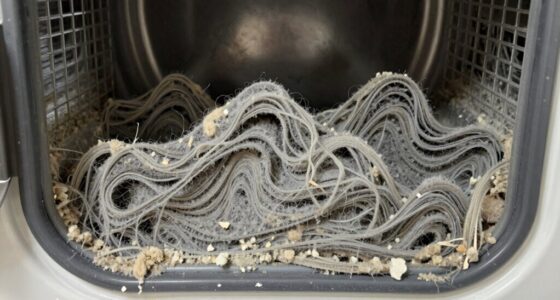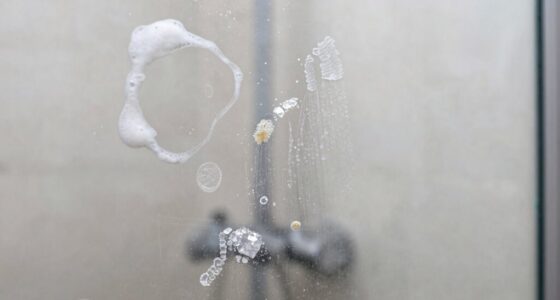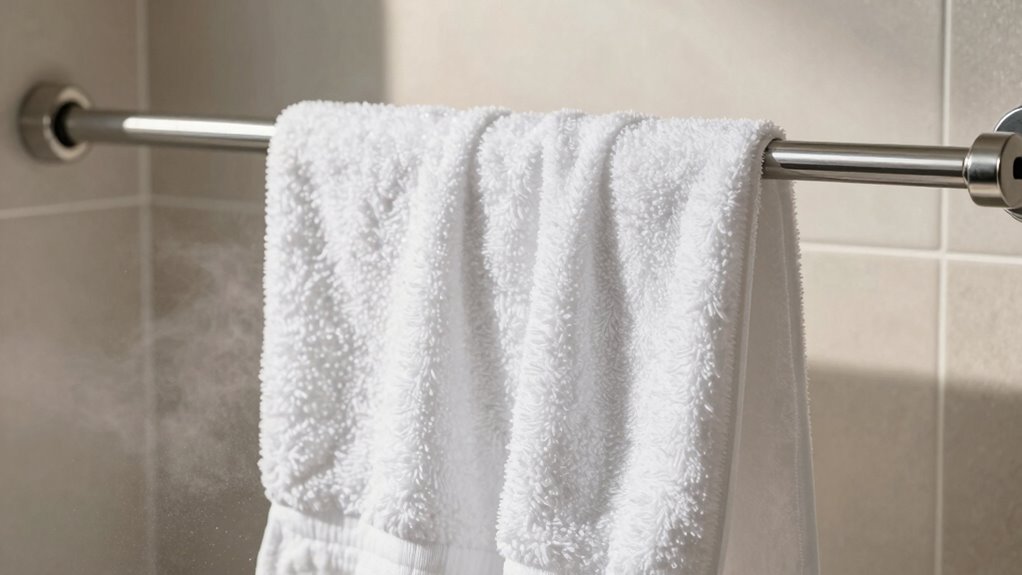
Your towels may smell fresh after washing but then develop a stale odor because of leftover detergent, fabric softeners, or moisture that isn’t fully dried or ventilated. Humidity, bacteria, mold, or mineral buildup from hard water can also cause odors to return. Overloading the washing machine or using improper temperatures can leave residues or dampness, making towels smell afterward. Keep these tips in mind to maintain your towels’ freshness—more tips follow to help you stay odor-free longer.
Key Takeaways
- Residual detergent or fabric softener buildup traps odors, making towels smell fresh initially but then develop musty smells over time.
- Damp towels stored in humid environments promote bacteria and mold growth, causing odors after they initially smell clean.
- Hard water minerals accumulate in fibers and washing machines, leading to stiff, odorous towels and reduced absorbency.
- Overloading the washer prevents thorough cleaning and rinsing, allowing residues and bacteria to cause lingering odors.
- Inadequate drying or improper storage traps moisture, fostering bacteria and mold that make towels smell musty later on.
The Role of Residual Detergent and Fabric Softeners
Residual detergent and fabric softeners can cling to towel fibers even after washing, and this buildup is often behind that fresh but slightly off smell. When you use too much detergent, it doesn’t rinse out completely, leaving behind detergent residue that traps odors. Fabric softeners, while making towels feel soft, can also coat fibers with a thin film. This film prevents proper drying and promotes bacteria growth, which causes musty smells. Over time, these residues build up, reducing your towels’ absorbency and leaving them smelling less than fresh. To keep your towels smelling clean, opt for a small amount of detergent, avoid overuse of fabric softeners, and run an extra rinse cycle if needed. This helps eliminate residue and keeps your towels smelling fresh longer. Regularly washing towels at higher temperatures can also help prevent bacterial growth, and using an electric-powered appliance for laundry tasks can improve cleaning efficiency and reduce residue buildup. Additionally, choosing appropriate detergent types designed for your washing machine can further minimize residue accumulation.
The Impact of Moisture and Humidity in Your Bathroom
High humidity levels in your bathroom create the perfect environment for towels to develop musty odors. When moisture lingers, it encourages bacteria and mold growth, making your towels smell unpleasant. To combat this, focus on improving air circulation and humidity control. Consider these strategies:
- Use exhaust fans or open windows after showers to reduce moisture.
- Hang towels in well-ventilated areas to promote faster drying.
- Invest in a dehumidifier to maintain ideal humidity levels.
- Avoid leaving damp towels crammed together, which traps moisture.
- Regularly monitor humidity levels to ensure your bathroom stays within a healthy range.
- Proper ventilation techniques can significantly reduce excess moisture and prevent odor buildup.
- Additionally, choosing moisture-resistant materials for bathroom accessories can help prevent mold growth and odor formation.
- Regular cleaning and laundry practices can further reduce bacteria and mold, keeping your towels smelling fresh.
- Incorporating antimicrobial treatments into your laundering routine can provide an extra layer of odor prevention.
Bacteria and Mold Growth in Towels

When towels remain damp for too long, bacteria and mold can quickly start to grow, leading to unpleasant odors and potential health risks. To combat this, using antibacterial sprays can help kill germs and inhibit mold growth. Regular towel sanitization is essential; you should wash towels frequently in hot water and consider adding disinfectants to your laundry routine. After washing, make sure towels are thoroughly dried, preferably in a warm, dry environment, to prevent any lingering moisture that supports bacteria growth. Avoid leaving damp towels hanging in humid bathrooms for extended periods. Implementing these practices not only keeps your towels smelling fresh but also reduces the chance of bacteria and mold buildup, ensuring your towels remain hygienic and safe to use. Free Floating can also be utilized to improve air circulation around towels, helping them dry more quickly and prevent mold formation. Ensuring proper airflow is crucial, as good ventilation helps eliminate excess moisture and further discourages mold development.
Overloading the Washing Machine
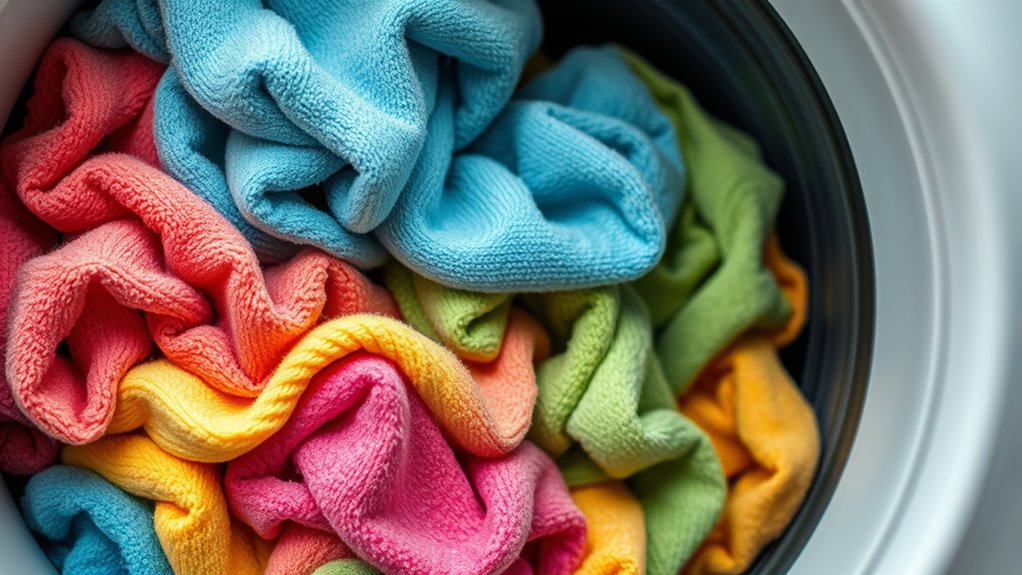
Overloading your washing machine can prevent your towels from getting thoroughly cleaned and dried. When you cram too many towels in, water and detergent can’t circulate properly, leading to detergent buildup and fabric softener residue that cling to fibers. This buildup traps moisture, encouraging mold and bacteria growth, which causes odors. To avoid this, keep these tips in mind:
- Don’t overload the drum; leave enough space for towels to move freely.
- Use the correct amount of detergent to prevent residue accumulation.
- Rinse towels thoroughly to wash out excess fabric softener.
- Opt for smaller loads periodically to ensure proper cleaning and drying.
- Choosing the right detergent formulation helps prevent buildup and odors.
Additionally, regularly cleaning your washing machine’s filter and seals can help maintain optimal performance and prevent odor-causing residues. Proper load size also plays a crucial role in achieving fresh-smelling towels, as it ensures water and cleaning agents can do their job effectively.
Incorporating a clogged drain check can further improve overall washing machine performance by preventing water retention issues.
You can also consider installing a backup power system for your laundry appliances to ensure they operate reliably during power outages, preventing incomplete washes that contribute to odors.
Following these steps helps eliminate lingering smells and keeps your towels fresh and absorbent.
Inadequate Drying Techniques

If towels don’t dry completely, they can develop a musty smell that lingers even after washing. Air drying is a common method, but it needs proper airflow and enough time to prevent dampness. Hanging towels in a humid environment or cramming them together slows evaporation, increasing the risk of odors. To improve drying, make sure towels are spread out evenly and hung in a well-ventilated space. Towel fluffing also helps; give your towels a gentle shake or tumble them briefly after drying to restore fluffiness and ensure all moisture is gone. Avoid leaving towels damp for too long, as lingering moisture creates the perfect environment for odor-causing bacteria. Proper airflow during drying can significantly enhance evaporation efficiency and reduce odors. Additionally, using a dehumidifier or drying towels in a less humid area can further improve drying conditions. Ensuring adequate air circulation around towels is essential for thorough drying, especially in humid climates. Incorporating proper airflow during drying can significantly enhance evaporation efficiency and reduce odors, especially when combined with sufficient drying time for complete moisture removal. Furthermore, maintaining good hygiene practices reduces bacterial growth that causes unpleasant smells.
Incorrect Washing Temperature and Cycle Settings
Using the wrong washing temperature or cycle can leave your towels smelling less than fresh. When you wash at too low a temperature, detergent residue and fragrance buildup may not fully rinse out, causing lingering odors. On the other hand, washing at too high a temperature can damage fibers, trapping dirt and bacteria. To avoid this, consider these tips:
- Use hot water for heavily soiled towels to eliminate bacteria and odors.
- Opt for a gentle cycle for delicate towels to prevent fiber damage.
- Always choose the right temperature based on the fabric type.
- Avoid overloading the machine, which prevents proper rinsing of detergent residue and fragrance buildup.
- Regularly check and clean your washing machine’s filters and drainage to maintain optimal cleaning performance filter maintenance.
- Paying attention to washing cycle settings can help ensure your towels are cleaned effectively without damage. Properly selecting the correct cycle also helps prevent fiber deterioration over time.
- Considering the existence of residual bacteria can further improve your laundry results, ensuring your towels stay fresh longer.
Adjusting your washing temperature and cycle ensures your towels stay fresh and odor-free longer.
The Effect of Hard Water and Mineral Deposits
Hard water contains high levels of minerals like calcium and magnesium that can leave deposits on your towels over time. This mineral buildup is a direct result of water hardness, which affects how effectively your laundry rinses and cleans. As mineral deposits accumulate, they create a layer on your towels, making them feel stiff and less absorbent. This buildup can also trap detergent residues and dirt, leading to lingering odors that make your towels smell less fresh. Over time, mineral deposits can clog your washing machine’s pipes and filters, reducing its efficiency. To combat this, consider using water softeners or descaling agents regularly. Proper maintenance helps prevent mineral buildup, ensuring your towels stay soft, absorbent, and smelling fresh longer.
Proper Storage Practices for Fresh-Smelling Towels
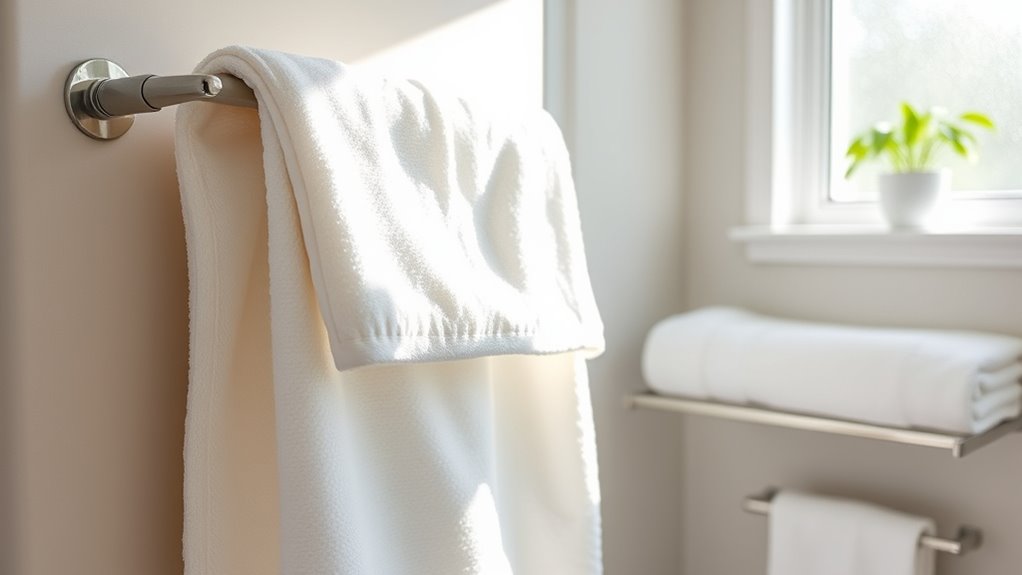
Proper storage is essential to keep your towels smelling fresh and clean. To maintain towel color preservation and prevent odors, choose storage options that promote airflow and dryness. Here are four tips:
- Use breathable storage containers like wicker baskets or mesh hampers to allow air circulation.
- Avoid plastic bins that trap moisture, which can cause musty smells and color fading.
- Fold towels neatly to prevent creases and color bleeding.
- Store towels in a cool, dry spot away from direct sunlight to maintain their vibrant color and freshness.
Always guarantee towels are completely dry before storing, as dampness leads to unpleasant odors. Proper storage practices help your towels stay fresh longer and look their best.
Frequently Asked Questions
Can Using Scented Detergents Prevent Towel Odor?
Using scented detergents can help mask towel odors temporarily, but they don’t prevent odor buildup in the long run. For effective odor prevention, you need to guarantee your towels dry completely and wash them regularly with a cleaner that removes bacteria and mildew. Scented detergents may make your towels smell fresh initially, but if you want lasting freshness, focus on proper drying and maintenance routines rather than relying solely on scent.
How Often Should I Replace My Towels for Freshness?
You should replace your towels every 3-4 years for ideal freshness. Did you know that bacteria can thrive in damp towel storage, causing odors? To maintain freshness, wash your towels frequently—ideally after 3-4 uses—and avoid leaving them damp in laundry baskets. Regular replacement prevents bacteria buildup and keeps your towels smelling clean, ensuring you enjoy fresh, hygienic towels every time.
Do Fabric Softeners Cause Towel Odors Over Time?
Yes, fabric softeners can cause towel odors over time. They create fabric softener buildup that traps moisture, leading to bacteria and mold growth. This buildup also accelerates towel fiber degradation, making your towels less absorbent and more prone to odors. To keep your towels fresh, avoid using fabric softeners frequently. Instead, opt for vinegar or baking soda during laundry cycles to prevent buildup and maintain their softness and scent.
What’s the Best Way to Freshen Smelly Towels Naturally?
To naturally freshen smelly towels, you should wash them with white vinegar or baking soda, which act as natural remedies to eliminate odors. After washing, make sure to dry towels thoroughly in a well-ventilated area or under sunlight. Store your towels properly with good storage tips, like folding them loosely and avoiding damp spaces, to prevent musty smells from returning. These steps keep your towels fresh and odor-free naturally.
Does Towel Material Affect Odor Retention?
Your towel’s fiber breathability plays a big role in odor retention, just like a sponge absorbing water. Cotton towels, with their open fibers, breathe better and dry faster, reducing smell buildup. On the other hand, synthetic fibers trap moisture and odors more easily, and dye retention can sometimes lock in smells too. Choosing towels with natural fibers and colorfast dyes helps keep your towels fresh longer and smelling clean.
Conclusion
To keep your towels smelling fresh and inviting, think of them as your home’s gust of fresh air. By rinsing out detergent residues, drying towels thoroughly, and storing them in a dry place, you can banish that fleeting scent of cleanliness. Treat your towels like a cherished guest—give them the attention they deserve, and they’ll reward you with a lasting, welcoming aroma that makes every shower feel like a spa day.