Soap scum appears as a soft, greasy film that feels filmy and is resistant to vinegar or simple rinses, mainly caused by soap reacting with minerals in hard water. Mineral scale, on the other hand, forms hard, crusty deposits that feel rough and are easier to dissolve with vinegar. Spotting these differences at common bathroom areas helps you identify them accurately. Continue exploring to discover effective ways to clean and prevent these stubborn buildups.
Key Takeaways
- Soap scum appears as a soft, greasy film that resists vinegar, while mineral scale is hard, crusty, and dissolves easily.
- Soap scum is typically grayish or yellowish and feels slick; mineral scale is white or off-white, rough, and crystalline.
- Residues resistant to vinegar suggest soap scum; deposits that dissolve with vinegar indicate mineral scale.
- Soap scum forms from soap-mineral reactions in hard water, whereas mineral scale results from mineral deposits from water evaporation.
- Surface texture helps: soap scum is smooth and soft; mineral scale is rigid, crusty, and rough to the touch.
What Is Soap Scum? Key Traits and How It Forms

Soap scum is a stubborn residue that forms when soap combines with minerals in hard water. This buildup appears as a filmy layer on bathroom surfaces like tiles, tubs, and glass. To tackle it, you might try DIY cleaning methods that focus on breaking chemical reactions responsible for its formation. Usually, soap reacts with calcium and magnesium in hard water, creating insoluble compounds that cling to surfaces. These chemical reactions make soap scum resistant to regular rinsing, so it lingers unless you use specific cleaners or remedies. Understanding how soap interacts with mineral content helps you choose effective cleaning strategies. By targeting these chemical reactions, you can prevent or remove soap scum more efficiently, maintaining a cleaner, clearer bathroom. Additionally, using proper cleaning techniques can help break down existing buildup and prevent future formation.
What Is Mineral Scale? Signs and How It Develops

Mineral scale forms when dissolved minerals like calcium and magnesium in hard water accumulate on surfaces over time. This mineral buildup creates a stubborn layer that’s difficult to remove and can cause damage. You’ll notice signs such as:
Mineral scale builds up from dissolved calcium and magnesium in hard water, causing damage and reduced efficiency.
- Reduced water flow in faucets and showerheads, making daily routines frustrating.
- Discolored fixtures that develop a crusty, white or bluish tint.
- Soap’s poor lathering, indicating mineral deposits interfere with cleaning.
- Scaling around appliances, which signals water hardness is affecting your equipment.
These signs develop gradually as mineral scale thickens. Understanding how mineral buildup occurs helps you catch problems early before they cause costly damage or inefficiency in your home. Recognizing these signs is key to taking action against persistent water hardness.
How Can You Tell Them Apart by Looking? Visual Clues
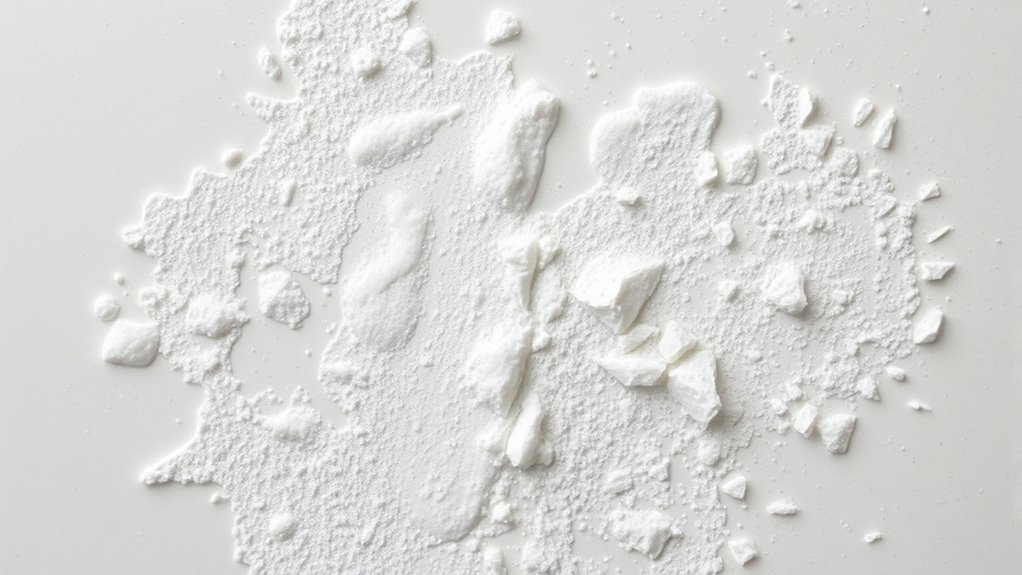
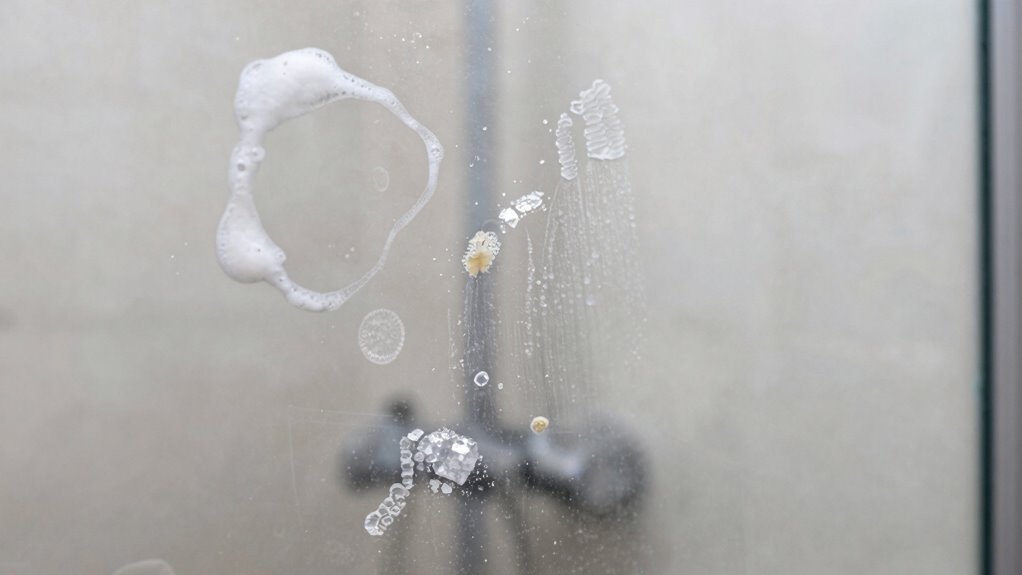
Although soap scum and mineral scale both create visible buildup on surfaces, they have distinct appearances that can help you tell them apart at a glance. Soap scum results from chemical reactions between soap residues, minerals, and body oils, forming a soft, filmy layer. It often appears as a dull, grayish or yellowish film with a smooth, sometimes sticky surface texture. Mineral scale, on the other hand, forms from dissolved minerals like calcium or magnesium depositing out of water. It tends to create hard, crusty deposits with rough, uneven surface textures, often looking chalky or crystalline. By examining the buildup’s appearance, you can differentiate between the two. Soap scum usually looks more smeary and soft, while mineral scale appears more rigid and granular. Recognizing the types of deposits can help in choosing the appropriate cleaning method.
Where Do Soap Scum and Mineral Scale Usually Appear? Common Bathroom Spots

You’ll typically find soap scum and mineral scale accumulating in the most frequently used areas of your bathroom. These spots are prone to buildup because of constant moisture and soap or mineral deposits. Regular cleaning and proper maintenance can help prevent these stubborn residues from forming. Deep-sky imaging techniques emphasize the importance of understanding surface conditions, which can be applied to recognizing bathroom buildup patterns. 1. Shower door – cloudy film and stubborn residue often form here, especially on glass surfaces. 2. Bathtub corner – corners trap water and grime, making buildup visible and hard to clean. 3. Sink edges – soap and minerals cling to the edges, causing discoloration over time. 4. Tile grout lines**** – these narrow spaces collect residues, leading to stubborn stains. Recognizing where these deposits appear helps you target cleaning efforts effectively. Keep an eye on these common spots to prevent stubborn build-up and maintain a sparkling bathroom.
How Do You Identify Soap Scum vs. Mineral Scale? Simple Tests
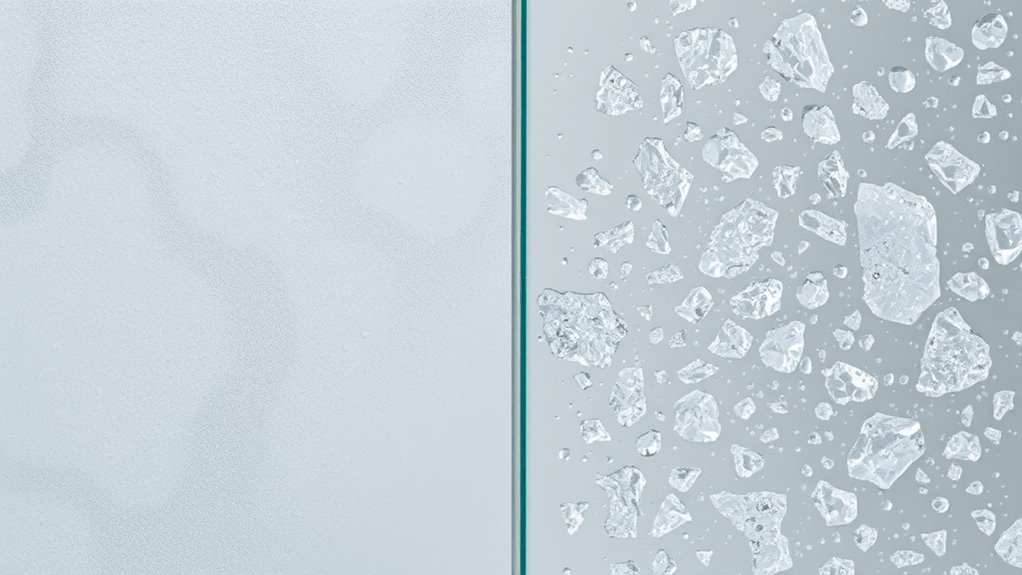
To tell soap scum from mineral scale, you can perform simple tests that reveal their different properties. First, try a vinegar test: apply white vinegar to the affected area. If the deposit dissolves easily, it’s mineral scale, which reacts with acids. If it remains, it’s likely soap scum, resistant to vinegar. For DIY remedies, this quick test helps you identify the buildup without professional cleaning. You can also observe texture—soap scum tends to be softer and filmy, while mineral scale feels harder and crusty. Using these simple methods saves you time and money, guiding you on whether to attempt DIY remedies or seek professional cleaning. Recognizing the difference makes your cleaning efforts more effective and targeted. Moreover, understanding the different properties of mineral scale and soap scum can help you choose the most sustainable and eco-friendly cleaning solutions.
What Are the Best Ways to Clean Soap Scum and Mineral Scale? Effective Methods

Once you can identify whether you’re dealing with soap scum or mineral scale, choosing the right cleaning method becomes straightforward. For DIY cleaning, eco-friendly methods are effective and safe. Here are the top approaches:
Identify soap scum or mineral scale to choose eco-friendly, effective cleaning methods easily.
- Use white vinegar or lemon juice to dissolve mineral scale naturally.
- Create a baking soda paste for stubborn soap scum, scrubbing gently.
- Combine vinegar and baking soda for a powerful, eco-friendly scrub.
- For tough deposits, soak surfaces in a mixture of equal parts water and vinegar before scrubbing.
- Regular maintenance with these methods helps prevent buildup and buildup of these residues, keeping surfaces sparkling and reducing the need for harsh chemicals.
These methods avoid harsh chemicals, making them safe for your home and the environment. Regular maintenance with these DIY solutions keeps surfaces sparkling and prevents buildup without the need for commercial cleaners.
How Can You Prevent Future Deposits? Tips to Keep Surfaces Clean

You can prevent future deposits by regularly cleaning your surfaces to stop buildup before it starts. Applying sealants or coatings creates a barrier that resists stains and mineral deposits. Additionally, using water softening solutions can reduce mineral content in your water, making it easier to keep surfaces spotless. Consulting a whole-house water filtration system can also provide ongoing protection against mineral buildup throughout your entire home.
Regular Surface Cleaning
Wondering how to keep soap scum and mineral scale from building up on your surfaces? Regular cleaning is your best weapon. Consistently using the right cleaning products tailored to your surface textures prevents buildup. Here are four simple tips:
- Use gentle, non-abrasive cleaners to avoid damaging delicate surfaces.
- Wipe down surfaces daily to stop deposits before they settle in.
- Target problem areas like corners and grout lines for extra attention.
- Dry surfaces thoroughly to prevent moisture from lingering and promoting deposits.
- Incorporate appropriate cleaning techniques like avoiding harsh chemicals that can harm surface materials or affect color accuracy.
Use of Sealants or Coatings
Applying sealants or protective coatings to your surfaces creates a barrier that helps prevent soap scum and mineral deposits from settling. When you choose a quality sealant and ensure proper coating application, you can markedly extend the sealant’s longevity, keeping surfaces cleaner longer. These coatings form a slick surface that resists buildup, making routine cleaning easier. To maximize effectiveness, follow the manufacturer’s instructions carefully during application, applying an even layer and allowing sufficient drying time. Regular reapplication may be necessary to maintain protection, especially in high-use areas. By investing in proper coating application, you reduce the frequency of deep cleans and preserve your surfaces’ appearance. Sealants provide a simple, proactive way to keep soap scum and mineral scale at bay, saving you time and effort in the long run. Incorporating proper surface preparation before applying coatings can further enhance their adhesion and effectiveness.
Water Softening Solutions
Water softening is an effective way to prevent mineral deposits from forming on your surfaces. By reducing water hardness levels, you can cut down on soap scum and mineral scale buildup. Here are some tips to keep surfaces clean and deposits at bay:
- Use eco friendly detergents that work better with softened water, reducing residue.
- Regularly test water hardness levels to adjust your water softening system as needed.
- Install a water softener to attract minerals before they reach your fixtures.
- Maintain your softening system consistently to ensure it functions efficiently.
- Understanding water chemistry can help you optimize your household water treatment strategies.
These steps help you enjoy cleaner surfaces, fewer stains, and a more eco-conscious approach to household maintenance. Protect your home and the environment with mindful water treatment.
Frequently Asked Questions
Can Soap Scum and Mineral Scale Occur Simultaneously?
Yes, soap scum and mineral scale can occur simultaneously because they’re different types of deposits that often form together. Soap scum results from soap reacting with minerals in water, while mineral scale forms from mineral deposits like calcium and magnesium. To remove both, use appropriate removal techniques like vinegar for soap scum and commercial descalers for mineral scale. Combining these methods helps keep your surfaces clean and free of buildup.
Do Different Water Types Affect Deposit Formation?
Yes, different water types affect deposit formation. Hard water, with high mineral content, promotes mineral scale buildup, making deposits more visible and easier to identify. Soft water contains fewer minerals, so soap scum is more noticeable than mineral deposits. Understanding your water’s hardness helps you predict whether you’ll see more soap scum or mineral scale, allowing you to take appropriate cleaning measures.
Are There Specific Cleaning Products for Each Type?
You’ll be surprised to learn that specific cleaning products aren’t always necessary—sometimes, understanding pH levels and cleaning techniques do the trick. For soap scum, a mildly acidic cleaner works wonders, while mineral scale demands a more robust, often acidic, approach. Instead of a one-size-fits-all, you can save money and time by choosing products tailored to the deposit type, making cleaning less of a chore and more of a science experiment.
How Long Does It Take for Deposits to Form Visibly?
Deposit growth varies depending on water quality and usage, but typically, visible deposits can form within a few days to a few weeks. Mineral scale deposits grow gradually as minerals like calcium and magnesium accumulate, making the visibility timeline unpredictable. If you notice a film or buildup forming quickly, it’s likely mineral scale, whereas soap scum tends to appear after soap residue interacts with moisture over time.
Can Environmental Factors Influence Deposit Accumulation?
A picture is worth a thousand words, and environmental factors definitely influence deposit buildup. Your water hardness, influenced by minerals in the environment, increases mineral scale formation, especially in hard water areas. Environmental impact, like temperature and water flow, also plays a role—stagnant or warm water speeds up deposits, while flowing water reduces them. So, yes, your environment directly affects how quickly and heavily deposits accumulate on surfaces.
Conclusion
Now that you know how to spot soap scum versus mineral scale, you can tackle your cleaning routine with confidence. Recognizing the differences helps you choose the right cleaning methods and prevent future buildup. Don’t let these deposits get the better of you—stay proactive and keep your surfaces spotless. With a little know-how, you’ll avoid fighting a losing battle and keep your bathroom shining like new. It pays to be prepared!