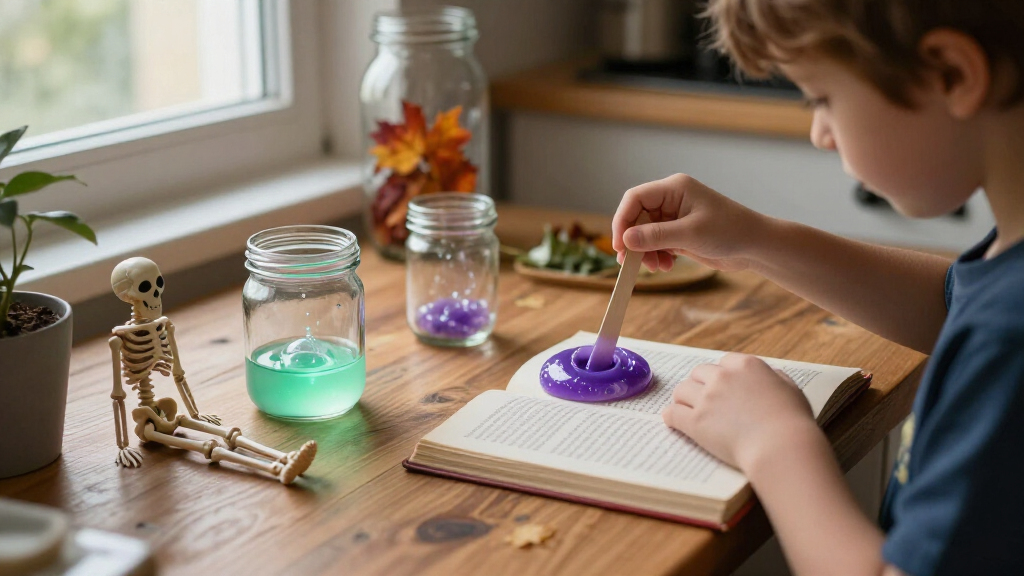

The best spooky science books for kids mix eerie subjects with explanations that keep curiosity ahead of fear. My best overall pick is The Science Spell Book, which pairs a Halloween-ready theme with hands-on experiments; 100,000 HALLOWEEN WHYS for Kids is a strong choice for question-driven readers, while Spooky Lakes suits kids drawn to real-world mysteries. The main tradeoff is whether your child wants to do experiments, browse bite-size facts, or explore unsettling natural phenomena. Age, reading stamina, and tolerance for creepy imagery also shape the right fit. Read on for the full breakdown and a guide to choosing the right kind of spooky science.

Prime made for students and young adults
- Fast, free delivery for dorm and study essentials
- Prime Video and Amazon Music included
- Member-only deals
Key Takeaways
- Hands-on activity sets stand apart: The Science Spell Book and Science Magic Tricks for Kids offer experiments, while most other titles focus on reading, browsing, or answering questions.
- Question-led books suit curious skimmers: The Big Halloween Book of Why and 100,000 HALLOWEEN WHYS for Kids organize spooky science around questions rather than long chapters.
- Real-world mysteries are a distinct lane: Spooky Rivers and Spooky Lakes focus on unusual places, offering a more nature-centered alternative to ghosts, monsters, and Halloween trivia.
- Reference books vary in scope: Frightlopedia covers a broad range of scary subjects, while Weird But True! Halloween emphasizes short, surprising facts.
- Spooky intensity and science depth are not the same: A title can be creepy or packed with facts without offering experiments, so match the format to what your child actually wants to do.
| Spooky Rivers: 25 Strange and Mysterious Rivers that Snake Across Our Planet | 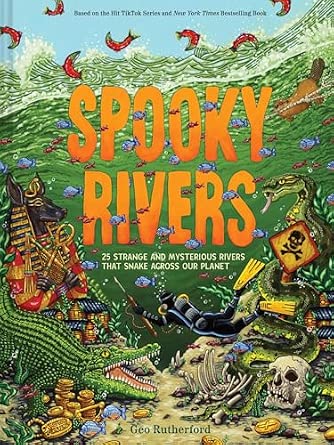 | Best for Eerie Nature Stories | Format: Book | Topic: Mysterious and haunted rivers | Featured places: 25 rivers | VIEW LATEST PRICE | See Our Full Breakdown |
| Spooky Facts for Brave Kids: Enter If You Dare |  | Best for Quick Halloween Trivia | Format: Book | Content type: Facts and trivia | Fact count: Over 300 | VIEW LATEST PRICE | See Our Full Breakdown |
| The Science Spell Book: 30 Enchanting Experiments for Kids |  | Best for Beginner-Friendly Experiment Fun | Format: Book | Experiment count: 30 | Activity type: Science experiments | VIEW LATEST PRICE | See Our Full Breakdown |
| 100,000 HALLOWEEN WHYS for Kids: A Spooky-Fun Science Adventure for Kids Ages 6–12 |  | Best for Curious Question-Askers | Format: Book | Intended age range: 6–12 | Theme: Halloween | VIEW LATEST PRICE | See Our Full Breakdown |
| Science Magic Tricks for Kids: 50 Amazing Experiments That Explode, Change Color, Glow, and More! | 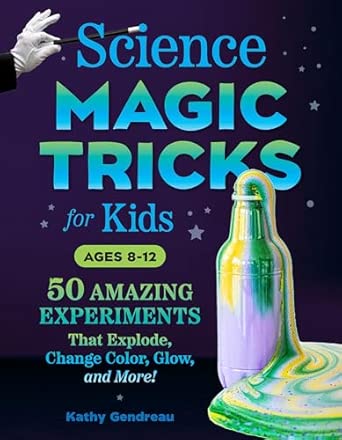 | Best for Colorful Science Demonstrations | Format: Book | Experiment count: 50 | Activity type: Science magic tricks and experiments | VIEW LATEST PRICE | See Our Full Breakdown |
| 100,000 Whys Encyclopedia for Kids – Spooky Scientists (Halloween Edition) |  | Best for Curious Question-Askers | Format: Encyclopedia | Theme: Spooky scientists and Halloween | Content: Fun facts and questions | VIEW LATEST PRICE | See Our Full Breakdown |
| Spooky Science: Dissecting the Mysteries of Ghosts, Cryptids, Aliens, and Other Oddities |  | Best for Skeptical Mystery Fans | Format: Book | Main approach: Scientific investigation and critical analysis | Topics: Ghosts, cryptids, aliens, and other oddities | VIEW LATEST PRICE | See Our Full Breakdown |
| Spooky Lakes: 25 Strange and Mysterious Lakes that Dot Our Planet | 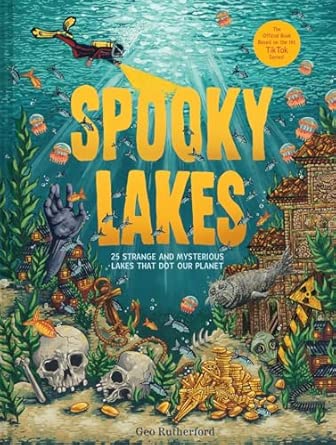 | Best for Natural Mystery Explorers | Format: Book | Number of lakes: 25 | Subject: Strange and mysterious lakes | VIEW LATEST PRICE | See Our Full Breakdown |
| The Big Halloween Book of Why: 400 Spooky Questions & Amazing Answers for Curious Kids Ages 6-12 | 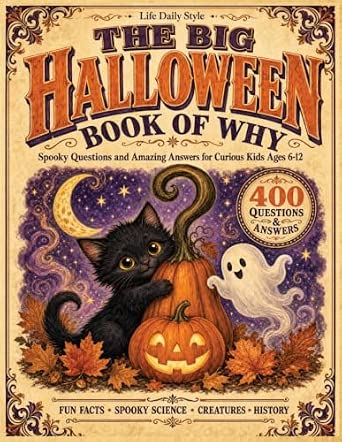 | Best for Halloween Reading Sessions | Format: Book | Question count: 400 | Content: Spooky questions, answers, creepy trivia, and fall activities | VIEW LATEST PRICE | See Our Full Breakdown |
| Frightlopedia: An Encyclopedia of Everything Scary, Creepy, and Spine-Chilling, from Arachnids to Zombies |  | Best for Broad Creepy-Fact Browsing | Format: Encyclopedia | Subject range: Scary, creepy, and spine-chilling topics | Example topics: Arachnids to zombies | VIEW LATEST PRICE | See Our Full Breakdown |
| Weird But True! Halloween: 300 Spooky Facts to Scare You Silly |  | Best for Halloween Party Trivia | Format: Fact-filled guide | Fact count: 300 | Topic: Halloween and spooky facts | VIEW LATEST PRICE | See Our Full Breakdown |
| spooky science books for kid | Format |
|---|---|
| Spooky Rivers: 25 Strange and | Book |
| Spooky Facts for Brave Kids: E | Book |
| The Science Spell Book: 30 Enc | Book |
| 100,000 HALLOWEEN WHYS for Kid | Book |
| Science Magic Tricks for Kids: | Book |
| 100,000 Whys Encyclopedia for | Encyclopedia |
| Spooky Science: Dissecting the | Book |
| Spooky Lakes: 25 Strange and M | Book |
| The Big Halloween Book of Why: | Book |
| Frightlopedia: An Encyclopedia | Encyclopedia |
| Weird But True! Halloween: 300 | Fact-filled guide |
More Details on Our Top Picks
Spooky Rivers: 25 Strange and Mysterious Rivers that Snake Across Our Planet
Spooky Rivers makes the most sense for kids who like real-world places with an unsettling backstory. Its 25 accounts pair river legends and unusual histories with illustrations and research, giving spooky readers a route into geography and nature. Compared with Spooky Lakes, it focuses on moving waterways rather than lakes, so the two books offer distinct settings instead of interchangeable lists. The tradeoff is that the description promises more mystery and legend than detailed science: children looking for explanations of river systems may get less than they want. I’d choose it for atmospheric browsing or shared reading, not as a science reference. Its finite set of 25 rivers also means readers seeking broad coverage may prefer a general nature book.
Pros:- Covers 25 mysterious rivers around the world
- Combines eerie histories and legends with nature topics
- Illustrated presentation can support browsing and shared reading
- Research-based stories offer real places alongside spooky themes
Cons:- Description indicates limited detailed scientific explanation
- The selection of 25 rivers may not cover every reader’s interests
- Story-led content may be less useful as a science reference
Best for: Kids who enjoy eerie legends tied to real rivers and families seeking illustrated, place-based spooky reading.
Not ideal for: Young readers seeking hands-on experiments or detailed explanations of geology, hydrology, and river ecosystems.
- Format:Book
- Topic:Mysterious and haunted rivers
- Featured places:25 rivers
- Geographic scope:Around the world
- Content:Eerie histories and legends
- Presentation:Illustrated
- Science detail:Description notes limited detailed scientific explanations
Our verdict“Choose this for illustrated river mysteries and spooky geography, but pick an experiment book for hands-on science.”
Spooky Facts for Brave Kids: Enter If You Dare
Spooky Facts for Brave Kids is the quick-browse pick: its collection of 300-plus frightening facts and trivia suits kids who want short bursts of Halloween-season reading rather than a sustained science project. The stated audience is ages 8–12, making it a more age-specific choice than 100,000 HALLOWEEN WHYS for Kids, which is presented for ages 6–12 and built around questions. That distinction matters: choose this for spooky tidbits, and the WHYS title for a question-led science adventure. The main tradeoff is that the available description gives little detail about the subjects or depth of the facts, so I can’t judge how much is science versus general Halloween trivia. Its seasonal, spooky focus may also narrow its appeal once Halloween has passed.
Pros:- Offers more than 300 facts and trivia items
- Designed for children ages 8–12
- Halloween theme gives the content a clear seasonal appeal
- Short-form trivia can suit readers who prefer browsing
Cons:- Description does not specify the topics or depth of the facts
- Spooky trivia may offer less direct science instruction than experiment books
- Narrow Halloween focus may limit year-round appeal
Best for: Ages 8–12 readers who enjoy short Halloween facts and want a casual, trivia-led spooky read.
Not ideal for: Children looking for step-by-step experiments, in-depth science explanations, or a book with a clearly described range of topics.
- Format:Book
- Content type:Facts and trivia
- Fact count:Over 300
- Intended age range:8–12
- Theme:Halloween and spooky topics
- Reading style:Trivia collection
Our verdict“Pick this for ages 8–12 who want quick spooky trivia, not for readers seeking structured science learning.”
The Science Spell Book: 30 Enchanting Experiments for Kids
For children who want to do science rather than just read about spooky subjects, The Science Spell Book offers 30 experiments framed with an enchanting theme. That hands-on focus separates it from Spooky Rivers, which centers on stories about real places, and makes this a stronger match for activity time. The experiments are described as a way to explore scientific principles, so the magical framing can help make learning feel playful. There is a real limitation, though: the available details don’t identify the experiments, materials, or difficulty level. Families can’t tell in advance whether a particular activity fits their child or what supplies it might need. The description also flags possible adult supervision, so this is less suited to children expecting to work independently.
Pros:- Includes 30 science experiments
- Hands-on activities encourage curiosity about scientific principles
- Enchanting framing suits a spooky-season science roundup
- Activity format differs from fact and legend collections
Cons:- Available description does not list experiment materials or instructions
- Some activities may require adult supervision
- Unspecified difficulty makes age fit hard to judge
Best for: Families with young learners who want themed, hands-on activities and are comfortable helping with experiments.
Not ideal for: Readers who want a clearly itemized experiment list, supply details, or activities children can reliably complete alone.
- Format:Book
- Experiment count:30
- Activity type:Science experiments
- Theme:Enchanting and spell-inspired
- Learning focus:Scientific principles
- Audience:Children
- Supervision:Some activities may require adult supervision
Our verdict“Choose this for supervised, themed science activities; choose a fact book if you want reading without setup.”
100,000 HALLOWEEN WHYS for Kids: A Spooky-Fun Science Adventure for Kids Ages 6–12
100,000 HALLOWEEN WHYS for Kids is aimed at children who learn by asking questions, with a Halloween-themed science adventure pitched to ages 6–12. That makes it a broader age-range fit than Spooky Facts for Brave Kids, which targets ages 8–12 and is described as a trivia collection. The question-led approach may suit younger readers who want prompts to spark discussion, while the older end of the range can use it for independent curiosity. But the title’s large number should not be mistaken for a confirmed question count: the description does not provide a contents list or explain how the book is organized. With format and length also unspecified, buyers have less information about reading depth than they get from the 30-experiment count in The Science Spell Book.
Pros:- Targeted at a broad 6–12 age range
- Halloween theme connects spooky fun with science questions
- Question-led framing can prompt conversation and curiosity
- Description highlights confidence-building for young learners
Cons:- Description does not explain the book’s format or length
- No detailed contents information is provided
- The title does not establish how many questions are actually included
Best for: Families with curious children ages 6–12 who want Halloween-themed questions to prompt discussion and exploration.
Not ideal for: Buyers who need a verified contents breakdown, clear format or length details, or hands-on activities listed in advance.
- Format:Book
- Intended age range:6–12
- Theme:Halloween
- Subject:Science questions and curiosity
- Approach:Question-led science adventure
- Learning aims:Curiosity and confidence
- Length:Not specified in the available product description
Our verdict“Choose this for question-driven Halloween science with a wide age range, but skip it if you need detailed contents information first.”
Science Magic Tricks for Kids: 50 Amazing Experiments That Explode, Change Color, Glow, and More!
Science Magic Tricks for Kids gives spooky-season science a show-and-tell angle: its 50 experiments include activities that explode, change color, and glow. That makes it a better fit for children drawn to visible effects than The Science Spell Book, whose description promises 30 enchanting experiments without naming their results. The larger stated activity count also offers more variety on paper, though the product description does not provide the instructions or safety guidance needed to judge each activity. “Safe and easy” is part of the supplied description, but families should still check individual directions and provide supervision, especially because the activities may be too advanced for very young children. I’d pick this for demonstration-minded kids, not for a reader who mainly wants spooky stories or facts.
Pros:- Includes 50 experiments
- Named effects include explosions, color changes, and glowing results
- Hands-on demonstrations can make science concepts visually engaging
- Offers a more explicitly effect-focused activity list than The Science Spell Book
Cons:- Available description does not provide detailed instructions or safety guidelines
- Some experiments may be too advanced for very young children
- Families may need to check activity requirements before starting
Best for: School-age children who enjoy dramatic demonstrations and families ready to supervise hands-on experiments.
Not ideal for: Very young children or families who need a detailed preview of materials, instructions, and safety guidance before choosing activities.
- Format:Book
- Experiment count:50
- Activity type:Science magic tricks and experiments
- Named effects:Exploding, color-changing, and glowing
- Learning approach:Hands-on demonstrations
- Safety information:Detailed safety guidelines not provided in the available description
- Age suitability:Description cautions that content may be too advanced for very young children
Our verdict“Choose this for supervised, visual science demonstrations; opt for a story or trivia title if experiments are not the goal.”
100,000 Whys Encyclopedia for Kids – Spooky Scientists (Halloween Edition)
For children who keep asking why, this book pairs spooky scientists with a question-and-fact format aimed at ages 6–12. That makes it a more direct fit for science-minded Halloween reading than Frightlopedia, whose broad scary-subject range includes topics such as arachnids and zombies. The Halloween framing can help younger readers approach unfamiliar ideas through a seasonal theme, while the encyclopedia approach suggests browsing rather than following one continuous story. The listing does not identify specific questions, experiments, illustrations, or science topics, so I would choose it for its stated age range and curiosity-led format—not for a guaranteed level of scientific depth. Compared with The Big Halloween Book of Why, its standout distinction is the spooky-scientist focus, but the available details give less information about the variety of content.
Pros:- Question-and-fact format is suited to children who like to browse and ask follow-up questions.
- Spooky scientist theme connects Halloween interest with science-oriented reading.
- Stated age range of 6–12 helps families judge whether it may suit their child.
Cons:- The listing does not specify the topics, number of entries, or depth of the explanations.
- No experiments or other hands-on activities are identified in the available product details.
- Its Halloween framing may offer less appeal to children seeking a general science encyclopedia.
Best for: Families with curious children ages 6–12 who prefer browsing spooky science facts and questions during Halloween season.
Not ideal for: Readers looking for a clearly specified set of experiments, detailed science explanations, or year-round topics beyond the Halloween theme.
- Format:Encyclopedia
- Theme:Spooky scientists and Halloween
- Content:Fun facts and questions
- Intended age range:6–12
- Seasonal focus:Halloween edition
- ASIN:B0H62VD4FG
Our verdict“Choose this for an ages 6–12 reader who enjoys spooky questions and science facts, but look elsewhere if hands-on experiments or a defined topic list matters.”
Spooky Science: Dissecting the Mysteries of Ghosts, Cryptids, Aliens, and Other Oddities
This is the pick for readers who want to examine spooky claims rather than simply collect creepy facts. Its focus on scientific investigation and evidence sets it apart from Spooky Lakes, which centers on strange natural places and their haunting histories. Ghosts, cryptids, aliens, and related oddities give the book a broad paranormal scope, while the analytical angle can prompt children to ask what evidence supports a claim. That approach is a stronger match for discussion-minded readers than a Halloween question book such as The Big Halloween Book of Why. The tradeoff is that the subject matter may feel speculative, and the available description does not say how the book handles uncertainty or how much scientific detail it offers. I would not treat the listing as proof that every mystery receives a definitive explanation.
Pros:- Uses scientific investigation as its lens on paranormal subjects.
- Covers several kinds of mysteries, including ghosts, cryptids, and aliens.
- Can support conversations about evidence and how to evaluate unusual claims.
Cons:- The paranormal subject matter may feel speculative to readers who prefer settled scientific topics.
- The available description does not establish the age range or level of explanation.
- No specific activities, illustrations, or chapter details are provided.
Best for: Older children and families who enjoy paranormal stories but want to discuss evidence, explanations, and scientific skepticism.
Not ideal for: Younger readers who want simple seasonal trivia, or families seeking only well-established science without paranormal claims.
- Format:Book
- Main approach:Scientific investigation and critical analysis
- Topics:Ghosts, cryptids, aliens, and other oddities
- Subject focus:Paranormal phenomena
- Intended audience:Readers interested in science and the supernatural
- ASIN:1577154797
Our verdict“Pick this for a reader who likes paranormal mysteries and wants an evidence-focused discussion, not for a child seeking straightforward Halloween facts.”
Spooky Lakes: 25 Strange and Mysterious Lakes that Dot Our Planet
Rather than ranging across monsters or Halloween trivia, this book narrows its attention to 25 unusual lakes and the strange stories linked to them. That tighter natural-world focus makes it a distinctive choice beside Spooky Science, which investigates paranormal claims, and Frightlopedia, which spans many creepy subjects. Readers who like geography, eerie histories, and real places may find the setting itself the hook: lakes offer a way into natural mysteries without making ghosts or aliens the main event. The limitation is equally clear. The description promises stories and facts, but not detailed scientific explanations, and the scope is fixed at 25 lakes. It also does not confirm illustrations, so buyers seeking a visually rich atlas or a hands-on science book should compare it with other options in the roundup.
Pros:- Focuses on 25 unusual lakes, giving the book a clear and memorable subject.
- Combines mysterious stories with facts about real places around the world.
- Offers a natural-world alternative to paranormal-focused books.
Cons:- Coverage is limited to 25 lakes rather than a wide range of spooky science subjects.
- The product description does not promise detailed scientific explanations.
- Illustrations are not confirmed in the supplied product information.
Best for: Children drawn to strange real-world places, geography, and eerie natural stories more than monsters or seasonal trivia.
Not ideal for: Readers who want step-by-step experiments, broad coverage of spooky science, or detailed explanations of the lakes’ phenomena.
- Format:Book
- Number of lakes:25
- Subject:Strange and mysterious lakes
- Geographic scope:Lakes around the world
- Content:Haunting histories, stories, and facts
- ASIN:1419770535
Our verdict“Choose this for a young geography fan who enjoys eerie natural places, but not for a reader seeking experiments or broad-topic science coverage.”
The Big Halloween Book of Why: 400 Spooky Questions & Amazing Answers for Curious Kids Ages 6-12
With 400 spooky questions, answers, creepy trivia, and fall activities, this is the most clearly defined choice here for a Halloween reading session with children ages 6–12. Its question-led format overlaps with 100,000 Whys Encyclopedia for Kids – Spooky Scientists, but the supplied description gives this book a specific count and mentions activities, making the content easier to picture before buying. It also offers more seasonal variety than Spooky Lakes, which stays with one type of natural mystery. The tradeoff is a strongly Halloween-centered scope: children wanting science topics they can return to throughout the year may outgrow the seasonal framing. The description does not name the questions or specify how much of the book is science, so I would choose it for varied spooky reading rather than a focused science reference.
Pros:- Lists 400 questions, giving buyers a concrete sense of the book’s question-based scope.
- Combines answers and creepy trivia with fall activities.
- States an intended age range of 6–12.
Cons:- The Halloween theme limits its appeal for readers seeking year-round science topics.
- The available description does not identify the questions or their scientific depth.
- Activities are mentioned, but their type and materials are not specified.
Best for: Families with children ages 6–12 who want a mix of spooky questions, trivia, and fall activities for Halloween season.
Not ideal for: Readers seeking a year-round science reference, a single in-depth subject, or a clearly described set of experiments.
- Format:Book
- Question count:400
- Content:Spooky questions, answers, creepy trivia, and fall activities
- Intended age range:6–12
- Theme:Halloween and fall
- ASIN:8368391652
Our verdict“Choose this for broad, seasonal question-and-activity reading with ages 6–12, but skip it if you want a focused science book for all seasons.”
Frightlopedia: An Encyclopedia of Everything Scary, Creepy, and Spine-Chilling, from Arachnids to Zombies
Frightlopedia is the broadest subject-led option in this group: its range runs from arachnids to zombies, so it suits readers who want to browse many kinds of creepy material rather than stay with lakes, paranormal claims, or Halloween questions. That breadth gives it a different role from Spooky Lakes, whose 25-location focus is more specific, and Spooky Science, which centers on investigation of paranormal mysteries. The encyclopedia format is a natural fit for dipping into topics as curiosity strikes. Still, breadth is not the same as science depth: the supplied description promises detailed information and facts but does not outline the scientific treatment, age suitability beyond a general all-ages claim, or any activities. I would choose it for variety, not as a substitute for a focused experiment book.
Pros:- Covers a wide range of scary and creepy topics, from arachnids to zombies.
- Encyclopedia format suits browsing and choosing topics independently.
- Offers a broad alternative to books centered on one mystery or natural feature.
Cons:- The supplied description does not clarify how much content is scientific versus general spooky information.
- No specific age range, activities, or topic-by-topic details are provided.
- Its wide scope may offer less depth on any one subject than focused books such as Spooky Lakes.
Best for: Children and families who enjoy browsing varied creepy subjects, from animals to fictional monsters, in an encyclopedia-style book.
Not ideal for: Readers who want a focused science curriculum, hands-on experiments, or a book limited to age-calibrated Halloween questions.
- Format:Encyclopedia
- Subject range:Scary, creepy, and spine-chilling topics
- Example topics:Arachnids to zombies
- Content:Information and facts
- Intended audience:All ages interested in spooky facts
- ASIN:0761183795
Our verdict“Pick this for a reader who wants variety across creepy subjects, but choose a more focused title for detailed science or activities.”
Weird But True! Halloween: 300 Spooky Facts to Scare You Silly
Weird But True! Halloween is the pick for kids who want spooky science-adjacent facts in quick, shareable bites rather than a book of experiments or extended explanations. Its 300 short facts make it easy to dip into between activities or use as conversation starters at a Halloween gathering. Compared with The Science Spell Book, which centers on hands-on experiments, this book favors reading and swapping surprising tidbits. That makes it simpler to use with a group, but less useful for children who want to understand how a phenomenon works step by step. The brief entries may also feel repetitive over repeated readings, and the available description does not establish how much of the content is science-focused. I’d choose it for festive trivia, not as a child’s main science resource.
Pros:- 300 short facts offer plenty of quick reading prompts
- Easy-to-read format suits casual browsing and group sharing
- Works as a conversation starter for Halloween celebrations
Cons:- Brief entries may not explain the science behind a fact in depth
- The short-fact format can feel repetitive on repeated readings
- Less suited to hands-on learning than experiment books such as The Science Spell Book
Best for: Families or party hosts who want easy-to-share Halloween facts for children to read aloud and discuss
Not ideal for: Curious readers seeking detailed scientific explanations, guided experiments, or a clearly structured science curriculum
- Format:Fact-filled guide
- Fact count:300
- Topic:Halloween and spooky facts
- Reading style:Short, easy-to-read entries
- Suggested use:Casual reading and party sharing
- Audience:All ages, according to the product description
Our verdict“Choose this for low-prep Halloween trivia and party conversation, but pick an experiment or question-and-answer book for deeper science learning.”
How We Picked
I compared the 11 books by the kind of spooky science experience they offer: hands-on experiments, question-and-answer browsing, real-world mysteries, or fact-based reference reading. I also weighed age fit, how easy each format is to pick up in short sessions, and whether the Halloween theme appears connected to science or mainly supplies spooky subject matter. Since a child who wants to mix ingredients needs a different book from one who enjoys flipping through facts, I treated format and intended use as major ranking factors.
The ranking gives priority to options that connect an engaging spooky theme with a clear way to learn or participate. Books with practical activities or accessible question-led structures rank ahead of titles that are mainly broad collections of scary facts, while focused nature titles remain strong for children with a specific interest. No single format suits every reader, so the lower-ranked books are not lesser choices; they are more specialized, less activity-led, or better suited to browsing than to guided science learning.
| spooky science books for kid | Format |
|---|---|
| Spooky Rivers: 25 Strange and | Book |
| Spooky Facts for Brave Kids: E | Book |
| The Science Spell Book: 30 Enc | Book |
| 100,000 HALLOWEEN WHYS for Kid | Book |
| Science Magic Tricks for Kids: | Book |
| 100,000 Whys Encyclopedia for | Encyclopedia |
| Spooky Science: Dissecting the | Book |
| Spooky Lakes: 25 Strange and M | Book |
| The Big Halloween Book of Why: | Book |
| Frightlopedia: An Encyclopedia | Encyclopedia |
| Weird But True! Halloween: 300 | Fact-filled guide |
Factors to Consider When Choosing Spooky Science Books For Kids
Before choosing a title, decide what you want the book to do after it catches your child’s attention. Spooky subject matter can mean an experiment, a question, a creature entry, or a real-world mystery, and those formats create very different reading experiences. Use these factors to match the book to your child’s habits, comfort level, and reason for wanting a Halloween-themed science read.
Choose the Format Before the Spooky Theme
Start with how your child likes to engage: doing, asking, or browsing. An experiment book can turn reading into a shared activity, but it also asks for supplies, setup, and adult involvement. Question-and-answer books suit children who like jumping between topics, though that structure may feel fragmented to a reader who prefers a continuous story. Encyclopedias and fact collections are easy to dip into, but they may not provide the guided learning path some families expect. Buy for the reading habit your child already has, not just for a cover that looks festive.
Check Whether “Science” Means Explanation or Theme
Some spooky books explain natural phenomena or scientific ideas, while others collect eerie facts and use science as part of the appeal. Neither approach is automatically wrong, but the distinction matters if you want a learning resource rather than seasonal entertainment. Look for clues in the title and description: experiments suggest active exploration, questions suggest explanatory reading, and creature or mystery references may signal a broader reference format. A child who wants to know how something works may lose interest in a book that only states unusual facts. Match the depth of explanation to the learning goal you have in mind.
Match the Creepy Content to the Child
“Spooky” can range from playful Halloween questions to material about ghosts, cryptids, zombies, or unsettling natural places. A child who enjoys mild suspense may still dislike disturbing illustrations or intense descriptions, so check sample pages when available rather than relying on a title alone. Shared reading can help younger or more sensitive children pause and discuss what is real, fictional, or unexplained. Older readers may want a stranger subject, but that does not always mean they want graphic presentation. Use the actual content and images—not age alone—to judge comfort.
Think About Reading Stamina and Browsing Style
Short entries and question-led layouts work well for readers who enjoy opening a book at random or reading a little at a time. Longer explanations can suit children who want to follow one subject more closely, but may be a poor fit for a reluctant reader looking for quick discoveries. A large fact count can sound appealing while still requiring a child to choose topics independently. If the book will be used during a family activity or classroom break, flexible sections are often easier to share. Consider whether your child wants a path through the book or a shelf of small discoveries.
Account for Supplies, Supervision, and Reuse
Hands-on books have a different ownership cost in time and preparation, even when the activities use common household materials. Check whether an experiment calls for adult supervision, cleanup, or items that need to be gathered in advance. Fact books avoid that setup and can be reread in short bursts, but may offer less to do together once the information has been read. For a gift, think about whether the child has a willing activity partner as well as a place to work. Pay for an activity format only when the family can support the activities.
Choose a Focus or a Broad Reference
Focused books about lakes or rivers can make a specific interest feel richer and give nature-minded children a clear subject to follow. Broad encyclopedias and fact collections offer more variety, which can help when a child has not settled on one favorite topic. The tradeoff is that a wide-ranging book may provide less detail on any single mystery, while a narrow topic can lose appeal if that interest fades. For a first spooky science book, variety may be safer; for a child already fascinated by strange places, focus can be more rewarding. Pick breadth for exploration and depth for an existing obsession.
Frequently Asked Questions
Which kind of spooky science book is best for a child who dislikes reading long chapters?
Look for a format built around short entries, questions, or standalone facts rather than a continuous narrative. The Big Halloween Book of Why and 100,000 HALLOWEEN WHYS for Kids are question-led options, while Weird But True! Halloween is framed as a fact collection. These structures let a child stop after a few pages without losing a story thread. If the child enjoys doing rather than reading, an experiment book may provide another route into the subject, though it calls for more time and adult support.
Are experiment books a better choice than spooky fact books?
They are better for children who want to make, observe, or test something, but not for every household or reader. Experiments can turn a book into a shared activity and make ideas easier to remember, yet they may require supplies, setup, supervision, and cleanup. Fact books are simpler to pick up and put down, and children can explore them independently. Choose based on whether your child is asking for something to do or something to discover, rather than assuming hands-on always means more educational.
How can I tell if a spooky book will be too scary for my child?
Check the subjects, sample text, and illustrations rather than using the word “spooky” as the only guide. Ghosts, cryptids, aliens, zombies, and strange natural places can be presented in very different tones, from playful to unsettling. If your child is sensitive to frightening images, preview the pages or read together before handing over a book. You can also talk about the difference between established science, folklore, and unanswered questions, which helps keep eerie topics from feeling like claims of fact.
Should I choose a broad spooky encyclopedia or a book about one subject?
A broad reference is a safer starting point when your child has several interests or you are unsure which topic will hold attention. A focused title about lakes or rivers makes more sense when your child already likes geography, nature, or unusual places. The broad option offers variety but may not spend as much time on any one subject; the focused one can feel more rewarding but is less flexible. Think about whether the book is meant to introduce new interests or feed an existing one.
What should I prioritize when buying a spooky science book for a younger reader?
Prioritize readable sections, clear explanations, and a tone that matches the child’s comfort with eerie material. Short questions and bite-size facts can make independent browsing easier, while an experiment book may work best when an adult can help with instructions and supplies. Do not rely on an age range alone: reading ability, attention span, and sensitivity to images vary among children of the same age. If you are unsure, choose a format that allows the child to read a small portion at a time and revisit favorite topics.
Conclusion
For a balanced mix of Halloween atmosphere and active learning, my best overall pick is The Science Spell Book. Families looking for a question-led option can choose 100,000 HALLOWEEN WHYS for Kids as a strong value-minded fit, while Spooky Lakes is the best match for children fascinated by real-world places and natural mysteries. For beginners or reluctant readers, start with a short-entry, browse-friendly format such as Weird But True! Halloween; for a child who wants a wider scary reference, consider Frightlopedia. If experiments are the main goal, compare The Science Spell Book with Science Magic Tricks for Kids and choose based on the activity style that best suits your household.
Columbus Day / Indigenous Peoples' Day Picks
long weekend sales
As an affiliate, we earn on qualifying purchases.