To ventilate in winter without freezing, time your airing during the warmest parts of the day, like midday. Keep windows open just a crack or for short periods to allow airflow while retaining heat. Use mechanical systems like heat recovery ventilators or exhaust fans with proper insulation and seals to prevent cold drafts. By combining these strategies, you can improve air quality without sacrificing warmth. For more helpful tips, continue exploring effective winter ventilation techniques.
Key Takeaways
- Ventilate during warmer, sunnier midday hours to reduce cold air entry and prevent freezing.
- Use controlled, short ventilation sessions with windows slightly ajar to limit heat loss.
- Install heat recovery ventilators (HRVs) or exhaust fans to improve airflow while maintaining warmth.
- Seal leaks around windows and doors to prevent drafts during ventilation.
- Keep one window slightly open and leverage natural sunlight to warm indoor air naturally.
Why Proper Ventilation Matters in Winter
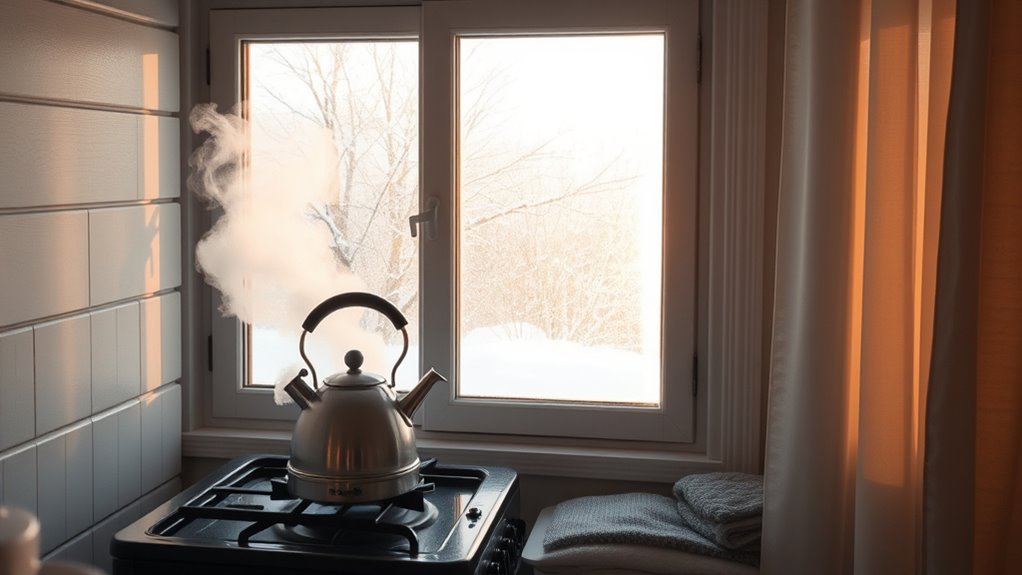
Proper ventilation is vital in winter because it helps prevent indoor air from becoming stale and polluted. When you don’t regularly exchange air, indoor air quality declines, trapping pollutants, moisture, and odors inside your home. This buildup can lead to health issues like allergies, respiratory problems, and increased mold growth. Good air exchange ensures fresh air enters while stale air leaves, maintaining a healthier environment. Even during cold weather, balancing ventilation with insulation is essential to avoid indoor air becoming too damp or contaminated. Additionally, utilizing energy-efficient ventilation systems can help maintain necessary airflow without losing excessive heat. By prioritizing proper ventilation, you reduce indoor pollutants and improve comfort without sacrificing warmth. Ultimately, maintaining good indoor air quality during winter keeps your home healthier, safer, and more comfortable for everyone inside.
When’s the Best Time to Ventilate?
The best time to ventilate during winter is when outdoor conditions are less harsh, typically during the warmest parts of the day. Timing considerations are vital because the ideal moment varies with seasonal differences. In milder winter climates, midday often offers the safest window, as temperatures are higher and the wind is calmer. In colder regions, you may need to wait for slightly warmer intervals or sunnier periods. Avoid ventilating during early mornings or late evenings when outdoor temperatures dip sharply. Monitoring local weather forecasts helps you identify optimal times, ensuring you can exchange stale indoor air without exposing your home to excessive cold or drafts. Additionally, understanding insulation and energy efficiency can help you better manage heat loss during ventilation. Being strategic about timing keeps your indoor environment healthy while minimizing heat loss.
How Can You Ventilate Safely and Effectively?
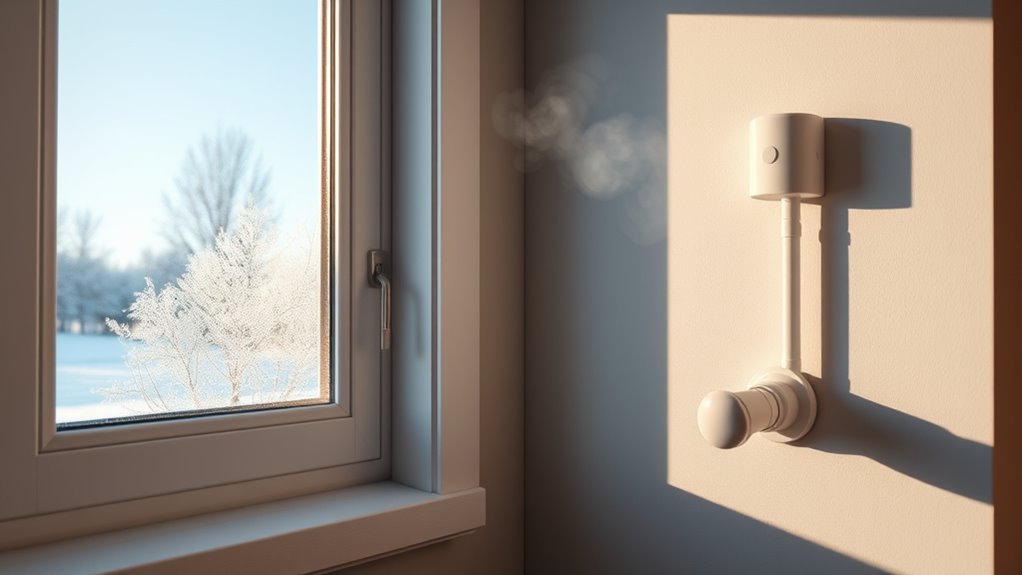
To ventilate safely and effectively, use the right equipment like fans and vents that prevent cold air from entering. Timing is key—choose moments when outdoor temperatures are higher or wind is calmer to minimize heat loss. Additionally, integrating proper ventilation techniques can help optimize airflow while maintaining warmth. By planning carefully, you can refresh your air without risking a freeze.
Use Proper Equipment
Choosing the right equipment is essential for safe winter ventilation. Proper tools help maintain good air quality and prevent freezing issues. Make sure your ventilation systems are well-maintained to operate efficiently and avoid breakdowns. Use weatherproof exhaust fans or heat recovery ventilators designed for cold climates to keep warm air inside while letting stale air escape. Ensure vents are properly sealed and insulated to prevent cold air intrusion. Regularly check and clean equipment to avoid blockages or malfunctions that could compromise air quality. Investing in quality, winter-specific ventilation gear ensures consistent airflow and safety. Proper equipment not only improves air quality but also reduces the risk of freezing pipes and drafts, creating a comfortable environment during the cold months. Proper maintenance practices are crucial for ensuring long-term functionality and safety of your ventilation system.
Time Ventilation Strategically
Timing your ventilation sessions carefully can make a significant difference in maintaining warmth while ensuring good air quality. To achieve effective air exchange and moisture control, plan to open windows during the warmest parts of the day or when indoor temperatures are higher. Short, frequent vents are better than long, open periods, reducing heat loss. Use a timer or schedule to avoid over-ventilating. Additionally, understanding airflow dynamics can help optimize ventilation without sacrificing warmth.
Keeping Your Home Warm While Ventilating
To keep your home warm while ventilating, consider using heat recovery ventilators that recycle heat from outgoing air. You can also open windows strategically during the warmest parts of the day to let in fresh air without losing too much heat. Ventilating during these peak hours helps maintain comfort while improving indoor air quality. Additionally, selecting a whole-house water filtration system designed for efficient operation can contribute to better indoor air quality and overall home comfort.
Use Heat Recovery Ventilators
Heat recovery ventilators (HRVs) are an effective way to keep fresh air flowing into your home without sacrificing warmth. They work by exchanging stale indoor air with fresh outdoor air while transferring heat from the outgoing air to the incoming air, guaranteeing your indoor air stays comfortable. This process maximizes heat recovery, reducing energy loss and helping maintain a cozy environment during winter. Installing an HRV can considerably improve indoor air quality without making your home colder. Plus, they operate quietly and require minimal maintenance. To get the most benefit, ensure proper placement and regular filter checks. Using an HRV allows you to ventilate efficiently, keeping your indoor air healthy and warm without the hassle of freezing temperatures. Understanding heat distribution can help optimize the effectiveness of your ventilation system.
Open Windows Strategically
Opening windows strategically allows you to ventilate your home effectively without letting the cold air take over. To do this, consider window placement; open windows on opposite sides of your home to create cross ventilation. This setup encourages fresh air to flow through quickly, replacing stale indoor air while minimizing heat loss. Timing is key—briefly opening windows during the warmest part of the day ensures you get good airflow without dropping indoor temperatures considerably. Keep one window slightly ajar instead of fully open, especially if outdoor temperatures are very low. Additionally, utilizing smart ventilation systems can help optimize airflow and maintain indoor comfort during winter months. By coordinating window openings to maximize cross ventilation, you can refresh your home’s air supply without sacrificing warmth or comfort.
Ventilate During Warmest Hours
Since outdoor temperatures are higher during the warmest hours of the day, this is the best time to ventilate your home without losing too much heat. Open windows briefly to let in fresh air, and consider placing indoor plants or air purifiers nearby to help filter pollutants. During these hours, you can:
- Crack windows open for 10-15 minutes to refresh the air
- Use indoor plants to naturally purify the environment
- Turn on air purifiers to remove indoor allergens and odors
- Keep doors open between rooms for better circulation
- Remember that ventilation routines can be integrated into your daily schedule to maintain consistent indoor air quality.
Ventilating during warmest hours minimizes heat loss while improving indoor air quality. Incorporating these strategies helps maintain a comfortable, healthy home, even in winter.
Using Mechanical Ventilation to Improve Airflow
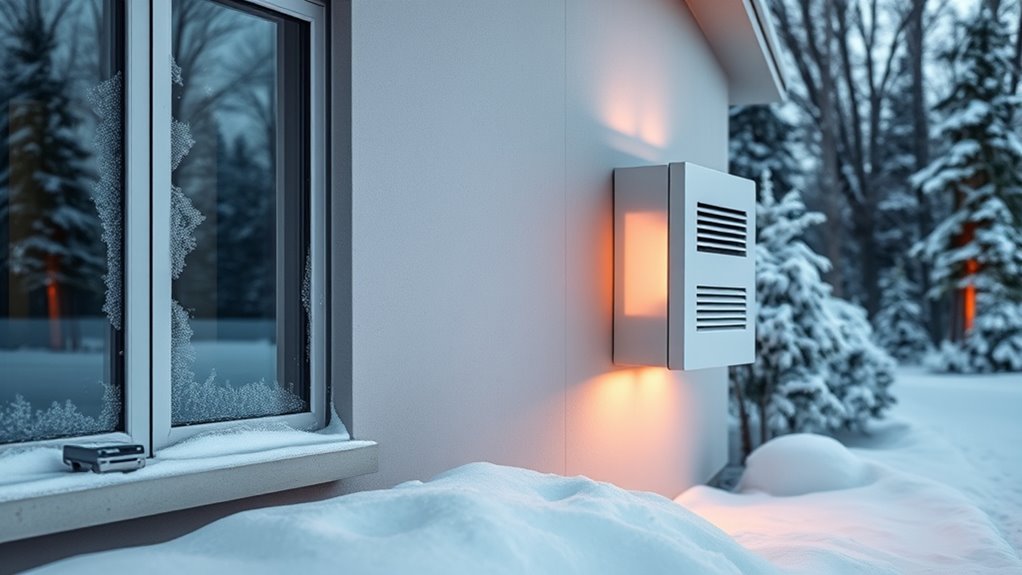
Mechanical ventilation systems can be an effective way to improve airflow in your home during winter without risking freezing temperatures. They facilitate proper air exchange, helping fresh air enter and stale air exit efficiently. To maximize their benefits, focus on strategic fan placement—install fans near vents or windows to direct airflow where needed. This targeted approach ensures continuous circulation without creating cold drafts. Modern systems can be controlled to run during specific times, maintaining indoor air quality while keeping warmth inside. By using mechanical ventilation, you reduce humidity and prevent mold buildup, all without compromising your comfort. Remember, proper installation and maintenance are key to ensuring your system works effectively and keeps your home ventilated safely during winter. Smart control systems can further optimize airflow and energy efficiency.
Extra Tips to Boost Air Quality and Keep Warm

To boost air quality and stay warm during winter, consider using air purifiers with HEPA filters to remove pollutants and allergens from indoor air. This helps maintain a healthy environment and reduces stuffiness. Additionally, adding indoor plants can naturally improve air quality by absorbing toxins and increasing humidity, making your space more comfortable.
Here are some extra tips:
- Use exhaust fans in kitchens and bathrooms to vent moisture and odors
- Keep vents and filters clean to ensure ideal airflow
- Maintain consistent humidity levels with humidifiers or diffusers
- Open curtains during the day to let in natural sunlight, warming the room naturally
Implementing these strategies helps you enjoy fresher air while staying cozy indoors, even during the coldest months.
Common Mistakes to Avoid When Ventilating in Cold Weather
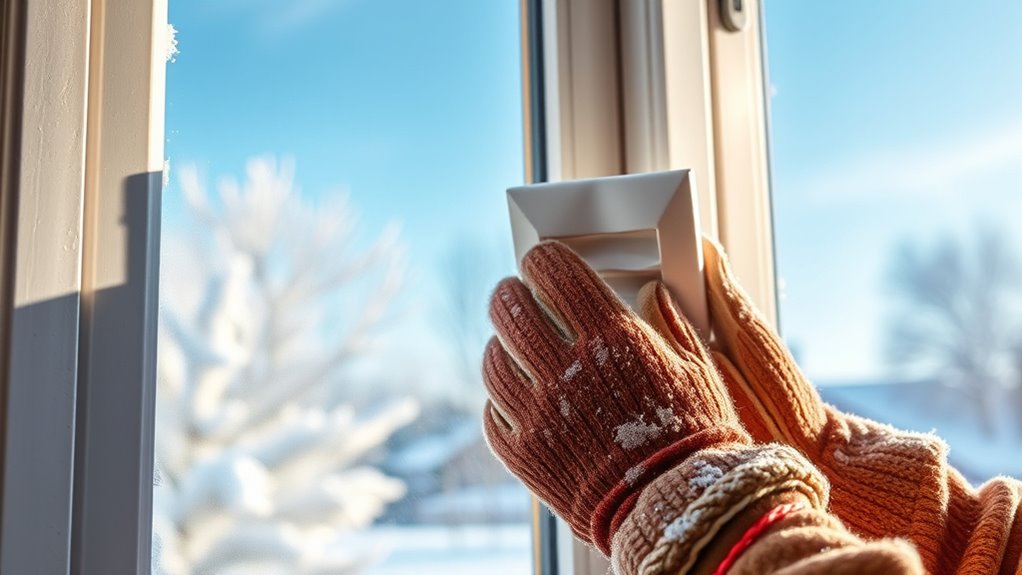
Ventilating properly during cold weather is essential for maintaining air quality, but it’s easy to make mistakes that compromise your comfort and energy efficiency. One common error is creating window drafts by leaving windows slightly open for too long, allowing outdoor air to cool your space rapidly. This can lead to unnecessary heating costs and discomfort. Avoid opening windows wide or for extended periods, especially during freezing temperatures. Instead, opt for short, controlled ventilation periods, such as quick cross-ventilation, to exchange indoor air without letting too much outdoor air in. Also, neglecting to seal leaks around windows can cause drafts, making your home colder and harder to heat. Be mindful of how outdoor air enters and exits, and control it wisely to prevent freezing issues and maintain a cozy environment.
Frequently Asked Questions
Can Opening Windows Cause Pipes to Freeze Indoors?
Opening windows in winter can cause pipes to freeze if you’re not careful. When you ventilate, it lowers indoor humidity and introduces cold air, which may reduce indoor temperatures near pipes. To prevent freezing, guarantee your HVAC maintenance is up to date, and consider using vents or exhaust fans that don’t chill the entire space. Maintaining a consistent indoor temperature and humidity level helps keep your pipes safe, even when airing out your home.
How Long Should I Ventilate During Cold Weather?
You should ventilate for about 5 to 10 minutes, twice a day, to dramatically improve indoor humidity and air quality without risking frozen pipes. Proper ventilation timing is essential; too long, and you risk cold drafts, too short, and stale air lingers. Think of it as giving your home a quick, invigorating breath—just enough to keep moisture levels balanced and prevent condensation, all while staying cozy inside.
Is It Better to Ventilate With Windows or Vents?
You should prefer vents over windows for ventilation during winter because they provide controlled natural airflow, reducing the risk of freezing. Vents allow consistent air exchange without opening your windows fully, which can let in cold drafts. Mechanical ventilation systems are also excellent options, as they actively manage airflow and humidity, ensuring fresh air circulates without compromising warmth. This way, you maintain a healthy indoor environment without sacrificing comfort.
What Indoor Temperatures Are Safe During Ventilation?
Picture a cozy cabin in winter’s embrace, where indoor air quality matters. You should keep indoor temperatures between 68-72°F during ventilation to maintain thermal comfort and prevent cold drafts. This balance ensures fresh air flows in without sacrificing warmth. Regularly opening windows or vents for short periods, even in cold weather, helps improve air quality without risking discomfort, keeping your space both healthy and comfortable.
How Do I Prevent Cold Drafts While Ventilating?
To prevent cold drafts while ventilating, you should control air exchange carefully by opening windows slightly or for short periods, ensuring a steady flow of fresh air without letting the room get too cold. Keep moisture in check by using exhaust fans or dehumidifiers, which also help reduce condensation. Wearing warm clothing or using draft stoppers around windows can further minimize drafts, making ventilation more comfortable and efficient during winter.
Conclusion
Ventilating in winter is like balancing on a tightrope—you need to keep your home fresh without losing too much heat. By timing your vents right, using smart methods, and avoiding common mistakes, you can enjoy clean air without freezing. Think of proper ventilation as a gentle breeze on a cold day—refreshing and necessary. Stay mindful, keep your home warm, and breathe easy all winter long.