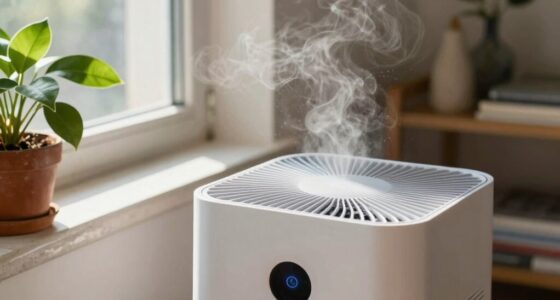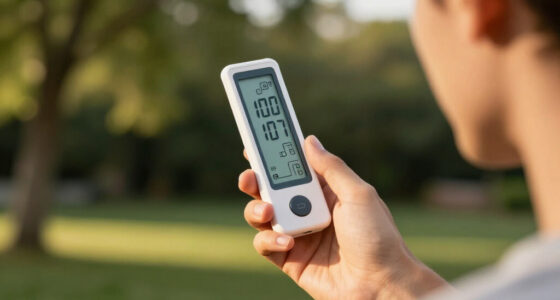
HEPA and MERV ratings measure how well air filters trap particles. HEPA filters are highly efficient, capturing at least 99.97% of tiny particles as small as 0.3 microns, making them ideal for allergens and microscopic pollutants. MERV ratings range from 1 to 20 and indicate the filter’s effectiveness for various particle sizes. Choosing the right depends on your needs, and understanding these ratings can help you make smarter choices—keep exploring to find out more.

Prime made for students and young adults
- Fast, free delivery for dorm and study essentials
- Prime Video and Amazon Music included
- Member-only deals
Key Takeaways
- HEPA filters trap ≥99.97% of 0.3-micron particles, focusing on microscopic pollutants like allergens and bacteria.
- MERV ratings (1-20) indicate a filter’s efficiency at capturing larger airborne particles, with higher numbers trapping smaller particles.
- HEPA filters are highly effective but generally have shorter lifespans and higher replacement costs than high-rated MERV filters.
- MERV ratings are broader and reflect performance across various particle sizes, suitable for different air quality needs.
- Higher MERV ratings do not always mean better overall air quality; filter type and environment determine optimal choice.
As an affiliate, we earn on qualifying purchases.
Understanding the Basics of Air Filtration Ratings
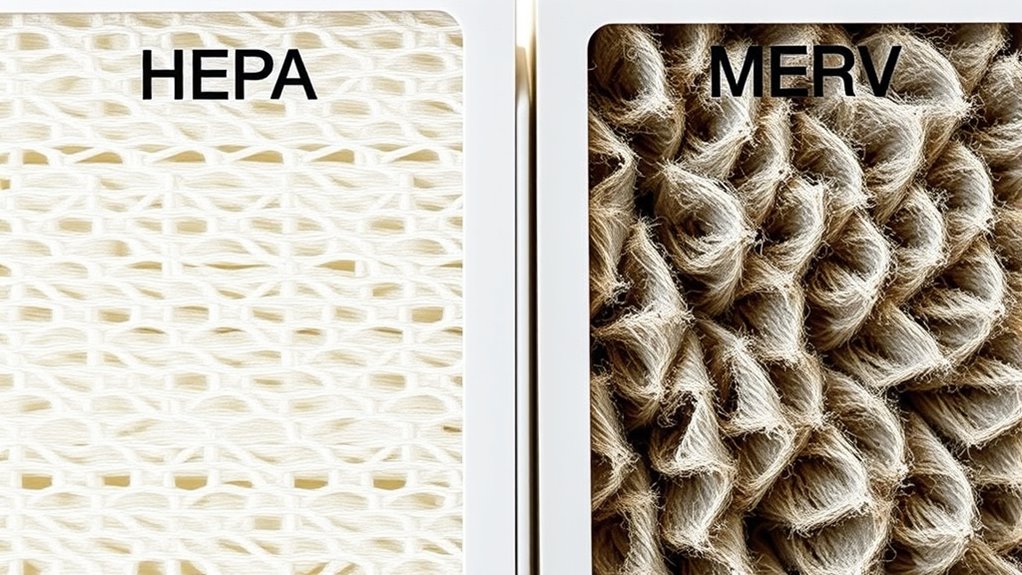
To understand air filtration ratings like HEPA and MERV, it’s important to know how filters are rated based on their efficiency. These ratings determine how well a filter improves air quality by capturing particles of different sizes. A higher rating means the filter can trap smaller particles, leading to cleaner air. Additionally, higher-rated filters often require more robust filter media, which can impact the overall airflow and system performance. For example, more efficient filters may increase airflow resistance, which can affect HVAC system operation. However, as filter ratings increase, their lifespan can decrease because they trap more contaminants more quickly. This trade-off highlights the importance of filter efficiency in selecting the right air purifier or filter system. Proper selection involves considering both filter lifespan and the specific air quality needs of your space, ensuring you get effective filtration without unnecessary replacements or reduced airflow. Understanding these ratings helps you choose the right filter for your needs, balancing air quality improvements with filter lifespan.
As an affiliate, we earn on qualifying purchases.
What Is a HEPA Filter and How Does It Work?
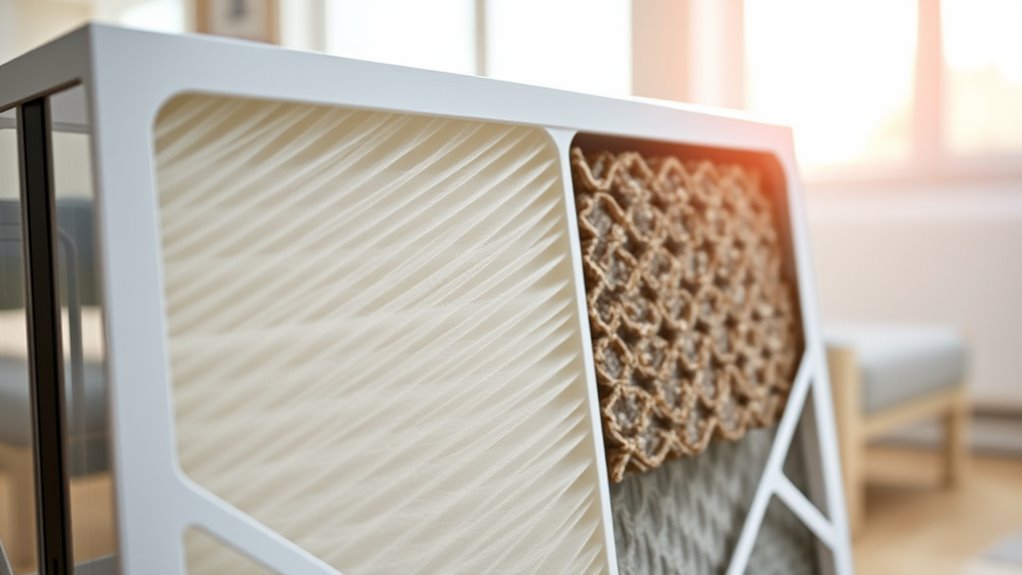
A HEPA filter traps tiny particles through a combination of interception, impaction, and diffusion, making it highly effective at capturing contaminants. It targets particles as small as 0.3 microns, including allergens and bacteria. By maintaining strong airflow and high efficiency, it guarantees cleaner air in your environment.
Filtration Mechanism Explained
HEPA filters are designed to trap tiny particles with remarkable efficiency, making them ideal for air purification. They use a combination of physical and electrostatic attraction to capture contaminants. The fibers in the filter create a maze that particles must navigate, increasing the chance of contact. Electrostatic attraction helps draw charged particles to the fibers, boosting performance. The filter’s longevity depends on particle load and maintenance, as clogged filters lose efficiency. Proper maintenance and timely replacement are essential to maintain optimal filtration performance for health and safety. Here’s a quick overview:
| Filtration Method | Description |
|---|---|
| Interception | Particles stick when close to fibers |
| Impaction | Larger particles collide with fibers |
| Diffusion | Small particles bounce randomly |
| Electrostatic Attraction | Charged particles attract fibers |
| Filter Longevity | Duration before replacement needed |
This combined mechanism ensures high efficiency and durability. Additionally, understanding the filtration mechanisms can help optimize air quality management in smart home systems, especially since the electrostatic attraction plays a key role in enhancing filtration. Recognizing how these filtration methods work together can improve the selection and maintenance of air filters for better health outcomes. Regular filter monitoring and maintenance practices are crucial for sustained performance.
Particle Size Targeting
Particle size targeting is at the core of how HEPA filters achieve their high level of air purification. HEPA filters are designed to trap tiny particles, typically as small as 0.3 microns, which include common allergens like pollen, dust mites, and pet dander. This precise targeting ensures effective allergen removal, notably improving indoor air quality. Because these filters capture particles at such a small size, they prevent allergens from circulating in the air you breathe. This level of filtration is especially beneficial for allergy sufferers and those with respiratory issues. By focusing on this specific particle size range, HEPA filters maximize air purification, creating a cleaner, healthier indoor environment where allergens are effectively removed. Understanding air filtration technology can also help in recognizing the importance of targeted filtration in various contexts, such as indoor air quality. Additionally, the particle size at which HEPA filters operate is critical for their effectiveness against airborne contaminants, making them a popular choice in settings requiring high standards of cleanliness and health. Recognizing the significance of filtration efficiency can further enhance understanding of how these filters maintain optimal air purity.
Airflow and Efficiency
While HEPA filters are highly effective at trapping tiny particles, their overall performance depends heavily on airflow and efficiency. Proper airflow enhancement ensures that air passes through the filter at the right speed, maximizing particle capture without reducing filter lifespan. Too fast, and particles may escape; too slow, and air quality suffers. Maintaining ideal airflow helps the filter operate efficiently, reducing strain and extending its lifespan. Consistent airflow also prevents bypass, where unfiltered air bypasses the filter entirely. To get the best performance, check your system’s airflow settings regularly and replace filters as recommended. Airflow balance is crucial to ensure that your HEPA filter functions optimally. This balance between airflow and efficiency ensures your HEPA filter works effectively, maintaining cleaner air and prolonging the filter’s usefulness. Additionally, adjusting airflow settings to match the filter’s specifications can further optimize its performance and lifespan.
high efficiency particulate air filter
As an affiliate, we earn on qualifying purchases.
As an affiliate, we earn on qualifying purchases.
Deciphering the MERV Rating System

Understanding the MERV rating system helps you choose the right filter for your needs. You’ll want to know what the scale means, how ratings are determined, and which options fit your environment. Let’s explore these points to make your selection easier.
MERV Scale Overview
The MERV (Minimum Efficiency Reporting Value) scale is a standardized way to rate the effectiveness of air filters in capturing airborne particles. It helps you understand how well a filter performs across various particle sizes. Most rating scales evaluate filters based on their ability to trap particles like dust, pollen, and bacteria. When examining MERV ratings, you’ll notice they range from 1 to 20, with higher numbers indicating better filtration. Here’s what to keep in mind:
- Lower MERV ratings (1–4) suit basic filtering needs, like capturing dust.
- Mid-range ratings (5–12) are common for residential use, balancing efficiency and airflow.
- Higher ratings (13–20) are used in industrial settings or cleanrooms, trapping very small particles.
- Understanding the inner wisdom behind these ratings can help you select the most suitable filter for your environment.
- Considering the filter material is crucial, as different materials offer varying levels of filtration efficiency and airflow resistance.
- Recognizing the filter design can also influence how effectively a filter performs across different particle sizes, impacting overall air quality.
- Additionally, being aware of filter lifespan and maintenance needs can ensure optimal performance over time, especially in environments demanding high air purity.
- It is important to select a filter with a proper airflow capacity to prevent system strain while maintaining filtration efficiency.
Rating Determination Factors
Deciphering how MERV ratings are determined helps you select the right filter for your needs. MERV ratings are based on how effectively a filter captures particles of different sizes, from pollen to bacteria. Factors influencing these ratings include the filter’s material, fiber density, and construction quality. Higher-rated filters tend to have better particle retention but may also reduce airflow, impacting filter longevity. This can lead to increased maintenance requirements, such as more frequent replacements or cleaning. Additionally, attention to detail in the design and manufacturing process can significantly influence a filter’s overall effectiveness and lifespan. Understanding the filtering efficiency of different materials helps consumers make more informed choices to optimize indoor air quality. Conversely, lower-rated filters generally last longer but might not trap smaller particles as effectively. Understanding these factors helps you balance filtration performance with filter longevity and maintenance needs, ensuring you choose a filter that maintains indoor air quality without excessive upkeep.
Practical Selection Tips
How can you easily interpret the MERV rating system to pick the right filter for your space? First, understand that higher MERV ratings mean better particle removal but may require more frequent air purifier maintenance. Second, match your needs: lower MERV (1-4) for basic dust, moderate (5-8) for pollen and pet dander, and higher (13-16) for allergens and bacteria. Third, keep in mind filter replacement schedules; higher-rated filters often need more frequent changes to maintain efficiency. This balance guarantees *ideal* air quality without overburdening your system. When selecting a filter, consider your environment and health needs, and regularly check your air purifier’s maintenance guidelines to avoid airflow issues. Properly deciphering the MERV system helps you choose filters that protect your space effectively and last longer. Additionally, understanding filter efficiency can help you make more informed decisions about your air quality management. Recognizing the differences in brewing methods, such as French press or percolator, can also influence the type of filter you need for fresh, clean air in your home.
As an affiliate, we earn on qualifying purchases.
Comparing Effectiveness: HEPA Vs MERV Filters

When comparing HEPA and MERV filters, it’s important to understand that HEPA filters are designed to capture at least 99.97% of particles as small as 0.3 microns, making them highly effective for improving air quality. HEPA filters excel at removing microscopic pollutants like allergens, bacteria, and viruses, providing superior filtration performance. MERV filters, on the other hand, vary in effectiveness based on their rating, generally capturing larger particles like dust, pollen, and mold spores. While HEPA filters offer exceptional air quality benefits, they tend to have a shorter filter lifespan and require more frequent replacements. MERV filters, especially those with higher ratings, can deliver good air quality with longer lifespan and lower maintenance costs. Your choice depends on your specific needs for air purity and filter durability.
Choosing the Right Filter for Your Space

Choosing the right filter for your space depends on your specific air quality needs and filter maintenance preferences. To make an informed choice, consider these factors:
Selecting the right filter depends on your air quality needs and maintenance preferences.
- The level of airborne particles you want to remove
- How often you’re willing to perform filter maintenance
- The compatibility of filters with your HVAC system
If you need high air quality, a HEPA filter might be best, but it requires more frequent replacement. For moderate air quality needs, a MERV filter offers a balance between efficiency and ease of maintenance. Remember, selecting the right filter isn’t just about ratings—it’s about matching your environment’s air quality demands with your ability to maintain the filter properly. Proper choice and upkeep ensure consistently clean air and healthier indoor spaces.
Common Misconceptions About Air Filtration Ratings
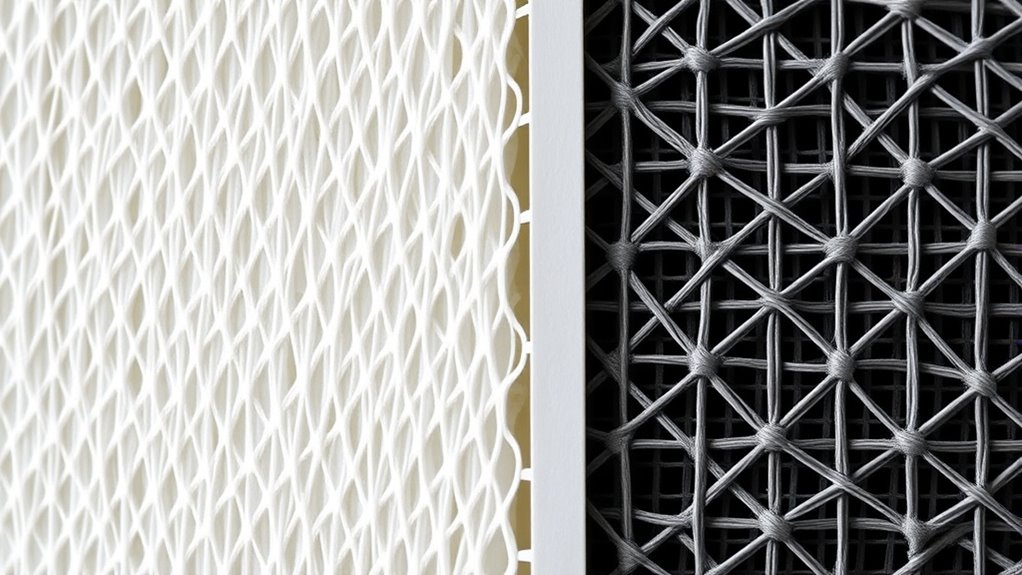
Many people assume that higher-rated air filters automatically mean better air quality, but this isn’t always true. A higher rating doesn’t guarantee a longer filter lifespan or improved performance in your space. For example, a MERV 13 filter may trap more particles, but it can also increase noise levels and reduce airflow, which might strain your HVAC system. Conversely, a lower-rated filter could last longer and operate quietly, but might not capture enough pollutants. It’s a common misconception that bigger numbers mean better results across the board. Instead, you should consider your specific needs, balancing filtration efficiency with filter lifespan and noise levels. Choosing the right filter requires understanding these nuances, rather than relying solely on the rating number.
Frequently Asked Questions
Can a Filter Have Both HEPA and MERV Ratings?
Yes, a filter can have both HEPA and MERV ratings, but it’s rare. These ratings reflect different standards—HEPA for high-efficiency particle removal and MERV for general air filtration. When shopping, check for filter compatibility and rating integration to guarantee it meets your needs. Keep in mind, combining these ratings often means the filter is specially designed, so always verify if it suits your specific air cleaning requirements.
How Often Should I Replace Air Filters Based on Ratings?
You should replace your air filter every 3 to 6 months, depending on its ratings, filter lifespan, and your indoor environment. Higher-rated filters like HEPA or MERV 13-16 typically last longer if maintained properly, but neglecting to substitute them can reduce efficiency and impact indoor air quality. Regular changes help minimize environmental impact and ensure your HVAC system runs smoothly, keeping your air clean and healthy.
Are Higher MERV Ratings Always Better for Indoor Air Quality?
Higher MERV ratings aren’t always better for your indoor air quality because filter lifespan and rating accuracy vary. While higher ratings can trap smaller particles, they may reduce airflow and strain your HVAC system, leading to more frequent replacements. You should choose a MERV rating suited to your needs, balancing filtration with system efficiency. Always consider the manufacturer’s recommendations to guarantee peak performance without compromising comfort or air quality.
Do HEPA Filters Eliminate Odors and Chemicals?
HEPA filters do a great job eliminating airborne allergens, but they don’t specifically target odors and chemicals. They use dense filter materials that trap tiny particles, including dust, pollen, and pet dander. However, for odors and volatile chemicals, you’d need activated carbon or other specialized filters. Combining HEPA with these filters provides thorough air cleaning, ensuring you reduce allergens, odors, and chemicals effectively.
How Do Environmental Factors Affect Filter Performance?
While subtle environmental influences may seem minor, they can truly impact your filter’s efficiency. Poor air quality and increased pollution control challenges can clog filters faster, reducing their ability to capture particles effectively. Humidity, temperature fluctuations, and airborne chemicals also play a role, potentially degrading filter materials over time. To maintain ideal performance, regularly monitor your environment and replace filters as needed, ensuring your space stays fresh and healthy.
Conclusion
Now that you know what HEPA and MERV ratings really mean, you can make smarter choices for your air quality. Think of it as finding the right tool for the job, instead of trying to buy a one-size-fits-all solution. Whether you’re battling allergies or just want fresh air, understanding these ratings helps you avoid throwing money at something that’s not a perfect fit. In the end, your space will breathe easier, like a weight lifting off your shoulders.
Fall Picks
fall essentials
As an affiliate, we earn on qualifying purchases.