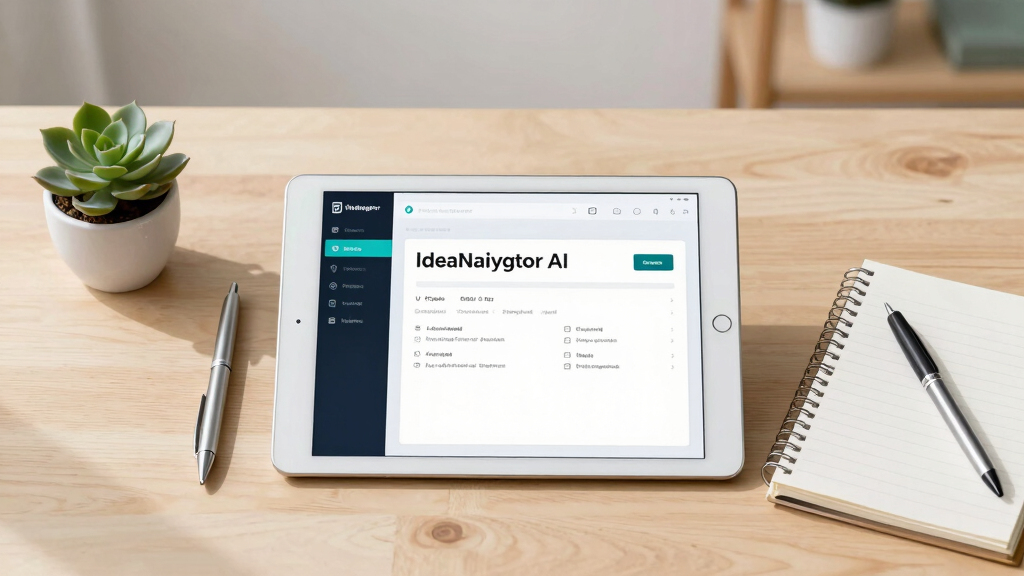

📊 Full opportunity report: IdeaNavigator AI: One Evidence-Mined Idea a Day on ThorstenMeyerAI.com — validation score, market gap, and execution plan.
TL;DR
IdeaNavigator AI generates one evidence-mined software idea per day using automated analysis of online complaints. It scores ideas based on real demand signals, helping reduce product failure risks. The system operates autonomously on a Mac mini.
IdeaNavigator AI, an autonomous idea generation system, now produces one validated software idea each day by mining real complaints and demand signals from online sources. This innovation aims to address the high failure rate of software products built on unverified assumptions, offering a new approach to idea validation that is faster and more evidence-driven.
The system, built as a public-facing extension of the private IdeaClyst validation workspace, runs entirely on a single Mac mini. It autonomously generates, mines evidence from sources such as app reviews, Hacker News, GitHub issues, and Stack Overflow, then scores each idea from 0 to 100 based on the strength of the demand signal.
The scoring results in four verdicts: Build, Validate, Research, or Rethink. The majority of ideas are marked Rethink or Research, preventing costly investments based on weak or thin signals. Only rarely does an idea receive a Build verdict, indicating a high-confidence opportunity.
This approach emphasizes de-risking product development by focusing on demand signals rather than opinions or market guesses, aiming to reduce the failure associated with building products nobody needs.
IdeaNavigator AI — one evidence-mined idea a day
Idea generation is cheap; validation is the bottleneck. Mine real complaints, scope an idea, score it 0–100 — and let the verdict tell you when not to build.
Verdict: Validate. Promising — but a high score is a prior, not a proof. The point of the gauge is the verdicts that say not yet.
Independent commentary, produced with AI assistance under human editorial oversight. The views are the author’s own and may change. IdeaNavigator AI generates, mines and scores ideas via automated pipelines; scores and verdicts are programmatic priors that may contain errors or bias and are not validated demand — verify independently before building. As an Amazon Associate the author earns from qualifying purchases; pages may contain affiliate links. Product and company names are trademarks of their respective owners; mention does not imply endorsement.
Impact of Evidence-Based Idea Filtering on Software Development
By automating the mining and validation of real demand signals, IdeaNavigator AI could significantly reduce the high costs associated with building products based on unverified hunches. Its evidence-driven approach promotes disciplined decision-making, potentially lowering failure rates and improving resource allocation in software projects. This system exemplifies a shift toward data-backed innovation, emphasizing validated problems over speculative ideas.
![Free Fling File Transfer Software for Windows [PC Download]](https://m.media-amazon.com/images/I/41Vq6ZqHfjL._SL500_.jpg)
Free Fling File Transfer Software for Windows [PC Download]
- User-Friendly FTP Interface: Intuitive design similar to traditional FTP clients
- Reliable FTP Site Management: Easy and dependable site maintenance
- FTP Automation & Sync: Automate transfers and synchronize files
As an affiliate, we earn on qualifying purchases.
As an affiliate, we earn on qualifying purchases.
Background of Idea Validation Challenges in Tech Innovation
Traditionally, idea generation is inexpensive, but validation is costly and slow, leading many startups and developers to build products based on intuition rather than proven demand. The startup landscape is littered with ideas that seemed promising but failed due to lack of real-world evidence. Tools that automate evidence collection and scoring, like IdeaNavigator, aim to reverse this trend by prioritizing demand signals from online communities, which are honest and effortful expressions of frustration or need.
![MixPad Free Multitrack Recording Studio and Music Mixing Software [Download]](https://m.media-amazon.com/images/I/71ltIxIuz1L._SL500_.jpg)
MixPad Free Multitrack Recording Studio and Music Mixing Software [Download]
- Multitrack Recording and Mixing: Create mixes with audio, music, and voice tracks
- Track Customization: Apply effects and editing tools to tracks
- Music Creation Tools: Includes Beat Maker and MIDI Creator
As an affiliate, we earn on qualifying purchases.
As an affiliate, we earn on qualifying purchases.
It is not yet clear how well the system’s scoring correlates with actual market success or how widely it will be adopted by developers and companies. The system's reliance on online complaints may also overlook silent or unvoiced needs, and the long-term impact on product innovation remains to be seen.

Git and GitHub for Beginner Programmers: Track Code, Fix Mistakes, and Publish Projects
As an affiliate, we earn on qualifying purchases.
As an affiliate, we earn on qualifying purchases.
Next Steps for Validation and Broader Integration
The team plans to monitor the real-world performance of ideas flagged as Build by the system, gathering data on their market success. They also aim to refine the scoring algorithms and expand the sources of demand signals. Wider adoption among startups and enterprise teams could follow if the system demonstrates consistent value in reducing failed investments.

Charting and Technical Analysis
- Charting and Technical Analysis: Advanced charting tools for analysis
As an affiliate, we earn on qualifying purchases.
As an affiliate, we earn on qualifying purchases.
Key Questions
How does IdeaNavigator AI find ideas?
The system mines complaints and requests from sources like app reviews, Hacker News, GitHub issues, and Stack Overflow, focusing on publicly expressed frustrations and unmet needs.
What does the scoring system indicate?
It assigns a score from 0 to 100 based on the strength of the demand signal, with higher scores indicating more promising ideas. Only rarely does an idea receive a 'Build' verdict.
Can this system replace traditional product validation?
It aims to complement existing methods by providing fast, evidence-based insights, but human judgment and market testing remain essential for final validation.
Is the system fully autonomous?
Yes, the entire process—from idea generation to scoring and syndication—runs autonomously on a single Mac mini, with minimal human intervention.
What are the limitations of IdeaNavigator AI?
Its effectiveness depends on the quality and representativeness of online complaints; silent or unvoiced demand may be missed, and the correlation with market success is still being evaluated.
Source: ThorstenMeyerAI.com