
📊 Full opportunity report: Electric Code Calculator on IdeaNavigator AI — validation score, market gap, and execution plan.

Prime made for students and young adults
- Fast, free delivery for dorm and study essentials
- Prime Video and Amazon Music included
- Member-only deals
TL;DR
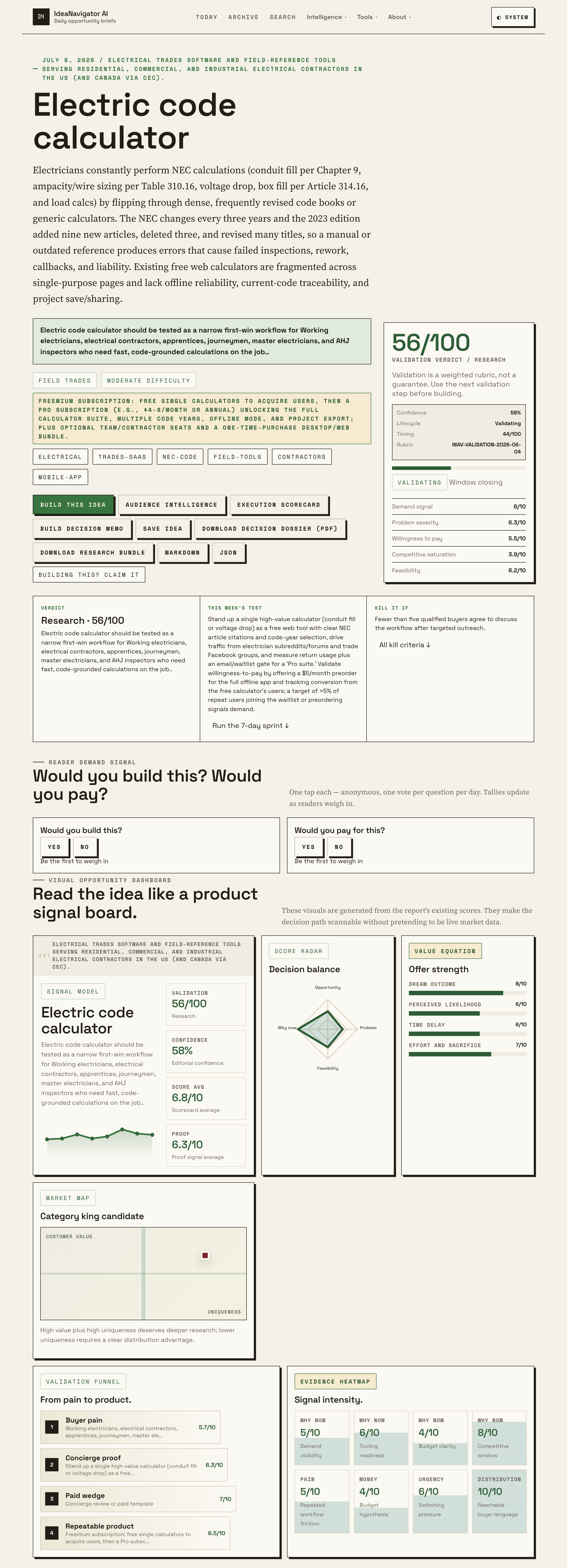
A new electric code calculator is being developed to help electricians perform NEC calculations quickly and accurately. It will offer offline access, project sharing, and support for the latest code revisions, addressing industry needs amid rising demand and code complexity.
A new electric code calculator is in development to provide electricians, contractors, and inspectors with a fast, offline tool for NEC calculations. This initiative aims to address the widespread need for accurate, up-to-date, and easily accessible code compliance tools, especially as the 2023 NEC revision introduces significant changes.
The calculator is designed as a mobile-first and web application that will include key NEC calculations such as conduit fill, wire ampacity, voltage drop, box fill, and load calculations. It will cite specific NEC articles and tables, support multiple code years (2017, 2020, 2023), and operate fully offline. To understand more about how code compliance tools are evolving, see Search as Code: Perplexity Is Right About the Future. Users will be able to save and share project calculations, making it suitable for field use and team collaboration.
The project is currently in the development stage, with a prototype focusing on a high-value calculator like conduit fill or voltage drop as a free web tool. For insights on security considerations when integrating AI tools, see Your Coding Agent Is an Attack Surface. The goal is to validate market interest through traffic from electrician forums and preorders for a paid Pro version, which will unlock all calculators, code-year switching, offline mode, and project export features.
Importance for Electrical Industry and Code Compliance
This electric code calculator addresses a critical industry need for reliable, up-to-date, and easy-to-use tools to ensure NEC compliance. As the electrical trade faces a surge in demand and a significant skills gap, especially with nearly 30% of union electricians near retirement, such a tool can reduce errors, rework, and inspection failures. It also supports less-experienced apprentices and contractors by streamlining complex calculations, potentially improving safety and reducing liability.
With the 2023 NEC revision adding nine new articles and revising many existing ones, manual calculations and outdated references pose risks of errors. An integrated, current, offline calculator can help maintain compliance and reduce costly mistakes, especially in fast-paced job sites.
As an affiliate, we earn on qualifying purchases.
Industry Trends and the Need for Updated Calculation Tools
The electrical industry is experiencing a structural boom, with the Bureau of Labor Statistics projecting 9% employment growth from 2024 to 2034, roughly 81,000 new jobs annually. Simultaneously, nearly 30% of union electricians are approaching retirement, intensifying the skills gap. The rise of electrification projects—such as data centers, EV charging stations, and solar installations—has increased the complexity and volume of electrical work, making accurate NEC calculations more vital than ever.
Current tools are often fragmented, web-based, and lack offline capability, which limits their usefulness in field conditions. The recent NEC updates, including the 2023 revision, further highlight the need for integrated, current reference tools that can keep pace with code changes and support the expanding scope of electrical work.
“Our goal is to create a simple yet powerful app that electricians can rely on in the field, with current code support and easy sharing capabilities.”
— a project developer
offline electrical code calculator app
As an affiliate, we earn on qualifying purchases.
As an affiliate, we earn on qualifying purchases.
Remaining Questions About the Calculator’s Features and Adoption
It is not yet clear how quickly the initial MVP will gain traction among electricians or how effectively it will integrate with existing workflows. The exact pricing, user interface, and comprehensive feature set are still under development, and user feedback will be critical for refinement. Additionally, the pace of NEC code updates and how well the tool will keep pace remain uncertain.
As an affiliate, we earn on qualifying purchases.
Next Steps Toward Launch and Market Validation
The development team plans to release a prototype focused on a core calculator, such as conduit fill, within the coming months. They will measure user engagement through traffic, feedback, and preorders for the full Pro version. Success metrics include achieving a >5% conversion rate from free users to paid subscriptions and gathering enough demand to justify full-scale deployment. Further updates will include expanding calculator features, refining offline capabilities, and establishing partnerships with electrical trade associations.
As an affiliate, we earn on qualifying purchases.
Key Questions
When will the electric code calculator be available for download?
The initial MVP is expected to launch soon, with a full version following after validation and user feedback, likely within the next few months.
Will the calculator support the latest NEC code revisions?
Yes, the tool is designed to support multiple code years, including the upcoming 2023 revision, with plans to update regularly.
Is the calculator free to use?
The initial version will offer a free tier with core calculators, with a paid Pro subscription unlocking additional features, offline mode, and project sharing.
Can I use the calculator offline in the field?
Yes, offline operation is a key feature planned for the full release, ensuring usability even without internet access.
How will this tool improve safety and compliance?
By providing accurate, up-to-date calculations directly aligned with NEC code, it reduces errors, rework, and inspection failures, improving overall safety and compliance.
Source: IdeaNavigator AI
Columbus Day / Indigenous Peoples' Day Picks
long weekend sales
As an affiliate, we earn on qualifying purchases.