📊 Full opportunity report: Ahead Of Its Time: AI Hardware Designed Before The Algorithms on ThorstenMeyerAI.com — validation score, market gap, and execution plan.
TL;DR
AI hardware is undergoing a fundamental shift, with new designs focusing on inference workloads rather than traditional training. This change addresses efficiency and scalability for serving billions of users and agents.
New AI hardware architectures are emerging that are purpose-built for inference workloads, marking a significant departure from existing GPU-based systems originally designed for earlier AI models. This shift aims to optimize throughput, energy efficiency, and scalability as inference becomes the dominant AI task, serving billions of users and autonomous agents worldwide.
According to Thorsten Meyer, a researcher and industry observer, most current AI chips, including GPUs and accelerators, were conceived before transformer models and large-scale inference workloads became dominant. These chips were originally optimized for training, but today, the workload has shifted toward inference, which requires different hardware characteristics.
Industry insiders highlight that the primary focus now is on three key areas: thermal efficiency, memory and interconnect latency, and workload specialization. Thermal management is critical because increasing floating-point operations on current chips leads to overheating and throttling. The next generation of inference hardware will likely feature low-voltage silicon to improve power efficiency and thermal performance.
Memory bandwidth and inter-chip communication latency are also under scrutiny. The bottleneck is no longer on-chip bandwidth but on the latency of data transfer between chips. Future hardware aims to treat large clusters as unified memory pools, reducing latency and improving performance.
Finally, specialization in hardware design is gaining momentum. Unlike general-purpose chips, dedicated inference hardware can optimize for specific tasks such as prefill and decode phases of model operation, leading to significant efficiency gains.
Almost every chip serving AI today was architected for a world that no longer exists — training-dominant, general-purpose, conceived before the transformer became the only architecture that mattered. The next decade rebuilds silicon around inference at civilizational scale.
Strip away the hype and the gains in purpose-built inference silicon come from exactly three places. Each tells you where the roadmap goes.
Prefill and decode have opposite hardware appetites. Running both on one undifferentiated chip satisfies neither. The answer is disaggregation — a pipeline of specialized chips, each doing the part it was born for.
Today we make tokens the way the Renaissance made screws — one at a time, by hand, on general-purpose machines. The endpoint is fab-like: cost per token falls as the facility grows.
Capital believes the workload is specializing. But the physics bet and the adoption bet are not the same bet.
- Merchant inference ASICs arriving with working silicon, $1B+ in contracts, gigawatt-scale roadmaps
- Groq’s inference tech absorbed into NVIDIA (~$20B)
- Cerebras public at large valuations; custom-chip shipments projected to outgrow GPUs
- Architecture lock-in: a transformer ASIC is obsolete the day a post-transformer design wins. The GPU’s inefficiency is its insurance.
- No independent benchmarks yet — the numbers are vendor-claimed.
- NVIDIA’s moat is software. A proprietary toolchain asks customers to abandon what they know.
If token production becomes a majority of output, and national capacity is measured in agents per gigawatt, the token supply chain becomes the most strategic chokepoint on Earth.
This is the strongest argument I know for the local-first, open-weight posture: keep meaningful capability distributed — models you can run yourself, on hardware you own, close enough to the frontier to matter. Scale pulls one way; sovereignty and resilience pull the other. Both futures get built at once.
It’s who owns the factories when it does, and whether the answer is “many.”
Implications of Custom Hardware for AI Scalability
This hardware shift is crucial because it directly impacts the ability to scale AI services to billions of users and autonomous agents. By focusing on energy efficiency, throughput, and latency, new architectures will enable more cost-effective and sustainable AI deployment at a global scale.
For businesses and developers, this means hardware will become more tailored to specific inference tasks, potentially reducing costs and increasing performance. It also signals a move away from legacy GPU architectures, which may become less relevant as dedicated inference chips mature.
As an affiliate, we earn on qualifying purchases.
Evolution of AI Hardware and Workload Demands
Historically, AI hardware was designed around the training phase, which involves intensive compute and data movement. GPUs and accelerators from major vendors like NVIDIA and AMD have dominated this space since the early 2010s. However, recent trends show that inference—the process of deploying trained models—now accounts for the majority of AI compute spending.
In 2023 and 2024, training workloads have been the focus of massive clusters, but the industry recognizes that inference, especially for serving billions of users and autonomous agents, is the real growth driver. This shift has prompted a reevaluation of hardware design priorities, emphasizing throughput, energy efficiency, and latency reduction.
Several industry leaders and researchers, including Thorsten Meyer, suggest that the current hardware ecosystem was never optimized for the scale and nature of modern inference workloads, which require different hardware characteristics than training.
"Most current AI chips, including GPUs, were conceived before transformer models and large-scale inference workloads became dominant."
— Thorsten Meyer
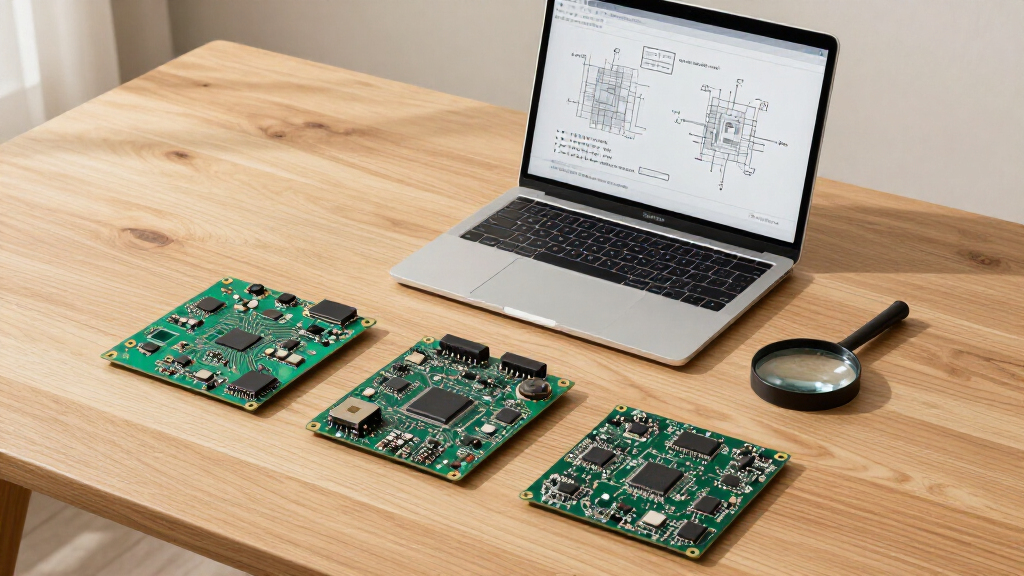
AI accelerator chips for inference
As an affiliate, we earn on qualifying purchases.
As an affiliate, we earn on qualifying purchases.
Unclear Aspects of the Hardware Transition
While industry trends point toward specialized hardware, it is still unclear how quickly these new designs will be adopted at scale, or how existing players will transition from legacy architectures. The precise technical implementations, such as low-voltage silicon and unified memory pools, are still under development and testing.
Additionally, the impact on the broader semiconductor supply chain and existing hardware markets remains uncertain, as does the timeline for widespread deployment of these new architectures.
As an affiliate, we earn on qualifying purchases.
Next Steps in AI Hardware Development and Adoption
Industry leaders and hardware manufacturers are expected to release prototypes and early products focusing on low-voltage, specialized inference chips within the next 12-24 months. Standardization efforts and ecosystem development will follow, aiming to integrate these architectures into data centers and edge devices.
Further research and testing will clarify the performance gains and cost benefits, influencing the pace at which the industry shifts away from general-purpose GPUs toward dedicated inference hardware.
As an affiliate, we earn on qualifying purchases.
Key Questions
Why are current GPUs no longer ideal for inference workloads?
Current GPUs were designed primarily for training, emphasizing raw computational speed. They are less efficient for inference, which requires high throughput, low latency, and energy efficiency. New hardware designs focus on these aspects, making existing GPUs less optimal for large-scale inference tasks.
What are the main technical challenges in developing inference-specific hardware?
The key challenges include managing thermal constraints to increase efficiency, reducing latency between chips through advanced interconnects and unified memory, and designing hardware that is specialized for inference operations like prefill and decode.
How soon could we see widespread adoption of these new hardware architectures?
Prototypes and early products are expected within the next year or two, but full adoption across industry data centers may take several years as ecosystems and standards evolve.
Will this shift impact the cost of AI inference services?
Yes, dedicated inference hardware is expected to lower operational costs by improving energy efficiency and throughput, making large-scale AI deployment more economically feasible.
Does this mean GPUs will become obsolete for AI inference?
Not immediately. GPUs will likely continue to be used for training and some inference tasks for the foreseeable future, but their role in large-scale inference will diminish as specialized hardware matures.
Source: ThorstenMeyerAI.com