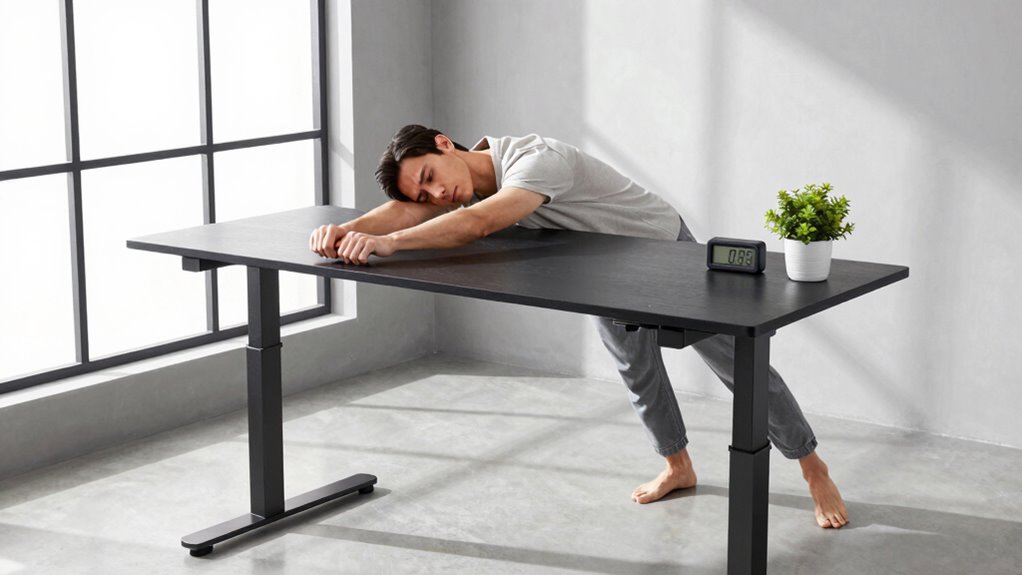

To combat fatigue at a standing desk, adopt an anti-fatigue rotation plan by switching positions regularly and incorporating movement. Adjust your schedule to balance sitting and standing, aiming for brief periods of standing every hour, and use ergonomic accessories like supportive mats. Pay attention to your body’s signals and modify your routine as needed. Continuing this approach helps maintain comfort and energy—discover more tips to stay balanced throughout your workday.
Key Takeaways
- Regularly switch between sitting and standing to prevent muscle fatigue and improve circulation.
- Use timers and ergonomic accessories to support consistent posture changes throughout the day.
- Incorporate movement, stretching, and deep breathing during scheduled breaks to reduce strain.
- Monitor fatigue signals like slouching or discomfort and adjust standing intervals accordingly.
- Maintain awareness of posture and routine to optimize comfort, productivity, and energy levels.

The Standing Desk Mat – Topo by Ergodriven | Premium Not-Flat Anti-Fatigue Standing Desk Mat with Calculated Terrain | Ultra-Thick Deluxe Comfort Foam, Durable, PVC-Free | Accessories | Obsidian Black
CRITICAL STANDING DESK ACCESSORY – If you have a standing desk, you need a standing desk mat. Why?…
As an affiliate, we earn on qualifying purchases.
As an affiliate, we earn on qualifying purchases.
What Causes Fatigue When Using a Standing Desk?

Have you ever wondered why you feel tired after standing at your desk for a while? It’s often due to poor posture awareness and lack of ergonomic accessories. When you don’t support your body properly, muscles strain, leading to fatigue. Without ergonomic accessories like anti-fatigue mats or supportive shoes, your legs and back bear extra stress. Poor posture, such as slouching or leaning too far forward, causes uneven weight distribution and muscle tension. Over time, this strain drains your energy and causes discomfort. Your body needs proper alignment and support to stay energized. Recognizing these factors helps you understand that fatigue isn’t just about standing; it’s about how you stand. Implementing ergonomic accessories and improving posture awareness can considerably reduce fatigue and boost comfort during your workday. Additionally, incorporating essential oils for fatigue relief, such as peppermint or lavender, can help promote alertness and reduce feelings of tiredness.
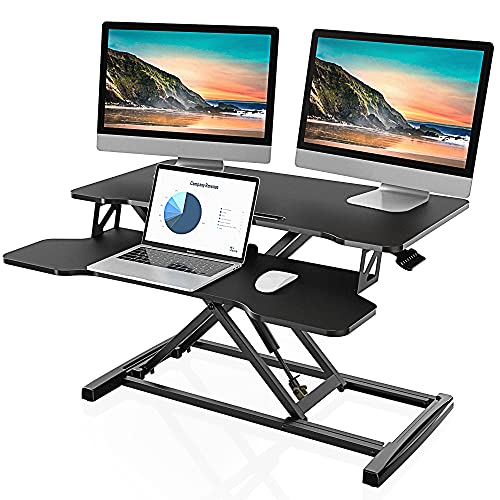
FITUEYES Height Adjustable Standing Desk 32” Wide Sit to Stand Converter Stand Up Desk Tabletop Workstation for Dual Monitor Riser FSD308001WB
【Spacious Work Area】: The top surface measures 31.5” x 15.7” providing plenty of space for single monitor, dual…
As an affiliate, we earn on qualifying purchases.
As an affiliate, we earn on qualifying purchases.
Why Moving More Helps Reduce Fatigue

Moving more during your workday can substantially lessen fatigue caused by prolonged standing. When you incorporate movement, you reduce strain on your muscles and joints, preventing stiffness and soreness. Using ergonomic accessories like sit-stand desks or anti-fatigue mats encourages natural shifts in posture, making movement easier and more frequent. Regularly changing positions boosts blood flow, which helps combat mental fatigue by increasing oxygen delivery to your brain. Standing still for too long can lead to decreased alertness and increased tiredness, but staying active keeps you engaged and energized. Even simple movements, such as stretching or walking in place, break up the monotony and refresh your focus. The key is consistent, intentional movement to maintain your energy levels and reduce overall fatigue. Additionally, incorporating dynamic movements that promote circulation can further enhance your comfort and productivity throughout the day.

KANGAROO Thick Ergonomic Anti Fatigue Mats for Kitchen Floor, Cushioned Standing Office Desk Mat, Waterproof Scratch Resistant Topside, Supportive All Day Comfort Padded Foam Rugs, 20×32, Grey
THICK AND SUPPORTIVE CUSHIONING: extra thick, three quarter inch foam mat is extremely comfortable and engineered to help…
As an affiliate, we earn on qualifying purchases.
As an affiliate, we earn on qualifying purchases.
How Does the Anti-Fatigue Rotation Plan Work?
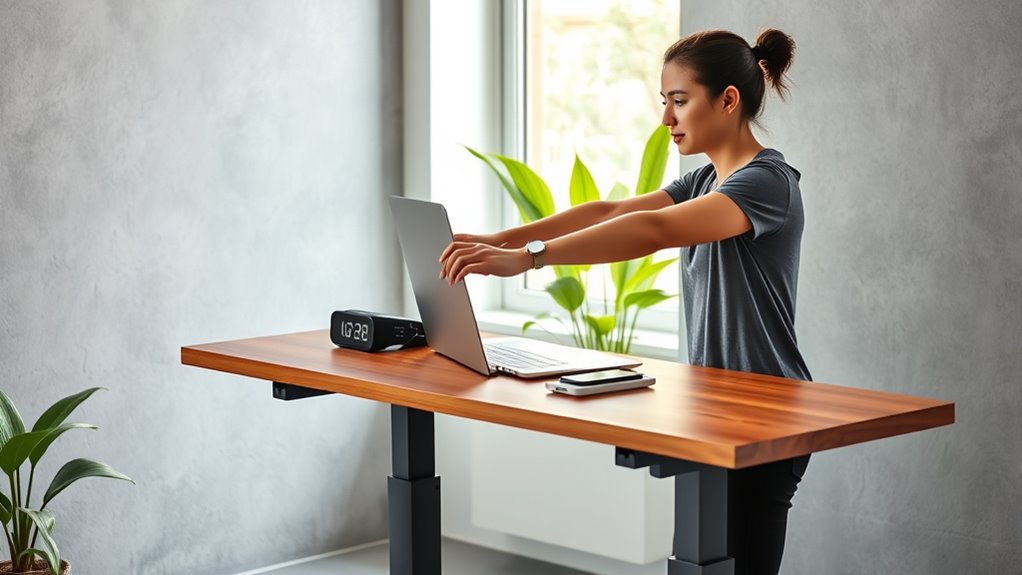
The anti-fatigue rotation plan works by switching your posture regularly, which helps prevent muscle strain and fatigue. By following a scheduled movement strategy, you guarantee you’re not staying in the same position too long. This approach keeps your muscles engaged and reduces overall tiredness throughout the day. Incorporating ergonomic principles into your routine can further enhance comfort and reduce the risk of repetitive strain injuries.
Alternating Posture Benefits
Alternating your posture throughout the day can substantially reduce fatigue and prevent discomfort associated with prolonged standing. By practicing posture variation, you avoid putting continuous strain on the same muscles and joints. This helps improve circulation and reduces the risk of pain or stiffness. Incorporating ergonomic adjustments, such as adjusting your desk height or using supportive footwear, complements this approach. When you switch between sitting, standing, or shifting your weight, you give different muscle groups a break, which helps maintain energy and focus. Consistent posture variation also prevents muscle fatigue, making it easier to stay productive. Using proper setup practices such as correct desk height and supportive footwear enhances the benefits of rotation. Overall, this simple strategy enhances comfort and supports your body’s natural alignment, ensuring you can work longer without suffering from fatigue or discomfort.
Scheduled Movement Strategy
Implementing a scheduled movement strategy involves planning specific times throughout your workday to change positions deliberately. Set reminders to stand, stretch, or shift using ergonomic accessories like adjustable footrests or sit-stand desks. This approach keeps your muscles active and promotes better posture awareness, preventing fatigue from prolonged static positions. By intentionally switching between sitting and standing, you reduce strain on your back, neck, and shoulders. Incorporate small movements, such as leg lifts or arm stretches, during these breaks. Consistency is key; sticking to a routine helps your body adapt quickly. The anti-fatigue rotation plan works by disrupting static postures, encouraging circulation, and reducing discomfort, all while maintaining productivity and comfort throughout your workday. Additionally, paying attention to ergonomic practices can further enhance comfort and prevent strain during prolonged periods of sitting or standing.

Posture Corrector, Back Brace for Women and Men, Adjustable Back Support, Shoulder Straightener for Improving Hunchback, Providing Pain Relief from Neck, Shoulder, and Upper Back-Black
[Healthy Posture]: This posture corrector is especially suitable for people with slight hunchback, people with bowed heads, long-term…
As an affiliate, we earn on qualifying purchases.
As an affiliate, we earn on qualifying purchases.
How Should You Schedule Sitting and Standing?
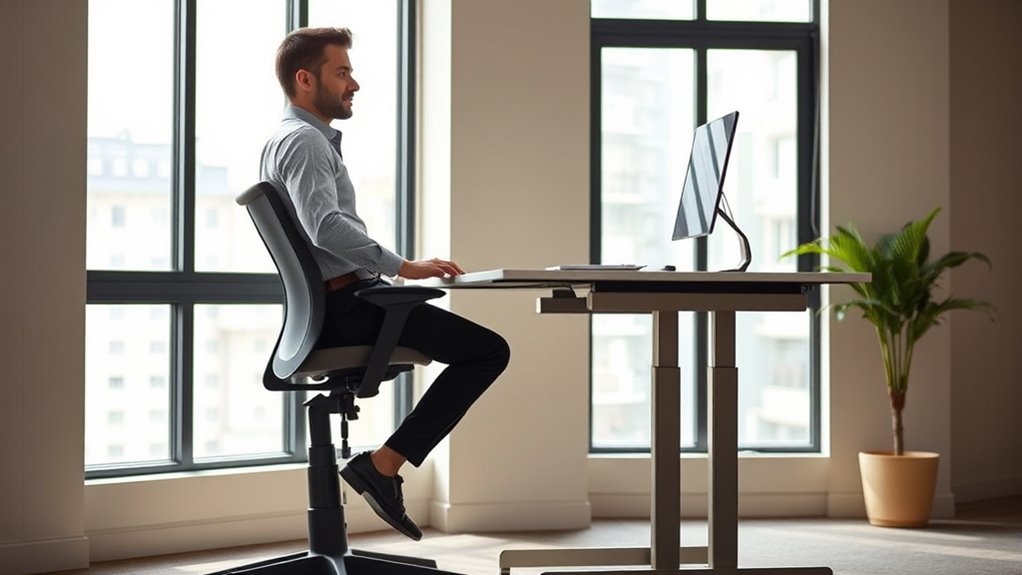
To avoid fatigue, you need to find the right balance between sitting and standing. Pay attention to how often you switch, and listen to your body for signs of tiredness. Adjust your schedule as needed to stay comfortable and productive throughout the day. Incorporating ergonomic strategies can help optimize your sitting and standing periods for better comfort.
Alternating Frequency Tips
Finding the right balance between sitting and standing can considerably reduce fatigue and discomfort. To optimize your schedule, aim to stand for about 15 to 30 minutes every hour, gradually increasing as your body adapts. Use ergonomic accessories like a supportive foot support to reduce strain on your legs and lower back during both sitting and standing periods. Alternate frequently to prevent muscle stiffness and maintain circulation. Setting timers or reminders helps you stay consistent, ensuring you don’t stay in one position too long. Pay attention to your body’s signals, and adjust your intervals if you start feeling tired or uncomfortable. Remember, the goal is to create a sustainable routine that minimizes fatigue while maintaining productivity and comfort. Incorporating energy-efficient solutions can further enhance your workspace comfort while supporting sustainable practices.
Recognizing Fatigue Signs
Monitoring your body’s signals is key to scheduling sitting and standing breaks effectively. Pay attention to posture awareness—if you notice your shoulders slouching or your back aching, it’s time to switch positions. Energy dips are another clear sign; feeling sluggish or unfocused often indicates you’ve been in one position too long. Recognizing these signs early helps you prevent fatigue and maintain productivity. When you feel discomfort or a drop in energy, it’s a cue to stand up, stretch, or sit down briefly. Consistently tuning into your body’s signals allows you to optimize the timing of your breaks, ensuring your posture stays aligned and your energy stays steady throughout the day. Being mindful of body signals can help prevent discomfort and support better posture during your workday. This mindful approach keeps fatigue at bay and supports sustained comfort.
What Are Practical Tips to Follow the Rotation Plan?
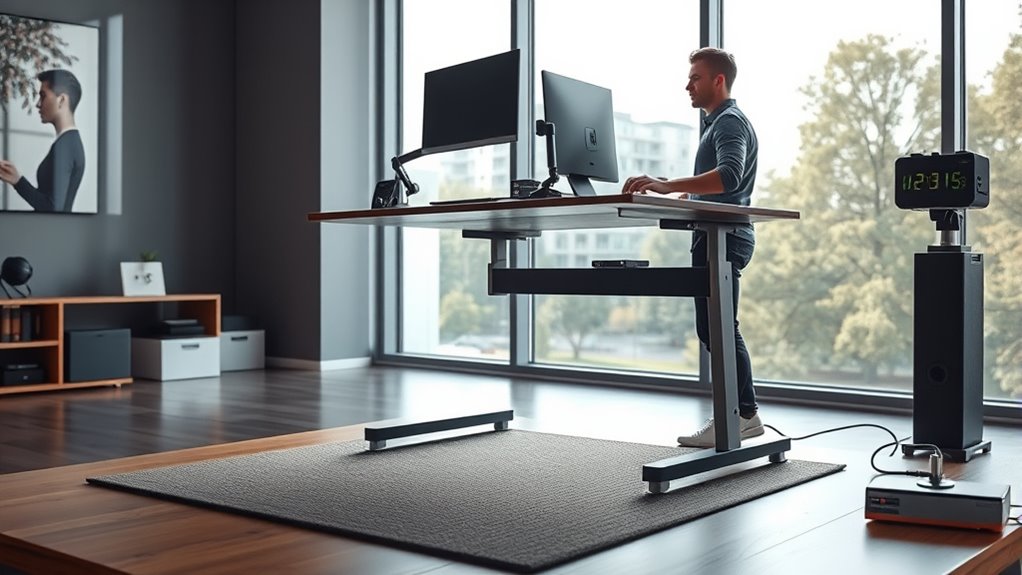
Implementing a rotation plan effectively requires setting clear, manageable schedules and sticking to them consistently. To do this, plan your work intervals with ergonomic accessories like supportive mats or adjustable desks to reduce strain. Remember to incorporate mindful breathing during breaks to relax muscles and clear your mind. Use the following tips to stay on track:
| Tip | Benefit |
|---|---|
| Schedule regular rotation times | Maintains consistency |
| Use visual reminders | Reinforces routine |
| Track your progress | Identifies patterns or issues |
| Adjust based on fatigue signals | Prevents overexertion |
Incorporating smart kitchen technology tools can also help automate reminders and track your rotation schedule efficiently. Sticking to these tips helps you prevent fatigue and optimize productivity without sacrificing comfort.
How Can You Track and Adjust Your Routine?
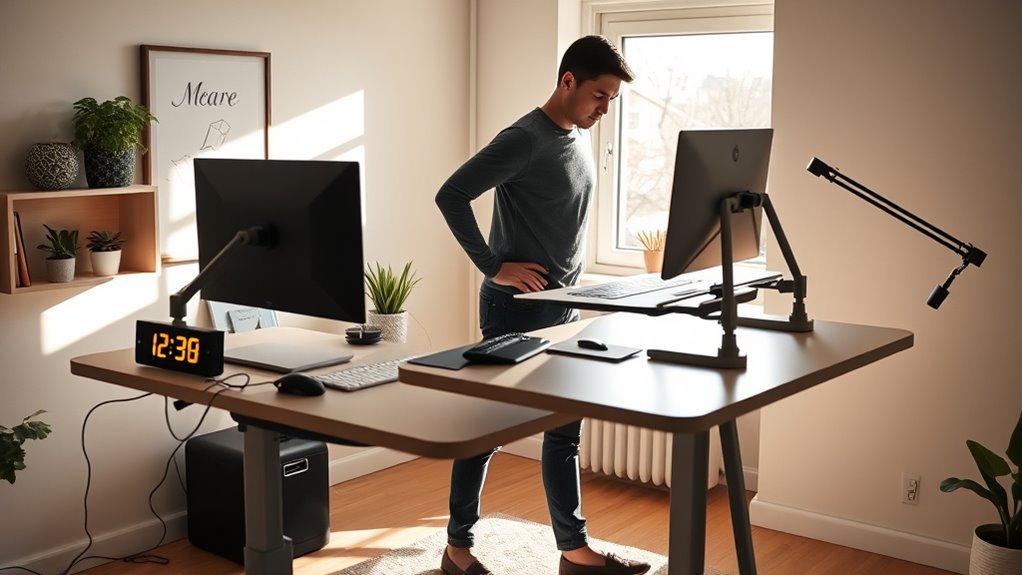
How can you effectively track and adjust your routine to prevent fatigue and stay productive? Focus on routine monitoring and posture awareness throughout your day. Regularly check how long you stay in one position and note any signs of discomfort or fatigue. Use simple tools like timers or apps to remind you to change positions. Observe your posture habits, ensuring you’re not leaning or slouching. Keep a journal to log your routine adjustments, such as shifting standing intervals or adding breaks. This helps you identify patterns that cause fatigue and refine your approach. Remember, consistent routine monitoring is key to maintaining energy and comfort. Stay mindful of your body’s signals, and don’t hesitate to tweak your standing desk schedule as needed. Incorporating movement variation into your routine can also significantly reduce fatigue and improve circulation.
What Extra Strategies Support Your Standing Desk Routine?
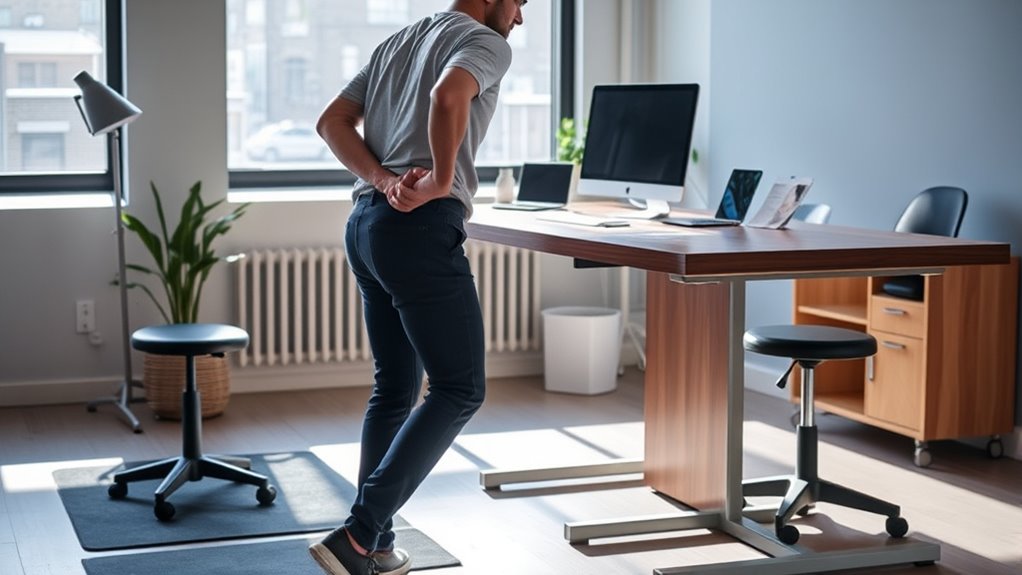
To enhance your standing desk routine, incorporating additional strategies can make a significant difference in preventing fatigue and boosting comfort. Using ergonomic accessories, like anti-fatigue mats, footrests, or adjustable monitor stands, helps maintain proper posture and reduces strain. These tools support your body, making standing more sustainable over longer periods. Additionally, focusing on your mental focus is key—taking brief breaks, practicing deep breathing, or stretching during your rotation keeps your mind alert and reduces fatigue. Staying hydrated and maintaining good ergonomics empowers you to stay productive and comfortable. By combining ergonomic accessories with mindful practices, you create a balanced routine that minimizes discomfort and sustains your energy throughout the day.
Frequently Asked Questions
Can This Rotation Plan Prevent Long-Term Musculoskeletal Issues?
Yes, this rotation plan can help prevent long-term musculoskeletal issues by promoting better posture correction. By alternating between sitting and standing, you reduce strain on your muscles and joints. Incorporate desk accessories like ergonomic mats and footrests to support proper alignment. Consistently changing positions keeps your muscles engaged and prevents stiffness, making it easier to avoid chronic discomfort and promote overall musculoskeletal health over time.
How Does Hydration Impact Fatigue During Standing Desk Use?
Think hydration is just for plants? Think again! Staying well-hydrated boosts your energy and fights fatigue during long hours at your standing desk. Proper fluid intake keeps your muscles functioning smoothly, preventing cramping and exhaustion. Hydration benefits your focus and stamina, so sip water regularly. Don’t wait until you’re parched—make hydration your secret weapon to stay alert, energized, and pain-free all day long. Cheers to standing smarter, not harder!
Are There Specific Ergonomic Accessories That Enhance the Rotation Plan?
Yes, ergonomic mats and accessories designed for compatibility can enhance your rotation plan. Use ergonomic mats to reduce fatigue and improve comfort during shifts, making it easier to switch between sitting and standing. Look for accessories that are compatible with your desk setup, like adjustable monitor arms or footrests, to support proper posture and prevent strain. These tools help maximize the benefits of your rotation, keeping you comfortable and energized throughout the day.
What Signs Indicate I Need to Adjust My Rotation Schedule?
If you notice persistent discomfort or stiffness, it’s time to adjust your rotation schedule. For example, if you feel neck pain after a few hours, it signals your posture awareness and movement frequency need attention. Pay close attention to how your body responds—tight muscles or fatigue indicate you should switch positions more often. Regularly monitoring these signs helps you optimize your rotation plan and prevent fatigue.
How Does Individual Fitness Level Affect Fatigue Management Strategies?
Your personal fitness level greatly influences your fatigue management strategy. If you have strong endurance-building habits, you can likely handle longer standing periods before feeling fatigued. Conversely, if your fitness is lower, you should incorporate more frequent breaks and rotations to prevent strain. Regular exercise boosts your stamina, making it easier to maintain standing desk work comfortably. Adjust your schedule based on your individual fitness to avoid fatigue and stay productive.
Conclusion
By following the anti-fatigue rotation plan, you can markedly reduce discomfort and boost productivity. Remember, research shows that standing desks can improve focus and energy levels—yet, over 60% of users experience fatigue without proper movement. So, incorporate regular sit-stand breaks, listen to your body, and tweak your routine as needed. Staying active throughout the day not only keeps fatigue at bay but also promotes overall well-being—making your workspace healthier and more comfortable.