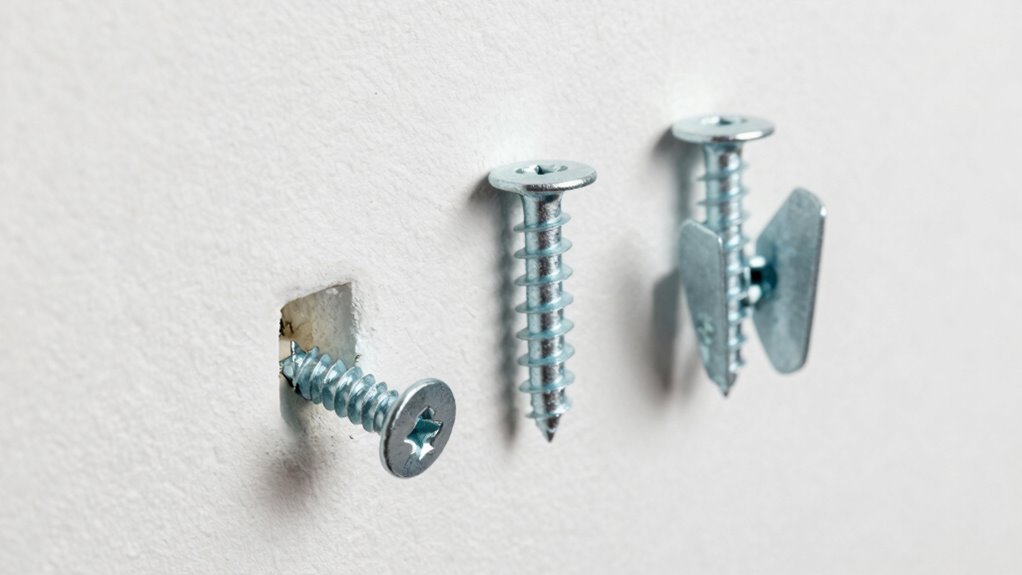

In drywall, the anchors you use are what actually support the weight of your hung items. Plastic expansion anchors spread the load when you tighten the screw, while metal molly bolts and toggle bolts expand behind the wall to hold heavier loads securely. Self-drilling anchors also enhance support without pre-drilling. Choosing the right anchor and installing it properly guarantees your items stay secure without damaging your wall—learn more to find the best fit for your needs.
Key Takeaways
- The load is primarily supported by the expansion of the anchor, which presses against drywall to distribute weight evenly.
- Metal toggle and molly bolt anchors spread weight over a larger drywall area for stronger support.
- Plastic expansion anchors rely on screw tightening to expand and hold weight securely against drywall.
- Load capacity depends on the anchor type, material, and drywall thickness, influencing what can be safely hung.
- Proper installation ensures the anchor’s expansion or wings effectively transfer weight, preventing drywall damage or failure.

3M Claw 15 lb. Drywall Picture Hanger with Spot Markers, Heavyweight Hanging Solution for Room Decor and Office Decor, Including Mirrors or Large Art – 5 Pack
TRUSTED STRENGTH: Pack of five 15 lb. 3M CLAW(TM) Drywall Picture Hangers; each picture hanger made of hardened…
As an affiliate, we earn on qualifying purchases.
As an affiliate, we earn on qualifying purchases.
The Basic Drywall Anchor Types

Drywall anchors come in several basic types, each designed to provide secure support for different weights and applications. When choosing an anchor, consider how it will interact with your drywall texture and paint adhesion. For lightweight items, plastic expansion anchors are simple and effective, offering decent support without damaging the surface. Metal toggle anchors are better for heavier loads, as they spread weight over a larger area and won’t compromise paint adhesion or drywall texture. Molly bolts are a good option for medium to heavy objects, creating a strong hold while minimizing surface damage. Selecting the right type guarantees your wall maintains its appearance and integrity, preventing issues like peeling paint or textured surface damage over time. Additionally, understanding the compatibility of anchors with different wall surfaces can help you choose the most effective support for your project. Proper installation techniques and anchor material properties further ensure your items stay securely mounted without damaging your drywall. Being aware of wall surface characteristics can also influence your choice, especially when dealing with textured or painted drywall, to ensure optimal adhesion and support. Moreover, considering sound transmission properties can help in selecting anchors that reduce noise transfer when mounting fixtures in certain environments.

KURUI Heavy Duty Hollow Wall Anchors for Drywall Ceiling, Toggle Bolts and Wing Nut Kit, 28Pcs Metal Drywall Anchors and Screws Assortment Set, 3 Sizes Butterfly Anchors for Hanging 1/8, 3/16, 1/4
MULTIPLE SIZE OPTIONS – This toggle bolt assortment includes 3 sizes (1/8 in, 3/16 in, 1/4 in) to…
As an affiliate, we earn on qualifying purchases.
As an affiliate, we earn on qualifying purchases.
How Plastic Expansion Anchors Work
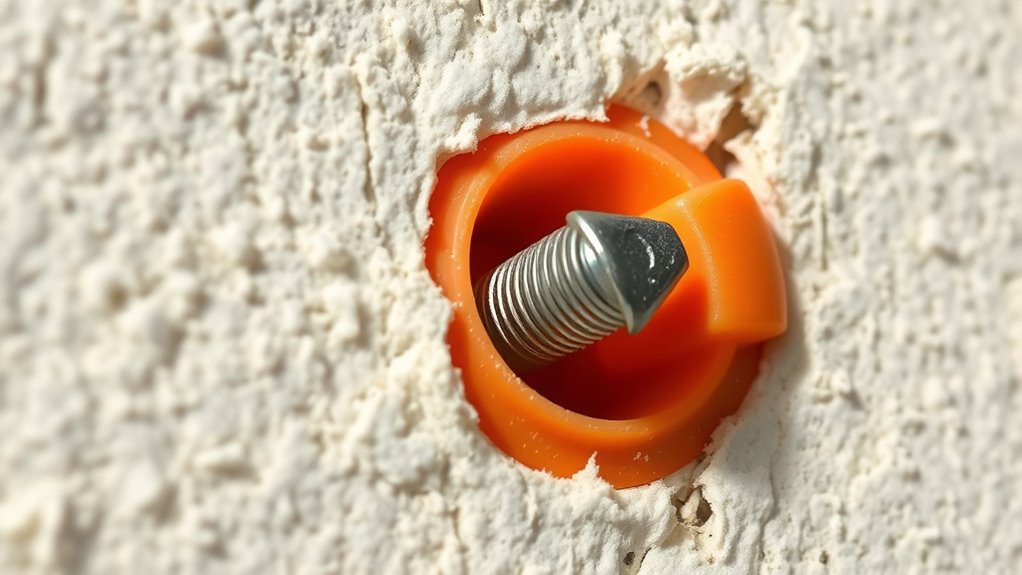
When you insert a plastic expansion anchor into drywall, it expands as you tighten the screw, pressing against the wall to secure itself. This expansion spreads the load evenly across a wider area, reducing stress on any single point. As a result, your mounted item stays firmly in place without damaging the drywall. Understanding the load distribution helps ensure the anchor performs effectively and safely. Proper installation techniques are essential to maximize the anchor’s holding capacity and prevent failure over time. Additionally, selecting the appropriate anchor type based on material strength can greatly improve the overall stability and durability of your mounting solution. Recognizing the importance of quality materials can further enhance the long-term performance of your drywall anchors, especially when considering the environmental conditions where they are used.
Expansion Mechanism Details
Plastic expansion anchors work by transforming their shape to secure themselves firmly in the drywall. When you insert the anchor, the plastic expands, gripping the wall material tightly. This expansion creates a strong hold, especially in drywall with varying textures. The anchor’s design allows it to adapt to different wall textures, ensuring stability even in rough or smooth surfaces. As you tighten the screw, the anchor expands further, distributing the load evenly across the wall material. This mechanism prevents the anchor from pulling out under weight. Understanding these details helps you choose the right anchor for your drywall texture and weight requirements, ensuring a safe and secure mounting. Additionally, the material properties of the plastic influence how well the anchor performs across various drywall types. Recognizing the adhesion mechanism of the plastic also helps in selecting anchors that provide better long-term stability and durability.
Load Distribution Effect
As you tighten the screw in a plastic expansion anchor, the anchor expands outward, distributing the load across a larger surface area of the drywall. This load distribution depends heavily on wall anchor materials and drywall thickness. Plastic anchors are designed to spread the weight evenly, preventing local damage or failure. Thicker drywall can support more weight because it provides a sturdier base for the anchor to grip. When the anchor expands, it presses against the drywall’s inner surface, sharing the load across a broader area. This reduces stress on any single point and enhances overall holding power. Properly chosen wall anchor materials and matching drywall thickness ensure your load is well-distributed, making your hanging more secure and durable. Additionally, understanding load distribution can help you select the most appropriate anchoring method for different wall types and weights, especially when considering wall stability and safety factors. Recognizing backing support can also be crucial in ensuring the anchor’s effectiveness in various environments. Furthermore, considering anchoring systems can improve your understanding of how different options perform under various conditions. Selecting the correct support structures can significantly enhance the strength and reliability of your wall-mounted fixtures.

KURUI Drywall Anchors and Screws Assortment Kit 270PCS, 135 Plastic Dry Wall Expansion Anchors and 135 Phillips Flat Head Wood Screws, 5 Sizes Wall Hanging Kit for Art Decor, Replaces Picture Nails
FIVE ESSENTIAL SIZES FOR MULTIPLE PROJECTS: This dry wall anchors and screws kit comes with five of the…
As an affiliate, we earn on qualifying purchases.
As an affiliate, we earn on qualifying purchases.
Metal Molly Bolts and Their Strengths
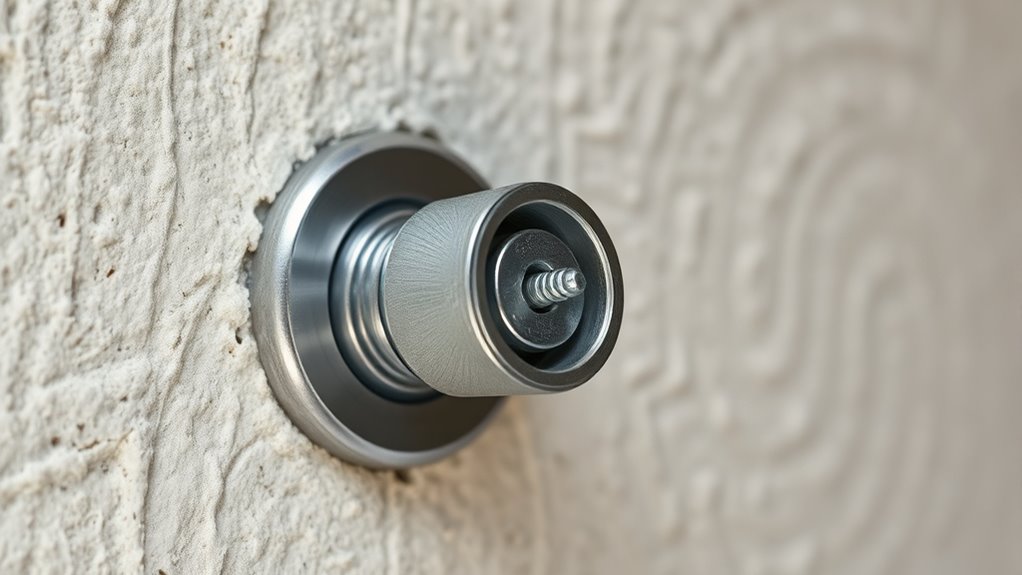
Metal Molly bolts are known for their durability and strong construction, making them ideal for heavy-duty applications. You should consider their weight capacity limits to make certain they can support your intended load safely. Understanding their construction helps you choose the right bolt for your project’s strength requirements. Additionally, knowing how to properly install and assess their load-bearing capacity is essential for ensuring safety and stability in your project. Proper maintenance and inspection can also help prevent failure due to wear or damage over time, ensuring they remain reliable under heavy loads. Being familiar with travel safety tips can further enhance your confidence when working on projects at heights or in unfamiliar environments, especially when using appropriate safety gear. Regularly inspecting your bolts and understanding structural integrity can help identify potential issues before they lead to failure.
Metal Molly Bolts Construction
Have you ever wondered why metal molly bolts are so reliable for drywall installations? Their construction features a sturdy metal body with a spring-loaded wing mechanism that expands behind the wall once inserted. This design provides a strong grip, ideal for supporting heavier objects. Metal molly bolts are often used in drywall finishing and wall texture projects where stability is essential. Their durability ensures they won’t easily pull out, even with frequent adjustments or vibrations. Plus, their simple installation process saves you time. The metal construction resists rust and corrosion, making them suitable for various environments. Additionally, understanding anchoring mechanisms helps you choose the right anchor for a secure, clean finish. Proper installation techniques also contribute to the overall strength and safety of the anchoring system. Whether hanging artwork or shelves, understanding their construction helps you choose the right anchor for a secure, clean finish. Cryptid mysteries and other folklore elements can sometimes influence perceptions of structural safety and supernatural legends attached to old buildings.
Weight Capacity Limits
When choosing molly bolts for your drywall projects, understanding their weight capacity is crucial to guarantee safety and stability. The weight capacity depends on the anchor materials and the wall thickness you’re working with. Metal molly bolts are strong, but their load limits vary based on the size and design. Typically, they can hold between 50 to 100 pounds, but this range changes if your drywall is thinner or thicker. Thicker walls usually support more weight, while thinner drywall reduces capacity. Always check the manufacturer’s specifications for exact limits. Overloading beyond these limits risks the anchor failing or causing damage. To ensure safety, select molly bolts that match your intended weight, considering both the anchor materials and the wall thickness.

JoblikeBrez Molly Bolts for Drywall Plaster Walls (0.12"-1.28"), 34 PCS in 3 Sizes, Heavy Duty Hollow Wall Anchors with Setting Tool, Perfect for TVs, Curtain Rods, Mirrors, Towel Racks, Up to 55 lbs
Say Goodbye to Wall Anchor Woes: Our Joblikebrez hollow wall anchor ensures a secure hold every time! With…
As an affiliate, we earn on qualifying purchases.
As an affiliate, we earn on qualifying purchases.
Toggle Bolts: Heavy-Duty Anchoring Solutions
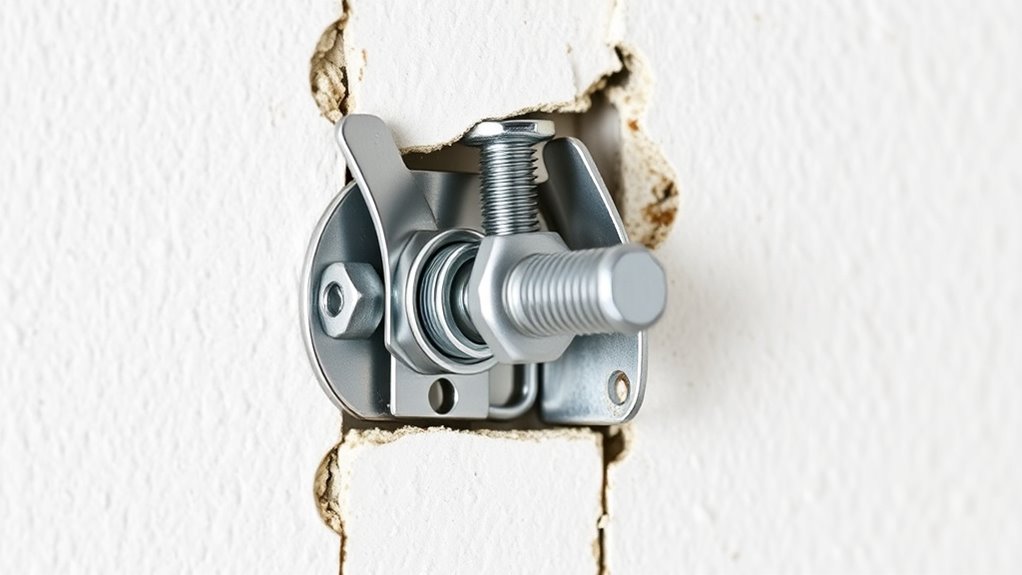
Are you looking for a reliable way to secure heavy objects in drywall? Toggle bolts are your best option for heavy-duty anchoring. They feature a spring-loaded winged nut that spreads behind the drywall, providing strong support. When planning your project, consider decorating tips that hide anchors for a clean look. Proper drywall preparation guarantees the toggle bolt works effectively, such as drilling the right-sized hole and avoiding electrical wiring. Here’s what makes toggle bolts effective:
- Capable of supporting significant weight
- Easy to install with minimal tools
- Suitable for thick drywall or hollow walls
- Ideal for mounting heavy fixtures like mirrors or shelving
Using toggle bolts correctly guarantees stability and safety for your decor, making them a versatile choice for demanding projects.
Self-Drilling Anchors and Their Advantages
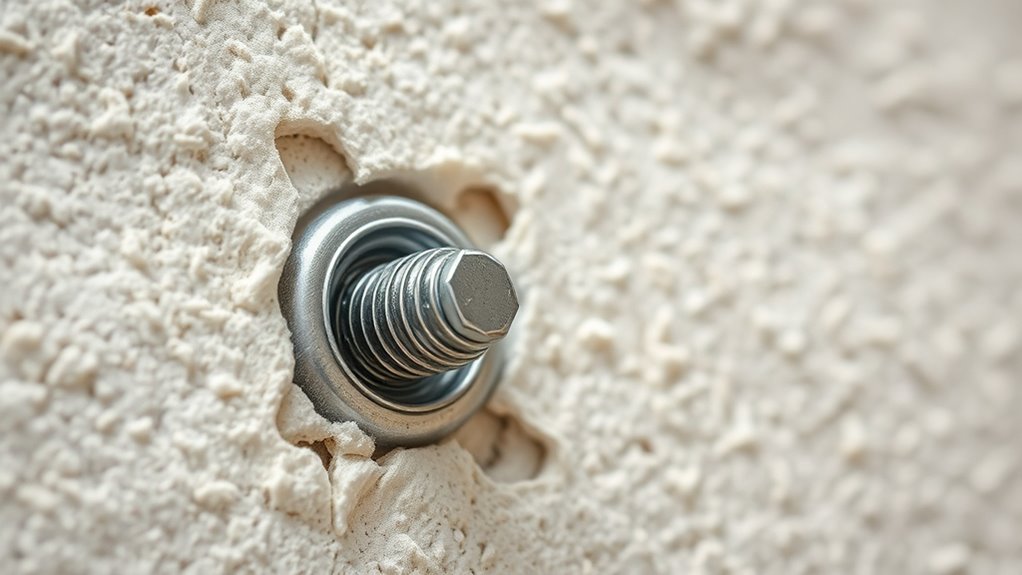
Self-drilling anchors make installing items in drywall quick and easy since you don’t need pre-drilled holes. They also provide strong holding power, ensuring your fixtures stay secure. With these benefits, they’re a convenient choice for many DIY projects.
Quick Installation Process
Self-drilling drywall anchors offer a fast and straightforward way to secure items without the need for pre-drilling holes. This simplicity accelerates your project, making drywall finishing quicker and easier. You can install these anchors in just seconds, saving you time and effort. Plus, their sleek design ensures minimal disruption to the wall’s appearance, maintaining good anchor aesthetics. Whether hanging a picture or mounting shelves, their quick installation process keeps your work clean and efficient. Here are some key benefits:
- No pre-drilling required, reducing setup time
- Easy-to-use design for DIY projects
- Smooth installation minimizes drywall damage
- Maintains a clean look for better drywall finishing
These anchors are perfect if you want a hassle-free, quick fix that doesn’t compromise your wall’s appearance.
Strong Holding Power
Ever wonder why self-drilling drywall anchors are a popular choice? Their strong holding power guarantees your hung items stay secure, even with heavier objects. These anchors bite into the drywall quickly, providing reliable support without the need for pre-drilling. This durability is especially beneficial when hanging items like shelves or artwork, where stability matters most. Plus, self-drilling anchors help maintain your decorative finishes, preventing unnecessary damage or holes that could compromise aesthetic considerations. Their robust grip minimizes movement over time, giving you peace of mind. Whether you’re decorating a living room or updating a workspace, their combination of strength and ease of installation makes them a practical, long-lasting solution that keeps your walls looking polished.
Comparing Load Capacities of Different Anchors
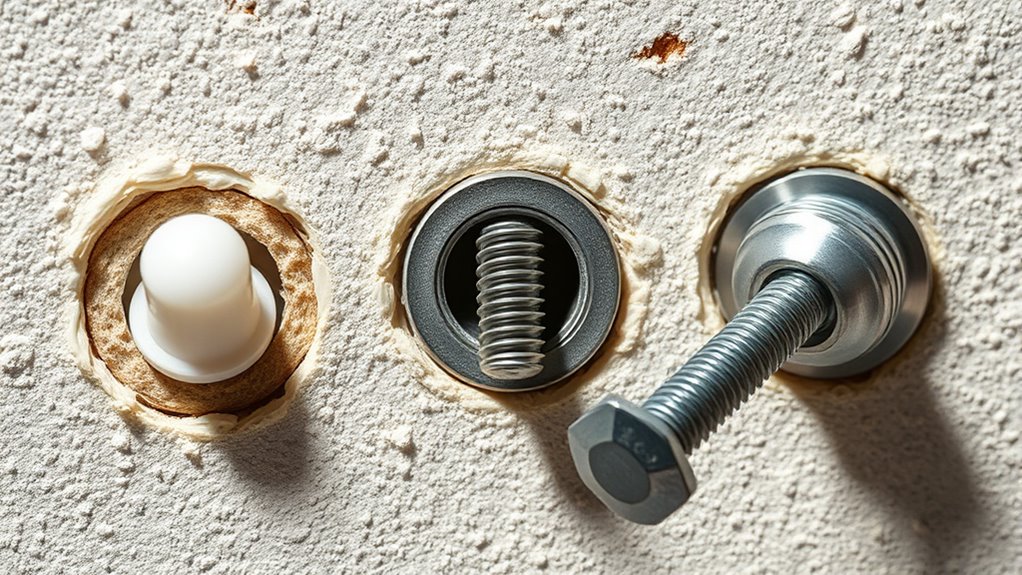
When selecting drywall anchors, understanding their load capacities is crucial because not all anchors can support the same weight. Different anchors are designed for specific uses, from lightweight picture hangings to heavy shelves. Comparing their load capacities helps you choose the right option for your project. For example, plastic expansion anchors generally support lighter loads, while metal toggle anchors or molly bolts can handle heavier items. Keep in mind that the weight capacity influences the need for drywall reinforcement or alternative mounting methods. Knowing these differences ensures your items stay secure and reduces the risk of damage.
- Plastic anchors for light loads and decorative items
- Toggle bolts for medium to heavy objects
- Molly bolts for a secure, flush finish
- Consideration of drywall reinforcement for extra support
Proper Installation Techniques for Secure Mounting
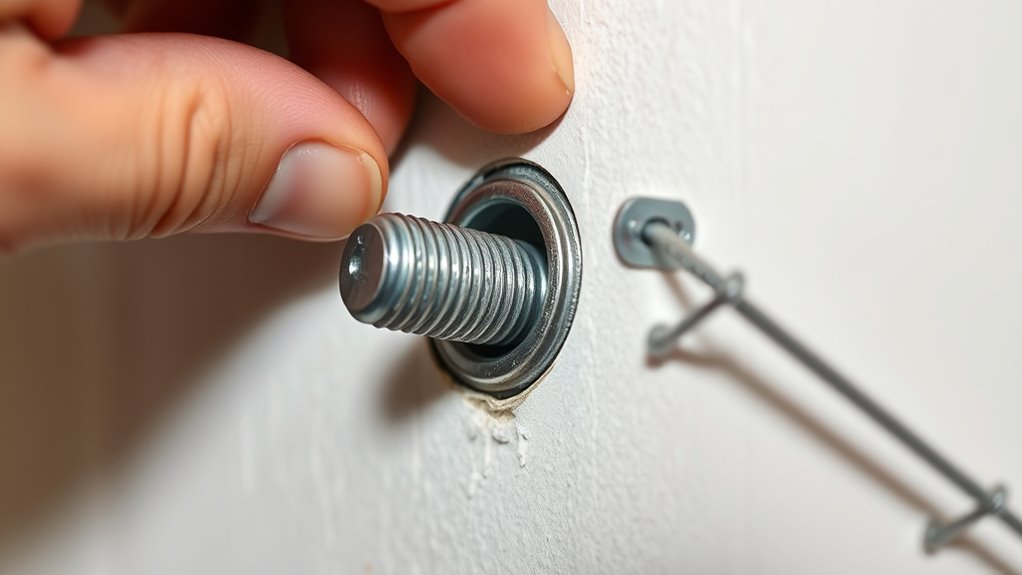
Choosing the right drywall anchor is only the first step; proper installation makes sure your items stay secure over time. To do this, select the appropriate types of drywall anchors based on your weight needs and wall thickness. Follow manufacturer instructions carefully, ensuring the anchor is fully inserted and flush with the wall surface. Use the correct tools, like a screwdriver or drill, to tighten the anchor without over-tightening, which can damage the drywall. If you encounter existing holes or damage, apply drywall repair techniques such as patching or reinforcement before installing new anchors. Proper technique minimizes the risk of failure and keeps your mounted items stable. Remember, precision during installation is key to long-lasting, secure mounting.
When to Use Special Anchors for Heavy Items
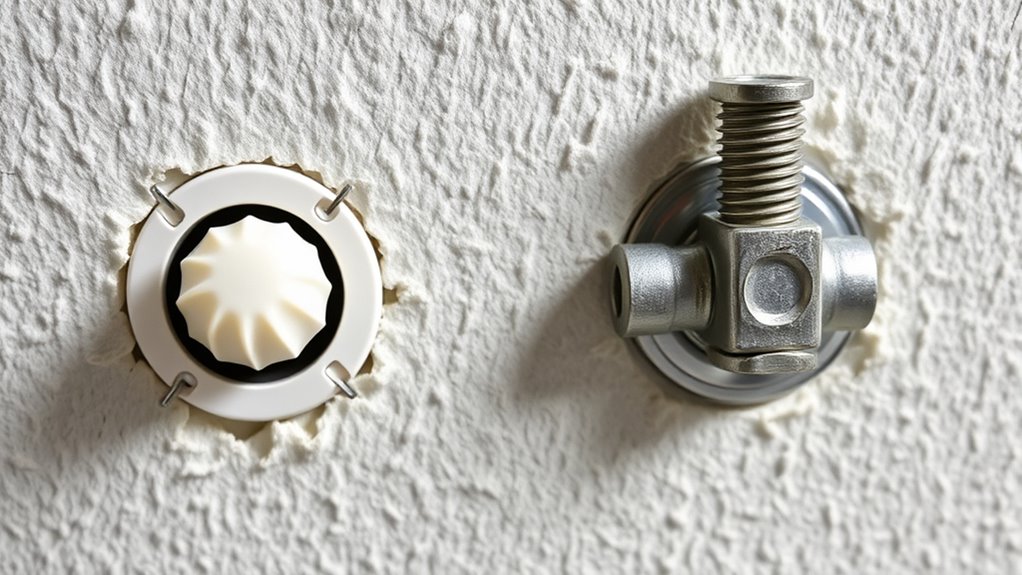
Heavy items require more than standard drywall anchors to stay securely in place; using the right type of special anchors is vital to prevent damage or failure. When decorating wall art or hanging picture frames that are particularly heavy, consider using special anchors designed for extra weight. These include toggle bolts, molly bolts, or heavy-duty plastic anchors. You should use these anchors when your load exceeds the weight capacity of standard anchors, or if you’re mounting items on drywall that may experience frequent movement. Special anchors distribute weight more evenly and provide a stronger hold. They’re ideal for securing large mirrors, heavy shelves, or bulky decorations. Choosing the right anchor guarantees your heavy items stay safe and your wall remains undamaged.
Common Mistakes That Weaken Wall Anchors

Using the wrong techniques or tools when installing wall anchors can substantially weaken their hold and increase the risk of failure. Common mistakes include choosing incompatible wall anchor materials or neglecting drywall reinforcement. For example, using plastic anchors in heavy drywall loads can lead to slipping, while ignoring proper wall prep can cause loose fittings. Additionally, over-tightening anchors can damage the drywall or weaken the anchor’s grip. To avoid these issues, always select the right anchor type for your wall and weight, ensure the drywall is reinforced if needed, and follow proper installation steps. Here’s a quick comparison:
| Mistake | Result | Tip |
|---|---|---|
| Using inappropriate materials | Reduced holding power | Match anchor to weight and drywall |
| Neglecting drywall reinforcement | Increased risk of failure | Reinforce with additional drywall |
| Over-tightening | Damages drywall or weakens anchor | Tighten just enough |
| Poor installation technique | Anchor slips or fails | Follow manufacturer instructions |
Tips for Removing and Replacing Wall Anchors
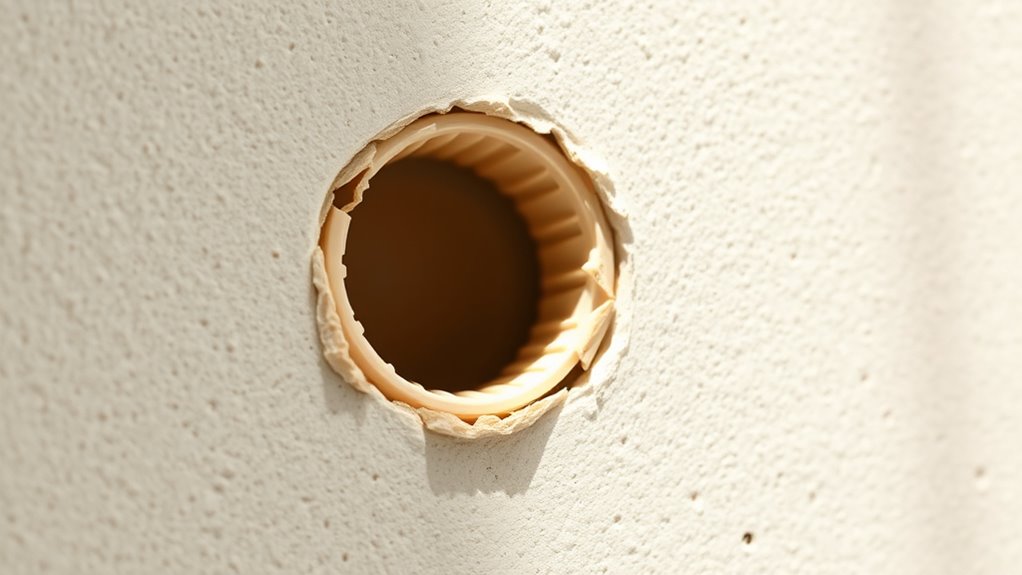
Removing and replacing wall anchors can be straightforward if you follow the right steps. First, gently pry the anchor out using pliers or a screwdriver, being careful not to damage the drywall. Next, clean the hole, removing any debris or loose drywall. If you’re updating your decorating ideas, consider patching the hole and preparing the surface for paint. When installing a new anchor, choose the right type for your project, and insert it securely. For a smooth finish, sand the patch lightly and apply primer before painting. Proper paint preparation ensures your wall looks seamless, especially after replacing anchors. Keep these tips in mind:
- Use the correct tools for removal
- Clean and prep the wall surface
- Choose the right anchor for your weight needs
- Follow proper paint prep for a flawless finish
Frequently Asked Questions
How Do I Determine the Weight Capacity of a Drywall Anchor?
You can determine the weight capacity of a drywall anchor by checking the packaging for specified limits, which vary by anchor type and installation techniques. Heavier loads need stronger anchors like toggle or molly types, while lighter items work with plastic or metal screw anchors. Always follow the manufacturer’s guidelines, guarantee proper installation, and consider the wall’s condition to prevent failure. When in doubt, opt for a more robust anchor.
Can Drywall Anchors Be Reused After Removal?
Drywall anchors generally can’t be reused after removal because they often get damaged or lose their gripping ability. Reusability considerations include inspecting the anchor for damage and ensuring it hasn’t compromised its integrity. If the anchor is damaged or deformed, you’ll need to repair the drywall or use a new anchor. To avoid issues, it’s usually best to replace anchors rather than trying to reuse them, ensuring secure support for your next project.
Are There Specific Anchors for Different Wall Materials Besides Drywall?
Did you know over 60% of homes feature multiple wall materials? Yes, there are specialized wall anchors for different surfaces beyond drywall, like brick, concrete, or plaster. These alternative wall materials require specific anchors to guarantee stability and safety. Using the right specialized wall anchors helps you securely hang items without damaging the wall or risking failure. Always choose anchors designed for your wall type for the best results.
What Are Signs That an Anchor Is Failing or Pulling Out?
If your decorative wall fixtures start tilting or falling, your anchor might be failing or pulling out. You’ll notice paint damage or cracks around the fixture, indicating looseness. Also, if you hear creaking or see the fixture sagging, it’s a sign the anchor is losing grip. To prevent damage, check for these signs regularly, and if you see any, reinforce or replace the anchor before more paint damage occurs.
How Do I Choose the Right Anchor for a Particular Project?
To choose the right anchor, consider material compatibility, weight capacity, and installation techniques. If you’re working with drywall, select anchors designed for light to moderate loads; for heavier items, opt for toggle bolts or molly bolts. For concrete or brick, use masonry anchors. Always match the anchor type to the material, follow proper installation techniques, and check weight ratings to guarantee your project stays secure and safe.
Conclusion
To guarantee your wall hangs securely, choose the right anchor for the weight and follow proper installation steps. For example, if you’re mounting a heavy mirror, using toggle bolts can prevent accidents. Remember, a small mistake like skipping a step can weaken the hold. By understanding your options and applying best practices, you’ll keep your items safe and your walls intact. Don’t rush—your wall will thank you for it.